Who is watching a whole quay at three in the morning?
A terminal is huge, it never stops and almost nobody is watching it. IRIS is.
We show fourteen cameras here: thirteen that raise an alert when something happens and one that alerts nobody, it just measures. And two things worth saying early. IRIS identifies nobody: it sees that someone has crossed the fence, it does not say who they are or what they came for. And it works with no internet, because on an isolated terminal the line drops and the operation does not stop.

Without IRIS this is a lot of cameras and almost nobody watching them.
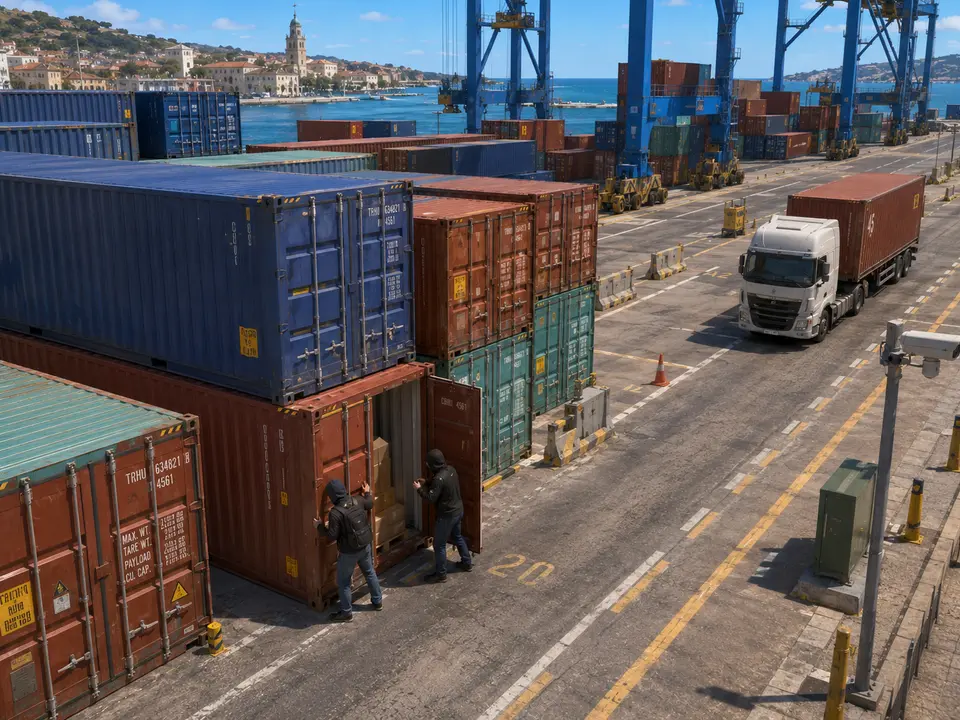
AI-generated image
What IRIS is
IRIS watches the dock while you get on with the job.
IRIS is an artificial intelligence that watches the cameras you already have at the port and understands what's happening at the fence, the perimeter, and the water's edge. When someone lingers where they shouldn't, gets close to the dock, or something you've asked it to watch happens, it alerts you — and whatever can be counted, like access points, it counts in numbers. All day long, with no one needing to watch a screen.
You tell it what you need to watch, and IRIS does it.
Works with the cameras you already have. Nothing to replace.
A person replies, not a form.
- Your footage never leaves your premises.
- It doesn't identify people.
- Certifications →
What is at stake on a terminal
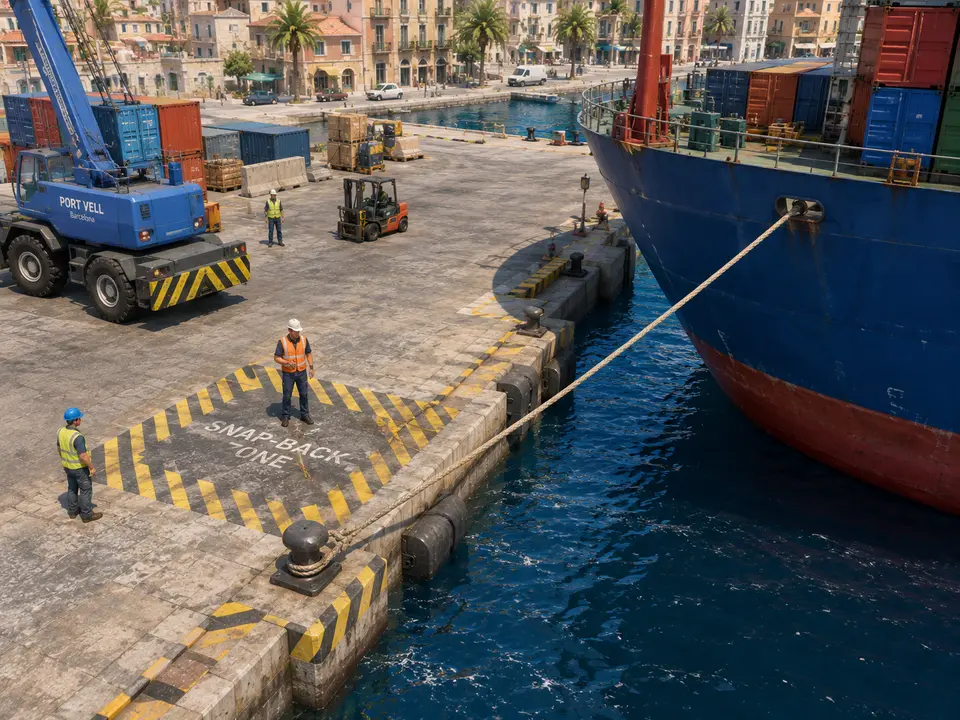
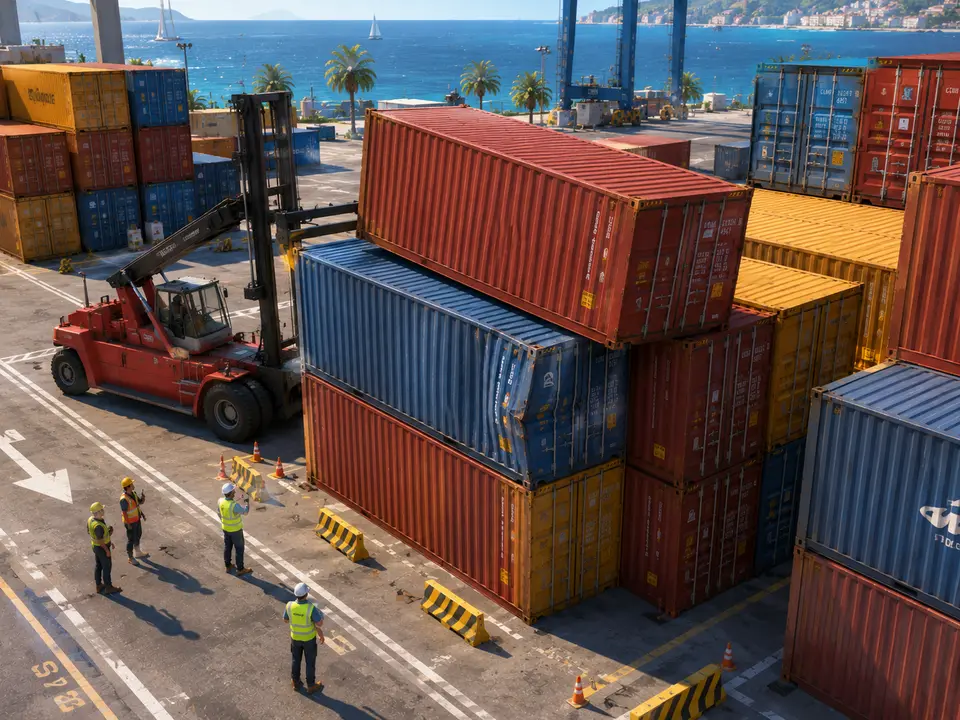
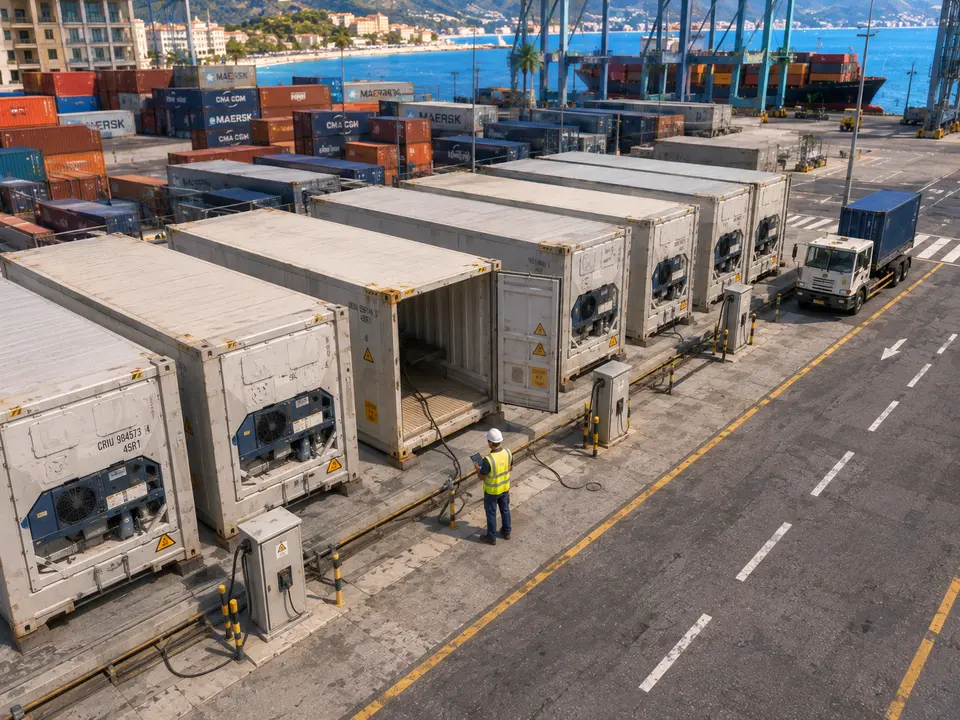
A terminal is a lot of open ground, and it does not stop at night, or in rain, or in wind. There are cameras everywhere; in the control room there are two people, and those same people are running the operation. Whoever walks under a suspended load is down there for eight seconds. Whoever stands inside a cable snapback zone does not know they are in it. The container left leaning across the stack gets spotted by the next shift. And the reefer that lost its plug is found when the doors open, when there is nothing left to do about it.
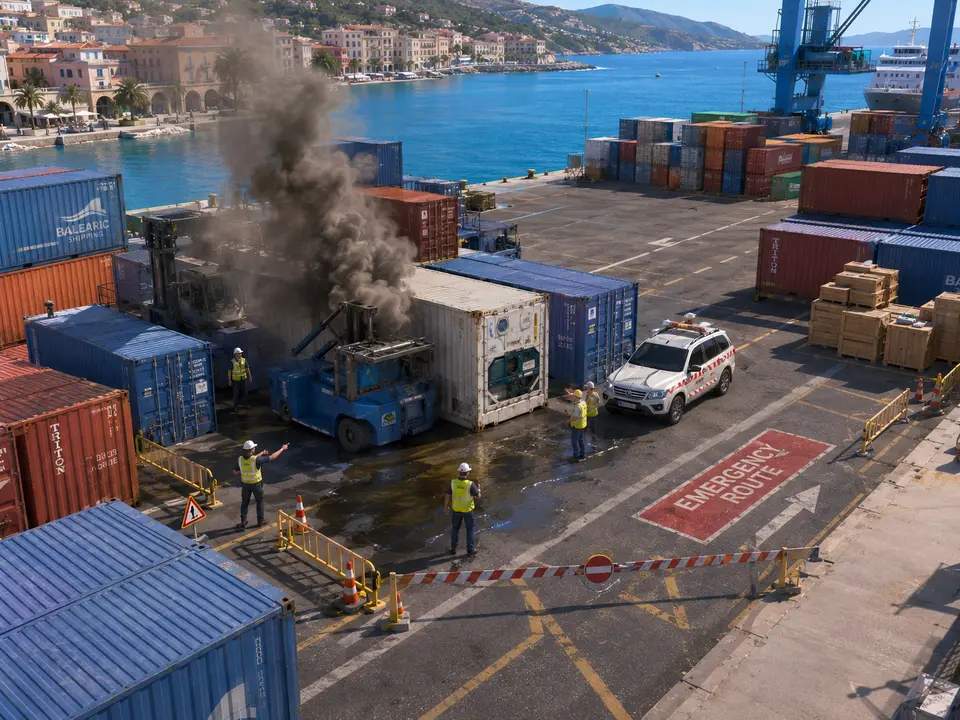
IRIS watches for you. It analyses every camera the terminal already has, all at once, and only interrupts when a rule your own team set is met: somebody walking into the fall line of a load, a person standing in the mooring snapback zone, a pedestrian and a machine closing on the same blind corner, somebody who has crossed the fence, a small boat approaching from the water, a container left leaning across the stack, a reefer with its cable on the ground, a liquid spreading along the quay edge. The alert arrives with the camera, the time and the video, while it is happening, to whoever can call a stop on the radio. And it identifies nobody: it sees that someone has crossed the fence; it does not say who they are or what they came for.
And where there is nothing to alert about, IRIS measures. Half an hour of berth without a single crane move is money standing still, and until now that got counted by hand or not at all. Measuring is not set up by talking: it is set up by drawing a line or an area on the image, because a line cannot be described in a sentence, it has to be traced. That is why the number comes out the same way every day and can be audited. And all of this happens inside the terminal: the models live on the customer's own installation, so it works with no internet and the image goes to no third party. On a quay where the line drops, that is not a detail.
The real scale
Fourteen cameras here. A terminal that fits on no screen.
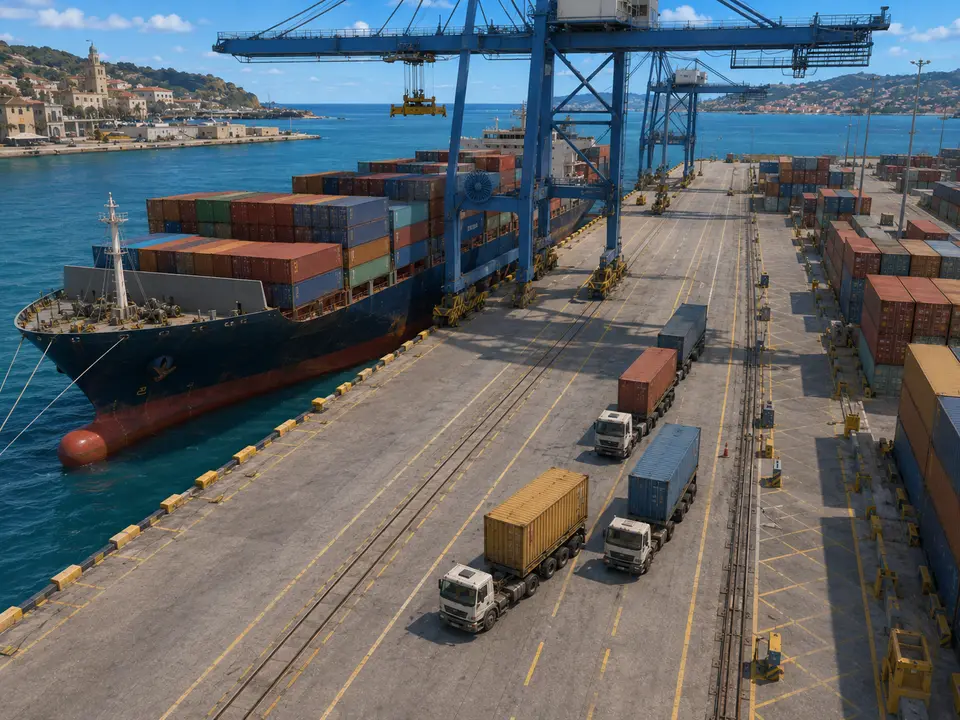
This demo shows fourteen cameras because fourteen fit on a screen. A terminal does not. Here the axis is not the kilometres of a road or the passengers of a station: it is the hectares and the shifts. Quay, container yard, reefer block, truck gate, rail siding, perimeter and waterline, all of it in the open and all of it running at night. There are plenty of cameras; there are very few people to watch them, and those same people are running the operation. That is the problem IRIS solves: it analyses however many cameras there are, all at once, around the clock, and only interrupts when a rule is met. And it does it inside the installation, without depending on an internet line that, on a quay, drops.
Examples
These fourteen are just examples.
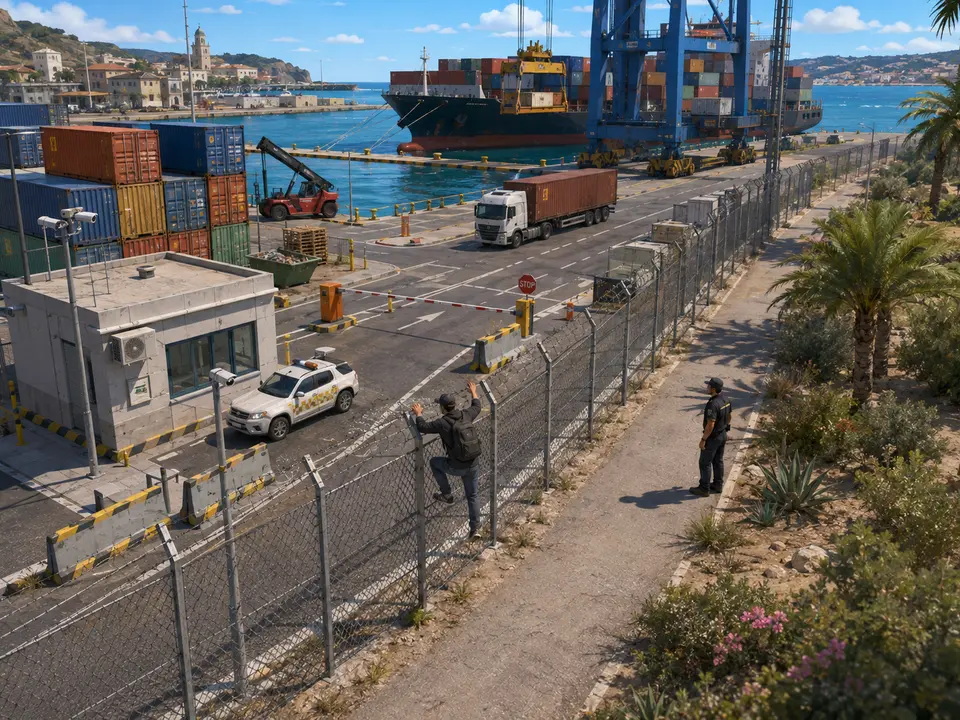
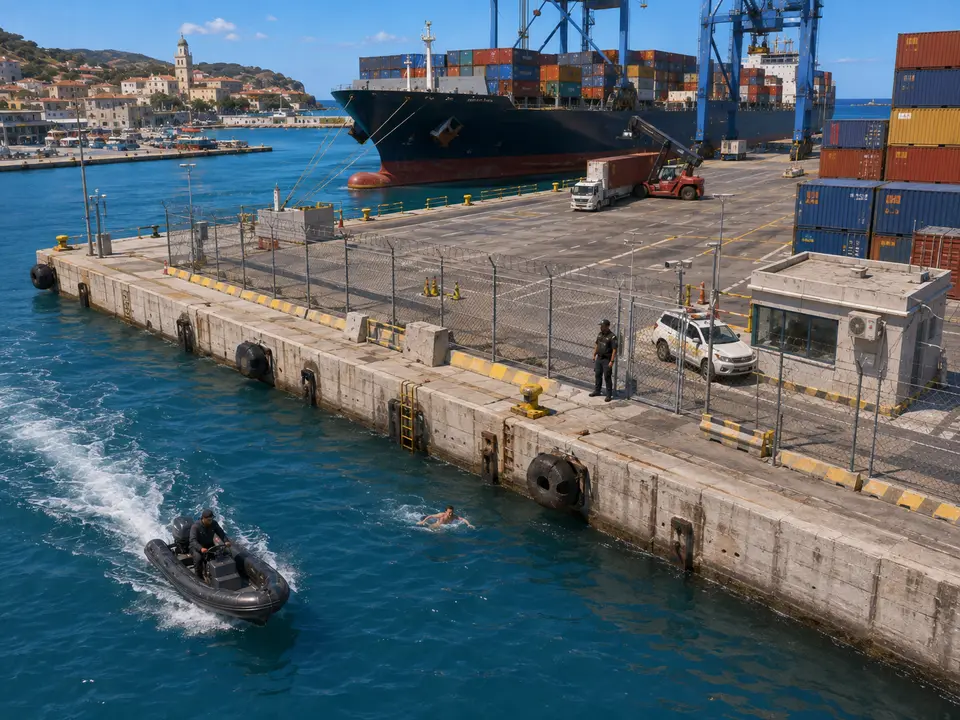
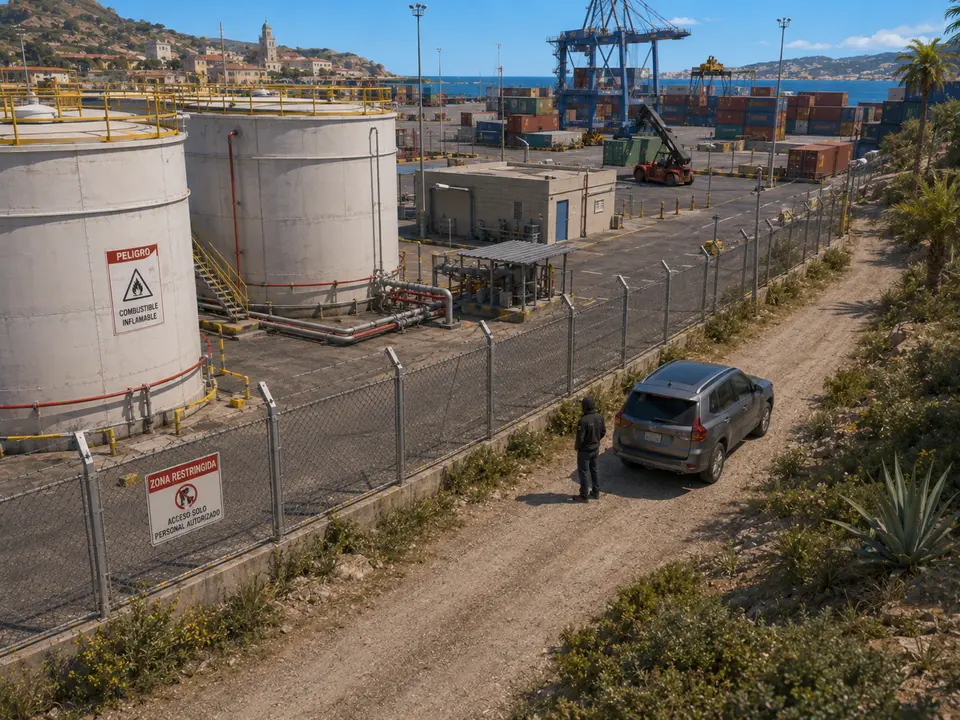
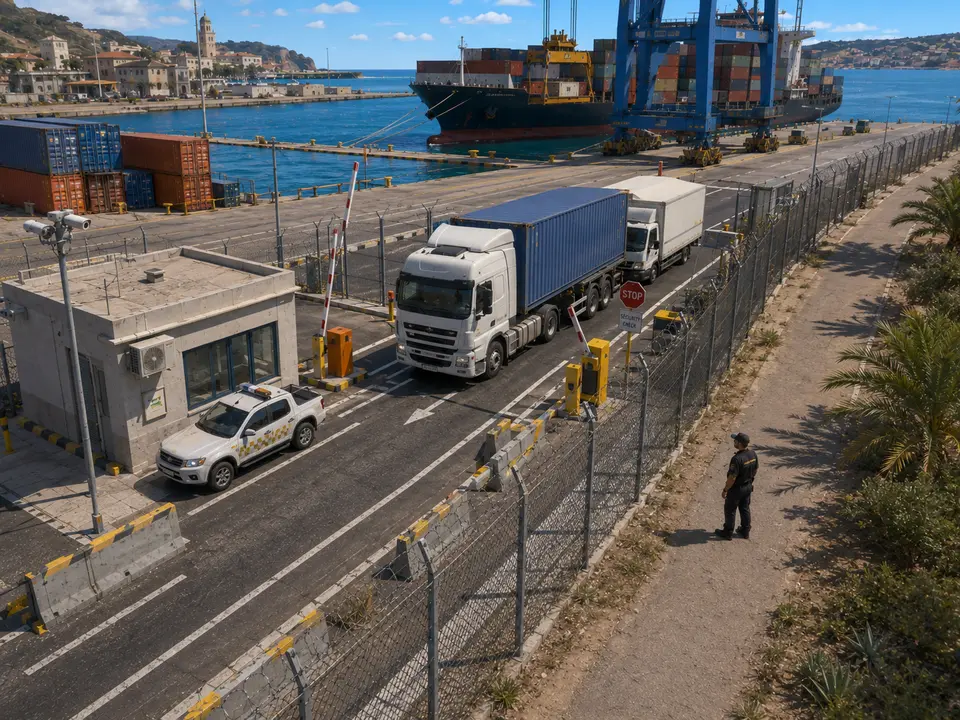
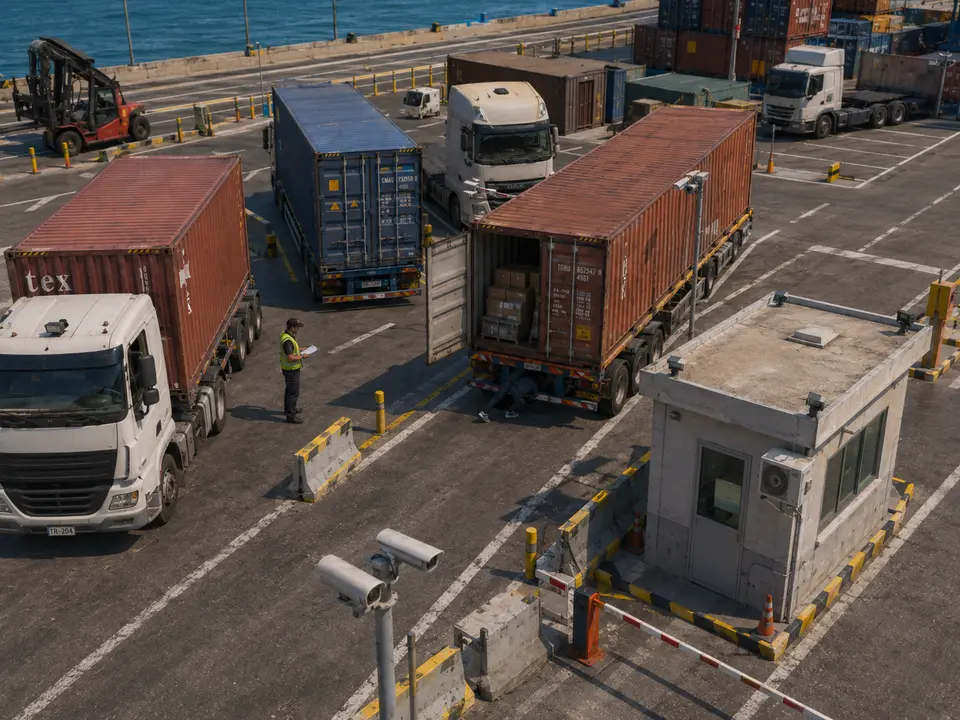
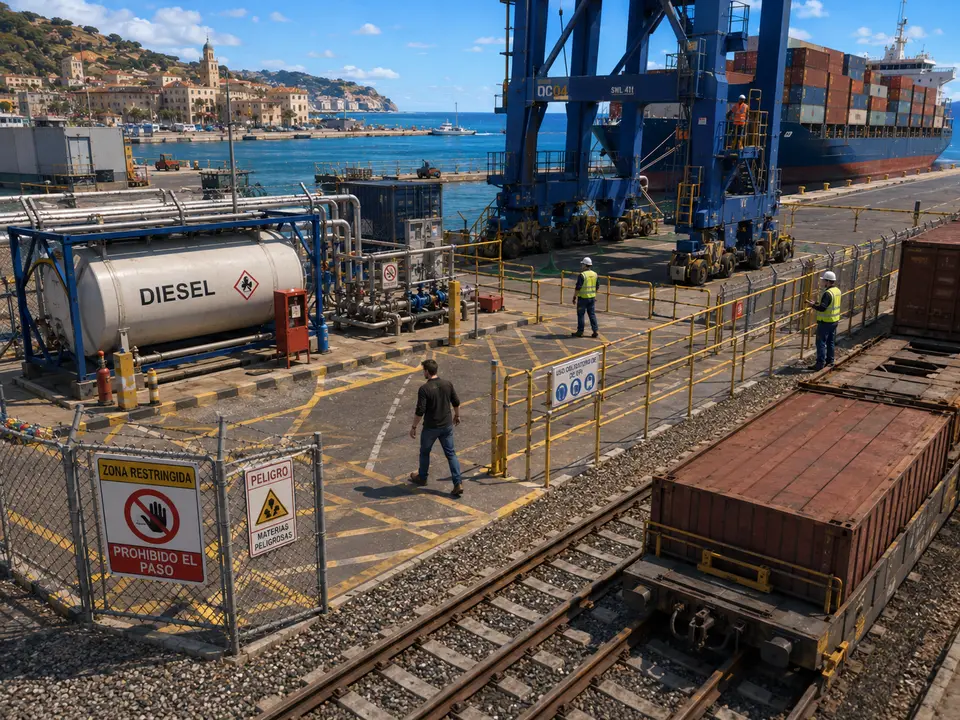
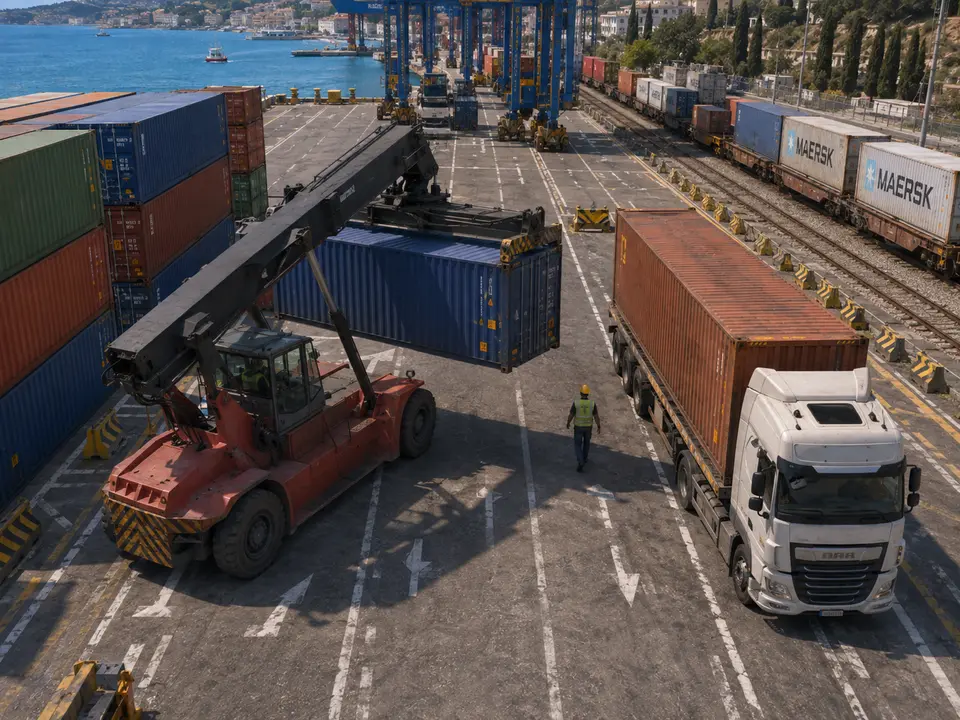
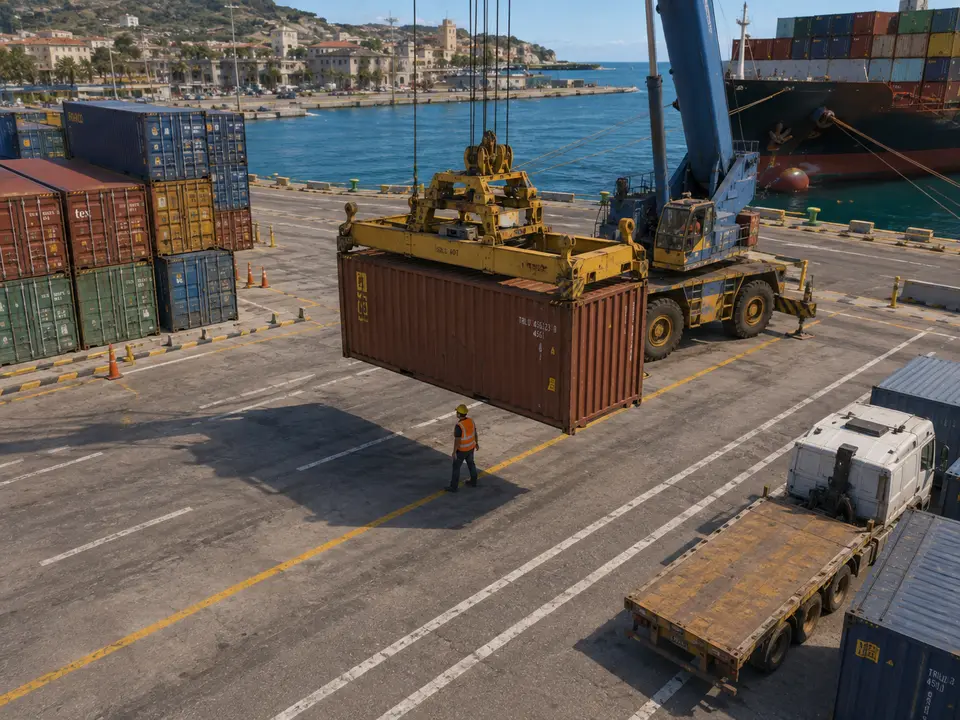
Thirteen raise an alert when something happens and one alerts nobody: it only measures. There are the people where they should not be — under the load, in the cable snapback zone, between the machine and the truck —, the load and the stack, the reefers, the gate and the perimeter, the water and the quay edge. They are not the fourteen things IRIS can do in a port; they are the ones that fit on a screen. Open any of them and you will see the image as it is, and then with what IRIS understands on top.
The real interface, step by step
We won't just tell you. We'll show you.
It is a summary of the real screen: it plays by itself, step by step, and shows only the path of one case. The actual tool has far more than fits in here.
- The alert fires
- It lands in the tray
- You open it
- You confirm or dismiss
Now think about your own terminal
Imagine knowing all of it while the shift is still on the quay.
The one who walked under the load at ten past four, when the crane driver could not see him. The one standing inside the snapback zone while the mooring line came tight. The container left leaning across the stack on Tuesday that nobody saw until Thursday. The reefer that had spent eleven hours with its cable on the ground. The pedestrian and the machine that met at the blind corner. The one who came over the fence on Sunday night. The boat that approached the quay before daybreak. And the half hour of idle berth that appears in no report.
All of that is happening in front of cameras the terminal already has up. And right now nobody knows: there are two people in the control room and far more cameras on the screens than there are eyes. IRIS watches them all at once and says it while it is happening, to whoever can stop the manoeuvre. Inside the terminal, without depending on the internet, and in front of cameras that already exist.
What gets asked on the terminal visit
The ten questions that come up before anything gets signed.
Answered in the first line, straight, with no promise that a system will prevent an accident on the quay. IRIS raises the alert while it is happening; stopping the move is still a person’s call.
Does it work with the cameras the terminal already has?
Yes, IRIS works with the cameras the terminal already has. It connects to the feed of the installed IP cameras and analyses it as it arrives: what changes is not the equipment, it is what gets understood from the picture. Now the uncomfortable part. A yard is long, and a camera put up years ago to watch a gate will not make out a person two hundred metres away. Salt and dust leave the lens hazy, and a dirty camera sees less every week. During the project we go through camera by camera and say plainly which ones reach, which ones only need moving or cleaning, and which ones fall short for what you want to see there. Adding a new camera is the exception, not the starting point.
Does it work if the line goes down?
Yes, it works if the line goes down, and at a terminal that is no small matter. There are two modes and only two. The first is local: the servers sit inside the terminal, the video comes in over your network, it is analysed right there and the system needs no internet to run. If the line drops, IRIS keeps seeing and keeps alerting, because the operation does not stop either. The second is our data centre, which is our cloud and not a third party’s: the video then leaves encrypted and under the terms set in the contract. You can start with one and move to the other, and in a port with several terminals both live side by side.
Is this for keeping an eye on the dockers?
No, this is not for keeping an eye on the dockers, and it needs saying in plain words. IRIS identifies nobody: it sees that a person has crossed the fence or is walking under a suspended load, not who that person is. It does not recognise faces, does not compare them against any database, is not a time clock and cannot be used to discipline one specific worker. What reaches the alert is the situation, where it is and since when. The works council gets shown exactly this, and the sooner the better: what the system looks at, what it does not, and who receives the alerts. A terminal where the council understands what the system is for works; one where it does not, does not.
Does IRIS stop the crane when somebody walks under the load?
No, IRIS does not stop the crane. It touches no machine, cuts no control and replaces neither the banksman nor the terminal’s safety plan. What it does is flag the situation while it is happening — with the camera, the time and the video — so that whoever is running the move can stop it. The decision stays with a person, and it has to: on a quay, the judgement of whoever is standing there is worth more than any automation. IRIS adds what that person is missing, which is a pair of eyes at the spot nobody is watching right now.
Does it see at night, in fog and in rain?
It sees at night, in fog and in rain depending on how much picture is left, and here we would rather be unpleasant than agreeable. At night it depends on how the quay is lit and on whether that camera is thermal: with light or with thermal you still see a person; with neither, you do not. In rain you lose sharpness but you keep working. In thick fog the picture is gone, and no vision system fixes that: anyone who tells you otherwise has not spent a foggy night on a quay. That is why the project states point by point which ones hold up at night and which do not, before signing and not after.
How many alerts are we going to get per shift?
You will get the alerts your rule asks for, and tuning that rule is the work of the first few weeks. A system that fires a hundred alerts a shift gets switched off in three days; we know that. That is why a rule is never a single condition: it combines what is seen, where it is seen and how long it has been there. «Somebody standing inside the mooring snapback zone, during the operation, for more than a few seconds» is not the same as «somebody standing». You bound the zone on the image, the hours, the duration and who it reaches. A week of alerts is reviewed with your quay supervisors and adjusted. An alert nobody attends to is a badly configured alert, and that gets corrected.
Does this count towards the port security plan?
This counts towards the port security plan as one more tool, not as the plan. What it brings is evidence: every detection is kept with the camera, the time and the video sequence, so a fence crossing or a barrier with two trucks and a single opening stops being somebody’s recollection and becomes a record that can be consulted and audited. And it serves equally to back up whoever acted and to contradict them. Now what we will not dress up: the plan is approved by the authority, and it is signed by your organisation. We supply the tool and the documentation on how it processes data, not the stamp.
Does it replace the fence, the perimeter sensors or the guards?
No, IRIS does not replace the fence, the perimeter sensors or the guards. The fence is still needed: a fence stops somebody, a camera stops nobody. The perimeter sensors stay where they are, and IRIS works alongside them: where a sensor says something touched the fence, IRIS says what can be seen there and shows the picture, which is what you need in order to decide whether to send anybody. With the guards it is the same as in any control room: they are not replaced, what they look at changes. Today they face far more cameras than eyes. With IRIS they stop watching everything and watch what matters, when it matters.
Is it for a single terminal or for the whole port?
It is for a single terminal and it takes on another meaning across the whole port. At one terminal, the value is the alert: somebody learns of the situation while it is happening and gets there in time to stop it. In a port with several terminals something appears that one alone does not have, which is comparison against the same yardstick: the same rule, written the same, applied everywhere. Then you can see which quay racks up the most walks under a load, which has fixed it after a toolbox talk and which one is worth a visit. Today that is decided on the gut feeling of whoever walks the most quays. With the figures in front of you it is decided better, and it can be explained. Starting with one terminal, seeing what comes out and deciding afterwards is the normal thing.
What does it cost?
It costs according to how many cameras are analysed, what each one is asked for, where the video is processed and whether the hardware is yours or ours. We do not publish a price list because it would not be honest: a terminal with twelve cameras on the gate and the quay is not the same project as a port with several concessions. What you can do is start small: a couple of points at one terminal, the two or three rules that really matter there, and look at the alerts with your quay supervisors before deciding anything. Tell us how many cameras you have and what you want to detect on each, and we will give you a figure. The number is +34 93 566 70 22.
See it somewhere else
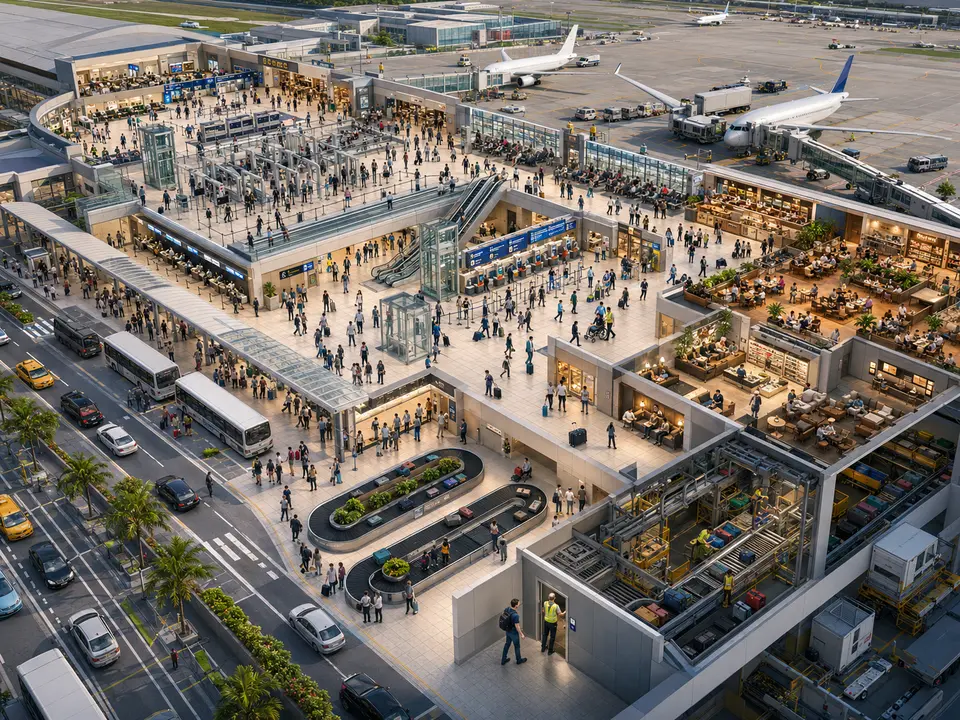
What does an airport see before the queue forms?
14 cases: 7 raise an alert when something happens and 7 only measure. You see each image as it is, and then with what IRIS understands on top.
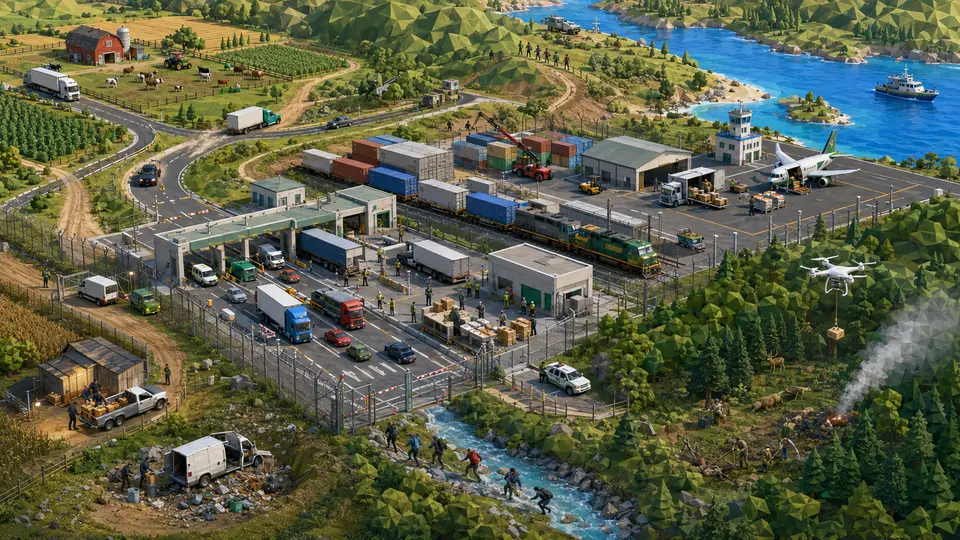
What can a camera see without pointing at anyone?
13 cases: 9 raise an alert when something happens and 4 only measure. You see each image as it is, and then with what IRIS understands on top.


And the best part
Counting is not watching over anyone.It is knowing how many went through, and when.
It is what lets you compare: two Tuesdays, two doors, two seasons. Because it is measured the same way every day, the comparison stands on its own.
Tell us your problem and we will say whether IRIS understands it, or not yet.
We reply the same working day.