CAM-440
Somebody has come over the perimeter fence
Mid-morning at the terminal’s outer fence. A person is up on the chain link, a few metres from the control booth. On the other side, on the patrol track, a guard is looking that way. Beyond the fence lies the yard: stacked containers, a truck on its way out and the ship berthed at the back. IRIS marks the exact point of the fence that was crossed, the time and the direction, and saves the video of the seconds before.

Turn on IRIS Vision
AI-generated image
What IRIS is
IRIS watches the dock while you get on with the job.
IRIS is an artificial intelligence that watches the cameras you already have at the port and understands what's happening at the fence, the perimeter, and the water's edge. When someone lingers where they shouldn't, gets close to the dock, or something you've asked it to watch happens, it alerts you — and whatever can be counted, like access points, it counts in numbers. All day long, with no one needing to watch a screen.
You tell it what you need to watch, and IRIS does it.
Here, for example, IRIS marks the exact stretch of fence someone climbed over, the time and which way they were heading, and saves the video from the seconds before. That's how you know exactly where along the perimeter fence to reinforce watch. With that you decide whether to send someone to that stretch or fix the fence, and next month you check if it's gone down.
Works with the cameras you already have. Nothing to replace.
A person replies, not a form.
- Your footage never leaves your premises.
- It doesn't identify people.
- Certifications →
What IRIS understands
What it recognises in this scene
- person on the fence
- perimeter fence
- access control booth
- patrol vehicle
- guard on the patrol track
What this camera measures
An alert says something is happening. The reading says how much.
- 11:42Time of the crossing
- 00:14Time since the alert
- 2People in shot
- 3Perimeter alerts in 24 h
- 2Vehicles on the inner road
The figures on this screen are an example from the illustration, not any client's measurement.
The rule
You decide once. IRIS applies it always.
If
a person climbs or crosses the perimeter fence line
Then
- alert the control post with the camera, the fence section and the exact time
- save the video from thirty seconds before the crossing
- keep tracking through the neighbouring cameras while it stays in view
The instruction that set it up«Tell me if somebody climbs or crosses the fence, and show me where and at what time.»
What changes
What changes for whoever answers for the terminal
The security manager has kilometres of fence and a handful of people to watch them. Without help, a crossing is discovered once there is nobody left to find. With the camera, the alert arrives while the person is still on the mesh, with the exact section and the time. And few alerts arrive: a moving branch, a reflection or an animal stop setting off the alarm. The record also stands as evidence for the facility’s security plan.
What people usually ask
Does IRIS know who came over the fence?
No. IRIS identifies nobody: it does not recognise faces and does not compare them with any list. What it detects is a situation — a person has crossed the fence line at this point and at this time — and it hands over the camera, the minute and the video. Who that is and what happens next is decided by the port’s security staff, with those images in front of them.
What about the seagulls, the cats and the branches?
That is where the real work is. A fence that runs for kilometres with vegetation alongside will fire alerts all day if all you look at is movement. IRIS tells the shape and path of a person from a swaying branch, an animal crossing or a reflection. And the port writes the rule: which sections are watched, at what hours, and what is worth interrupting somebody for.
Is it useful for the port facility security plan?
Yes, as a record. The ISPS Code requires control of the facility’s access points and perimeter, and a record of what happens. IRIS supplies the exact time, the point of the fence and the video of every crossing, always in the same format. It replaces neither the plan nor the people who apply it: it gives them the evidence that until now had to be reconstructed from memory.
Other cameras
- CAM-441 · Someone is swimming towards the quay
- CAM-442 · A car has sat eleven minutes where nobody ever stops
- CAM-443 · Two trucks, one single barrier opening
- CAM-444 · A container opened outside the working window
- CAM-445 · Someone has crawled under a trailer
- CAM-446 · He walks past the sign to the diesel tank with no helmet
A different case every time
No extra alarms here. Just what needs looking at.
Not a recorded video, not an explanatory drawing: a summary of the real screen, with a different case every time it starts. There is a lot more behind it.
- You ask
- IRIS searches
- It shows you
See it somewhere else
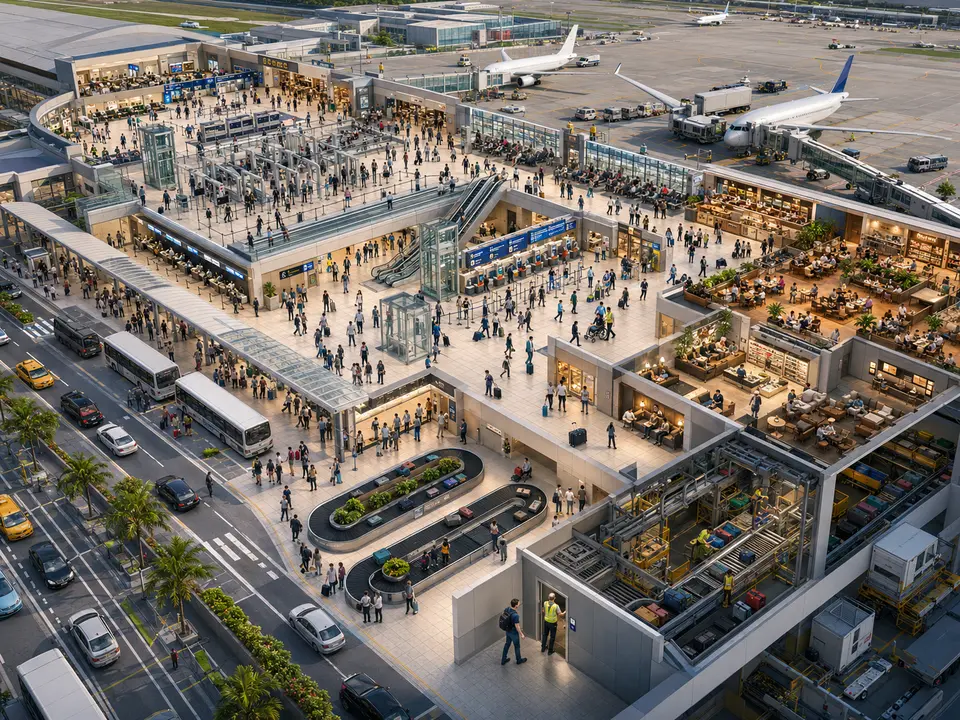
What does an airport see before the queue forms?
14 cases: 7 raise an alert when something happens and 7 only measure. You see each image as it is, and then with what IRIS understands on top.
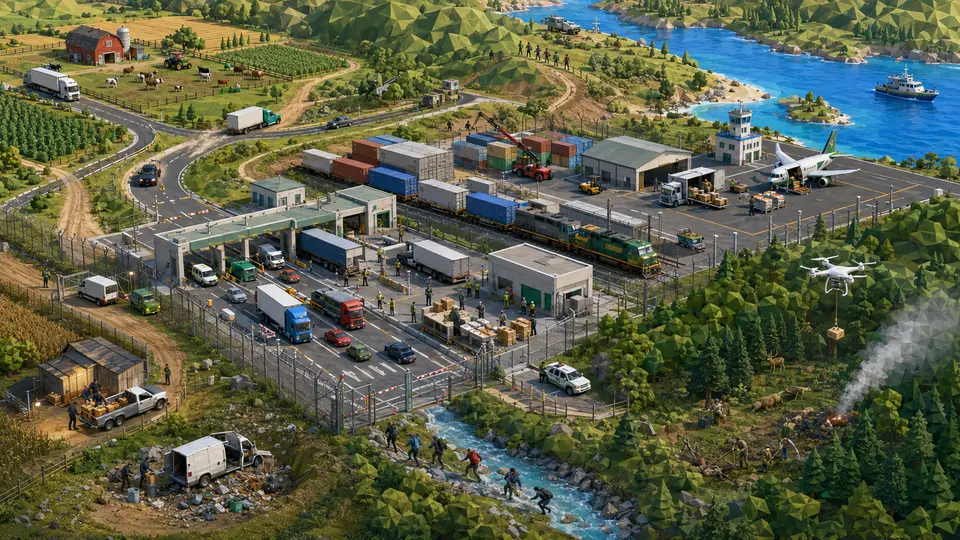
What can a camera see without pointing at anyone?
13 cases: 9 raise an alert when something happens and 4 only measure. You see each image as it is, and then with what IRIS understands on top.


And the best part
“The white van, Tuesday afternoon.”That is enough to find it.
You type it the way you would tell a colleague, and the matching minutes come back, each with its camera and its time. You do not need to remember the exact moment.
Tell us your problem and we will say whether IRIS understands it, or not yet.
We reply the same working day.