What does a shopping centre see beyond the visitor count?
Footfall tells you how many came. IRIS tells you what happened inside.
Which door they came in by, which floors they stayed on, which malls they avoided and what changed the day you launched the campaign. We show twelve cameras here: some measure, others raise alerts. A real centre has hundreds. The system is exactly the same. And everything counted is anonymous: IRIS counts bodies, it identifies nobody.

Without IRIS this is just people walking through a door.
AI-generated image
What IRIS is
IRIS keeps an eye on the mall for you.
IRIS is an artificial intelligence that looks at the cameras you already have and understands what's happening in the aisles, queues and stores. When a queue grows long, an area fills up, or something you want to track happens, it alerts you; and whatever can be counted, it counts in numbers. All day long, without anyone having to stare at a screen.
You tell it what you need to watch, and IRIS does it.
Works with the cameras you already have. Nothing to replace.
A person replies, not a form.
- Your footage never leaves your premises.
- It doesn't identify people.
- Certifications →
Counting is not understanding
Every month a report arrives with the visitor count. It goes up or down, and nobody can explain why. A mall on the first floor has been half empty for six months, and you find out the day the tenant there asks for a rent cut. The campaign cost money, and the only proof it worked is that more people came in that Saturday. Everyone knows about the half-past-one queue in the food court, and it is measured nowhere.
IRIS reads the cameras the centre already has. It counts which door people come in by, which floors they pass through, which malls fill up and which go cold, how many come up from the car park and how long the wait is at each counter. And all of it is anonymous: it counts bodies and measures routes. It does not recognise faces, it identifies nobody, and it does not follow a person around the centre. In a business that lives off visitor data, that line is worth having in writing.
And there are two ways to ask for things, because they are two different things. What you watch for is described in words: one sentence, and IRIS alerts you when it happens. What you measure is drawn: a line across the threshold, an area on the floor. A line does not fit in a sentence, you have to draw it — which is why Tuesday's number and Saturday's are measured the same way, and why they can be audited. Capacity goes further: people counting is type-approved by the Spanish Metrology Centre through NeuralPax, the body that says whether a weighbridge or a speed camera measures correctly. Mind the scope: what is approved is people counting, not the rest. And there is one line the camera does not cross: IRIS sees who stops in front of a shop window; whether that person went in and bought is something the tenant tells you from their till data.
The real scale
Twelve here. Hundreds in a real centre.
This demo shows twelve cases because twelve fit on a screen. A real centre has cameras at every entrance, in the car park and on its ramps, along the malls of every floor, in front of the shop windows, on the escalators, in the food court, in the atrium where events are staged, at the loading bays, all along the perimeter and at the doors of the toilets — where access and how often they are serviced are what is monitored, never the inside. Hundreds of them, and a few more with every refurbishment. Nobody can watch them all on a Saturday afternoon; that is exactly the problem IRIS solves: it analyses however many there are, all at once, and only interrupts when a rule is met. And where there is nothing to watch for, it measures: how many people come in through each door, how many go up to each floor, how long the wait is at each counter.
Examples
These twelve are just examples.
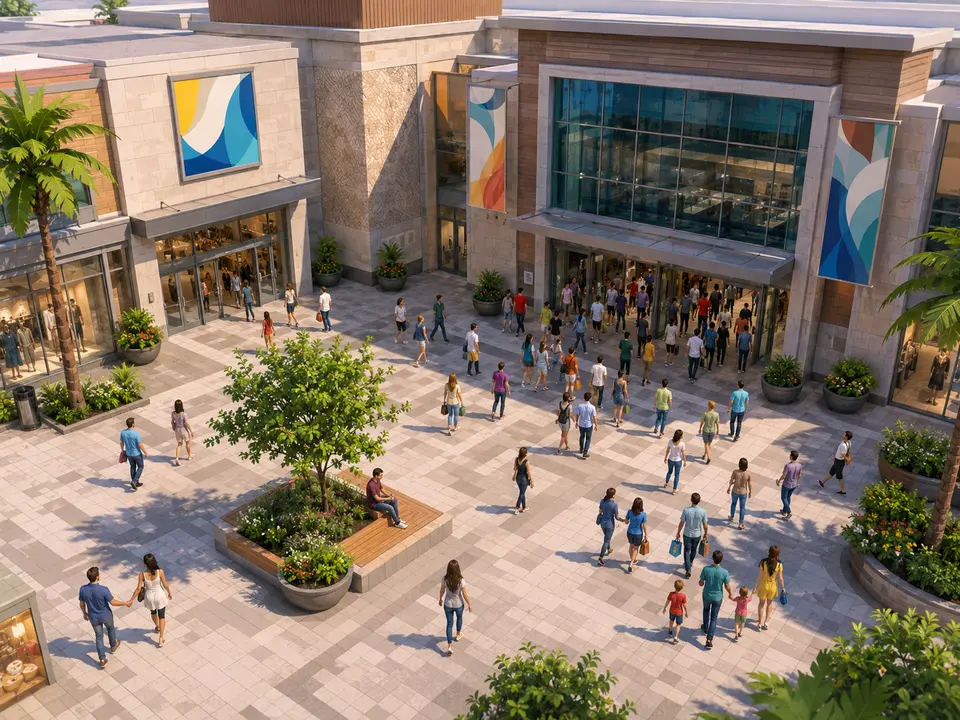
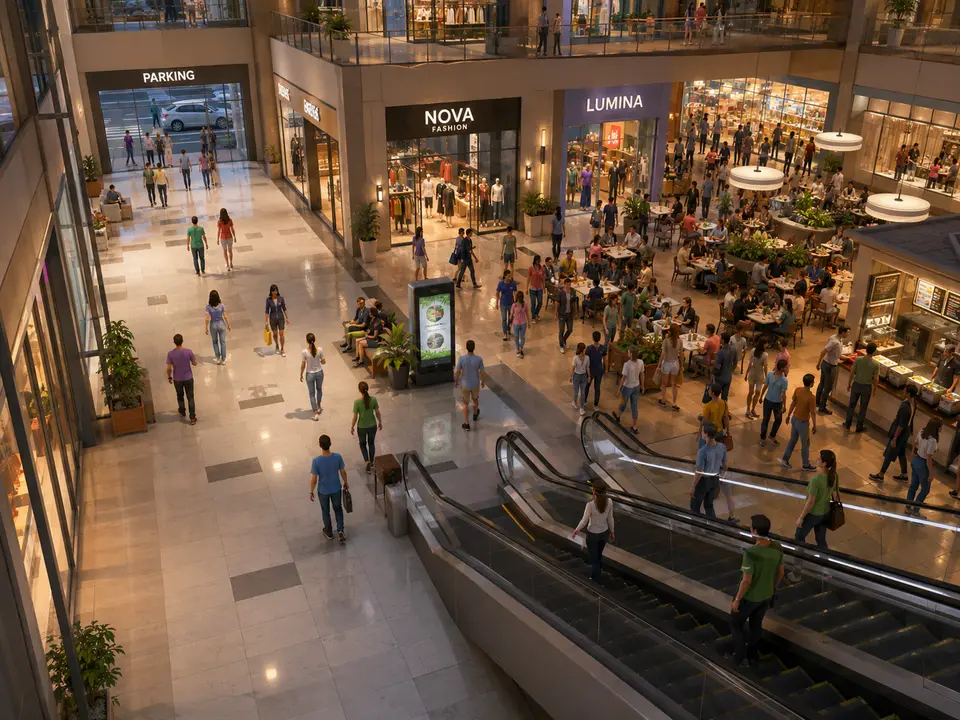
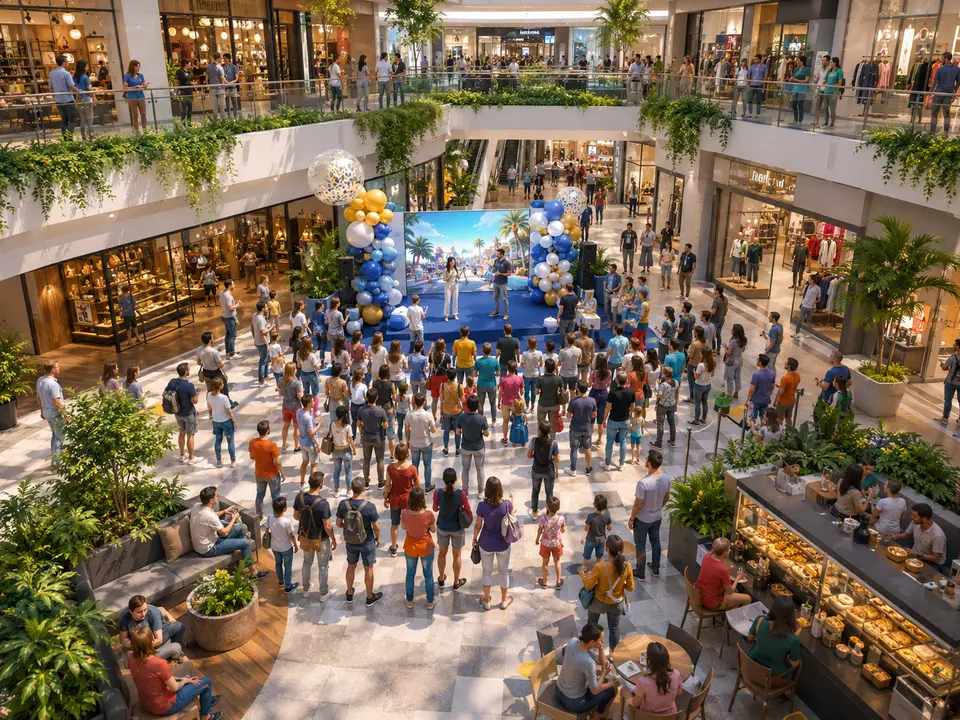
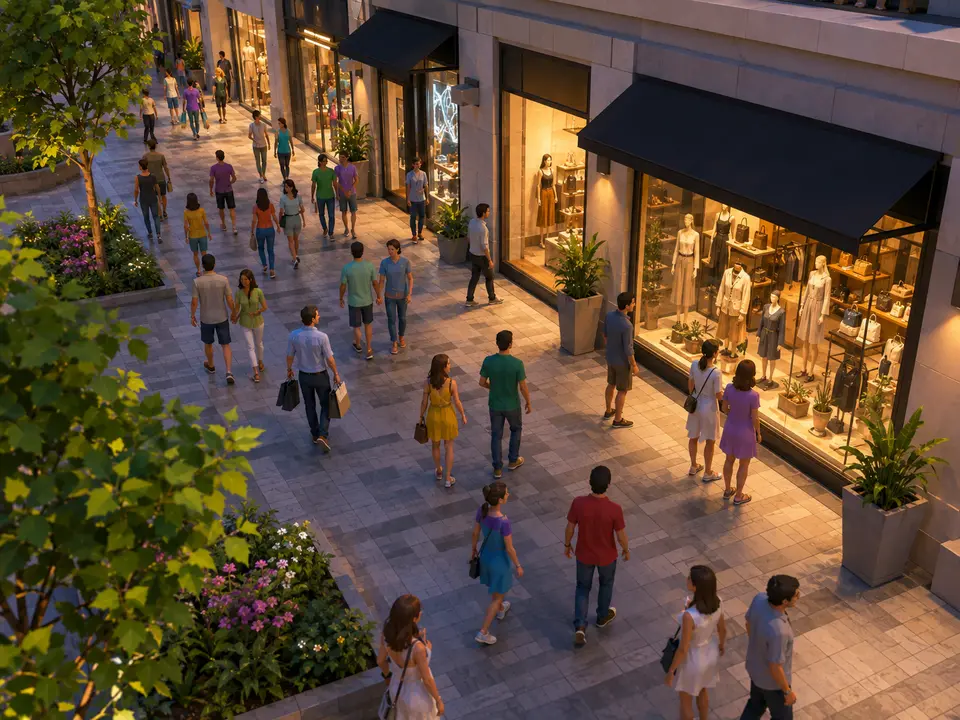
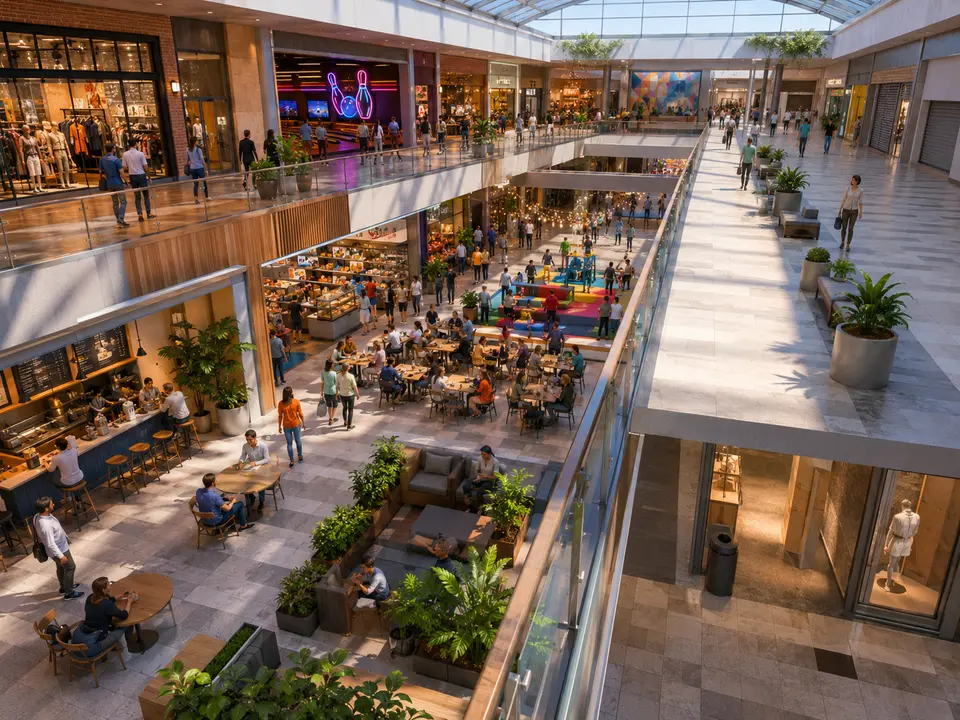
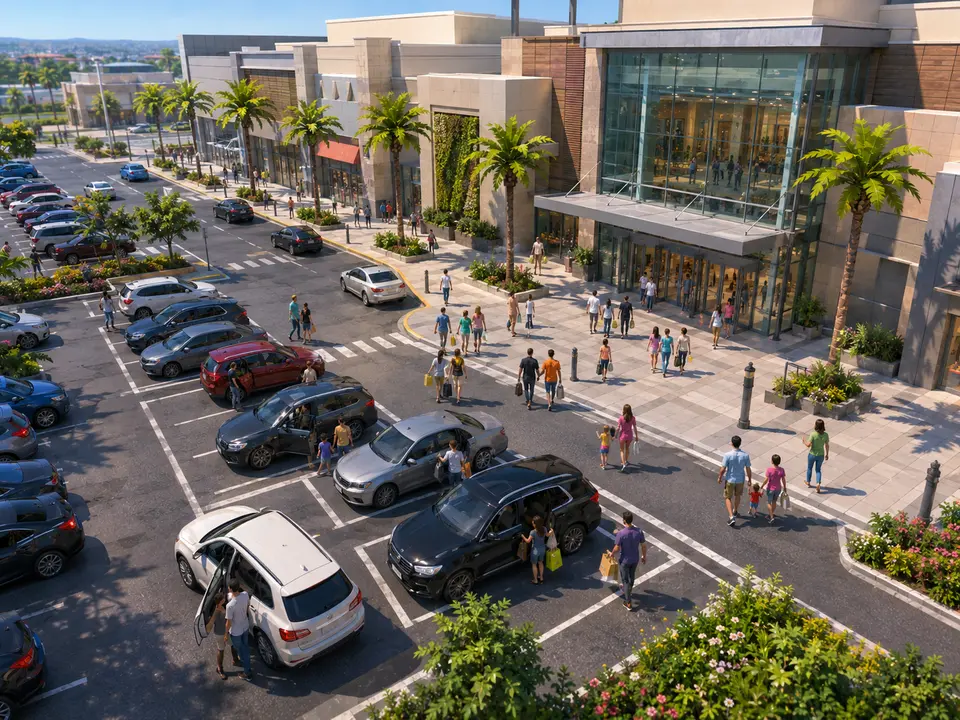
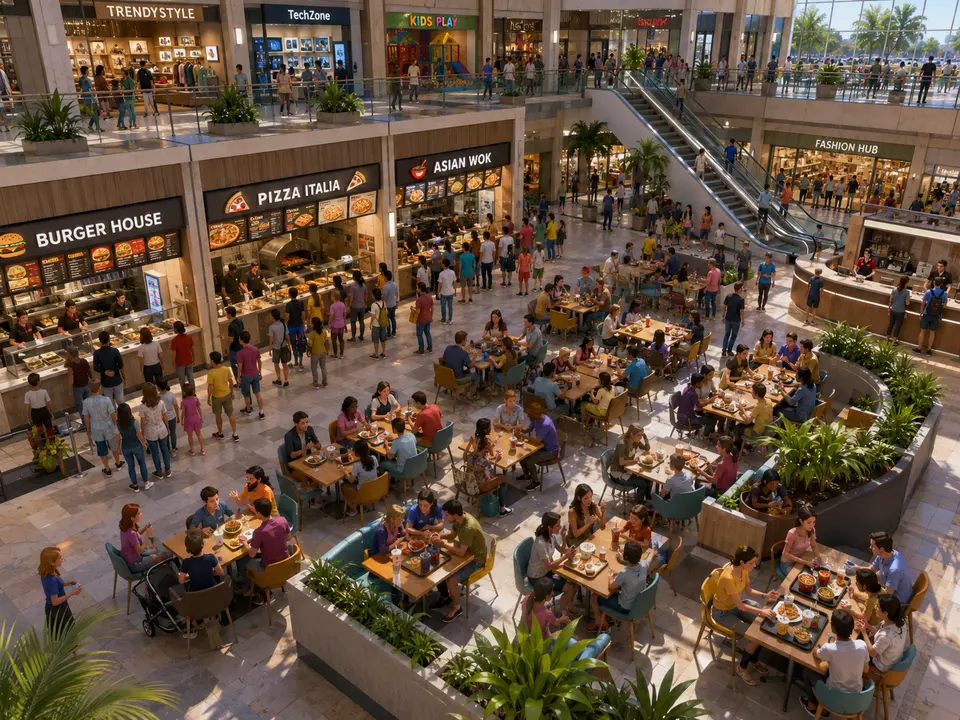
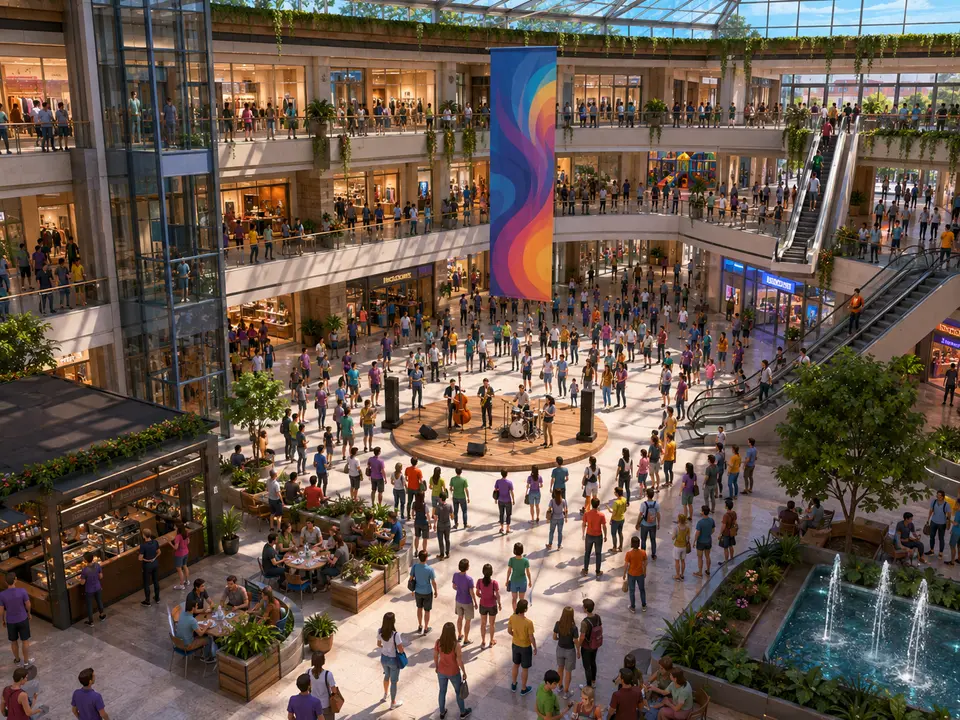
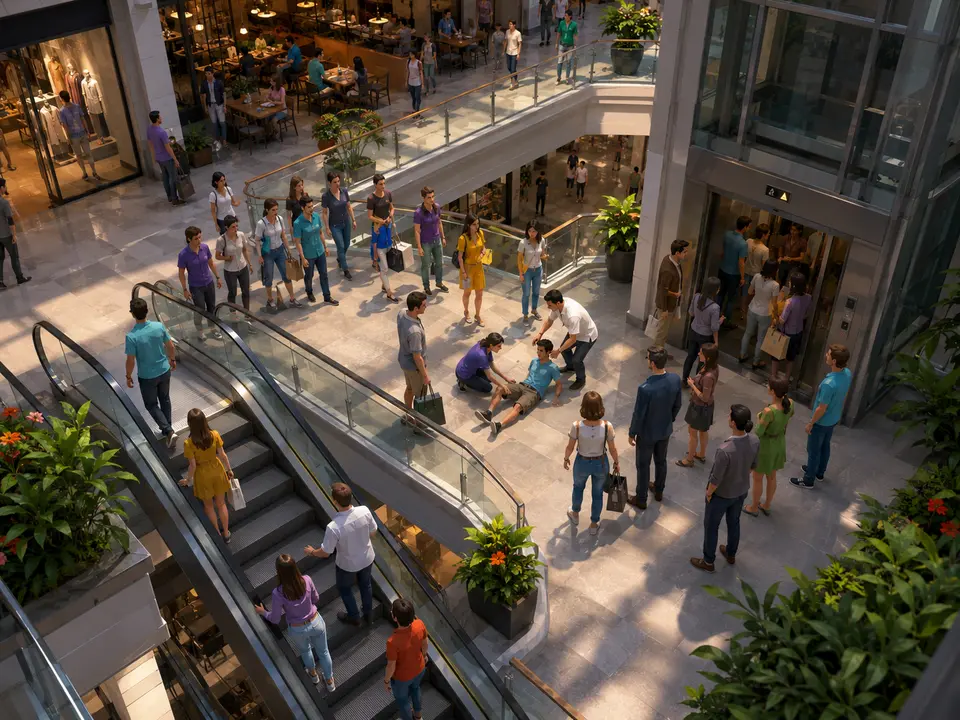
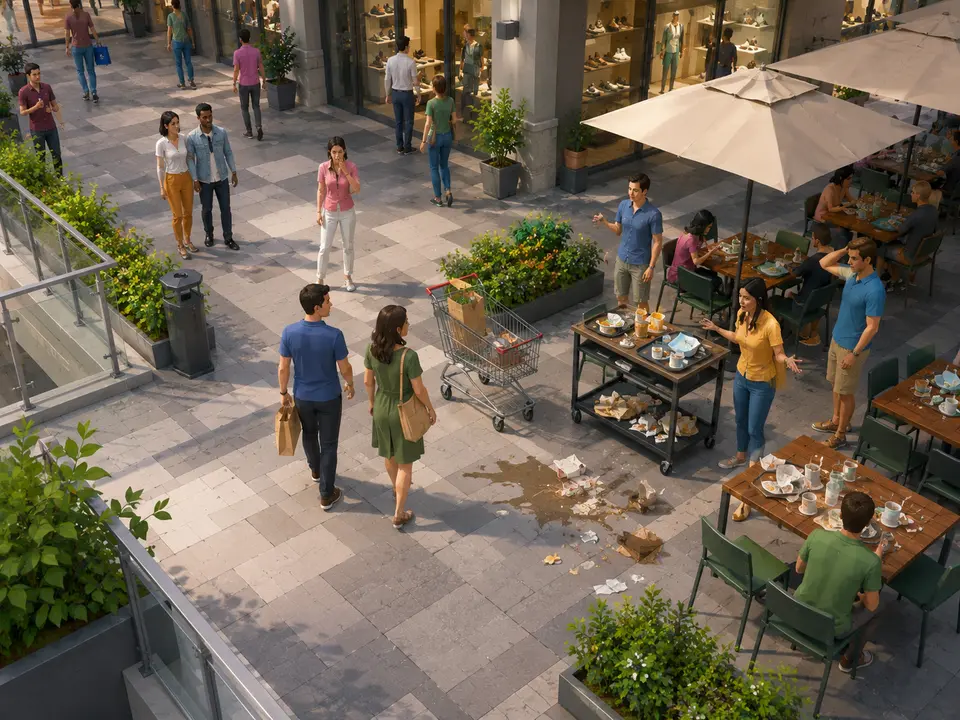
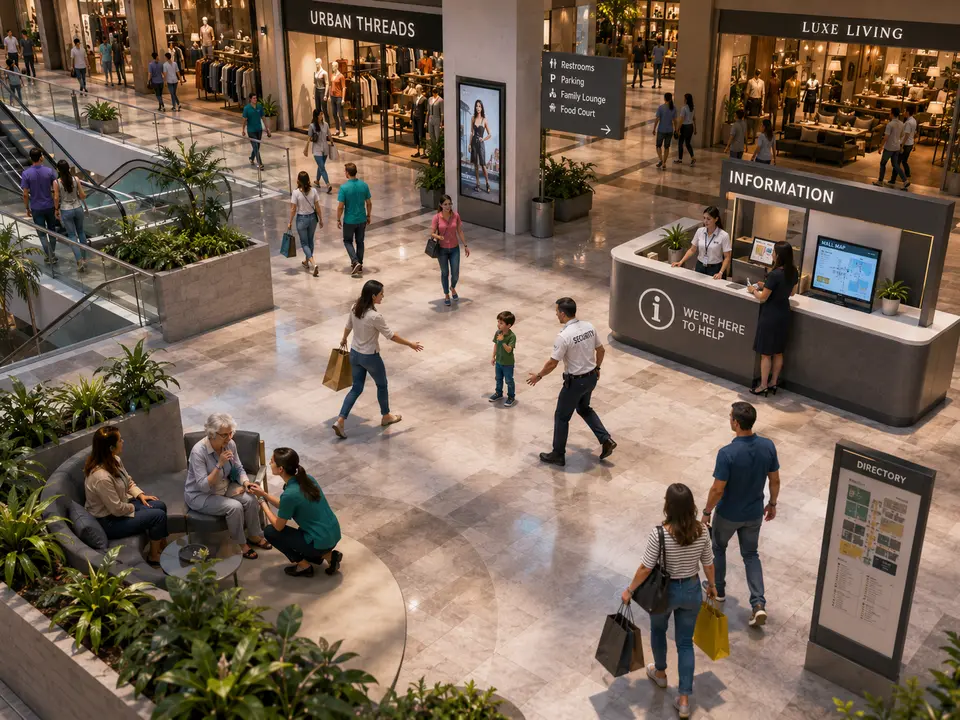
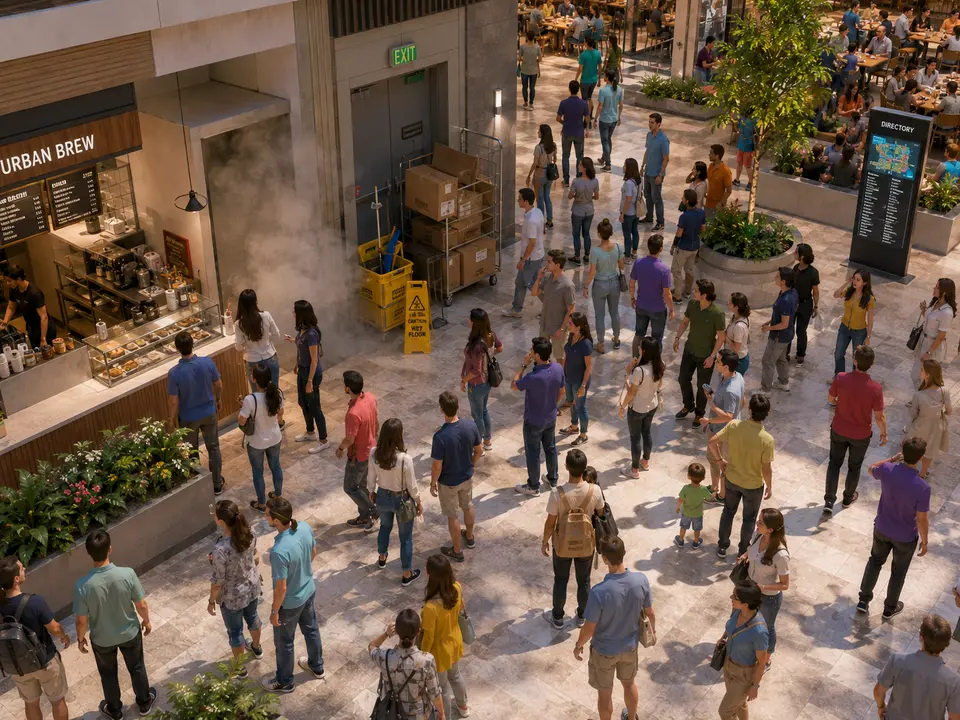
Each one shows a different kind of thing: an entrance, a mall, a shop window, a queue, an escalator, an exit. They are not the twelve things IRIS can do: they are the ones that fit on a screen. Open any of them and you will see the image as it is, and then with what IRIS understands on top.
See it in action
Every simulation
Search by number plate
Show me every time that plate crossed the barrier this week, with the time and the video.
- What you are looking for
- Where to look
- What matches
- Who looks
Now think about yours
Imagine knowing which door your visitors use and which mall they avoid.
The car park door brings in twice as many people as the street door, and the tenants paying the highest rent are on the other side. A mall on the first floor that almost nobody walks through any more since the unit at the end closed. A shop window people stop in front of, and another they walk straight past. The weekend campaign that filled the atrium and moved nobody out of it. The half-past-one queue in the food court, with one counter overwhelmed and the one beside it idle. The number of people in the atrium during an event, which you must be able to show the authorities. The foot of an escalator where somebody has just fallen. A spill on the floor, half an hour before the first complaint. An abandoned trolley in the middle of the walkway. A child on their own who has been wandering for a while. Smoke in a corridor and the exit blocked by boxes.
All of that is happening in front of cameras your centre already owns and already paid for. And nobody knows until someone complains, or until a tenant shows you their sales and asks why. IRIS watches them all at once: it counts what you drew and alerts you when what you wrote comes true, with the camera and the time. And it does it without identifying anyone: it counts bodies and measures routes, it does not recognise faces and it does not follow a person around the centre.
What the management committee asks
The ten questions that come up in the management meeting.
Answered in the first line, straight, and with no promises about sales we cannot prove. With the line drawn from the start: everything counted here is anonymous. IRIS counts bodies, it recognises nobody.
Does it work with the cameras the centre already has?
Yes, it works with the cameras the centre already has. IRIS connects to the feed of the installed IP cameras and analyses it as it arrives: what changes is not the equipment, it is what gets understood from the picture. During the project we go camera by camera to see whether the framing is enough for what you want to measure there — a camera hung to watch an entrance may not reach far enough to count in the corridor at the back — and we tell you plainly which ones fall short and which only need turning a few degrees. Adding a new camera is the exception, not the starting point.
Does IRIS identify visitors or recognise faces?
No, IRIS does not identify visitors and does not recognise faces. It compares them against no database, keeps nobody’s identity, does not follow a person from one shop to the next and is not crossed with any loyalty programme. A counted person is a one: nothing else of them is kept. And because this comes up in every meeting, we say it plainly about the lost child: IRIS can flag that a child is alone in an area, but it does not search for a child by their face and does not know who they are. What it does is narrow down cameras and minutes so a person can look, and it is that person who finds them.
Does the video leave the centre?
The video leaves the centre or stays inside depending on the mode you choose, and there are two. In the on-site mode it does not leave: the servers sit in your building, the video comes in over your network, it is analysed in there, and the system does not need internet to work. In the other one it is processed in our data centre, which is our cloud and not somebody else’s. In both, the links are encrypted and the terms are set in the contract. It is worth deciding early, because putting a server in the building is not the same as taking the analysis outside: it shapes the centre’s network.
How is this different from the counter we already have at the door?
The difference is that the counter at the door says how many people came, and this says what happened inside: which entrance they came through, which floors they stayed on, which corridors they avoided and what changed the day you launched the campaign. And there are two ways of asking for things, because they are two different things. What is watched is described by speaking: one sentence, and IRIS warns you when it happens. What is measured is drawn: a line across the threshold, a zone on the floor. A line does not fit in a sentence, you have to trace it, and that is why the number is worked out the same way every day, can be repeated and can be audited. On people counting you do not have to take our word for it: our system is certified by the Spanish Metrology Centre, an independent third party. To be precise: that certification covers people counting, not the whole product.
Can we hand these numbers to our retail tenants?
Yes, you can hand those numbers to your tenants, and it is one of the reasons the system gets installed: they are anonymous, aggregated figures, so they are shared without passing on anybody’s data. How many people walk past each unit, at what time, and which entrance they came from. What is not here is the sale: that sits in the tenant’s till and we do not go there. But putting the two halves together changes the diagnosis: if plenty of people walk past and almost nobody comes in, the problem is the shopfront or the sign. If nobody walks past, the problem is the corridor and not the shop. Today those two situations look the same in the report — it sold little — and they are two different problems with two different fixes.
How many alerts are we going to get in the control room?
You are going to get the alerts you decide on, because a rule is narrowed down: area, time band and duration. A system that fires two hundred times a day is switched off within a week, and rightly so: when everything alerts, nothing does. That is why a rule is not «tell me if someone is standing on the escalator», but «tell me if someone is standing at the foot of this escalator for more than a minute, between ten and half past ten». Change the area, the band and the minimum time, and the same detector goes from ringing a hundred times a day to ringing when it really matters. And it is tuned afterwards, with whatever comes out in the first two weeks in your centre, not in some centre in general.
Who decides what gets watched and what gets measured?
The centre decides, not IRIS. A rule is written as one sentence anyone can read and anyone can change; a measurement is drawn on the image, as a line or a zone. IRIS applies what you told it, always the same way and without getting tired. It brings no factory list of behaviours and does not decide on its own what is normal in your corridor: normal in a neighbourhood centre is not normal in a three-floor one with a food court, and the people who work there know it. If the opening hours change tomorrow, a unit closes or the seasonal campaign goes up in the atrium, the rule is rewritten in a few minutes and nothing has to be ordered.
What does IRIS not see on a busy Saturday afternoon?
On a busy Saturday afternoon IRIS stops telling one person from another when they cover each other up, and we would rather say so before anything is signed. It happens to every vision system, ours included, and anyone who says otherwise has not tried it with the centre full. What is not lost is exactly what is needed most at that moment: occupancy. Measuring how many people are in an area and how they spread across the floors does not require telling each person apart. What does degrade is counting one by one in a narrow, heavily loaded passage; there the count is moved to the entrance, where people go through in single file. And whatever happens outside the frame, behind a column or in an area with no camera, nobody sees: IRIS neither.
How long does it take to be up and running?
How long it takes depends on the size of the centre, and we are not going to give you a date we do not yet control. The work has three clear phases: connecting the cameras that already exist, drawing the zones on each image and writing the rules that matter, and tuning those rules against what actually happens in the centre. The first measurements and the first alerts show up early; the fine tuning takes longer, because a quiet day, a Saturday and a campaign day all have to go by. Specific dates go in the proposal, once we know how many cameras there are and what you want to measure on each one.
How much does it cost to put IRIS on a shopping centre’s cameras?
The cost is worked out from how many cameras are analysed, what is measured or detected on each one, which deployment mode you choose and whether the hardware is yours or ours. There is no single price list that fits everyone, because measuring two entrances and one floor does not cost the same as covering three floors, the food court and the car park ramps. And you can start small: the entrances and one floor, look at the numbers with your team, and decide afterwards. Tell us how many cameras you have and what you want to measure, and we will give you a figure. The number is +34 93 566 70 22.
See it somewhere else
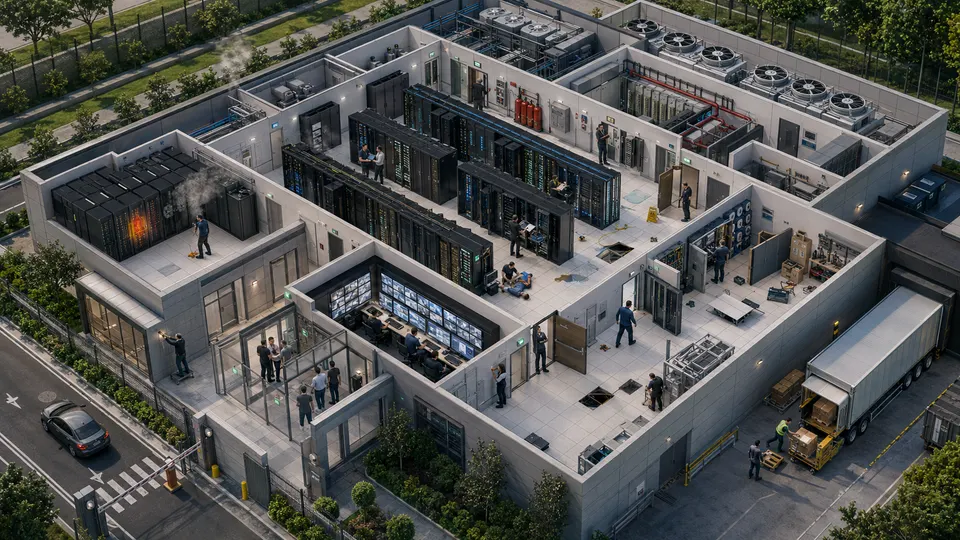
What if the outage does not start with an attack?
13 cases, and in every one of them IRIS raises an alert when something happens. You see each image as it is, and then with what it understands on top.
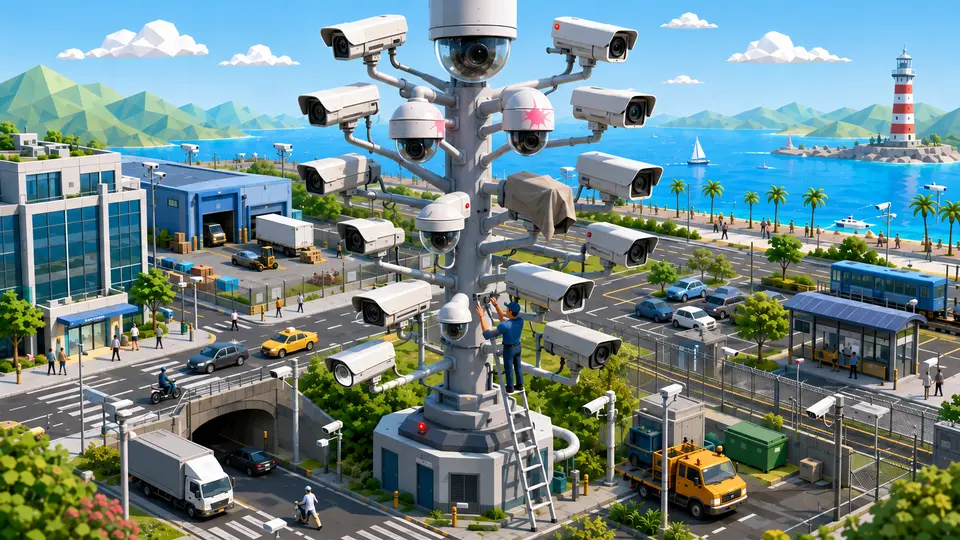
And who watches the cameras?
34 cases, and in every one of them IRIS raises an alert when something happens. You see each image as it is, and then with what it understands on top.


And the best part
Video tells you what happened.An alert reaches you while it is happening.
Reviewing the recording helps you explain. Hearing about it at the time helps you get there. Two different things, and until now you only had the first.
Tell us your problem and we will say whether IRIS understands it, or not yet.
We reply the same working day.