Who watches an entire motorway?
A motorway has kilometres of cameras. IRIS watches them all at once.
We show ten here: eight that raise an alert when something happens and two that alert nobody, they just measure. A real motorway has cameras spread over dozens of kilometres and a control room with a handful of people per shift. The system is exactly the same.

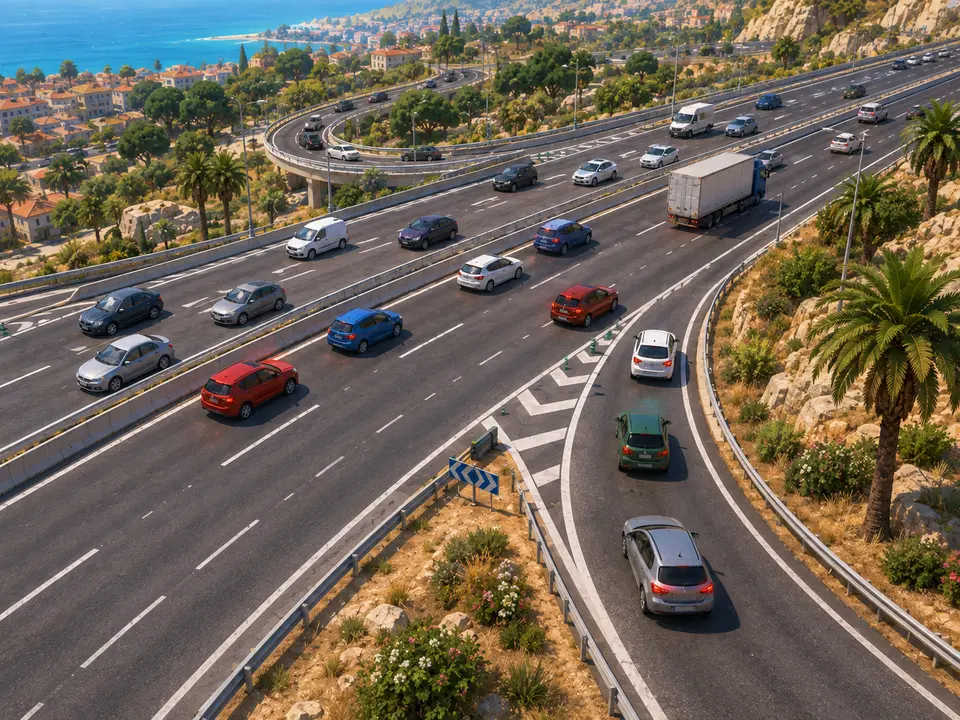
Without IRIS this is just a nice stretch of road.
AI-generated image
What IRIS is
IRIS keeps an eye on the road for you.
IRIS looks at the cameras you already have on the highway and at the toll booths and understands what's happening: a crash, a broken-down car, a pedestrian where they shouldn't be or long queues at the booths. When something important happens, it alerts you; and whatever can be counted, it counts. All day long, with no one watching a screen.
You tell it what you need to watch, and IRIS does it.
Works with the cameras you already have. Nothing to replace.
A person replies, not a form.
- Your footage never leaves your premises.
- It doesn't identify people.
- Certifications →
Kilometres of road, understood
A crash anywhere along the road goes unseen until a driver calls 112. By then there is already a queue behind it, and behind the queue more cars keep arriving at motorway speed. And the moment somebody steps out of the car to look at a tyre, the problem stops being a traffic jam.
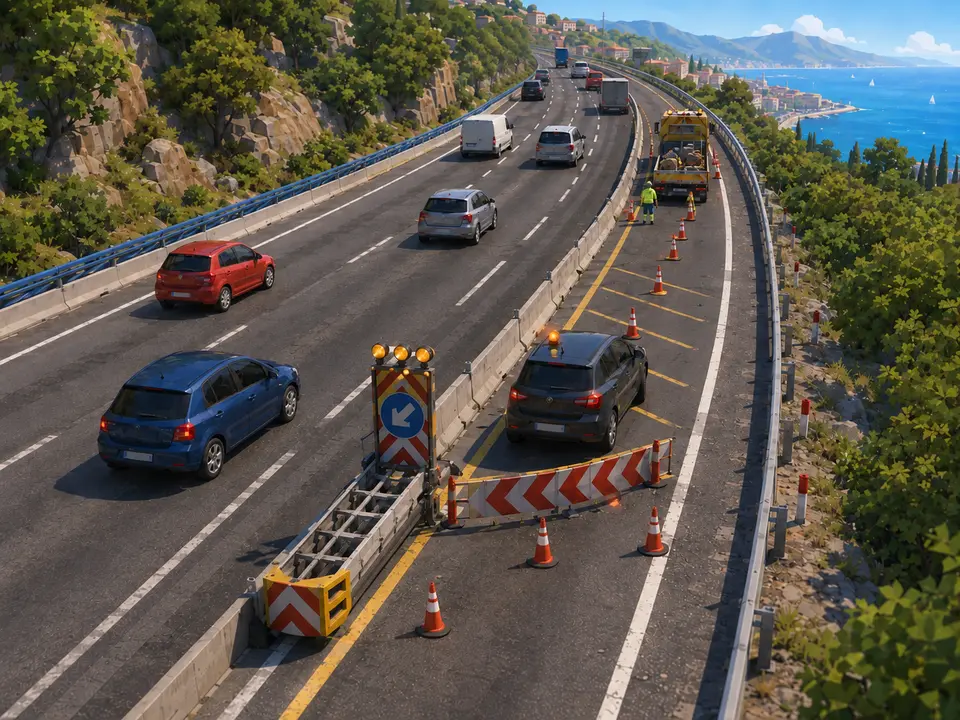
IRIS watches for the control room. It analyses every camera along the road at once and only interrupts when a rule your own team set is met: a vehicle stopped where it should not be, a person walking on the carriageway, something dropped in a lane, material fallen from a slope, a lane closure that is badly signed.
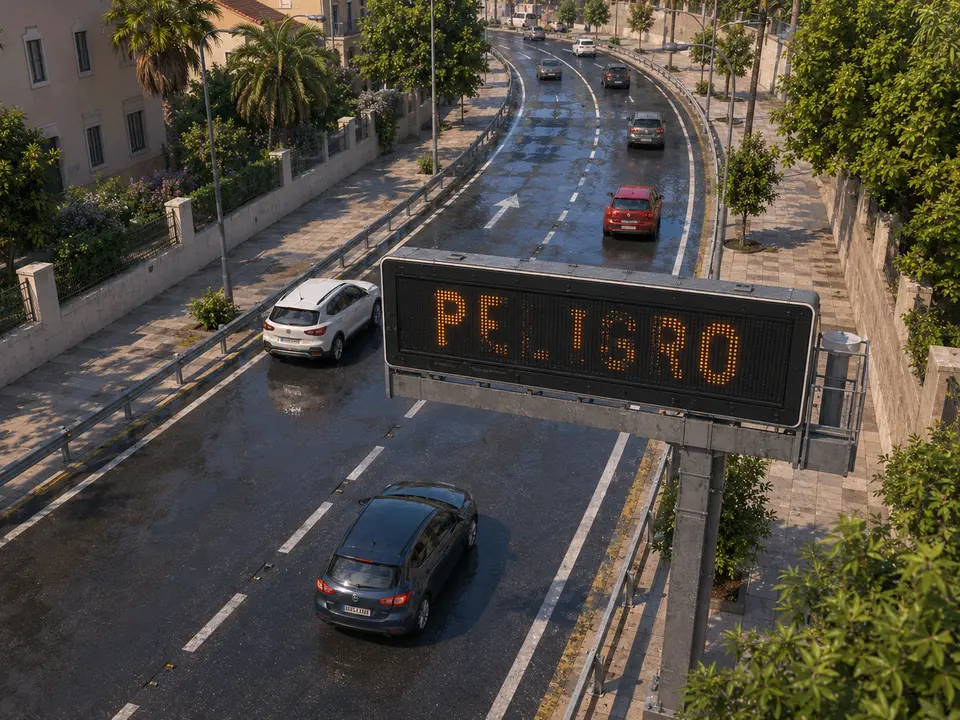
And there is one case nobody thinks of until you point it out: today nobody checks that a variable message sign is showing what it was told to show. The control centre sends the order, the sign replies «received», and that is where the checking ends. Whether the message can really be read — and read in full — is only known when somebody drives past it. A sign with dead LEDs keeps reporting «fine» while it displays an unreadable word. IRIS reads what is on the sign, not what the acknowledgement says.
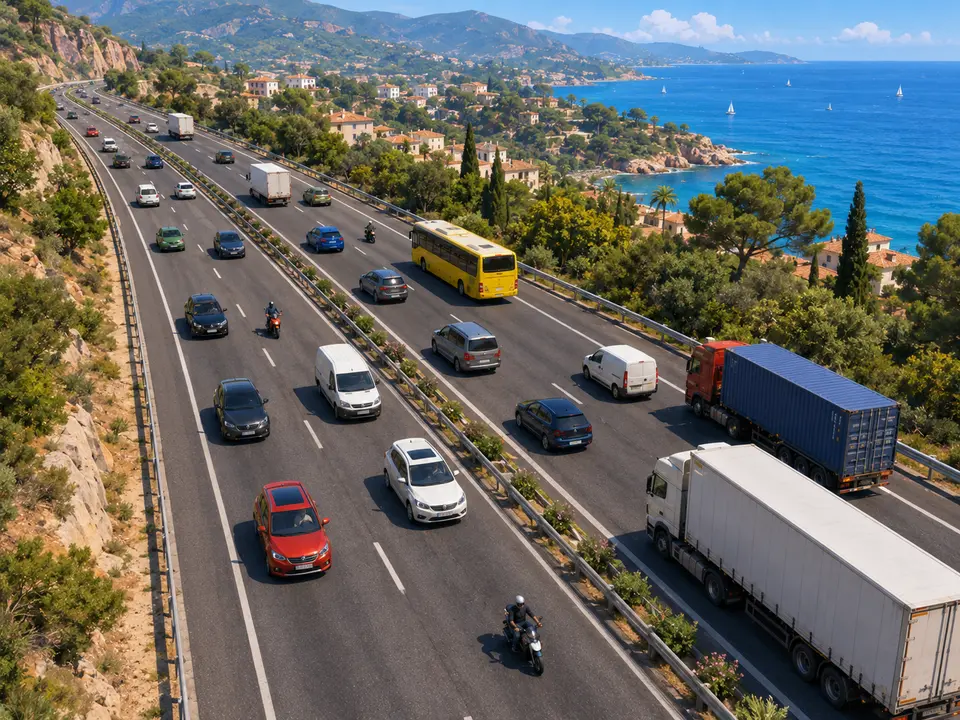
And where there is nothing to alert about, IRIS measures. How many vehicles go past and of what type, hour by hour, every day of the year. How much the junction that has just opened is really used. That is what tells you where the surface needs work and where another lane is needed, with data from the whole road instead of a traffic count taken over a few days.
The real scale
Ten cameras here. Kilometres of road out there.
This demo shows ten cameras because ten fit on a screen. A road does not fit: it is dozens of kilometres with cameras at junctions, tunnels, viaducts, service areas, toll plazas and open stretches, and a control room with a handful of people per shift. Nobody can watch all of that, and it is nobody's fault: there are not enough eyes. That is exactly the problem IRIS solves: it analyses however many cameras there are, all at once, and only interrupts when a rule is met. And where there is nothing to watch for, it counts: what goes through each lane, at what time and of what type.
Examples
These ten are just examples.
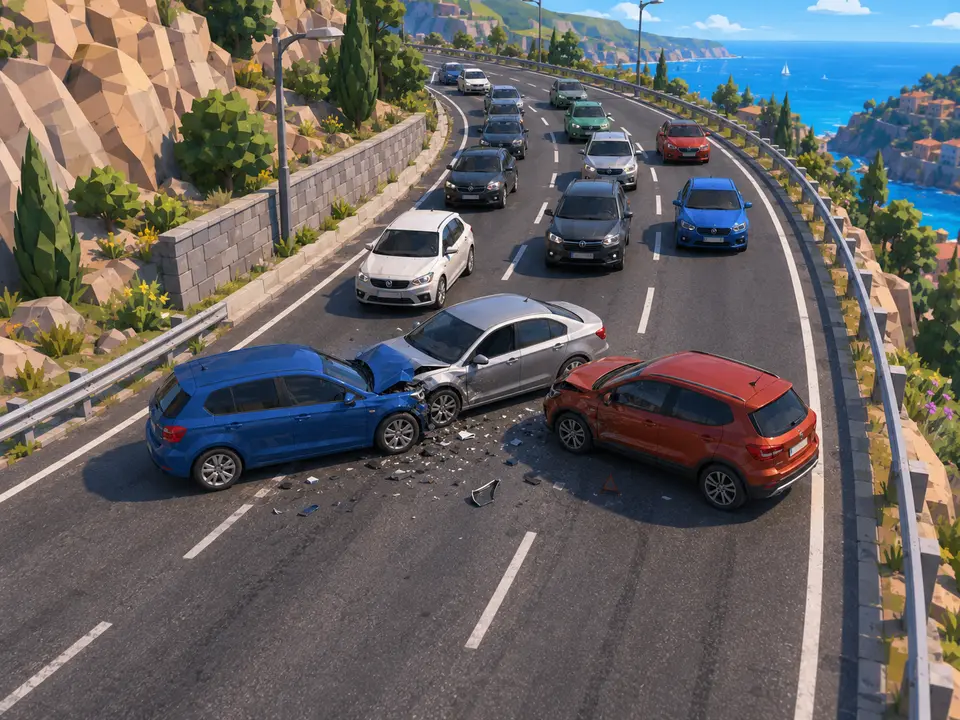
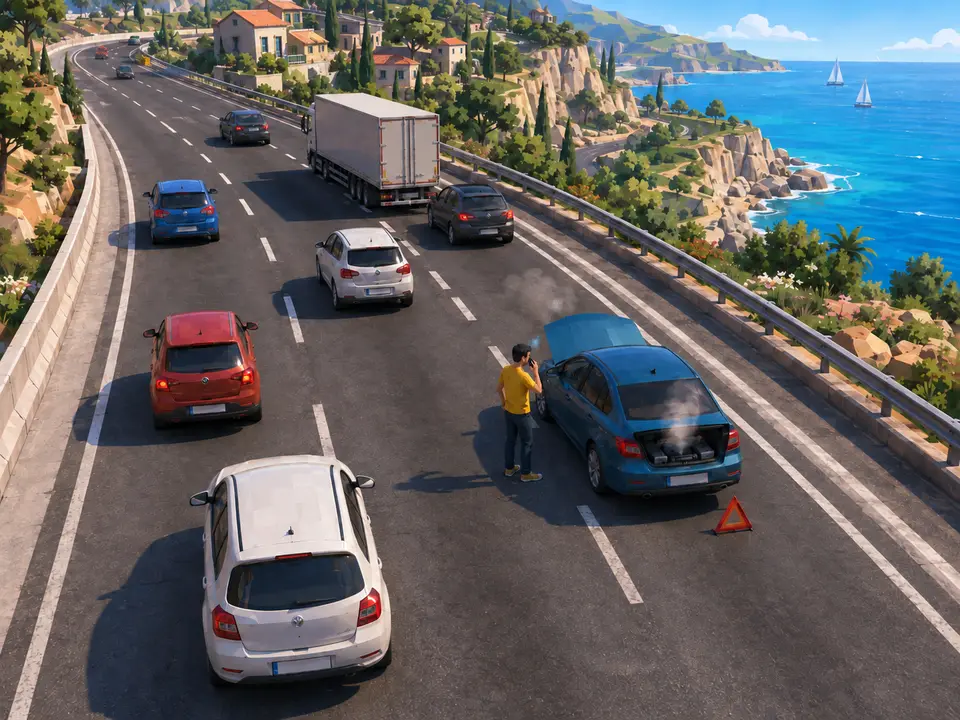
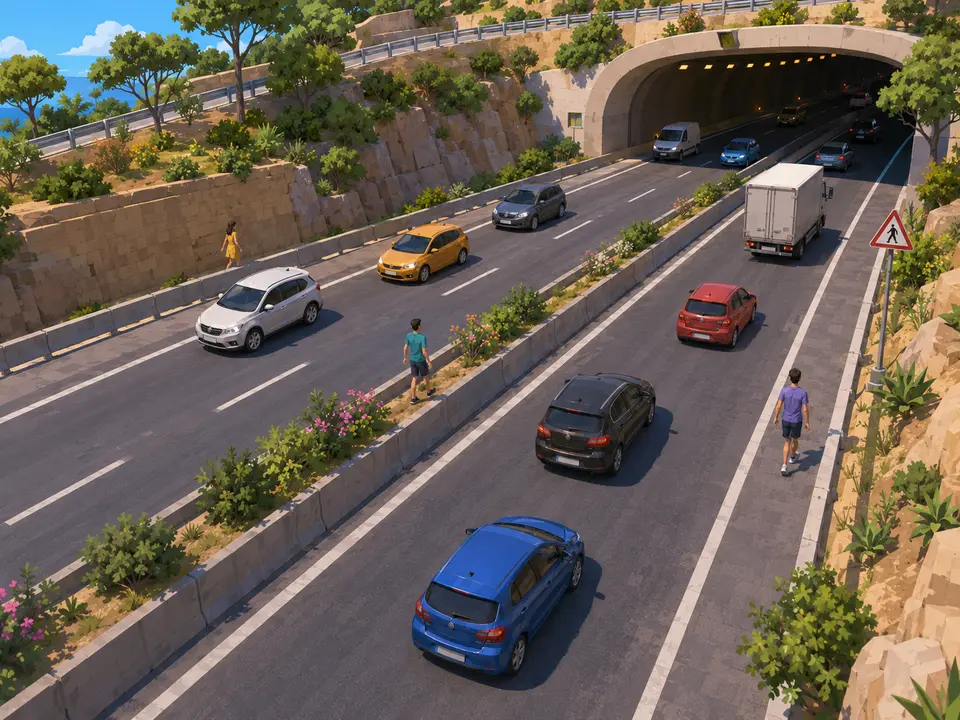
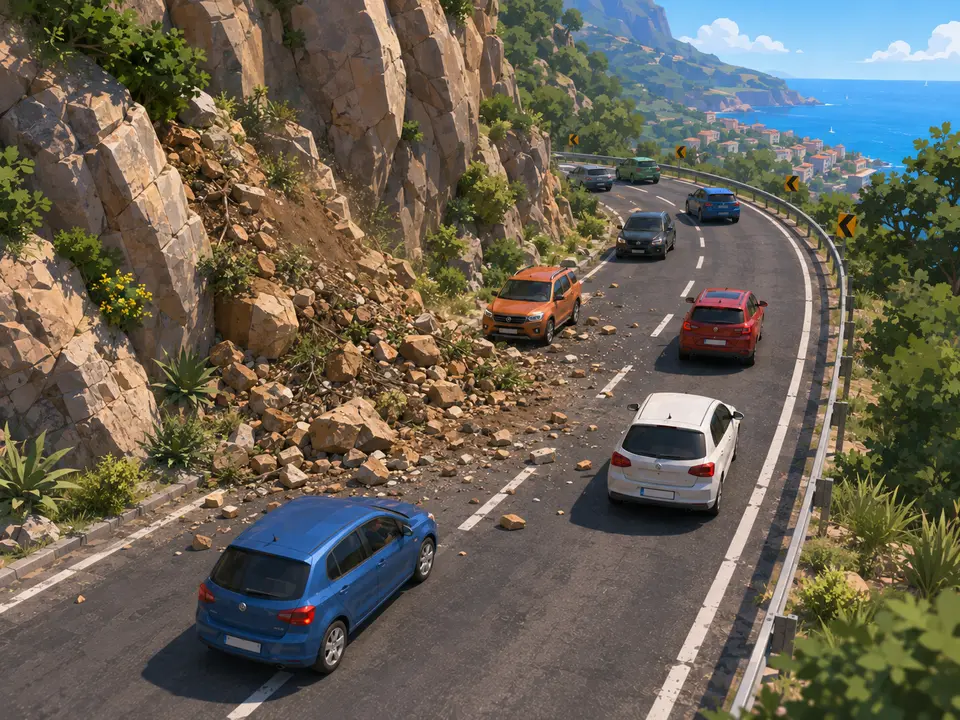
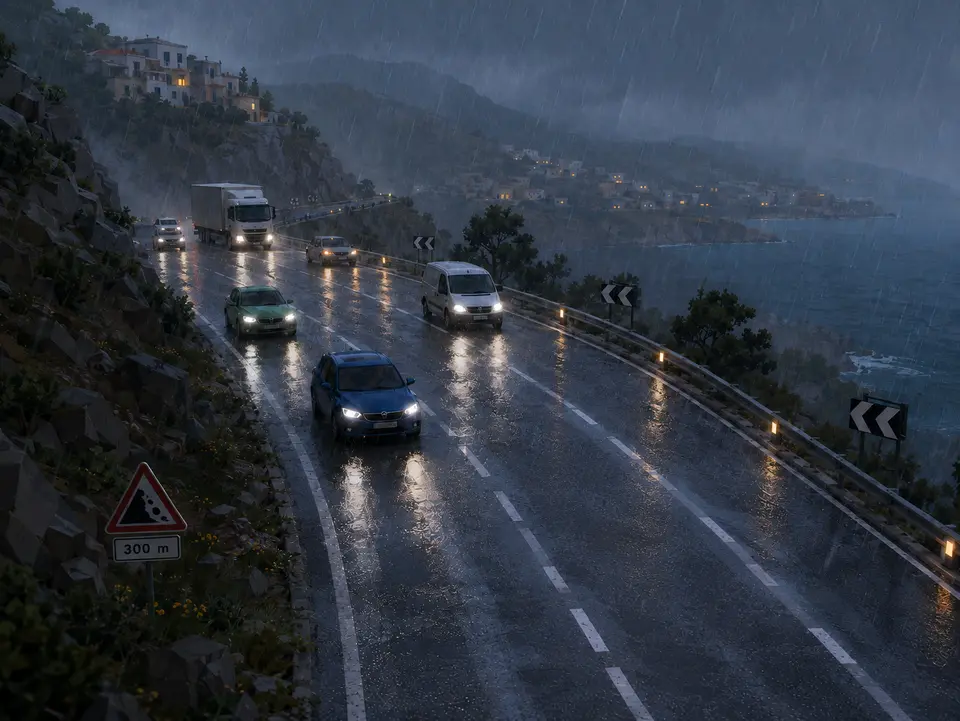
Eight raise an alert when something happens and two alert nobody: they only measure. They are not the ten things IRIS can do on a road; they are the ones that fit on a screen. Open any of them and you will see the image as it is, and then with what IRIS understands on top.

See it in action
Demo · IRIS at work
We won't just tell you. We'll show you.
It is a summary of the real screen: it plays by itself, step by step, and shows only the path of one case. The actual tool has far more than fits in here.
- The alert fires
- It lands in the tray
- You open it
- You confirm or dismiss
Now think about your own road
Imagine finding out about all of it while it is happening.
A car stopped on the hard shoulder for the last twenty minutes. A loose wheel in the outside lane. Somebody walking along the hard shoulder at night. A slope that has shed stones and the patrol has not seen yet. A lane closure that has had a cone knocked over for half an hour. A stretch where it is raining so hard you can barely see. How many lorries go past in the inside lane at four in the morning.
All of that is happening right now, in front of cameras your road already owns and already paid for. And right now nobody knows, because there is a handful of people in the control room and kilometres of road out there. IRIS watches all those cameras at once and tells you when it happens, not when the first driver phones in.
What the technical committee asks
The ten questions that come up before signing.
Answered in the first line, straight, with no promises that fall apart on a foggy night out on the road.
Does it work with the cameras we already have out on the road?
Yes, IRIS works with the cameras you already have out on the road. It connects to the feed of the IP cameras already mounted on gantries, poles and columns and analyses it as it arrives: what changes is not the kit on the pole, it is what gets understood from the picture. During the project we check camera by camera whether the framing and the reach are enough for what you want to detect on that stretch — a hard shoulder fifty metres away is not the same as a lane at the back of the frame — and we tell you plainly which ones fall short. Replacing a camera is the exception, not the starting point.
Does it work at night and in the rain?
IRIS works at night and in the rain, with one caveat we would rather say before signing: heavy rain, thick fog and glare cut down what any camera can see, and what cannot be seen cannot be detected. That is why IRIS also detects the drop in visibility itself: when a stretch stops being clear, the control room knows and can warn drivers, lower the speed limit or send a patrol. At night it works with the lighting the road already has and with what headlights give it; on unlit stretches we check point by point what can be detected and what cannot.
How quickly does it flag an incident on the road?
IRIS flags an incident the moment the rule you defined is met, with nobody having to phone in. That is the real change: today the clock starts when a driver calls 112 or when someone in the control room happens to land on that camera. With IRIS it starts when the scene happens in front of the lens. We will not give you a number of seconds, because it depends on your network, your cameras and the hardware behind them; what we will tell you is that finding out stops depending on somebody watching the right screen at the right moment.
Can it replace the traffic counters we install for a few days a year?
IRIS does not replace an officially approved traffic count, but it counts what a few days of counting cannot: every day, at every hour, on every camera. A one-off count gives you a snapshot of one week; a camera with IRIS gives you the whole year, split by vehicle type — car, lorry, bus, motorcycle — and without closing a lane to install anything. If you need a figure with legal metrological standing for vehicles, that is a different matter and we are not going to claim we provide it: our approval from the Spanish Metrology Centre covers the counting of people. For deciding where the surface needs work or where another lane is needed, continuous data is usually worth more than a few days' snapshot.
Does it detect a vehicle stopped on the hard shoulder?
Yes, IRIS detects a vehicle stopped on the hard shoulder, and also what usually comes next. The rule is not just «there is a car»: it is a vehicle stopped inside the area you marked as hard shoulder, for longer than the time you set. And if somebody gets out and walks along the shoulder or onto the carriageway, that is a separate detection and it can raise the level of the alert. A breakdown is an incident; a breakdown with a person outside the car is an emergency, and the system tells the two apart.
Does IRIS check that variable message signs are actually working?
Yes, IRIS checks that variable message signs are working, with one limit we would rather state plainly. IRIS reads what is on the sign, so it spots that it is off, that it has dead LEDs or that the message has stopped being readable: it sees that from the camera, without depending on anybody. What it cannot know on its own is whether the sign is showing the wrong message, because that means comparing what is displayed with what was ordered, and that requires the system sending the orders to be connected. IRIS can also send orders out to the signs and to whatever systems are connected: what gets connected is reviewed during the project, before signing, and we tell you what fits and what does not.
Does the video leave our site or does it stay inside?
The video leaves or stays inside depending on the option you choose, and there are exactly two. In the on-site option it does not leave: the servers are in your own facilities, the video comes in over your network, it is analysed there and the system does not need the internet to work. In the other one it is processed in our data centre, which is our own cloud and not a third party's. In both, communications are encrypted and the terms are set out in the contract. It is worth deciding early, because it drives how the network and the servers are sized.
Does it identify number plates or the people who appear on camera?
No, IRIS does not identify number plates and does not identify people. It detects objects, behaviours and situations: a stopped vehicle, a person walking on the carriageway, an object in a lane, material fallen from a slope, a closed lane. It does not read plates, it does not compare faces against any database and it does not put a name to anybody. When it counts vehicles it counts them by type — car, lorry, bus, motorcycle — and the result is an aggregate number, never a list of who went past.
What about false alarms out on an open road?
False alarms exist, and anyone who tells you otherwise has never put a detection system on an open road. Long shadows at dawn, oncoming headlights, a bag blowing across a lane: all of that looks like something. That is why a rule is never a single condition, but what is seen, where it is seen and how long it has been there. Those three values get tuned with your operators over the first few weeks, stretch by stretch, until what reaches the control room is what the control room wants to get. An alert the night shift learns to ignore is a badly tuned alert, and that can be fixed.
How much does it cost to put IRIS on the cameras of a road?
The cost is worked out from how many cameras are analysed, what is detected on each one, which deployment option you choose and whether the hardware is yours or we supply it. There is no single price list, because analysing the cameras of one stretch does not cost the same as analysing a whole route with its junctions, tunnels and service areas. Tell us how many cameras you have and what you want to detect on each, and we will give you a number. The phone number is +34 93 566 70 22.
See it somewhere else

What does a venue with twenty thousand people inside see?
15 cases: 11 raise an alert when something happens and 4 only measure. You see each image as it is, and then with what IRIS understands on top.

When does a bad review get decided?
15 cases: 11 raise an alert when something happens and 4 only measure. You see each image as it is, and then with what IRIS understands on top.


And the best part
What happens outside the framedoes not exist for IRIS. No camera sees the whole world.
So the first thing we do is check what each camera covers and write it down: from here you can understand this, and not that. A dull hour that saves a lot of misunderstandings.
Tell us your problem and we will say whether IRIS understands it, or not yet.
We reply the same working day.