What if the outage does not start with an attack?
Most outages are not caused by an attack. They are caused by a procedure somebody skipped without meaning to.
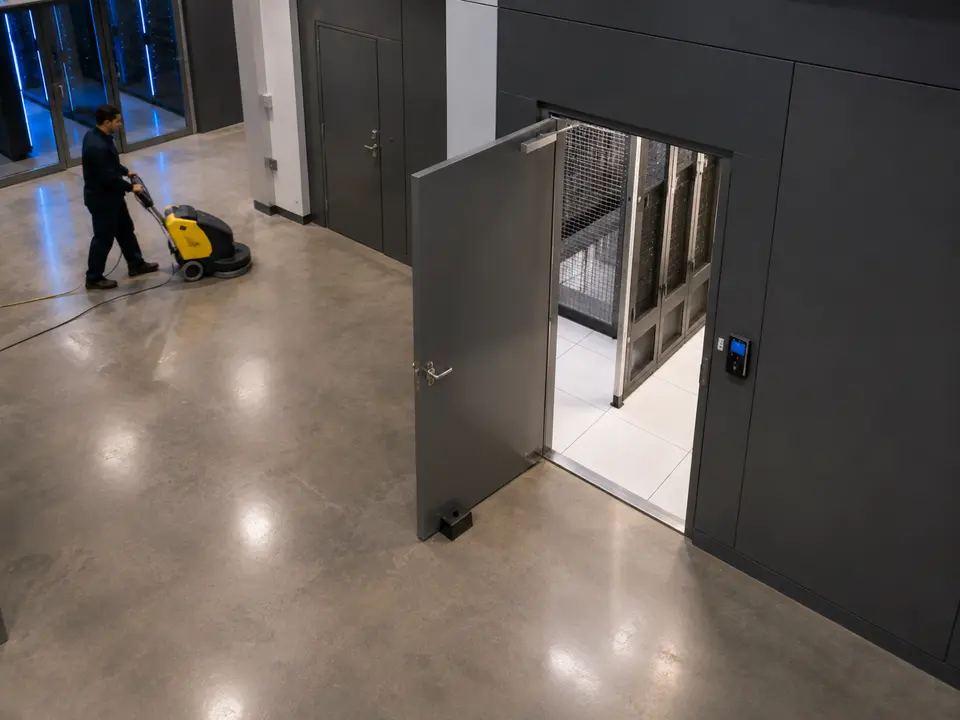
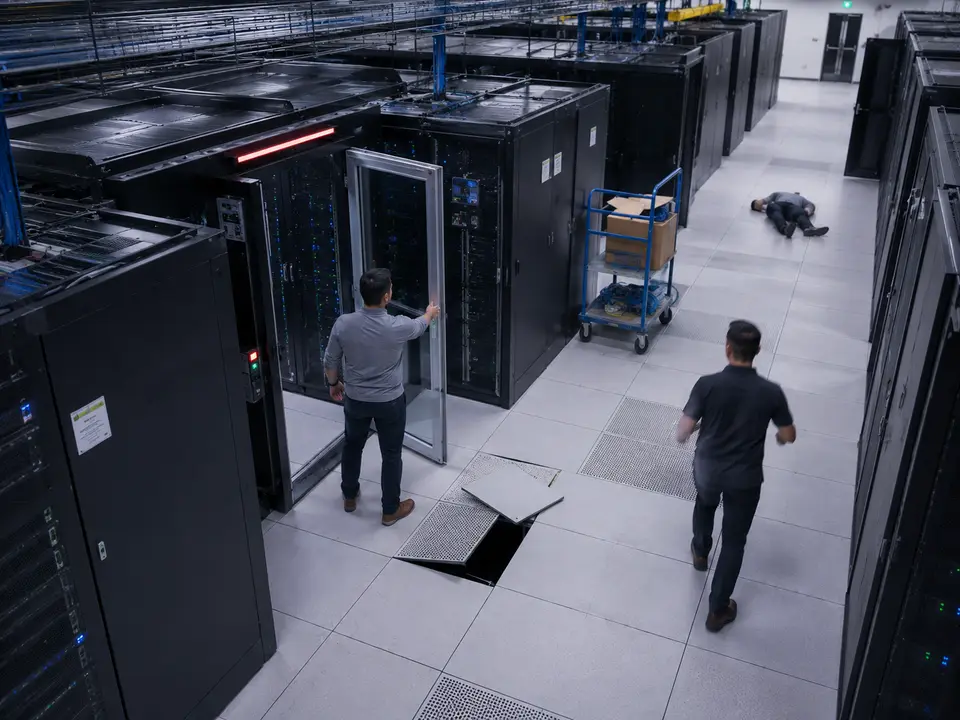
Somebody wedged a critical door open to get the floor scrubber through. A cabinet was left open at the end of the job. A task that calls for two people ended up with one. We show thirteen cameras here, all of them the kind that raise an alert. A real site has hundreds. The system is exactly the same.

Without IRIS this is just an empty corridor on a screen.
AI-generated image
What IRIS is
IRIS guards the data centre for you.
IRIS is an artificial intelligence that looks at the cameras you already have and understands what's happening at entrances, rooms and racks. If someone gets in without authorisation, two people slip through on one badge, or something you want to track happens, it alerts you right away; and whatever can be counted, it counts in numbers. All day long, without anyone having to stare at a screen.
You tell it what you need to watch, and IRIS does it.
Works with the cameras you already have. Nothing to replace.
A person replies, not a form.
- Your footage never leaves your premises.
- It doesn't identify people.
- Certifications →
The alert is there to close the door
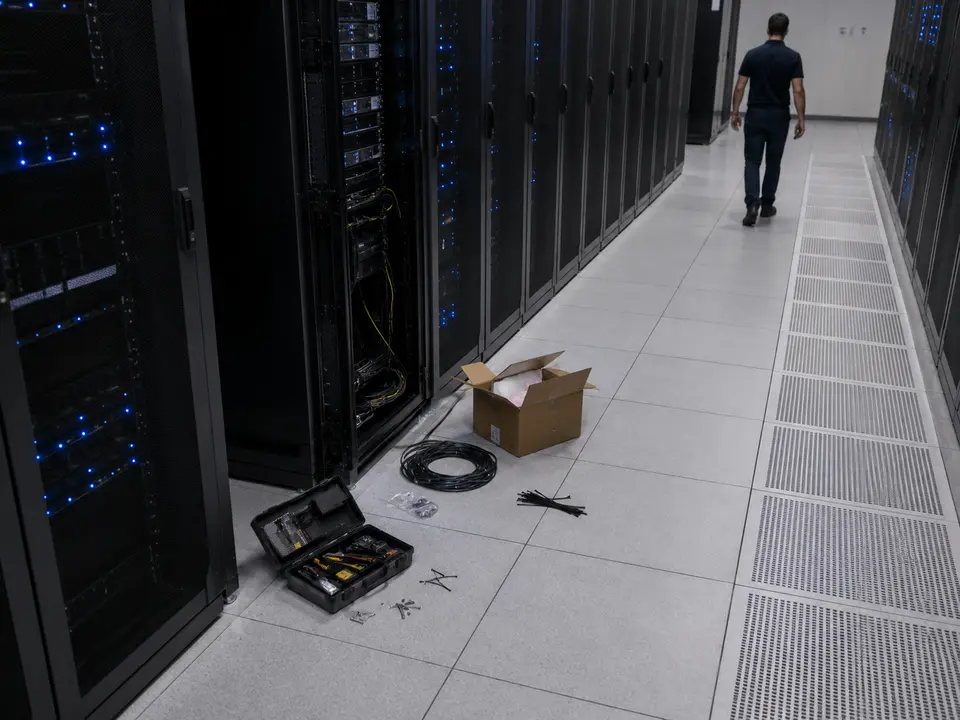
Almost nobody comes in here to do harm. They come in to clean, to swap a part, to take a piece of equipment out or to unload a delivery. And along the way a door that should never stay open gets wedged, a cabinet is left unlocked, a task that calls for two people is done by one, a tool is left on the floor of a cold aisle. Nobody does it in bad faith, and nobody notices: it comes to light later, reviewing video, once something has already gone wrong.
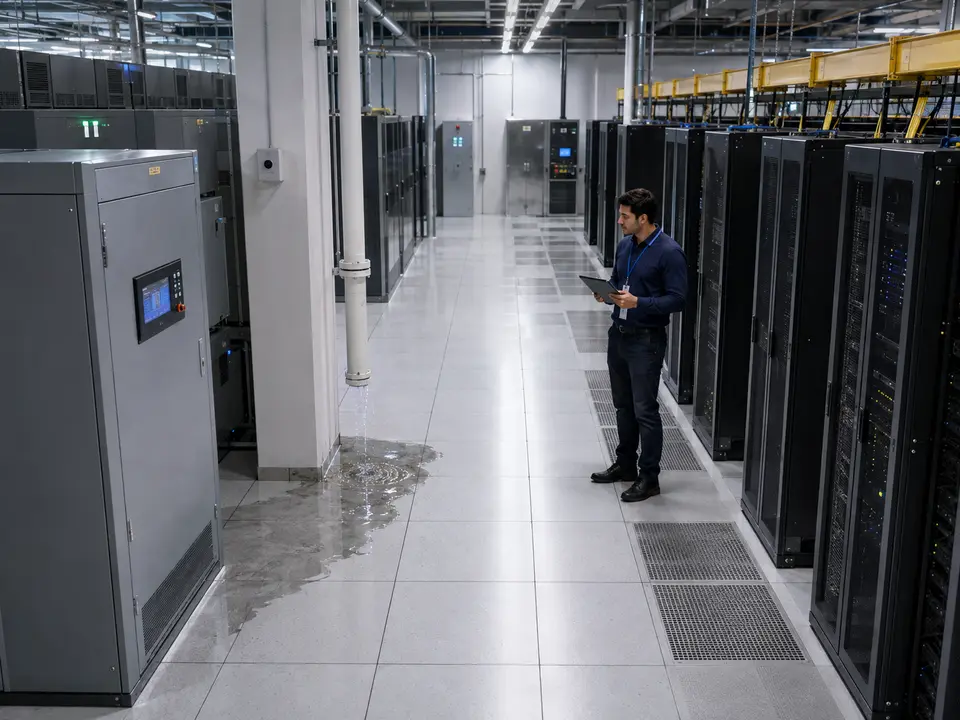
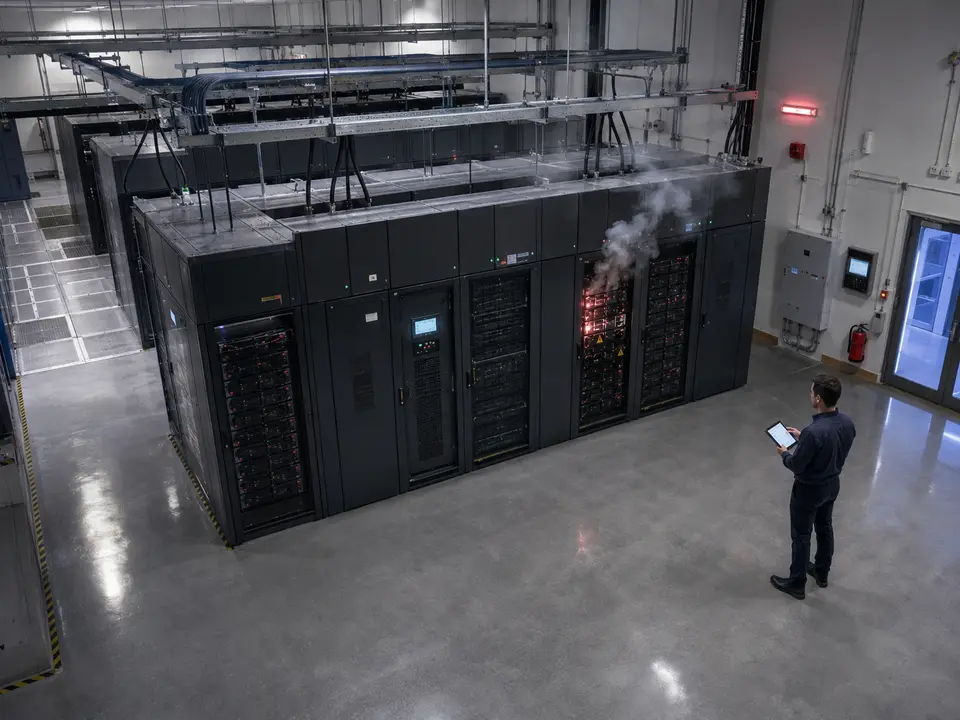
IRIS watches for them. It analyses every camera at once and only interrupts when a rule written by the site itself is met: a door that has been open too long, a cabinet standing open with nobody in front of it, one person where the procedure asks for two, water on the raised floor, smoke at the battery block. It identifies nobody and accuses nobody: it says what is happening, where, and since when. Never who.
And it says where it stops. IRIS supplies the fact; the meaning comes from another system. A technician in an aisle is not a problem: it is one if the work order says a different aisle. One person in front of a switchboard is not a problem: it is one if the procedure asks for two. That cross-check is done by the access control system, the work-order system or the facility management system, never by the camera. And all of this runs without internet, inside the site itself: in a critical, isolated facility that is not a detail.
The real scale
Thirteen here. Hundreds in a real site.
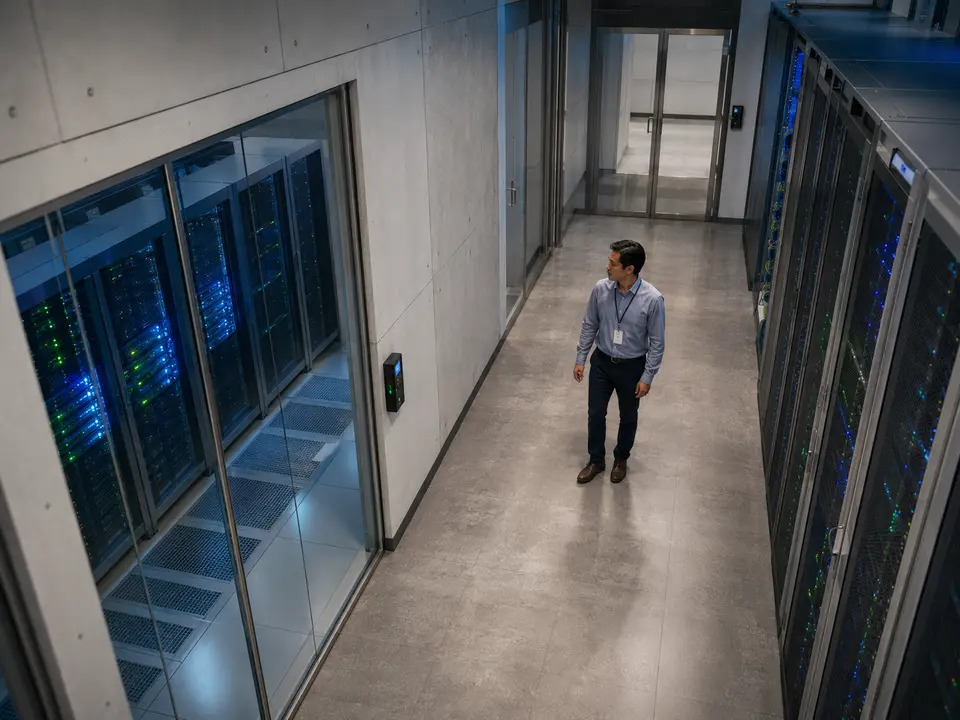
This demo shows thirteen cases because thirteen fit on a screen. A real site has cameras on the fence line, at the goods dock, at reception, at the entry airlock, in every cabinet aisle, in the plant rooms, at the battery block, under the raised floor and at every door that separates one area from another. Hundreds of them, and a few more with every expansion. Nobody can watch them all at three in the morning; that is exactly the problem IRIS solves: it analyses however many there are, all at once, and only interrupts when a rule is met. And it does it inside the site itself, without pushing the video out to the internet.
Examples
These thirteen are just examples.
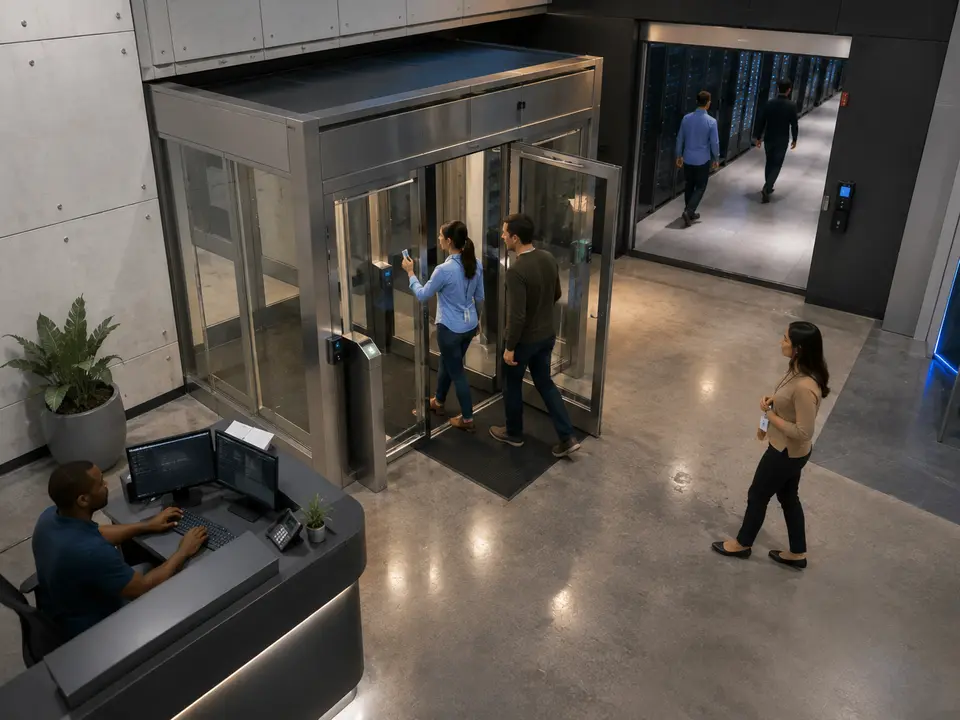
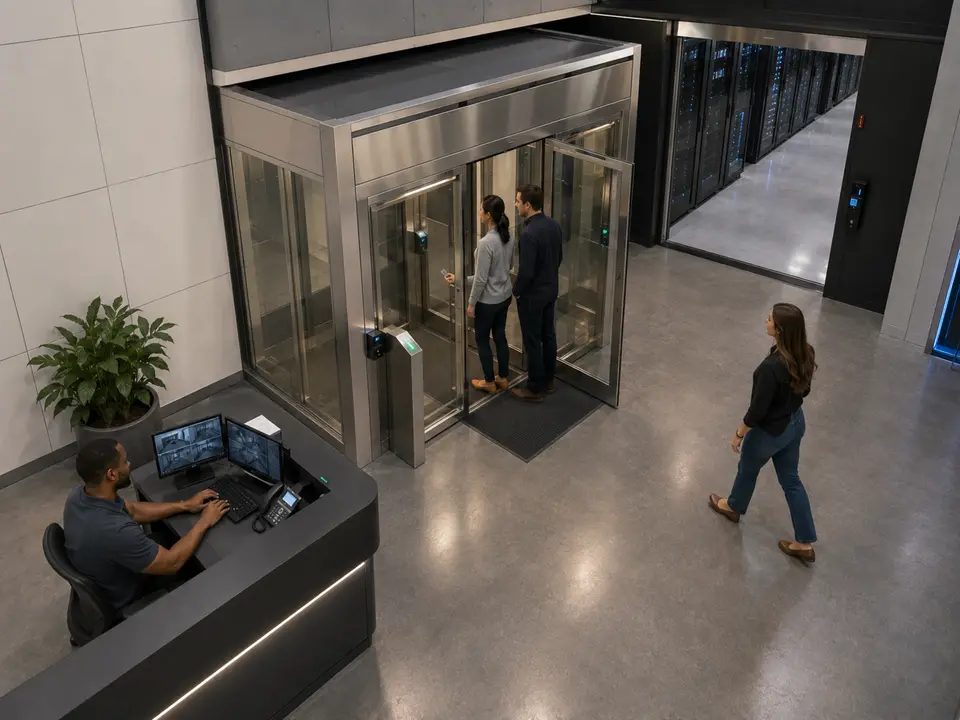
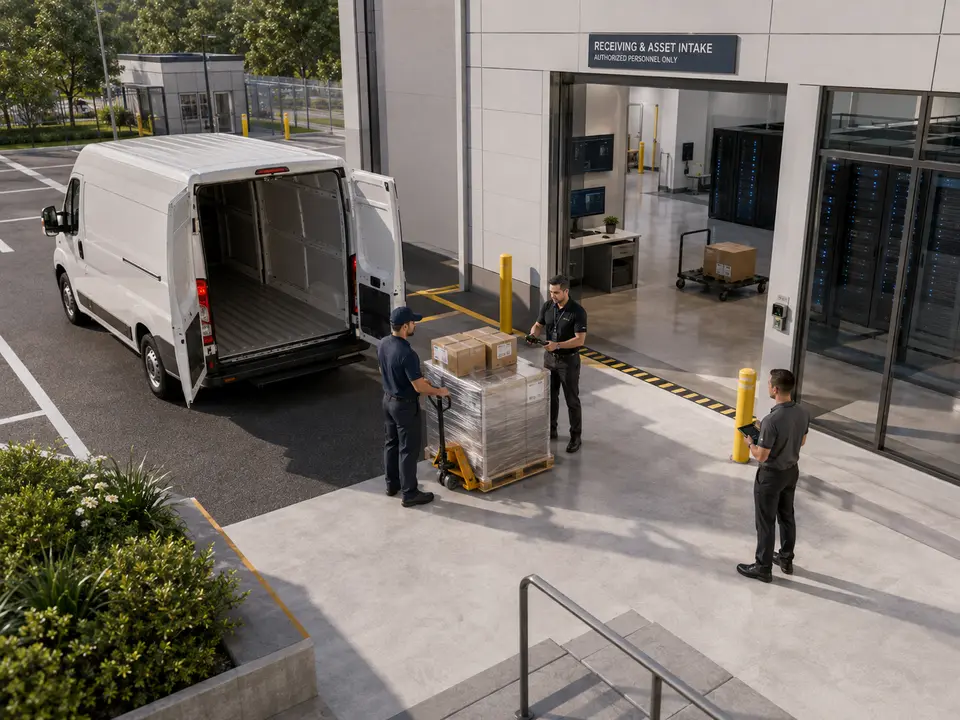
Each one shows a different kind of thing: a door, a cabinet, an aisle, a floor, a battery block. They are not the thirteen things IRIS can do: they are the ones that fit on a screen. Open any of them and you will see the image as it is, and then with what IRIS understands on top.
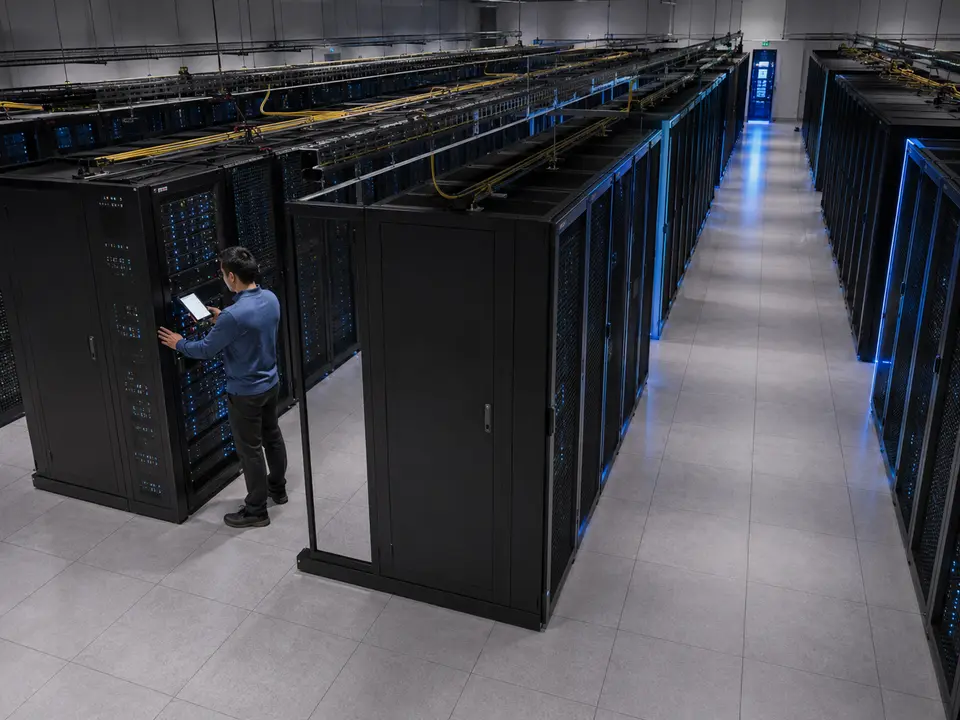
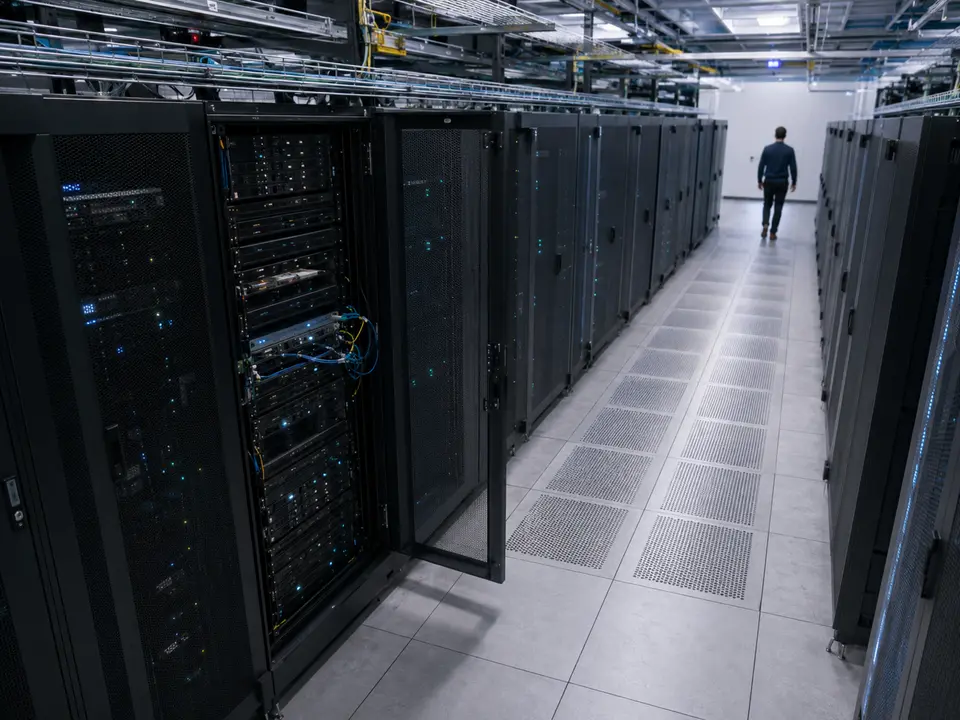
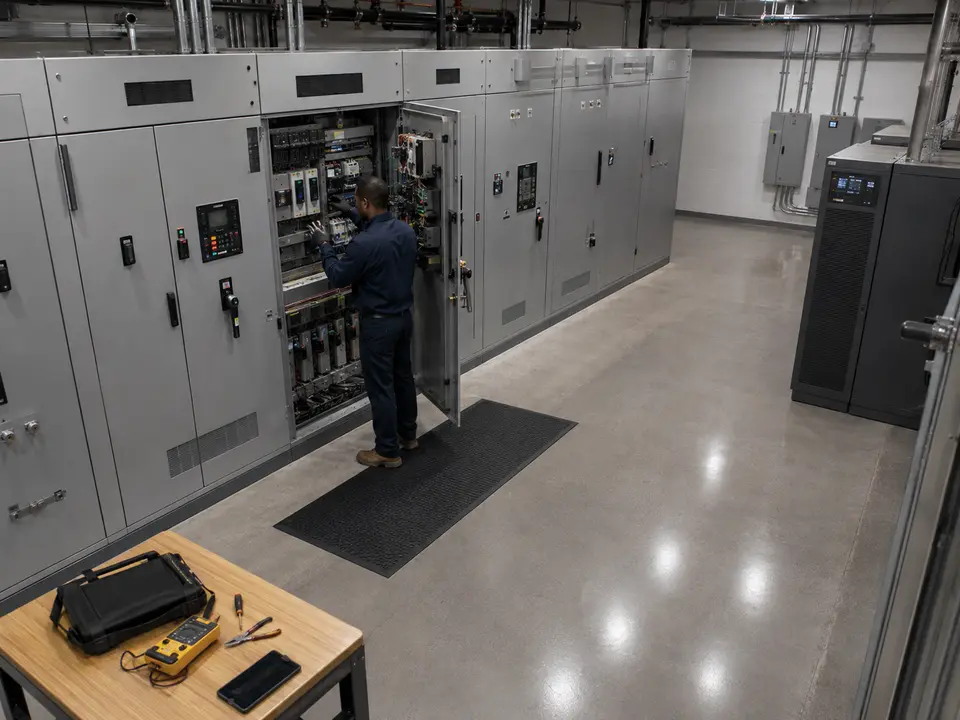
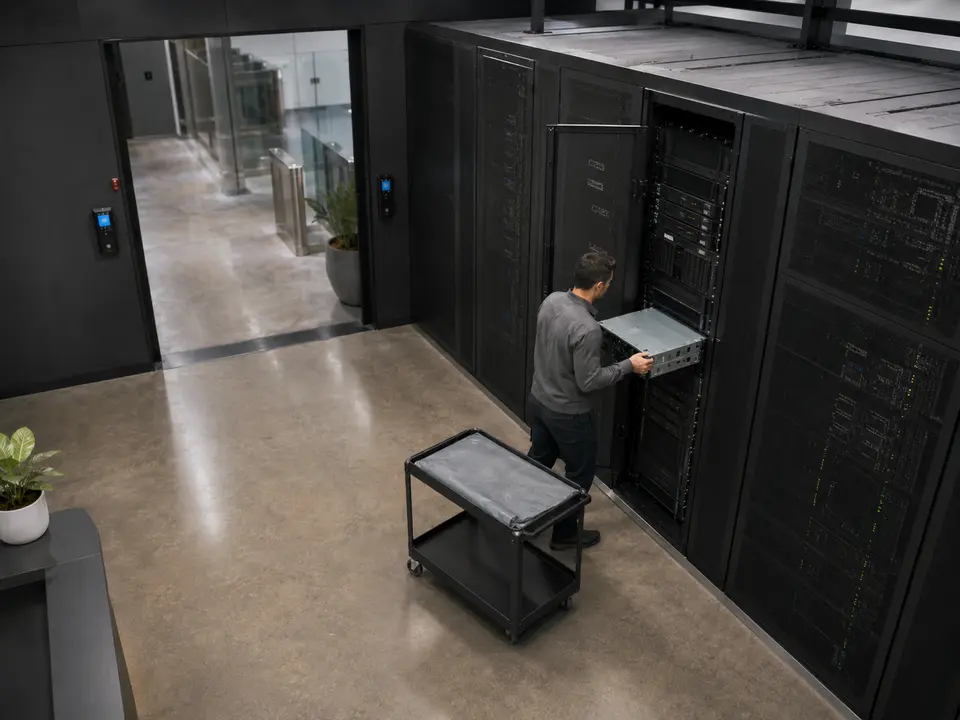
The real interface, step by step
No extra alarms here. Just what needs looking at.
Not a recorded video, not an explanatory drawing: a summary of the real screen, with a different case every time it starts. There is a lot more behind it.
- It lands in the tray
- You open it
- You confirm or dismiss
Now think about yours
Imagine knowing while the door can still be closed.
Two people crossing a door on a single authorisation. Two inside the airlock when it should have been one at a time. A visitor left on their own because whoever was escorting them turned back. A critical door wedged open so nobody has to unlock it again. A technician working in the aisle next to the one on their work order. A cabinet standing open with nobody in front of it for a while now. A task that calls for two people, and there is one. A piece of equipment coming out of a cabinet with no open work order behind it. A delivery coming in through the dock with the door held open. A tool left on the floor of a cold aisle. Water under a pipe. Smoke at the battery block. A containment aisle standing open with a person on the ground.
All of that is happening in front of cameras your site already owns and already paid for. And nobody knows until someone reviews the video, almost always because something has already failed. IRIS watches them all at once and tells you while it is happening, with the camera, the door and the time. It names nobody and blames nobody: it supplies the fact. Whether that fact was planned is answered by the access control system or the work order, and what to do about it is decided by a person, with the video in front of them. And it runs without internet, inside the site itself.
What physical security asks
The ten questions that come up before signing.
Answered in the first line, straight, and without promising that a system will prevent an outage. IRIS sees the fact while the door can still be closed; what that fact means and what is done about it comes from your systems and your people.
Does it work with the cameras we already have in the centre?
Yes, it works with the cameras you already have in the centre. IRIS connects to the feed of the IP cameras that are already installed and analyses it exactly as it arrives: what changes is not the equipment, it is what gets understood from the picture. During the project we look camera by camera at whether the framing is good enough for what you want to see there — a camera placed to cover a whole aisle may not reach far enough to tell whether a rack was left open — and we tell you plainly which ones fall short and which would only need turning a few degrees. Adding a new camera is the exception, not the starting point.
Does IRIS identify staff or recognise faces?
No, IRIS does not identify staff and does not recognise faces. It compares no face against any database, keeps no record of who anyone is and does not follow a person around the centre. We say this inwards too, because it is the first thing the staff representatives ask: this is not for checking anyone’s hours, or measuring one person’s performance, or knowing how long somebody stood in an aisle. What it sees is «there is one person», «there are two», «this door has been open this long», «this rack is open with nobody in front of it». The name, if you need one, comes afterwards from your access control, and that cross-check is your decision.
Does the video leave the data centre?
The video leaves the centre or stays inside depending on the deployment you choose, and there are two. In the on-site mode it does not leave: the servers sit in your own facilities, the video comes in over your network, it is analysed in there and the system does not need internet to work. In the other one it is processed in our data centre — our cloud, not somebody else’s — encrypted and under the terms set in the contract. In this sector staying inside is the usual choice, and that is fine by us: it is your decision, not a condition of ours.
Does it detect two people going through on a single authorisation?
IRIS detects that two people went through that door, and at what time. What it does not know is how many authorisations there were: that lives in your access control, not in the picture. Your system does the cross-check using the fact the camera supplies — two bodies and a single authorised entry, or a technician in an aisle that is not the one on the work order — and that is where an ordinary walk-through turns into a problem. The split is deliberate: the camera supplies the fact, the meaning comes from whoever holds the rest of the information. And the fact is kept with its camera, its time and its clip of video, which is exactly what you need the day you have to reconstruct what happened or show it to whoever comes to audit.
Does it alert on water on the raised floor, on smoke or on a wedged door?
Yes, IRIS alerts on water on the raised floor, on smoke in an aisle and on a door wedged open, and also on a rack left open or a tool forgotten inside the room. Now the limit, because it matters: this does not replace fire detection, water sensors or plant monitoring. Those systems have their own regulations and their own maintenance, and they stay exactly where they are. What the camera adds is something else: it reaches places where there is no sensor, and it shows the picture of the moment, so the person on duty can see what it is without having to walk down and look.
How many alerts will we get per shift?
You will get the alerts you decide on, because a rule is bounded: which door, which time band and for how long. A system that fires two hundred alerts a shift is switched off within a week, and rightly so: when everything alerts, nothing does. That is why a rule is never «tell me if this door opens», but «tell me if this door has been open for more than two minutes outside maintenance hours». By changing the zone, the time band and the minimum duration, the same detector goes from ringing all day to ringing when it actually matters. And it is tuned afterwards with what comes out in the first couple of weeks in your centre, not in general.
Who decides what gets watched and what does not?
The centre decides, not IRIS. Which door, at what time, how many people and for how long: your team writes that, and it stays written in a sentence anyone can read and anyone can change. IRIS applies what it has been told, the same way every time and without getting tired. It ships with no list of behaviours and does not decide on its own what is normal in your aisles: what is normal in an operations room is not what is normal on a loading dock, and the people who work there know that. If a procedure changes tomorrow, a new room opens or an aisle is closed for works, the rule is rewritten in a few minutes and nothing has to be ordered.
What does IRIS not see in an aisle of racks?
What IRIS does not see is real, and it is better said before anything is signed. A camera only understands what falls inside its frame: a rack hides what is behind it, one body hides another, and in a narrow aisle the angle leaves blind spots. With little light, a dirty lens or harsh light straight into it, it sees worse. And some situations look a lot like each other: somebody leaning on a door and somebody wedging it open can be confused for a second. That is why a person always closes the alert after looking at the video. IRIS is not infallible and we are not going to sell it to you as if it were. It is a system that watches, at every hour, the cameras nobody is watching right now.
How long does it take to be up and running?
How long it takes depends on the size of the installation, and we are not going to give you a date we cannot yet control. The work has three clear phases: connecting the cameras that already exist, drawing the zones on each image and writing the rules that matter — this door, this aisle, this rack — and tuning those rules against what actually happens on your shifts. The first detections show up early; the fine tuning takes longer. Specific dates go in the proposal, once we know how many cameras there are, which rooms are included and what you want to detect on each one.
How much does it cost?
The cost is worked out from how many cameras are analysed, what each one is asked to do, which deployment mode you choose and whether the hardware is yours or ours. We do not publish a single price list because it would not be honest: covering the entry airlock and the loading dock does not cost the same as putting rules on every aisle of every room. And you can start small: the critical access points, the two or three rules that really matter there, and see the alerts with your own team before deciding anything else. Tell us how many cameras you have and what you want to see, and we will give you a figure. The number is +34 93 566 70 22.
See it somewhere else
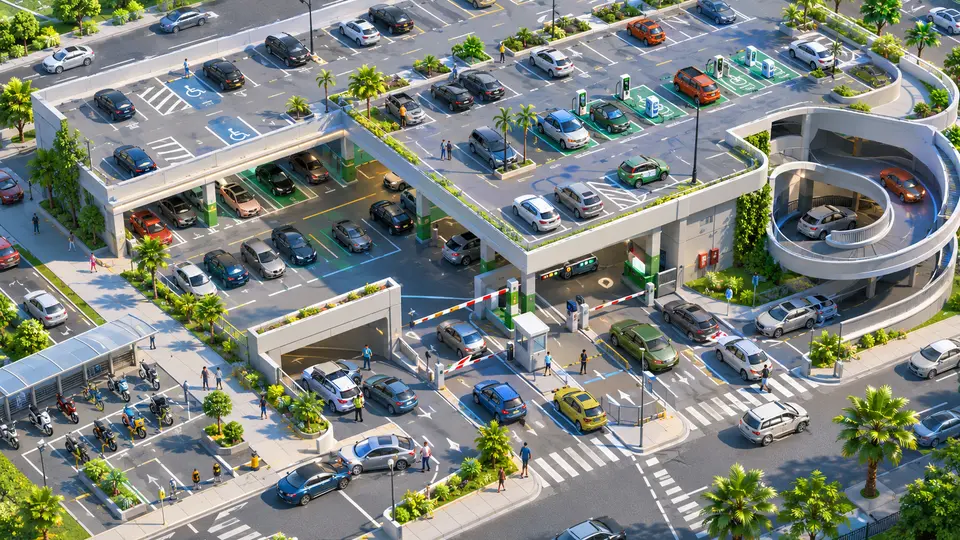
How many bays are free right now?
15 cases: 9 raise an alert when something happens and 6 only measure. You see each image as it is, and then with what IRIS understands on top.

What does a venue with twenty thousand people inside see?
15 cases: 11 raise an alert when something happens and 4 only measure. You see each image as it is, and then with what IRIS understands on top.


And the best part
You have cameras to spare.What you run out of is eyes to watch them.
One person can follow two or three screens. Nobody can follow forty. IRIS watches them all and speaks up when someone needs to decide.
Tell us your problem and we will say whether IRIS understands it, or not yet.
We reply the same working day.