Where do my camera images end up?
Unplug the internet cable. IRIS keeps working.
IRIS deploys in two ways, and only two: inside your own site with no internet access, or in our data centre, which is our cloud. There is no third option. In both, video travels encrypted. Here is what each one gives you and what each one costs you, said before you have to ask.
What IRIS is
IRIS watches the cameras for you.
IRIS Neural is an artificial intelligence that watches the cameras you already have and understands what happens in front of them. When something important happens —or something you told it you need to keep an eye on—, it alerts you; and whatever can be counted, it counts in numbers. All day long, without anyone having to watch a screen.
You tell it what you need to watch, and IRIS does it.
Works with the cameras you already have. Nothing to replace.
A person replies, not a form.
- Your footage never leaves your premises.
- It doesn't identify people.
- Certifications →
What sets us apart
On your site, with no internet
It is not that it can work without a connection. It does not need one to work.
The servers sit in your building. Video comes in over your network, is analysed on your hardware and stored on your disks. The models are yours too: they run in there and call no external service. You can cut internet access entirely and the system keeps detecting, alerting, measuring and recording exactly the same.
What you get
- Video never leaves your site
- Models run on your own servers
- Works on closed, air-gapped networks
- No third party sees your footage
- Keeps running if the link goes down
- All communications are encrypted
What to keep in mind
- You buy the server, and keeping it running is on you
- Adding cameras can force you to buy another machine
- On an isolated network, updates have to be carried to the site
When you do not want servers
In our data centre
When we say cloud, we mean our data centre. Not someone else's.
Processing happens on our own dedicated infrastructure, located where we agree. You buy no servers and handle no maintenance. Video travels encrypted from your cameras to the data centre and comes back encrypted: the same as inside an on-site deployment, but over the link. The contract sets where the information lives, who may access it and how long it is kept.
What you get
- No investment in servers
- All communications are encrypted
- Data location agreed in the contract
- Maintenance and updates included
- Capacity grows without buying kit
What to keep in mind
- Video leaves your site, encrypted but out all the same
- If the link goes down, analysis stops until it is back
No meter
One query or a million. It costs the same.
IRIS does not charge per question. Not per search, not per alert, not per time you open a camera. You can ask it a thousand times a day, every day of the year, and the bill does not move.
It sounds like small print and it is not: it decides who actually uses the system. When every query has a price on it, people stop querying. The operator thinks twice before searching, the shift manager asks permission to go through a whole afternoon, and you end up with an expensive tool almost nobody touches. Here there is nothing to think twice about. And it makes no difference what you ask: asking whether somebody has fallen and asking whether that same camera is dirty cost the same, because the licence is per camera, not per question.
Searching is free
Whoever is at the screen can try a search, see it was not the right one, and try another. Nobody is keeping count.
You know the bill in advance
The month the system gets used most costs the same as the month it gets used least. No surprise at the end of the month and no usage to keep an eye on.
And nobody outside is counting
The analysis runs on your hardware or in our data centre. In both modes there is no outside service to ask permission from or to pay per query.
And they can be mixed
You do not have to pick one for the whole organisation. The usual pattern is to process the sensitive sites locally — a prison, a treatment plant, a control room — and leave the rest in our data centre. Each site can have its own mode and they are all seen from the same place.
Can IRIS work without an internet connection?
Yes, IRIS can work without an internet connection, and the nuance matters: it is not that it survives a line outage, it is that in the on-site mode it does not use the line to work at all. The servers sit in your building, video comes in over your network, and the models run on your hardware without calling any outside service. You can unplug the cable and the system keeps detecting, alerting, measuring and recording exactly the same.
Where does the video live and who can access it?
The video lives where you decide, and only the people you authorise can reach it. In the on-site mode it lives on the disks in your building and no third party sees it. In our data centre it lives on our own dedicated infrastructure, located where we agree, and the contract sets who may get in, with what permissions and how long each thing is kept. In both modes communications are encrypted and access is logged.
Can I start with one mode and switch to the other later on?
Yes, you can start with one mode and switch to the other later on. It is the same system in both places: what changes is where the analysis runs, not what it can do, nor the rules you drew over your cameras, nor how your operators work. The whole organisation does not have to move at once either: each site can have its own mode and they are all seen from the same place. What does change is who buys the hardware and how it is billed, and that gets discussed before signing, not after.
What happens if the link goes down while the video is being processed in your data centre?
If the link goes down, analysis in our data centre stops until the line comes back. We say it plainly because it is the real limit of that mode: with no link, nothing arrives to be analysed at the other end, and during that time you will not get alerts. Your cameras keep recording wherever they do today, and as soon as the line is restored the analysis resumes. If there is a spot where that gap is not acceptable — a control room, a treatment plant, a prison — that spot goes on-site. The two modes can be mixed in the same organisation.
Does it cost me more the more I use it?
No. IRIS is not billed by usage: there is no meter on queries, searches, alerts or open cameras. One query and a million queries cost the same. That is deliberate, because a system that charges per question ends up barely used: the operator hesitates before searching and the tool sits idle. What does change the price is the size of the installation and the deployment mode, and that is agreed before signing, not after.
The real interface, step by step
This isn’t a video. It’s a slice of the real screen.
A summary of the real interface, played hands-free. You see one case from start to finish; what you do not see are the other screens, and there are many.
- Checks the whole system
- Flags what is failing
- Puts it on one screen
See it somewhere else
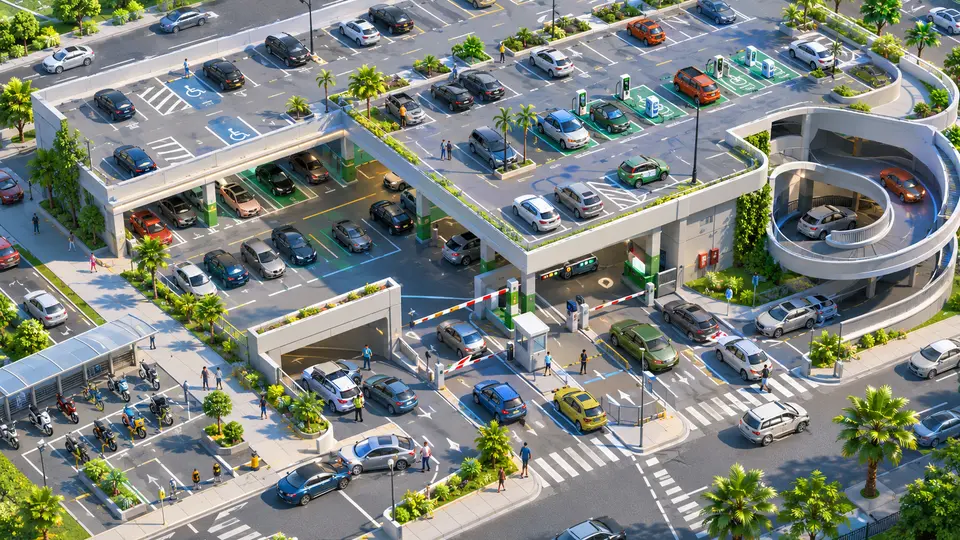
How many bays are free right now?
15 cases: 9 raise an alert when something happens and 6 only measure. You see each image as it is, and then with what IRIS understands on top.

What does a venue with twenty thousand people inside see?
15 cases: 11 raise an alert when something happens and 4 only measure. You see each image as it is, and then with what IRIS understands on top.


And the best part
The cameras you bought years agostill hold up. What they were missing was not image quality.
It was someone to look. IRIS connects to the installation you already have — same equipment, same cabling — and those images go from being stored to being understood.
Tell us your problem and we will say whether IRIS understands it, or not yet.
We reply the same working day.