Who sees the sales that never reach the till?
In a store, data is not there to keep watch. It is there to sell more.
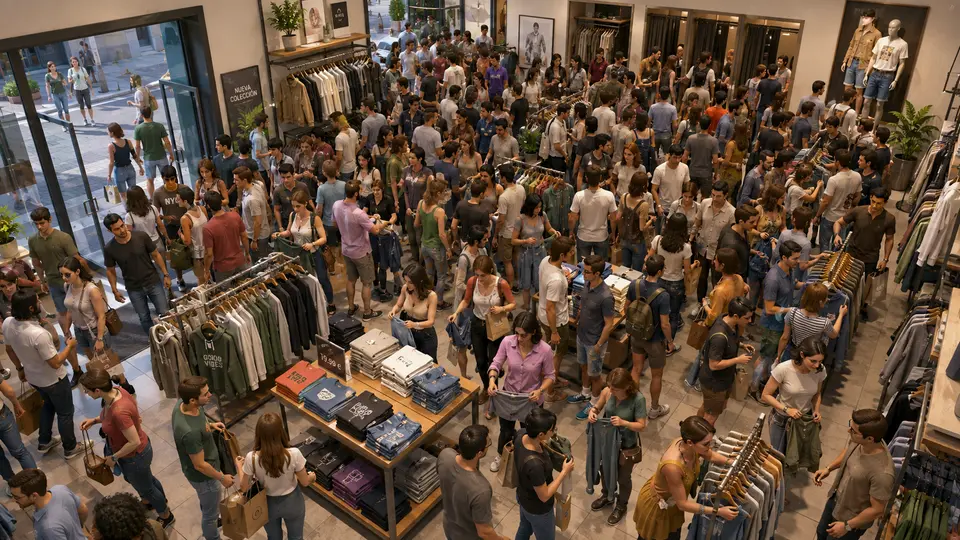
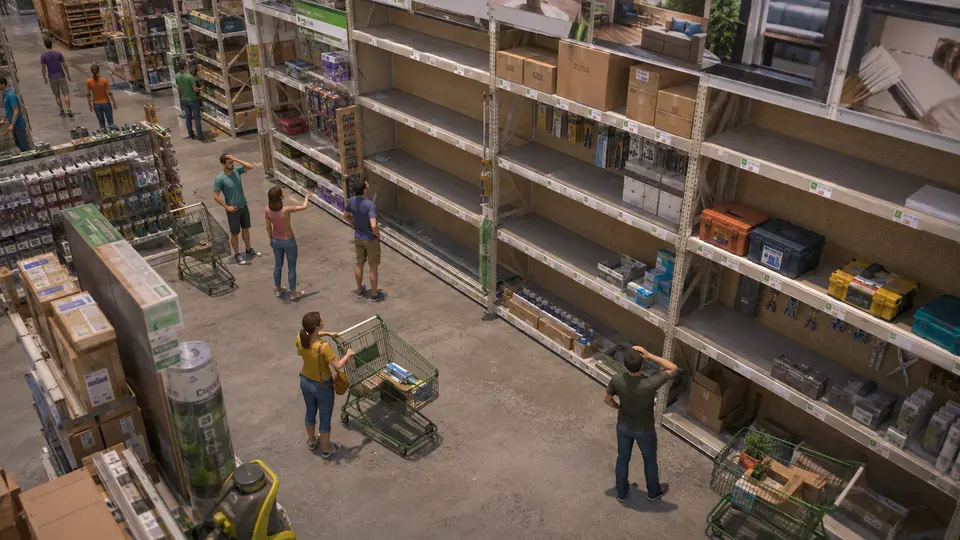
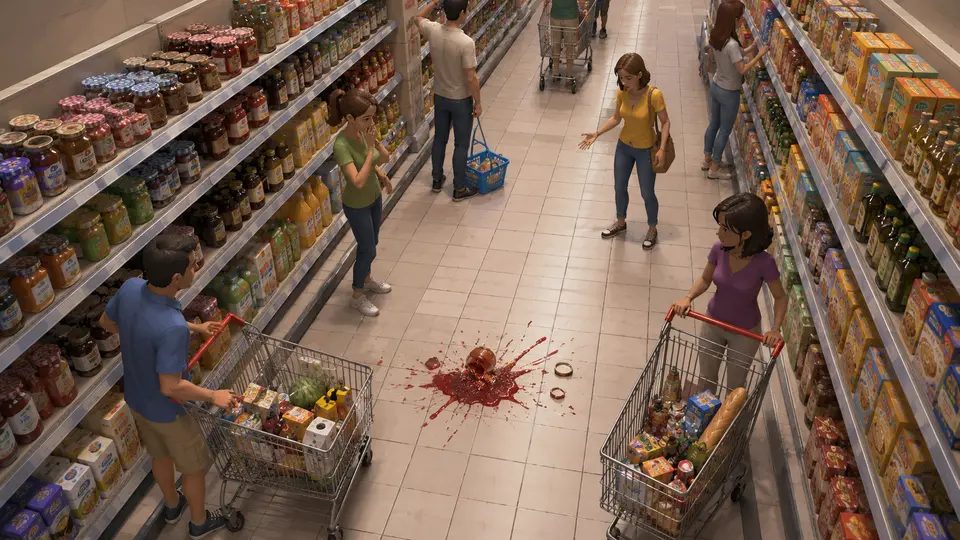
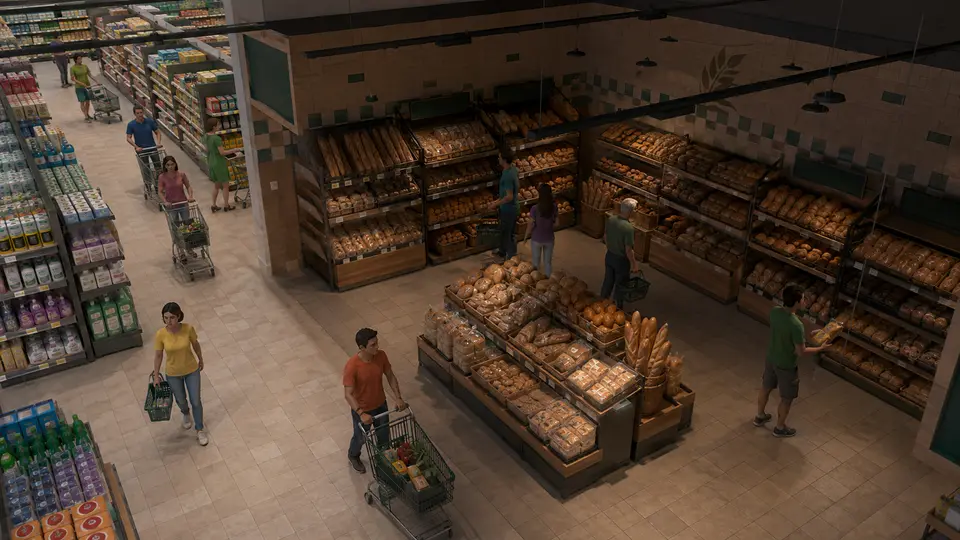
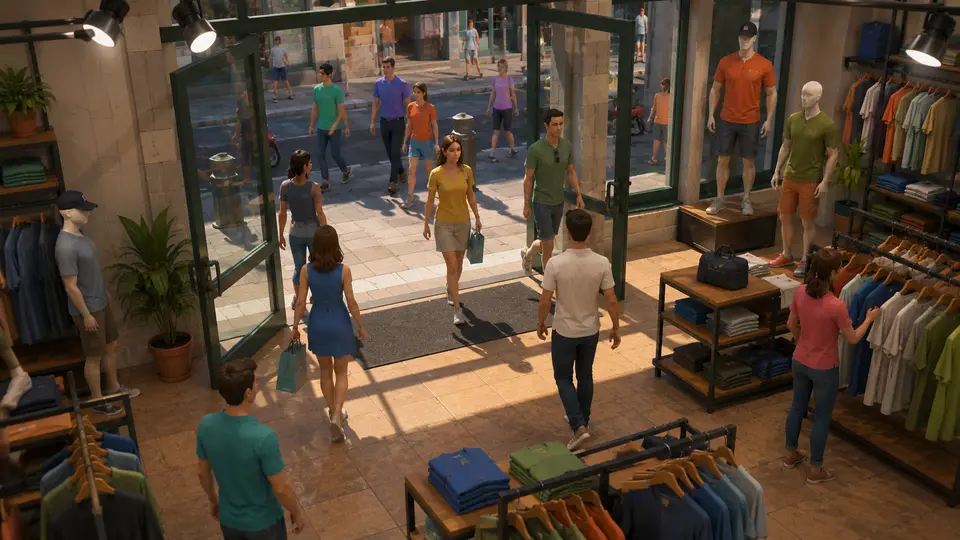
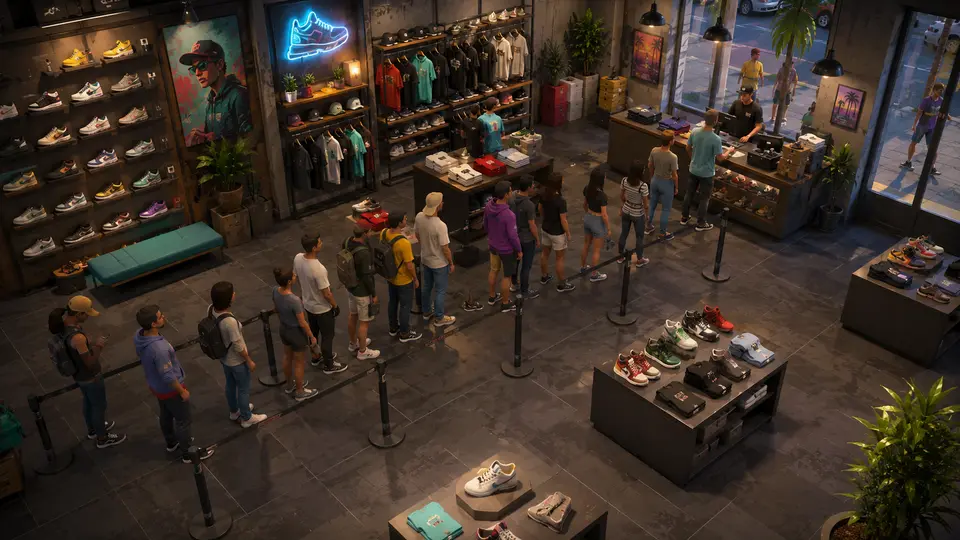
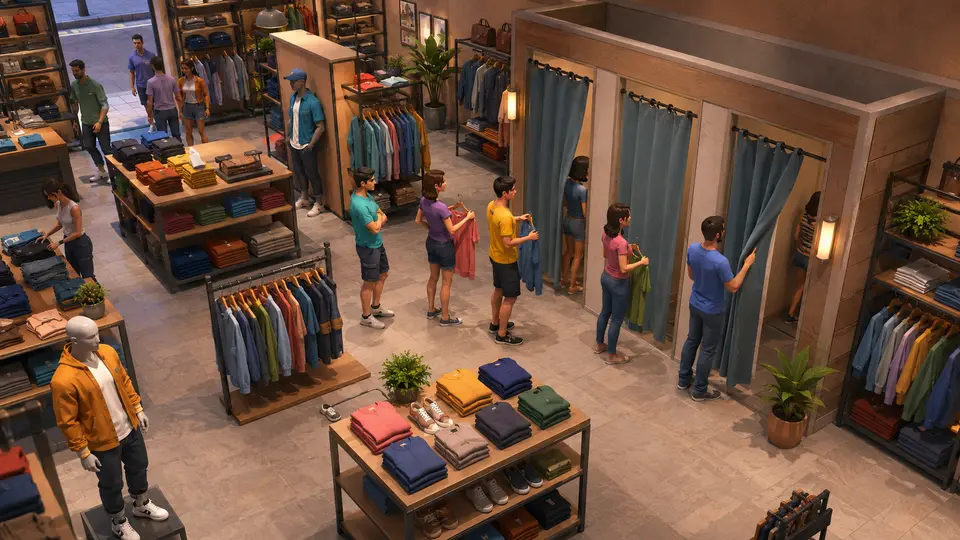
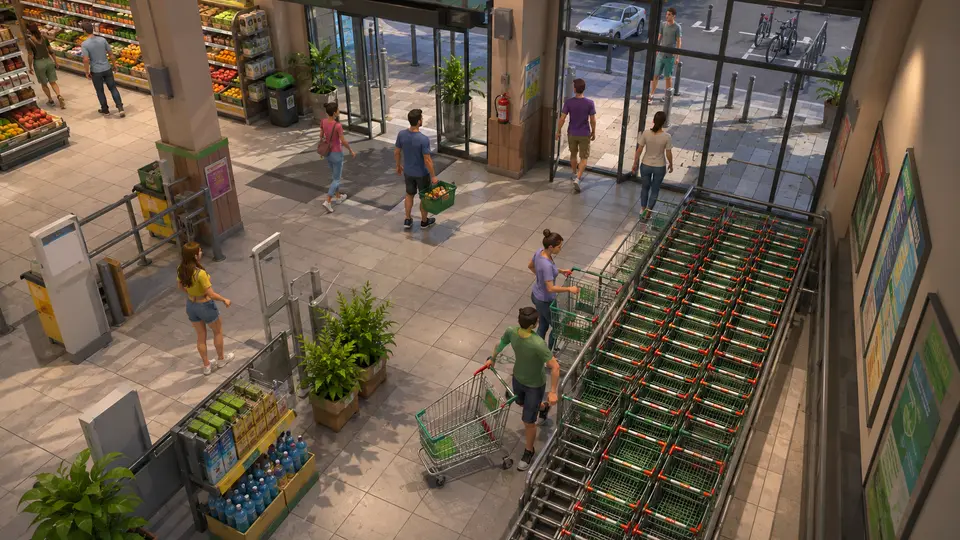
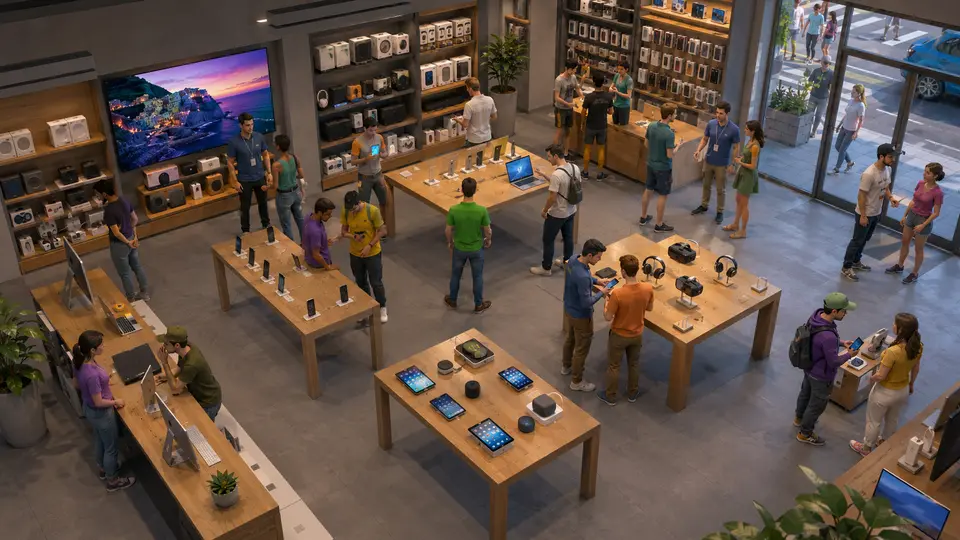
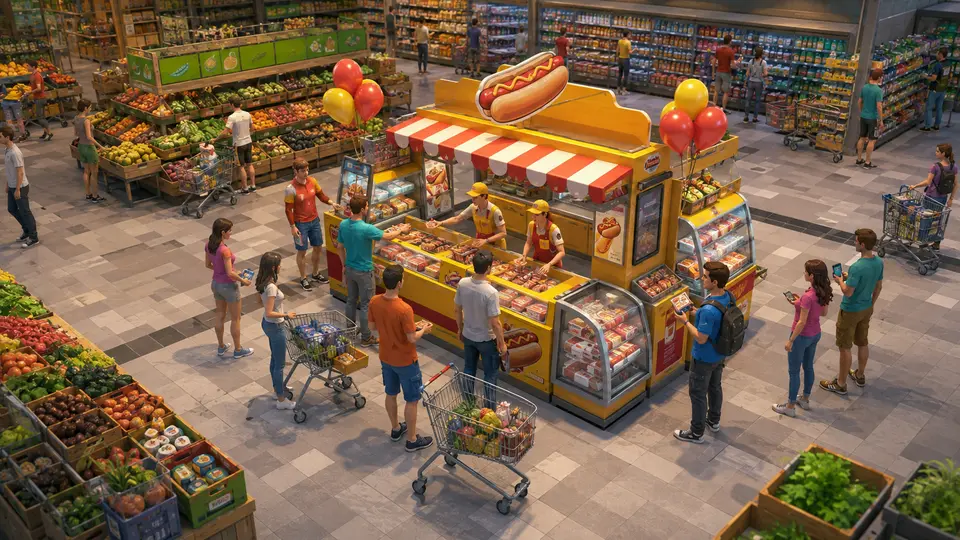
We show ten cameras here: four that raise an alert when something needs fixing and six that alert nobody, they just measure. Each image is a different shop on the same street — a supermarket, a clothing store, an electronics store — because «retail» is not one single format. And none of the ten is looking for shoplifters: they are looking for the sales that are lost today without anyone seeing them.

Without IRIS this is just a street with shops.
AI-generated image
What IRIS is
IRIS stays on top of the shop floor for you.
IRIS looks at the cameras you already have in the store and understands what's happening: long queues at the counter, fitting rooms in use or a spill on the floor. When something important happens, it alerts you; and whatever can be counted, it counts. All day long, with no one watching a screen.
You tell it what you need to watch, and IRIS does it.
Works with the cameras you already have. Nothing to replace.
A person replies, not a form.
- Your footage never leaves your premises.
- It doesn't identify people.
- Certifications →
The sales nobody sees today
The till receipt only records what did get sold. It does not record the customer who reached the shelf and could not find their brand, or the one who abandoned a trolley in the queue because eight people were ahead of them, or the one who got tired of waiting for a fitting room and hung the clothes back on any rail. Those three sales appear in no report the store has, and they are sales.
And whatever needs fixing today is nearly always reported by a customer. The spill gets flagged by the person who almost slipped on it. The dead light in the aisle turns up in a review two days later. That the store was impassable on Saturday is something you learn on Monday. IRIS watches for you: it analyses every camera the store already has, all at once, and only interrupts when a rule your own team set is met — a gap on the shelf, something spilled on the floor, an area left in the dark, the floor busier than the shift can handle.
And where there is nothing to alert about, IRIS measures. How many people come in and at what time. How long the wait at the tills is, and with how many tills open. How many give up on the queue before their turn comes. How many walk past the promotional display and how many stop at it. How the floor splits up: how many reach the back and how many turn round halfway down the aisle. Today that is decided by what the store manager reckons, and they are usually right; with the numbers in front of them they are right more often, and they can explain why. And that number has backing: IRIS people counting is type-approved by the Spanish Metrology Centre, so the store's footfall figure is guaranteed by a third party and not by us. The approval covers people counting, not the whole product.
And two things said out loud, because they are the first ones anybody thinks of on hearing «cameras» and «shop». First: IRIS does not identify anyone. It detects objects, behaviours and situations. It does not recognise faces, does not compare them against any database, does not store who anybody is, does not follow a person from one store to another and is not cross-referenced with your loyalty programme. What it sees is «a person», «a trolley», «an empty shelf» and how long it has been that way. Second: this is not about catching shoplifters. None of the ten cameras on this page does that. It is about selling better and about the store being in the state it should be in.
The real scale
Ten cameras here. A whole chain open out there.
This demo shows ten cameras because ten fit on a screen. A chain does not fit. Here the axis is not kilometres or passengers: it is opening hours and stores. A store is open for many hours every day, every day of the week; a chain has dozens or hundreds of stores open at the same time, and the operations director cannot be in any of them. Not even the store manager can be everywhere in their own store: while they deal with the stockroom, the back of the shop floor is on its own. That is the problem IRIS solves: it analyses however many cameras there are, in every store, for every hour they are open, and only interrupts when a rule is met. And where there is nothing to alert about, it measures — store by store and hour by hour — so that two stores can be compared with the same yardstick.
Examples
These ten are just examples.
Four raise an alert when something needs fixing and six alert nobody: they only measure. Each one is a different shop on the same street, and that is deliberate: a supermarket, a clothing store and an electronics store do not have the same problems, but they are watched by the same system. They are not the ten things IRIS can do in a store; they are the ones that fit on a screen. Open any of them and you will see the image as it is, and then with what IRIS understands on top.
See it in action
The real interface, step by step
Everything comes in. Only what matters gets through.
This sums up what IRIS does with one alert, from the moment it appears until it is closed. The real screen holds far more; this is the main thread.
- You ask
- IRIS searches
- It shows you
Now think about your own store
Imagine knowing all of it while the store is still open.
A gap on the shelf that has been empty since this morning. Fourteen people who left a trolley in the queue today and walked out. A promotional display everybody walks past without stopping. The back of the store, where hardly anybody gets to. The dead light in aisle three, which nobody has spotted because aisle three is behind the tills. The fifteen minutes at seven in the evening when the queue turned the corner and only two tills were open.
All of that is happening right now, in front of cameras your store already owns and already paid for. And right now nobody knows: the manager is in the stockroom, head office looks at next month's report, and the customer who walked out does not come back to tell anyone. IRIS watches all those cameras at once and tells you while the store is still open. In front of cameras that already exist.
What a retail group's committee asks
The ten questions that come up in the operations meeting.
Answered in the first line, straight, and without promising sales we cannot prove.
Does IRIS identify our customers?
No, IRIS does not identify your customers: it detects objects, behaviours and situations. It does not recognise faces, does not compare them against any database, does not store who anybody is, does not follow a person from one store to another and is not cross-referenced with your loyalty programme. What it sees is «a person», «a trolley», «an empty shelf», where it is and how long it has been there. That is why a store's counting never says who came in: it says how many, through which door and at what time. If somebody ever offers you the opposite, know that we do not do it, and that this is not an oversight: it is a decision.
Does it work with the cameras we already have in the store?
Yes, IRIS works with the cameras you already have in the store. It connects to the feed of the ceiling IP cameras and analyses it as it arrives: what changes is not the hardware, it is what gets understood from the picture. During the project we check camera by camera whether the framing is enough for what you want to see there — a camera set up to watch the door may not reach the shelf at the back — and we tell you plainly which ones fall short and which just need turning a few degrees. Adding a new camera is the exception, not the starting point.
Is this for catching shoplifters?
No, this is not for catching shoplifters, and we would rather say so before it comes up in a meeting. None of the ten cameras on this page does that, and it is not because it never occurred to us: detecting theft means judging the intent of one particular person, and IRIS does not look at particular people. What it does do is what you have on this page: flag a gap on the shelf, something spilled on the floor, an area left in the dark or a shop floor busier than the shift can handle; and measure queues, fitting rooms, trolleys, how people spread across the floor and what the promotional display actually achieves. In other words: sell better and keep the store in the state it should be in. If what you need is loss prevention, you will need something else, and we will tell you that in the first meeting rather than the last.
How do I know how many people give up on the queue and leave without buying?
You know how many people give up on the queue because IRIS counts two things separately: how many people enter the waiting area at the tills and how many reach the point of payment. The difference is the people who left before their turn came. Two more clues get added to that: the average wait in that queue, and the trolleys left abandoned in an aisle or beside the tills, which nearly always belong to someone who got tired of waiting. And all of it carries a timestamp, so it can be cross-referenced with how many tills were open at that moment. We are not going to tell you how much money that is — we do not know, it never went through your till — but we will tell you what time it happens and with how many tills open it stops happening.
Can it tell me whether a promotion is working?
IRIS can tell you whether a promotion is working in the part you can see from a camera: how many people walk past the display, how many stop and how long they stay. The sale itself is in your till, and we do not go in there. But putting the two halves together changes the diagnosis: if a lot of people walk past and almost nobody stops, the problem is where the display sits or how it looks. If a lot of people stop and it still does not sell, the problem is the price or the product. Today those two situations look identical in the sales report — it sold badly — and they are two different problems with two different fixes. The same works for comparing the same display in two stores, or the same spot in two different weeks.
Does it work when the store is packed?
IRIS works when the store is packed, with one caveat we would rather say before signing: when a lot of people are close together, some block others and a camera stops telling them apart one by one. That happens to any vision system, ours included, and anyone who tells you otherwise has never tried it on a Saturday afternoon. What does not get lost is exactly what matters most at that moment: occupancy. Measuring how many people are in an area and how they spread across the floor does not require telling each person apart, so it keeps working, and detecting that the store is overwhelmed works precisely because it is full. What does degrade is counting people one by one through a narrow, crowded gap; in that case the counting is moved to the entrance, where people go through in single file, and occupancy is left to cover the shop floor.
Does the video leave the store?
The video leaves the store or stays inside depending on the option you choose, and there are exactly two. In the on-site option it does not leave: the servers are in your own facilities — in the store or at head office —, the video comes in over your network, it is analysed there and the system does not need the internet to work. In the other one it is processed in our data centre, which is our own cloud and not a third party's. In both, communications are encrypted and the terms are set out in the contract. In a chain it is worth deciding early, because a server per store is not the same as bringing the analysis to one single place: it drives the network in every branch.
And what about data protection, with a store full of customers?
Data protection is handled by configuring the processing piece by piece: what is stored, for how long, who can access it and from where. And above all of that sits the part that weighs most in a shop: IRIS does not identify anyone, so there are no identities to protect and no customer profiles to build. Compliance, though, does not depend on the software alone: it also depends on how you deploy it and what you decide to process, and that is signed off by your organisation, not by us. What we can put on the table is that our way of working is certified for information security and for privacy by an external auditing body. That paper is not signed by a salesperson: it is signed by an auditor, and you can ask us for it before you sign anything.
Does it work for a single store, or do you need a whole chain?
IRIS works for a single store and for a chain alike; what changes is not the system, it is what you do with the data. In one store it helps you decide your store: when to open the third till, where to put the promotional table, whether the back of the shop gets visited at all or needs a reason to walk to. In a chain something appears that a single store does not have: comparison. The same promotion set up in forty stores and measured the same way in all of them. The store where the queue spikes half an hour earlier than the rest. The one that is the same size and has half as many people at the back. Starting with one store, seeing what comes out and deciding afterwards is the normal way in, and it is what we usually recommend.
How much does it cost to put IRIS on a store's cameras?
The cost is worked out from how many cameras are analysed, what is detected or measured on each one, how many stores are included, which deployment option you choose and whether the hardware is yours or we supply it. There is no single price list, because measuring the tills and the entrance of a corner shop does not cost the same as covering the whole floor of a large supermarket, and one store does not cost the same as forty. Tell us how many stores you have, how many cameras are in each and what you want to see, and we will give you a figure. The phone number is +34 93 566 70 22.
See it somewhere else

Who watches an entire motorway?
10 cases: 8 raise an alert when something happens and 2 only measure. You see each image as it is, and then with what IRIS understands on top.

Who watches a whole station at rush hour?
17 cases: 11 raise an alert when something happens and 6 only measure. You see each image as it is, and then with what IRIS understands on top.


And the best part
We would rather promise less.Let the first week be the surprise, not the brochure.
What it cannot do gets said on day one, not on the last day. A short list that holds beats a long one that falls apart the moment it is switched on.
Tell us your problem and we will say whether IRIS understands it, or not yet.
We reply the same working day.