PortsEnvironment and cleanliness
CAM-450
Someone is standing inside the snap-back zone
Mid-morning on the quay. A ship is made fast and a mooring line runs from the bollard to the bow, tight over the water. Painted on the ground there is a rectangle with yellow stripes: the snap-back zone, where the rope would go if it parted. A worker is standing inside it, watching the operation. A colleague waits outside the stripes, which is where you are supposed to be. The rule is geometry: someone inside a painted rectangle while the line is working.

Turn on IRIS Vision
AI-generated image
What IRIS is
IRIS watches the dock while you get on with the job.
IRIS is an artificial intelligence that watches the cameras you already have at the port and understands what's happening at the fence, the perimeter, and the water's edge. When someone lingers where they shouldn't, gets close to the dock, or something you've asked it to watch happens, it alerts you — and whatever can be counted, like access points, it counts in numbers. All day long, with no one needing to watch a screen.
You tell it what you need to watch, and IRIS does it.
Here, for example, IRIS watches the painted snap-back rectangle and whether anyone is standing inside it while the mooring line is under tension. That gives you the bollard, who was inside it, and the exact time, while the rope is still working. With that alert you decide whether to pull the person out right now, and the video is what actually changes habits at next day's briefing.
Works with the cameras you already have. Nothing to replace.
A person replies, not a form.
- Your footage never leaves your premises.
- It doesn't identify people.
- Certifications →
What IRIS understands
What it recognises in this scene
- person inside the snap-back zone
- snap-back zone painted on the ground
- mooring line under load
- bollard the line is made fast to
- worker outside the painted zone
What this camera measures
An alert says something is happening. The reading says how much.
- 1People inside the painted zone
- 40 sTime spent inside
- 4People on the quay
- 1Mooring lines under load in view
- 11:12Time of the alert
The figures on this screen are an example from the illustration, not any client's measurement.
The rule
You decide once. IRIS applies it always.
If
a person enters the snap-back zone painted on the ground during a mooring or unmooring operation
Then
- alert the mooring supervisor with the camera, the mooring point and the time
- save the video from the moment the person stepped into the painted zone
- leave the alert in the operation log with the image attached
The instruction that set it up«Tell me as soon as there is a person inside the painted snap-back zone while a mooring line is under load.»
What changes
What changes for whoever answers for the terminal
Twenty past ten in the morning, the line under load over the water. The linesman is standing inside the yellow-striped rectangle watching the operation; his mate is waiting outside it, which is where you are supposed to be. A mooring line that parts kills: the rope whips back and anyone inside the stripes has no time to move. Today this is policed by shouting and by trying to look everywhere at once. With the camera the alert goes out while the line is still under load: the mooring point, the occupied rectangle and the exact time. And the video of the whole operation stays, for the toolbox talk the next morning, which is where habits actually change.
What people usually ask
How does IRIS know where the snap-back zone is?
A person draws it on the image, once. On most quays the zone is already painted on the ground, so it is a matter of tracing the stripes with the mouse. From then on the rule is always the same and it is pure geometry: if someone is inside that polygon during an operation, the alert goes out. If the paint is redone or the mooring point changes, you draw it again.
Does IRIS know who the worker inside is?
No. IRIS does not recognise faces and does not identify anyone. It sees that there is a person inside a particular rectangle and how long they have been there. Who it is, the mooring supervisor knows: he knows his team and he has the video with the time on it. The camera supplies the fact and the minute; the name, if it is needed, comes from a person.
Can IRIS stop the operation?
No. IRIS does not act: it does not slack a line, it does not stop a winch and it does not send anyone anywhere. It alerts whoever is running the operation, with the image and the time, and that person decides whether to stop, to shout, or to do nothing at all. What counts as an alert is the port’s call too: the terminal writes the rules, not the camera.
Other cameras
- CAM-440 · Somebody has come over the perimeter fence
- CAM-441 · Someone is swimming towards the quay
- CAM-442 · A car has sat eleven minutes where nobody ever stops
- CAM-443 · Two trucks, one single barrier opening
- CAM-444 · A container opened outside the working window
- CAM-445 · Someone has crawled under a trailer
Every simulation
Emergency gear blocked
Tell me if something blocks an exit, an emergency shower or a fire lane, or if the equipment is not where it belongs.
- The sentence
- Where it applies
- What it finds
- The same rule
See it somewhere else
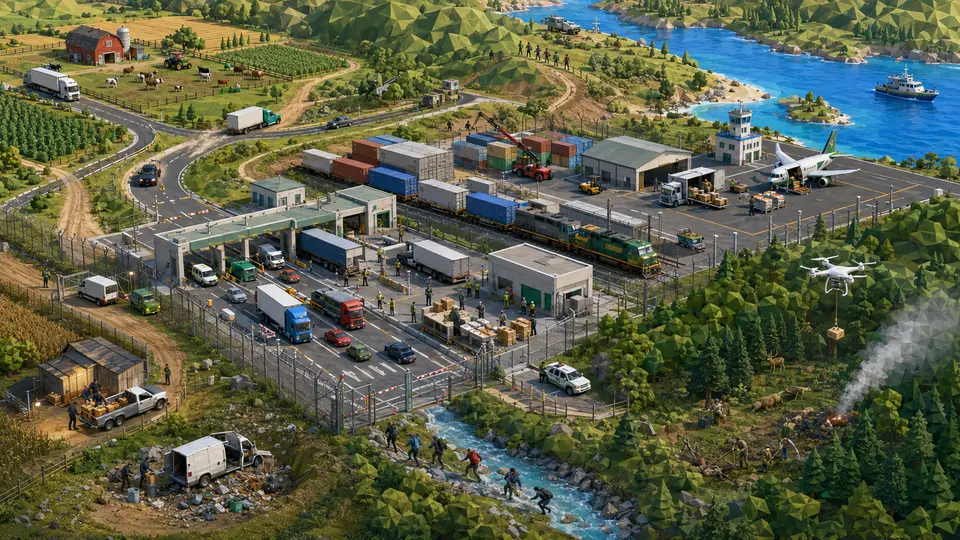
What can a camera see without pointing at anyone?
13 cases: 9 raise an alert when something happens and 4 only measure. You see each image as it is, and then with what IRIS understands on top.
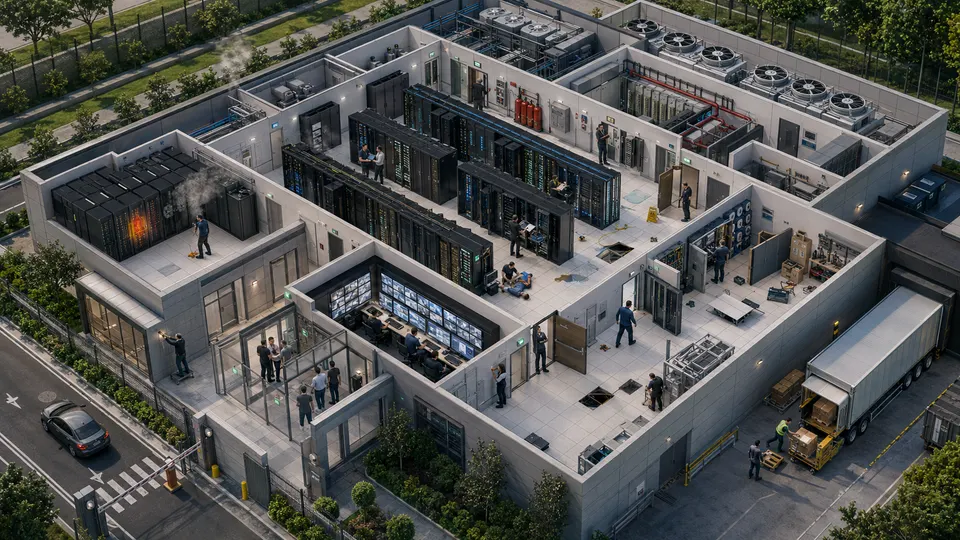
What if the outage does not start with an attack?
13 cases, and in every one of them IRIS raises an alert when something happens. You see each image as it is, and then with what it understands on top.


And the best part
At four in the morning,the camera is still watching just as it does at noon.
No heavy eyelids, no distractions, no shift change. What happens at night is understood at night, not the next morning.
Tell us your problem and we will say whether IRIS understands it, or not yet.
We reply the same working day.