Solutions by typeMobility analysis
How many times has it nearly happened?
A near miss leaves no trace
Ten to five, the street outside the school. A child with a backpack steps out from between two parked cars and runs across the middle of the road, away from the crossing. Another car is coming down that lane and brakes in time. Nothing happens. The driver moves on, the child reaches the pavement, and not one line is written in the day’s log, because nothing happened.
11 cameras across 7 sectors
What IRIS is
IRIS watches the cameras for you.
IRIS Neural is an artificial intelligence that watches the cameras you already have and understands what happens in front of them. When something important happens —or something you told it you need to keep an eye on—, it alerts you; and whatever can be counted, it counts in numbers. All day long, without anyone having to watch a screen.
You tell it what you need to watch, and IRIS does it.
Works with the cameras you already have. Nothing to replace.
A person replies, not a form.
- Your footage never leaves your premises.
- It doesn't identify people.
- Certifications →
This is how you ask for it
«Alert me when a child steps into the road away from the crossing, and keep how often it happens, at what time and where.»
The same thing happens every afternoon, at the same hour and the same spot, and not one line is written about it. The day a car does not brake in time, somebody will ask whether this had happened before. It will have happened a hundred and twenty times, and nobody was counting. Crossings get moved or signalised with data, and that data is what is missing.
You decide once
The council, or the factory, decides once which surface is roadway and which is not, in what hours it matters and what happens when it occurs: whether it rings in the control room, whether it is only counted, or both. That second part is the one almost nobody asks for and the one that pays best: that it is always logged, even when nobody had to brake. IRIS applies it every day at the same hour, without anyone remembering to switch it on.
The school street is the version everybody recognises, but the same scene repeats inside a warehouse, and there the vehicle weighs four tonnes. An operator walks along the edge of the green walkway with the pedestrian symbol behind him, while a forklift moves up the vehicle lane beside him. At the aisle 4 junction another one pulls out with a pallet of boxes stacked above the driver’s head: straight ahead he sees nothing, and the person on foot jumps aside. In the engine aisle, an AGV arrives from the left just as a forklift crosses from the right.
In all three places there are two things to ask of the camera, and they differ. The first is the alert now: a person and a vehicle have coincided in the same stretch, with the time and the video kept so it can be watched. The second is the count: how many times it happened this week, at which junction, at what hour and with which machine. The first is for the conversation with the driver. The second is for moving a rack, reversing a traffic direction or fitting a mirror, which is what removes the risk.
And it is worth saying what this is not: a judgement on anyone. It is rarely one person being careless; it is a badly drawn aisle or a load blocking the view. With the data in hand, the talk is about what gets changed on the floor.
What changes
Near misses used to vanish. If nobody fell, there was no report; with no report, it never existed. And changes to the street or the aisle were decided from what people remembered in a meeting.
Now every encounter is logged with time, place and video, and at the end of the month there is a list. You can see the junction that holds half the cases and the hour when almost all of them cluster. That is what moves a mirror, a barrier or a timetable.
Where we have seen it
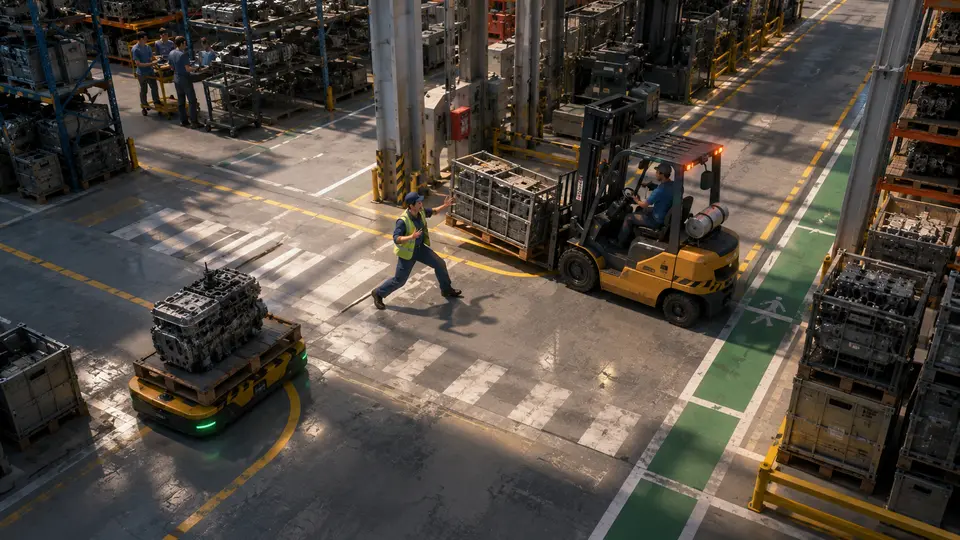
CAM-236A pedestrian jumps back at the crossing
«Tell me when a person and a vehicle meet at the crossing, and save me the video.»
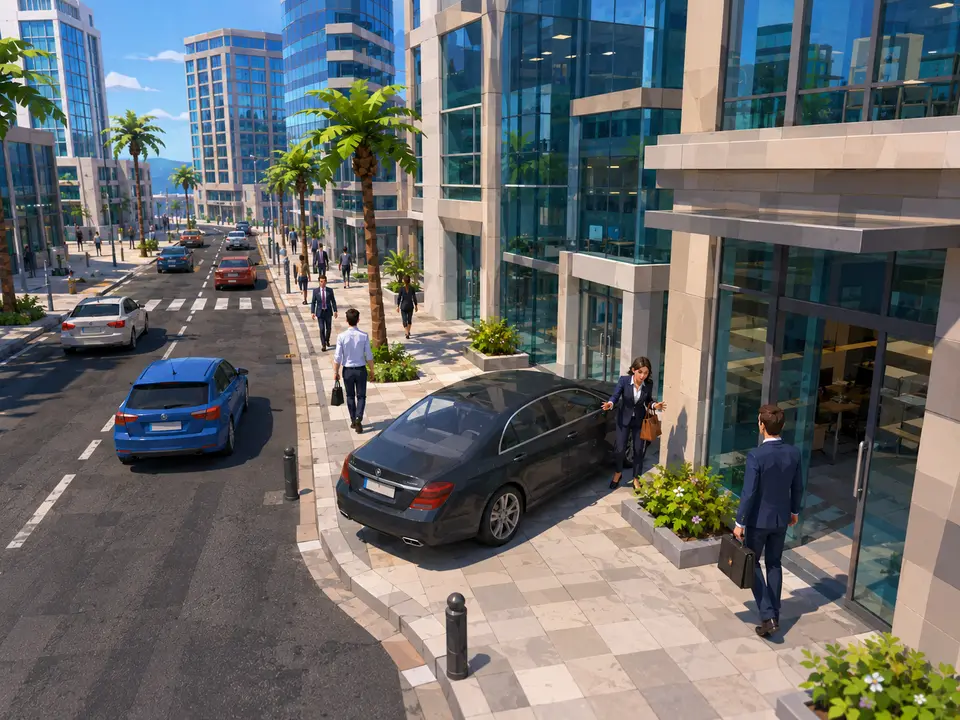
CAM-12Vehicle parked on the pavement
«Tell me if a vehicle parks on the pavement, and how long it has been there.»
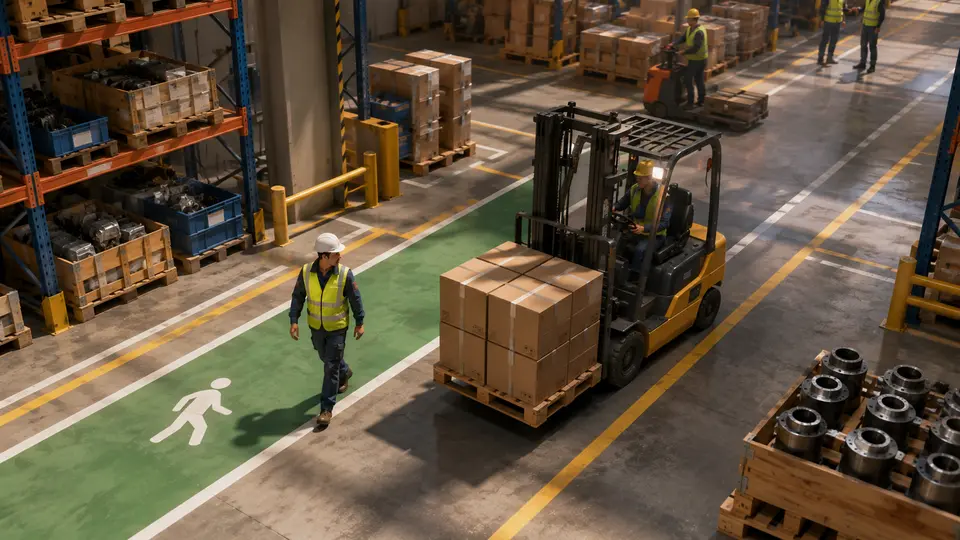
CAM-254Only a white line separates the pedestrian from the forklift
«Tell me when a forklift and a person are in the same stretch of aisle at once, and count how often it happens each day.»
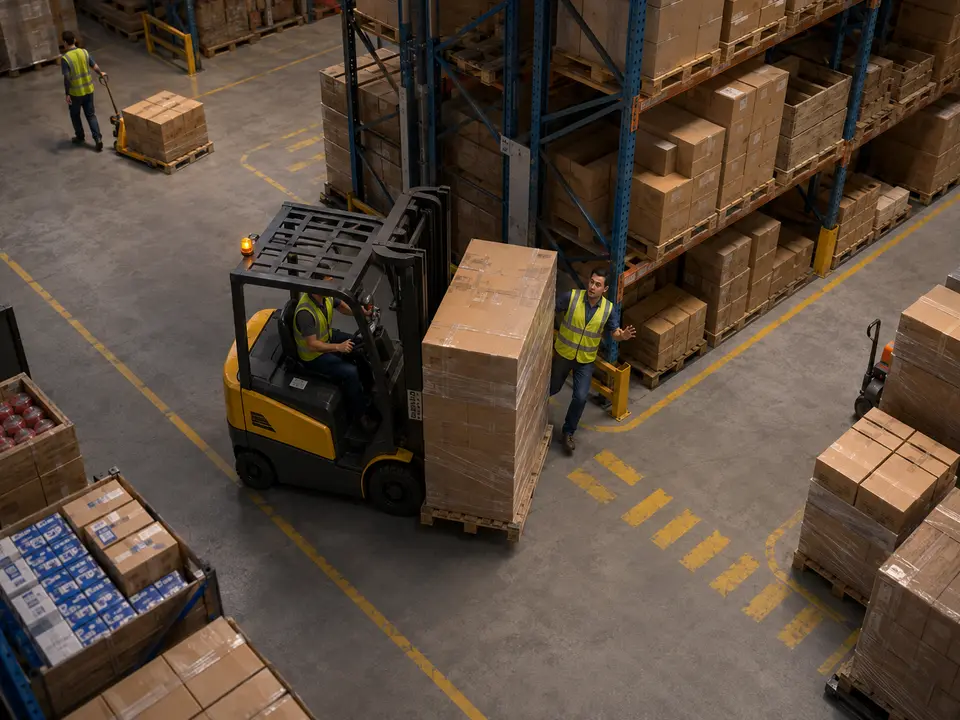
CAM-271The pedestrian jumps clear at the crossing
«Tell me when a person and a forklift are in the aisle 4 crossing at the same time, and save me the video.»
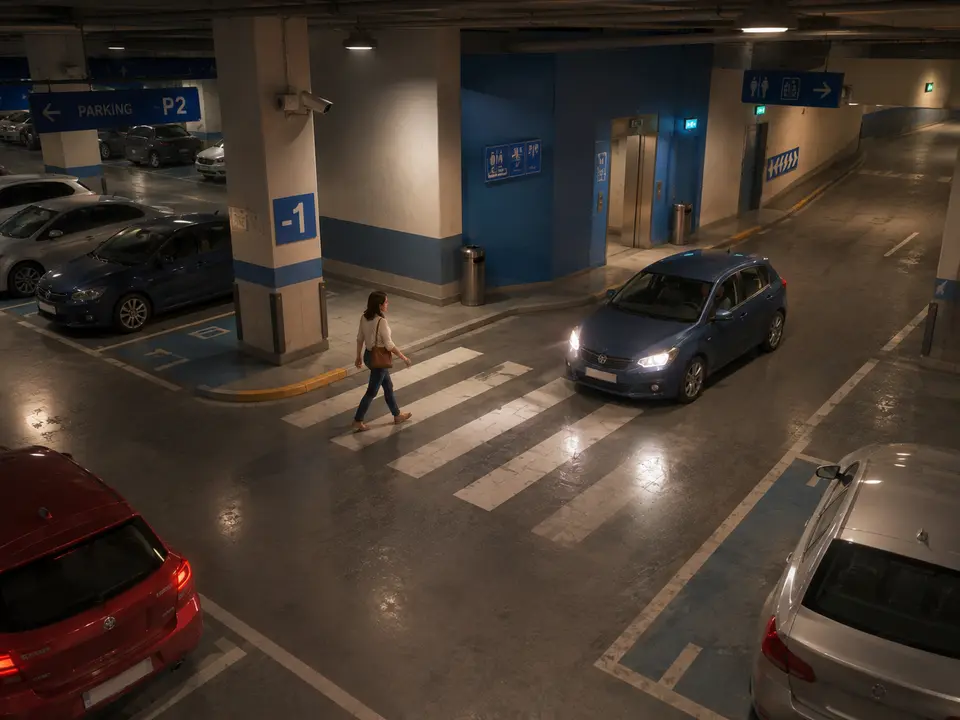
CAM-470A car reaches the crossing just as someone is on it
«Alert me when a car enters the crossing while somebody is walking across it.»
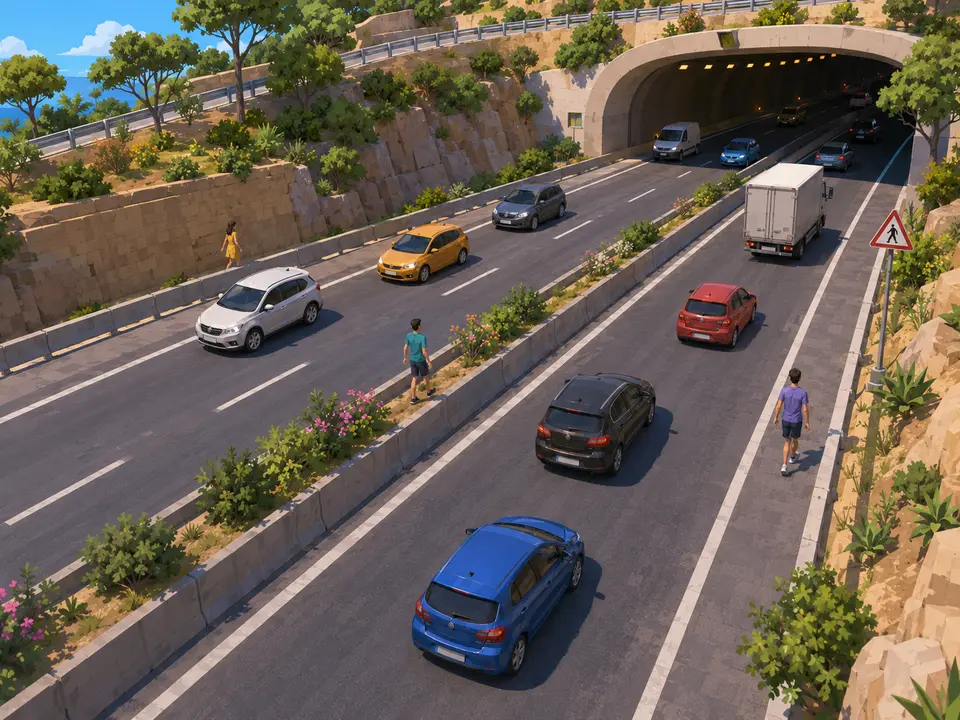
CAM-63People walking on the carriageway
«Tell me right away if you see anyone walking on the carriageway, and all the more so near the tunnel.»
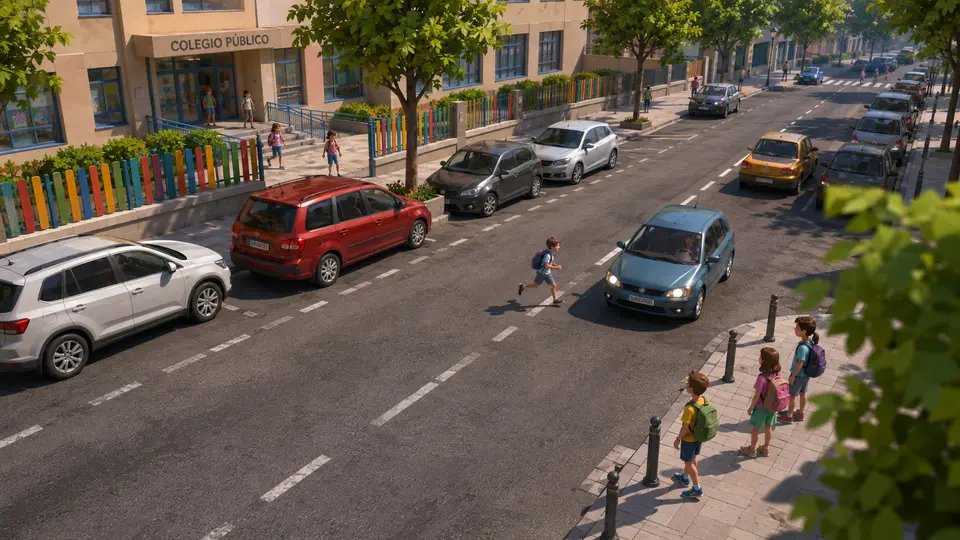
CAM-140A child crosses the road alone
«Tell me when a child steps into the road away from the crossing, and keep me a count of how often it happens, at what hour and at which spot.»
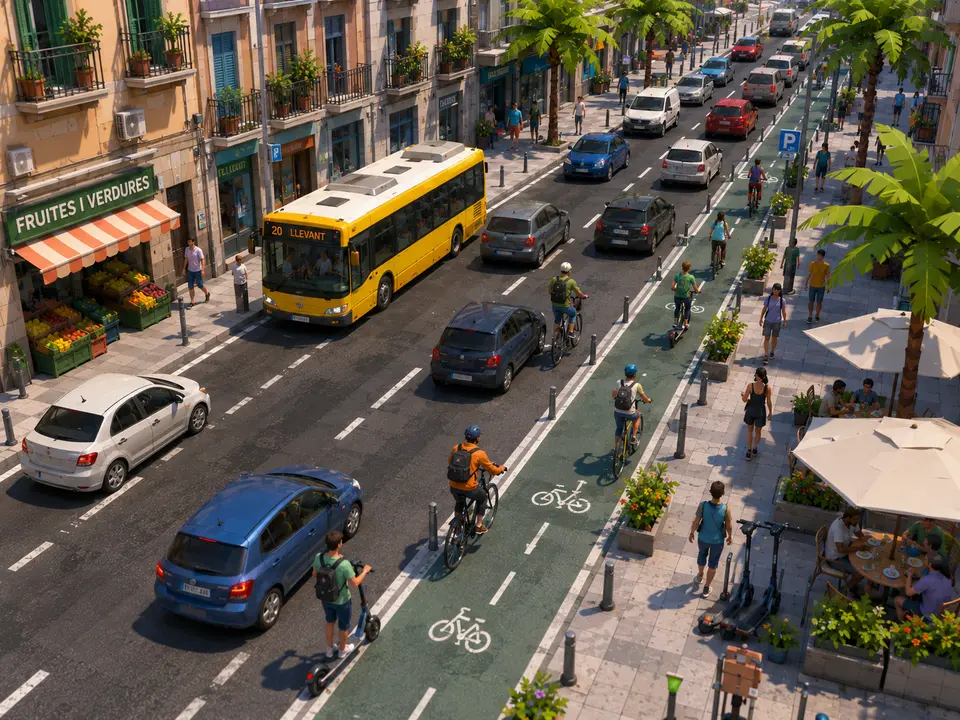
CAM-41Boulevard: cars, bikes and people
«Also tell me how many people ride past without a helmet, so I know whether we need a road-safety campaign.»
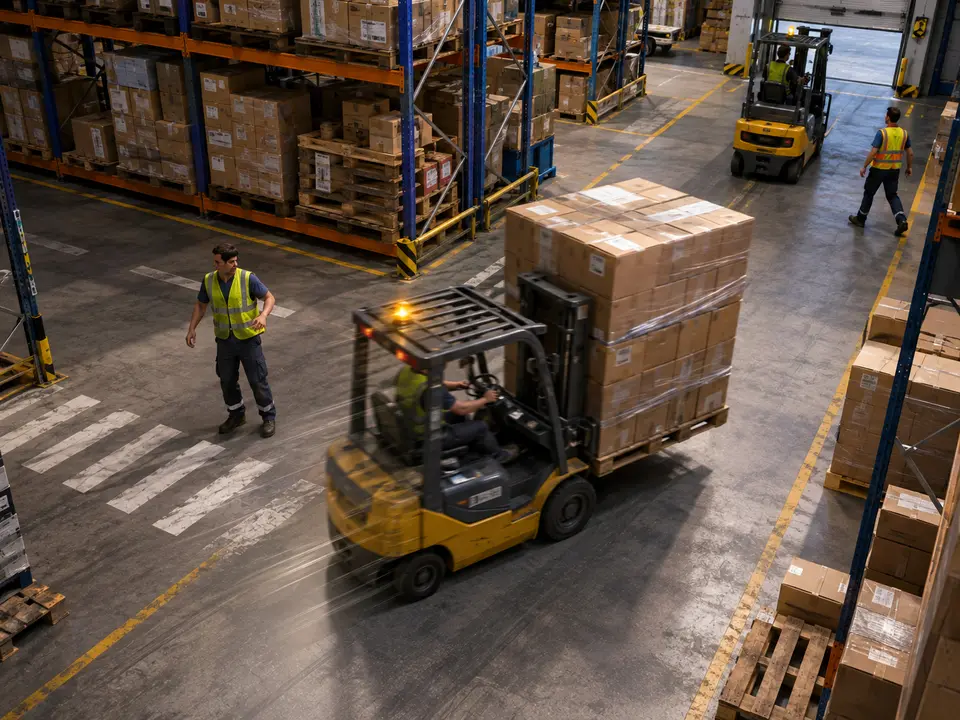
CAM-272Crossing the walkway without seeing what is ahead
«Tell me when a forklift crosses the walkway too fast or with the load blocking its view.»


What it does not do
IRIS does not brake the car or stop the forklift: it alerts, and a person decides. And it does not know who the pedestrian is: it identifies nobody and keeps no record of people.
Also, a coincidence in the image is not always a real risk: two things that look adjacent can be four metres apart. The criterion is tuned on site, with the people who know the aisle.
Questions
- Does it tell a child from an adult?
- Not by name, and it does not need to. IRIS identifies nobody: it does not recognise faces and does not know whose child is crossing. What it sees is a small person in a place where cars go, and that is what triggers the rule. For what is needed here — somebody looking at that spot now, and the event counted for later — knowing who they are adds nothing, and storing it would carry a cost not worth paying.
- Can it stop the forklift or the AGV?
- Not on its own, and that boundary should be respected. Stopping a machine is a safety function of the installation, with its own components, wiring and certification; a camera cannot take that place and should not claim to. What IRIS does is alert at once, keep the video and count how often it happens. If the site has a stopping system, that system rules; IRIS contributes the eye that sees the whole junction.
- Does it also count the times when nothing happens?
- Yes, and it is the most valuable thing it does here. A collision is data that arrives late: by the time it exists there is nothing left to prevent. Near misses, on the other hand, happen every week and are recorded nowhere today. Counting them turns a hunch — «that junction is dangerous» — into a list with dates, times and places. That is what justifies a mirror, a reversed direction or a different delivery schedule, and it justifies it to whoever pays.
- And at night or in the rain?
- It works, but not equally, and that should be said. A person in dark clothes, at night, with the road wet and reflecting headlights, is the hardest situation there is for any camera — and for the driver too. On a street with lamps it holds up well; on an unlit stretch you need lighting or a camera built for it. Inside a warehouse or a car park the problem does not arise, because the light is always the same.
Every simulation
Something has spilled
Tell me if there is liquid or foam outside its place and it is still there two minutes later.
- The sentence
- Where it applies
- What it finds
- The same rule
Not seeing yours here?
These words are the ones we have built, not the ones IRIS understands. The list falls short on purpose: you ask for it in a sentence, and sentences do not run out. Tell us what is in front of your cameras and we will tell you whether it understands it, or not yet.
And the best part
Finding something in yesterday’s videoshould take as long as asking for it.
No more scrubbing back through six hours with your finger on the mouse. You type what you are after, in plain words, and the matching moments come up. Same cameras as always.
Tell us your problem and we will say whether IRIS understands it, or not yet.
We reply the same working day.