CAM-272
Crossing the walkway without seeing what is ahead
Quarter past four in the main aisle. A forklift crosses the white painted walkway with a pallet stacked higher than the driver’s head: straight ahead he sees nothing. The amber beacon is lit and the image comes out blurred, which is what speed does in front of a camera. On the left, a worker in high-vis has stopped at the edge of the crossing, watching it go by. At the back another forklift comes in through the dock door.

Turn on IRIS Vision
AI-generated image
What IRIS is
IRIS watches the plant for you.
IRIS looks at the cameras you already have on the plant floor and understands what it sees: a stopped line, someone inside a robotic cell, someone without their safety gear on, jammed parts. When something like that happens, it alerts right away; and whatever can be counted, it counts in numbers. All day long, with no one needing to watch the screen.
You tell it what you need to watch, and IRIS does it.
Here, for example, IRIS times how long each forklift takes to cross the painted pedestrian crossing. That way you know whether that speed happens at the same time every day or just this once. With that number you decide whether to change the layout, add a mirror, or move the warning sign, and the next month you check if it's improved.
Works with the cameras you already have. Nothing to replace.
A person replies, not a form.
- Your footage never leaves your premises.
- It doesn't identify people.
- Certifications →
What IRIS understands
What it recognises in this scene
- forklift crossing the walkway
- stacked load blocking the view
- worker at the edge of the crossing
- painted pedestrian walkway
- forklift coming in through the dock
What this camera measures
An alert says something is happening. The reading says how much.
- 16:14Time of the run
- 1,9 sTime between the two lines
- 38Runs counted this shift
- 6Runs under the minimum time today
- 4People in shot
The figures on this screen are an example from the illustration, not any client's measurement.
The rule
You decide once. IRIS applies it always.
If
a forklift takes less than the set minimum between the two lines of the section
Then
- alert the supervisor with the camera, the section and the time
- save the video of the whole run between the two lines
- add the run to the section tally by hour and by shift
The instruction that set it up«Tell me when a forklift crosses the walkway too fast or with the load blocking its view.»
What changes
What changes for whoever answers for the plant
Nobody sees speed inside a warehouse: everyone has their own idea of what counts as fast. IRIS times how long a forklift takes to travel between two lines drawn on the floor, and that number comes out the same whoever measures it. The safety manager stops arguing about impressions: he has the section, the time, the count and the video. And with that you can change the layout, not just repeat Monday’s talk.
What people usually ask
How does a camera measure the speed of a forklift?
By timing. The warehouse draws two lines over the image, a known distance apart on the real floor, and IRIS measures how long each forklift takes to go from one to the other. If it takes less than the set time, there is an alert. This is not asked for in a sentence: a line cannot be described, it has to be drawn. That is why the number comes out the same every time, can be repeated and can be shown to anyone.
And what if the load blocks the view but the truck is slow?
It can also raise an alert, if the warehouse writes that rule. They are two different things and are set up separately: speed is time between two drawn lines, and a view-blocking load is a zone drawn over the walkway plus a load height above the truck’s overhead guard. What deserves an alert and what does not is decided by the plant, not by the camera. IRIS supplies what it sees, with the time and the video.
Does IRIS brake or limit the forklift?
No. IRIS alerts, it does not drive: it sends no signal to the vehicle and does not limit it. What it does is record every run with the time, the measured duration and the video. With that the warehouse decides whether to change the layout, add a speed hump, review the training or talk to the shift. The decision and the action stay with a person; the camera only puts in front of you what was not visible before.
Other cameras
- CAM-260 · A cage goes out through the wrong door
- CAM-261 · Two people, one turn of the gate
- CAM-262 · Hands on a trailer's rear lock
- CAM-263 · The trailer is at the wrong dock
- CAM-264 · The truck pulls away with a worker still inside
- CAM-265 · The pallet going into the truck is not the one for that route
Demo · IRIS at work
A camera looks. IRIS understands what it sees.
An extract of the real screen, no voice-over and hands-free. Each round poses another situation. What sits behind it is a good deal bigger than what you see.
- You ask
- IRIS searches
- It shows you
See it somewhere else
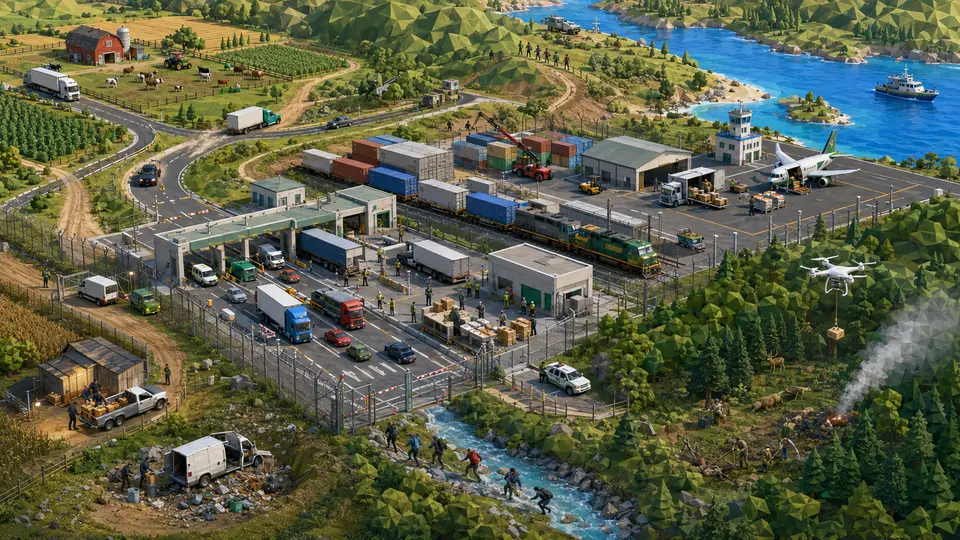
What can a camera see without pointing at anyone?
13 cases: 9 raise an alert when something happens and 4 only measure. You see each image as it is, and then with what IRIS understands on top.
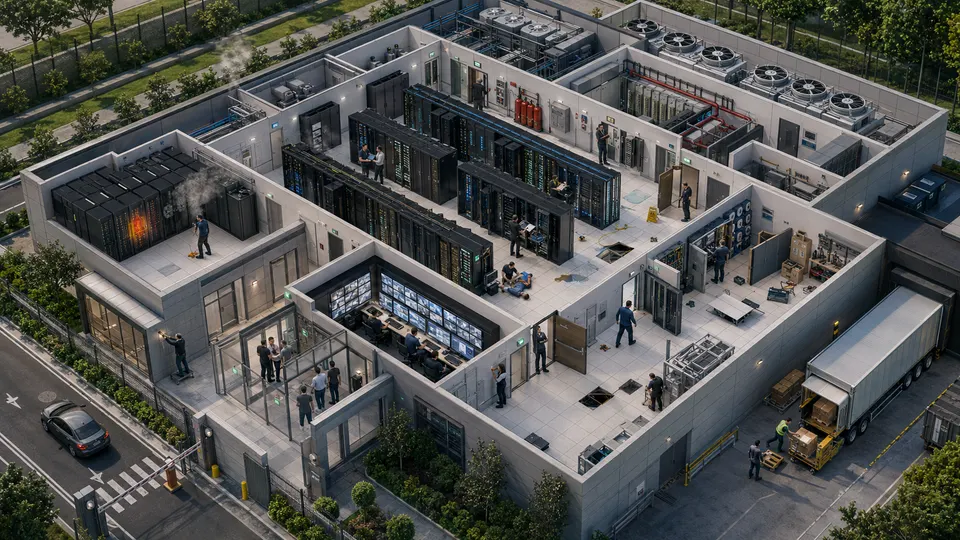
What if the outage does not start with an attack?
13 cases, and in every one of them IRIS raises an alert when something happens. You see each image as it is, and then with what it understands on top.


And the best part
What you bought was a warehouse of images.What you needed was someone to look at them.
Those same cameras that only fill disks today can flag what matters while it is happening. The warehouse stays; it just stops being all you have.
Tell us your problem and we will say whether IRIS understands it, or not yet.
We reply the same working day.