Solutions by typePersonal safety
How many times a day does this happen in the same aisle?
A white line and nothing else
It is 11:05 in aisle 4. The forklift comes through with three pallets and the load covers half the driver’s view. A picker steps out from between two racks, eyes on his scanner. They meet. The pedestrian jumps aside and carries on as if nothing happened. The driver does not brake, because he never saw anything worth braking for. Nobody got hurt, so nobody writes it down. It is the fifth time this month at that junction.
8 cameras across 4 sectors
What IRIS is
IRIS watches the cameras for you.
IRIS Neural is an artificial intelligence that watches the cameras you already have and understands what happens in front of them. When something important happens —or something you told it you need to keep an eye on—, it alerts you; and whatever can be counted, it counts in numbers. All day long, without anyone having to watch a screen.
You tell it what you need to watch, and IRIS does it.
Works with the cameras you already have. Nothing to replace.
A person replies, not a form.
- Your footage never leaves your premises.
- It doesn't identify people.
- Certifications →
This is how you ask for it
«Tell me when a forklift and a person share the same stretch of aisle, and count how many times a day it happens.»
That near miss is written down nowhere, so it does not exist. What exists is the day it goes wrong: a broken leg, an investigation, the forklift impounded and a warehouse that ships nothing for hours. Racking goes the same way. An upright dented three times gets inspected by nobody, until it gives way on an ordinary Tuesday and half the building has to be emptied.
You decide once
The warehouse manager decides once which stretches count as junctions and who gets the alert. The sentence is simple: if a person on foot and a forklift are in the same stretch at the same time, then tell the shift lead, keep the video and add one to that aisle’s count. And a second one: if a forklift hits a rack, tell maintenance. Decided once, and it holds across all three shifts.
In a warehouse the forklift is the hardest-working machine and the most frightening one. It moves fast because what gets measured is pallets per hour. It turns in tight spaces. And it often carries the load out in front, hiding exactly what the driver needs to see. The white line on the floor separates people from machines, but from the cab that line is invisible.
A struck-by inside a warehouse is almost never the first one. Ten near misses came before it at the same junction and none were recorded, because the one who jumped back went on working and the driver never noticed. Rack impacts go the same way: an upright hit three times gives way on an ordinary Tuesday, with two tonnes coming down on somebody. All of it happens in full view of a camera nobody is watching.
IRIS does both of the things that need doing here. It alerts when a person on foot and a forklift share the same stretch, and it keeps the video. And it counts those encounters by aisle, by hour and by shift. The first saves today’s scare. The second is what gets the aisle changed next month, because a plan showing the three points where it always happens is far harder to argue with than an opinion.
What changes
Before, if anyone mentioned the near miss, it went in a notebook and surfaced at the committee three months later. Mostly it was never mentioned. Now the shift lead gets the alert with the junction camera open, and the rack impact reaches maintenance the same day. And at month end there is a table with the three aisles where it all concentrates. That changes a traffic direction, not a talk.
Where we have seen it
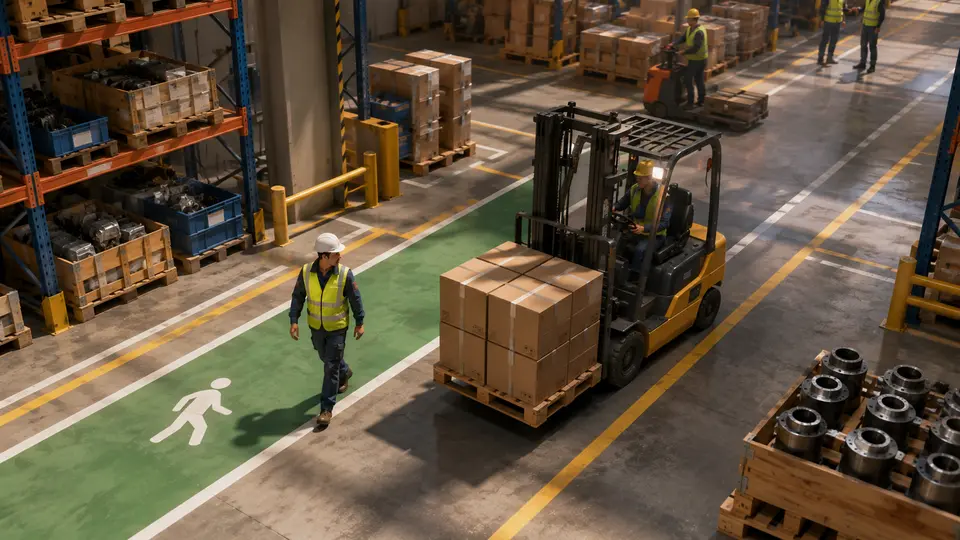
CAM-254Only a white line separates the pedestrian from the forklift
«Tell me when a forklift and a person are in the same stretch of aisle at once, and count how often it happens each day.»
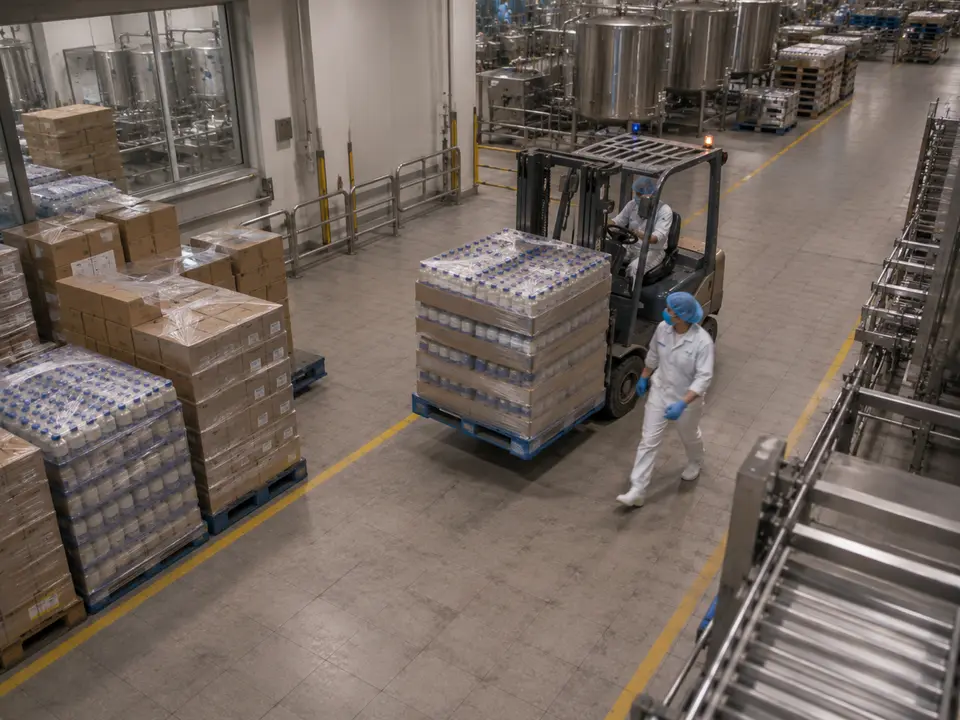
CAM-218The forklift passes right beside a person
«Tell me if a forklift and a person on foot get too close in the aisle, especially when the load blocks the driver's view.»
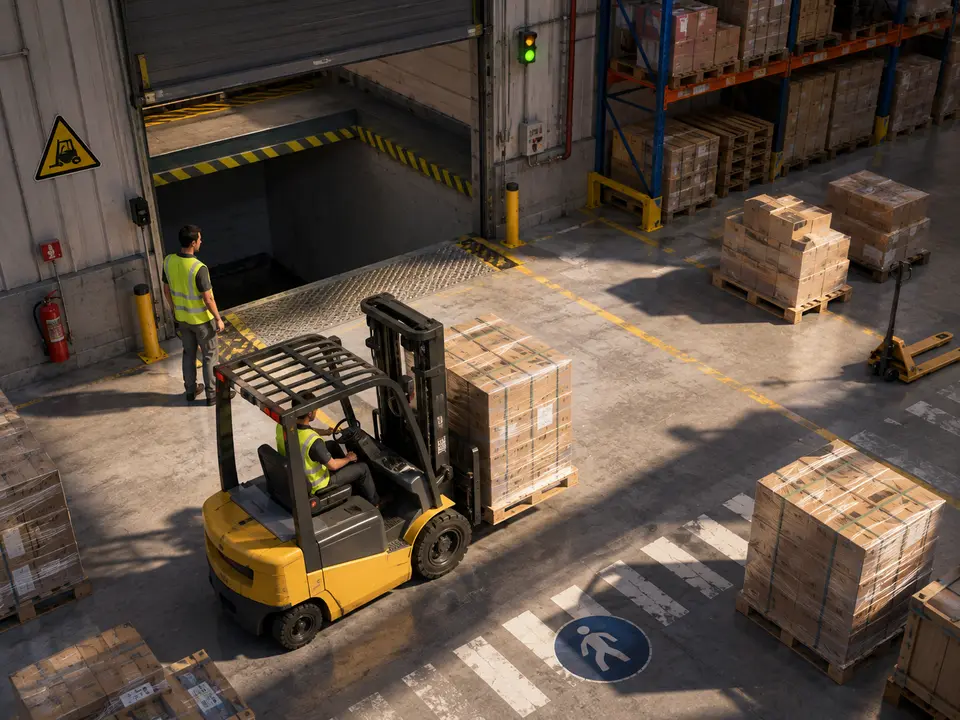
CAM-273Dock door open, and there is no truck behind it
«Tell me when a dock door is open with no truck behind it and a forklift or a person comes near.»
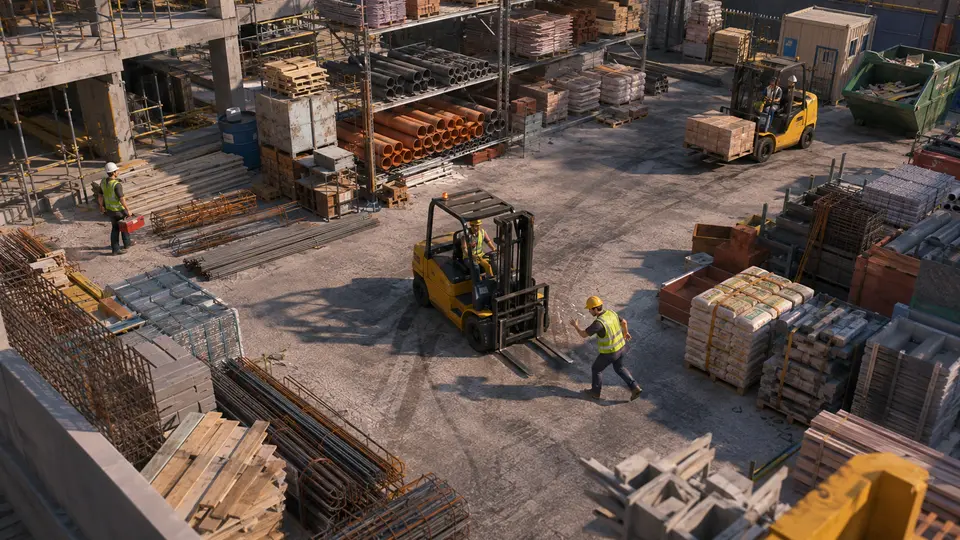
CAM-56On foot in front of the forklift
«Tell me when somebody is walking where the forklifts run, and tell me before the machine is right on top of him.»
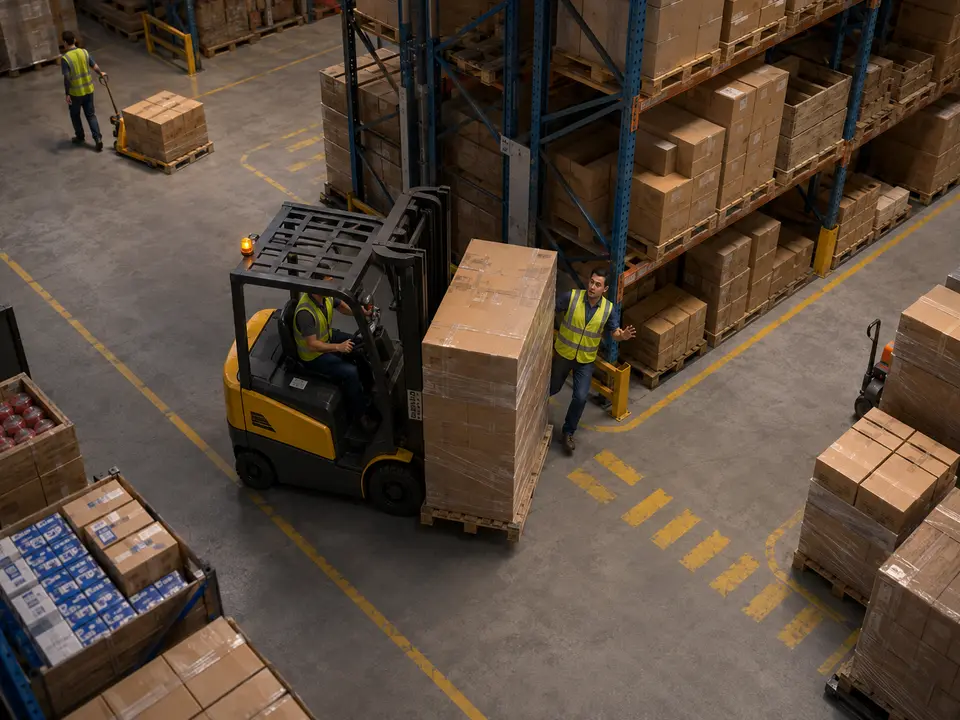
CAM-271The pedestrian jumps clear at the crossing
«Tell me when a person and a forklift are in the aisle 4 crossing at the same time, and save me the video.»
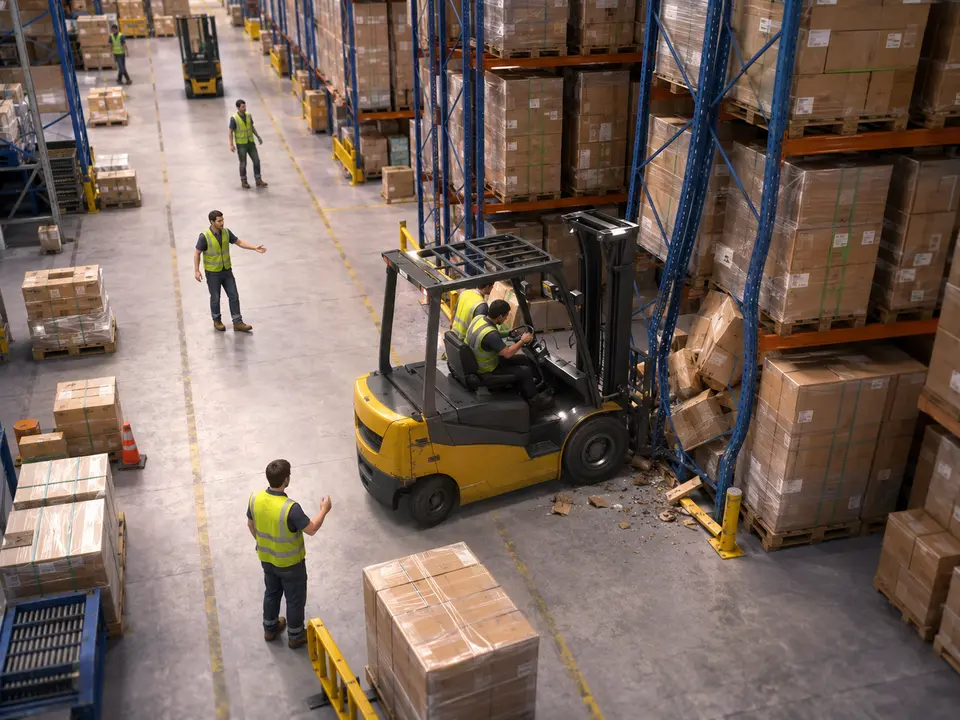
CAM-270A rack hit that nobody is going to report
«Tell me when a forklift hits a rack, and save me the video of the impact.»
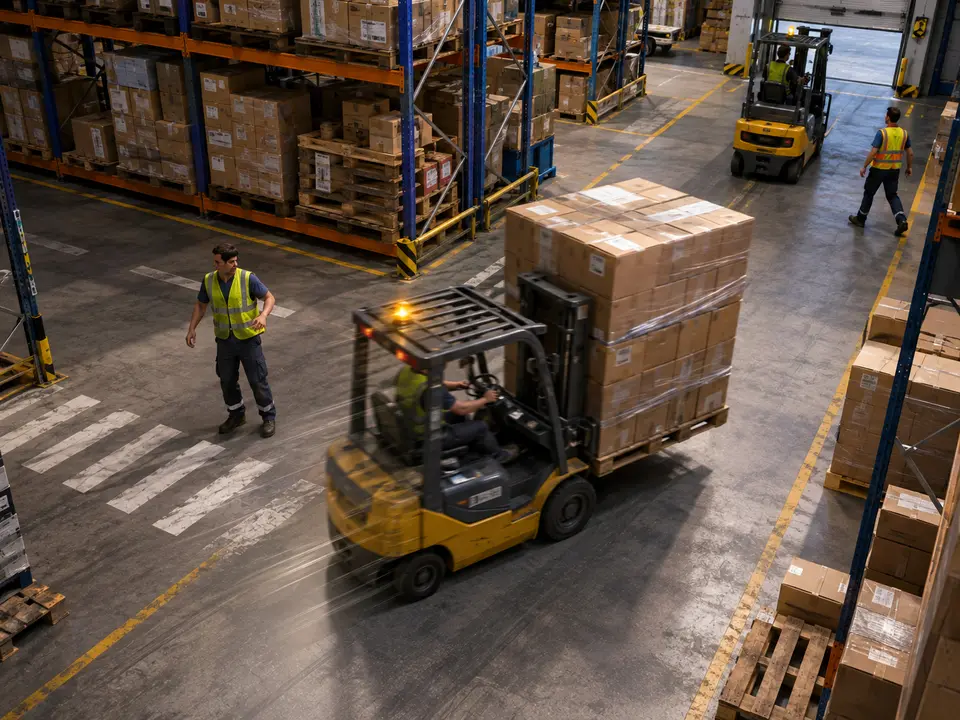
CAM-272Crossing the walkway without seeing what is ahead
«Tell me when a forklift crosses the walkway too fast or with the load blocking its view.»
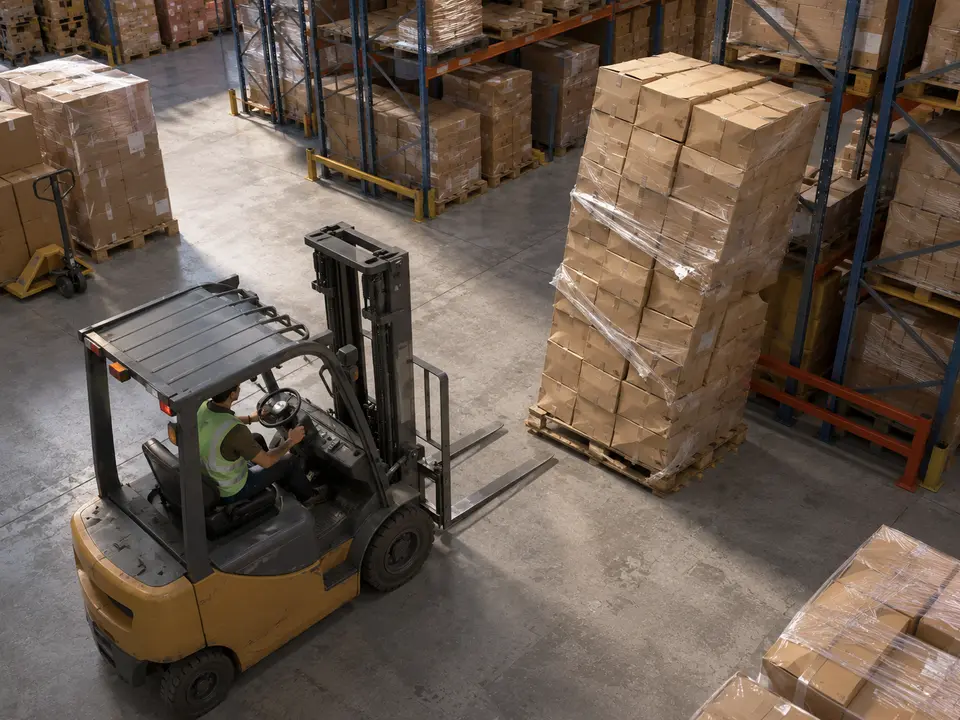
CAM-269A pallet stacked too high, leaning, with the wrap hanging loose
«Tell me if there is a leaning pallet or one with loose wrap in the aisle, especially if a forklift is coming.»


What it does not do
IRIS does not read the forklift number and does not know who is driving. It talks about machines and people in a stretch of aisle, not about individual drivers.
Nor does it measure exact centimetres or know whether the driver ever saw the person. It flags that the two coincided and keeps the video so someone who knows that aisle can judge.
Questions
- Does IRIS alert, or does it count?
- Both, and they are not asked for in the same way. The alert is asked for in words: a sentence, tell me when a forklift and a person share the same stretch. The count is set up by drawing the line or the zone on the image, because a line cannot be described in words: it has to be traced. That is why the resulting number is repeatable and can be audited. One camera can do both at once.
- Does it count as a near miss if they never touch?
- Yes, and that is where all the value is. You define it on the plan: usually, a person on foot and a forklift being inside the same stretch of aisle or the same junction at the same time. No contact is needed, because the ones that never touched are the only ones you can still learn from. A single alert is an anecdote. The same count over a month is a map of where the railing should go.
- Does it catch impacts against the racking?
- Yes, and it is one of the most requested scenes in logistics, because a knock nobody records is a rack nobody inspects. IRIS marks the moment of impact and keeps the video of it, with the time and the aisle. With that, maintenance can look at the upright before it gives way rather than after. You can also ask for the leaning pallet or the loose wrapping, which is the early warning of the same problem.
- Does anything have to be fitted to the forklifts?
- No. Everything is seen from the cameras already in the aisle. No tags, beacons or sensors have to be fitted to the machines, no fleet has to change, and the driver does not have to carry anything. That matters more than it seems: a system that depends on somebody wearing a device stops working the day that device runs flat or simply stays in the locker.
A different case every time
Watch what happens. Then watch what IRIS does with it.
Not a recorded video and not a drawing: it is a summary of the real tool, with a different case each time round. The whole tool does not fit in a box.
- You ask
- IRIS searches
- It shows you
Not seeing yours here?
These words are the ones we have built, not the ones IRIS understands. The list falls short on purpose: you ask for it in a sentence, and sentences do not run out. Tell us what is in front of your cameras and we will tell you whether it understands it, or not yet.
And the best part
The door was left open at two.Finding out at nine is no use to anyone.
The video tells you at nine. IRIS says it at two, with the camera, the time and the images from that moment. The difference between the two is whether someone can go.
Tell us your problem and we will say whether IRIS understands it, or not yet.
We reply the same working day.