CAM-519
Someone on the floor and a briefcase nobody comes back for
Mid-morning in a high-street branch. A person is lying face down on the lobby floor, not moving; their glasses have fallen a hand’s width away. An employee has crouched down to help and two customers have turned round. At the other end of the room, propped beside the waiting-area sofa, there is a briefcase nobody has been near for six minutes. IRIS sees both things at once: there is someone on the floor who is not getting up, and there is a bag on its own. It does not know who that person is or what has happened to them.

Turn on IRIS Vision
AI-generated image
What IRIS is
IRIS watches the branch so you don't have to.
IRIS is an artificial intelligence that watches the cameras you already have at the branch and understands what's happening at queues, ATMs, and service desks. When a queue gets long, a desk is left unattended, or something you've asked it to watch happens, it alerts you — and whatever can be counted, like people waiting, it counts in numbers. All day long, with no one needing to watch a screen.
You tell it what you need to watch, and IRIS does it.
Here, for example, IRIS sees two things at once: someone lying on the floor who is not getting up, and a bag left alone with nobody near it. It alerts the branch screen and the operations centre right away, with the camera, the location and the time, and the live video open. That buys minutes until someone who knows how to help arrives, and the bag's own clock gets logged too.
Works with the cameras you already have. Nothing to replace.
A person replies, not a form.
- Your footage never leaves your premises.
- It doesn't identify people.
- Certifications →
What IRIS understands
What it recognises in this scene
- person lying on the floor
- employee helping
- briefcase with nobody beside it
- fallen glasses
- customer calling for help
- customer reacting
- person seated in the waiting area
- counter with staff
What this camera measures
An alert says something is happening. The reading says how much.
- 48 sMotionless for
- 6 min 10 sBag alone for
- 1People helping
- 6People in the lobby
- 11:24:06Video saved from
The figures on this screen are an example from the illustration, not any client's measurement.
The rule
You decide once. IRIS applies it always.
If
a person has been lying still in the lobby for more than thirty seconds, or a bag has had nobody beside it for more than five minutes
Then
- alert the branch and the operations centre with the camera, the place and the time
- open the live video from that camera
- save the clip from one minute before the fall and from the moment the bag was left
The instruction that set it up«Tell me if somebody has been lying still on the lobby floor for more than thirty seconds, and tell me too if a bag is left alone in the public area for more than five minutes.»
What changes
What changes for whoever answers for the branch network
A branch has two or three staff, and the second one of them crouches to help the person on the floor is exactly the second nobody is watching the rest of the room. The alert reaches someone who can act — the branch screen and the operations centre — with the camera, the place and the time, and with the live video already open. What is gained is the only thing there is to gain: minutes until someone who knows how to help arrives. And the briefcase is on the record with its own clock, which on a morning like that is precisely what nobody writes down.
What people usually ask
Does IRIS know what has happened to that person?
No, and it is not going to. IRIS makes no diagnosis and identifies nobody: what it sees is a person lying still in a place where nobody lies down, and how long they have been like that. Who they are and what is wrong is decided by whoever attends them, and they get there sooner because they know which branch and which spot in the room. The camera provides the place and the minute, not a medical opinion.
And what if the briefcase belongs to the person who has fallen?
It may well be, and that is exactly what has to be checked by looking. IRIS reports a fact, not a conclusion: there is a bag on the floor and nobody has been beside it for five minutes. Whoever gets the alert opens the video and in ten seconds knows whether it belongs to the person who fell, to someone who stepped over to the cash machine, or to nobody. One alert too many costs ten seconds; one alert too few costs rather more. The branch writes the time limit and can tune it room by room.
What does this camera not see?
It sees the lobby floor from above, and that is where it ends. It does not see what is inside the briefcase, and it cannot. It does not see what goes on behind the counter or in the cash-machine area: those are other cameras. And if someone falls behind a sofa or a large plant, that patch of floor is hidden and this camera does not cover it. That is why there is one camera per point and not one for the whole branch: an honest frame is the one that says where it stops.
Other cameras
- CAM-510 · The queue tells you how many desks you need at that hour
- CAM-511 · Five people waiting and a desk set up with nobody at it
- CAM-512 · Two people through the door on a single opening
- CAM-513 · A restricted door standing open and someone waiting outside
- CAM-514 · An operation that takes two people, and there is one in the room
- CAM-515 · Someone has been in the ATM lobby for twenty-two minutes
Demo · IRIS at work
Watch what happens. Then watch what IRIS does with it.
Not a recorded video and not a drawing: it is a summary of the real tool, with a different case each time round. The whole tool does not fit in a box.
- Cameras on the map
- You draw an area
- What passed shows up
See it somewhere else
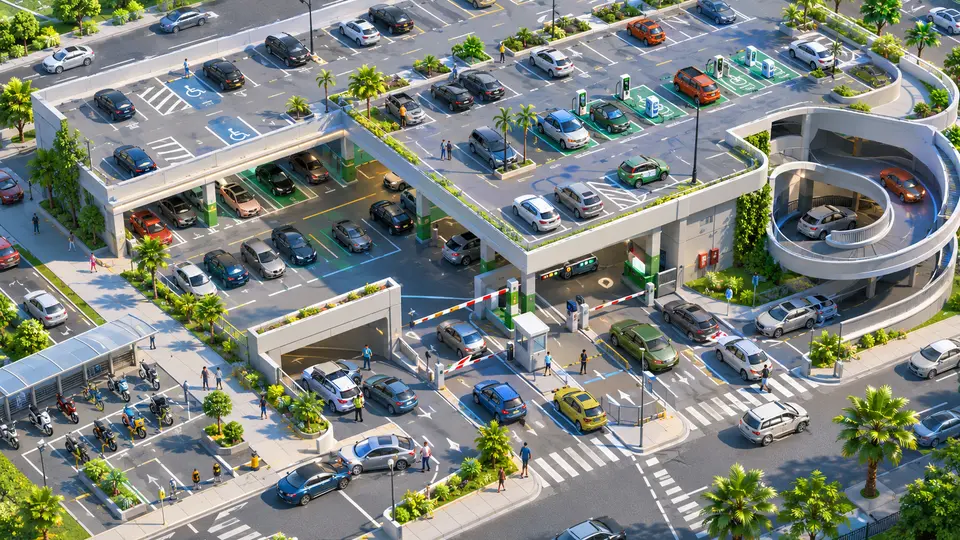
How many bays are free right now?
15 cases: 9 raise an alert when something happens and 6 only measure. You see each image as it is, and then with what IRIS understands on top.

What does a venue with twenty thousand people inside see?
15 cases: 11 raise an alert when something happens and 4 only measure. You see each image as it is, and then with what IRIS understands on top.


And the best part
No building work, no trenches, no new cabling:the cameras are already up and already looking.
What changes is what happens to the picture. It used to be stored and never seen; now it is understood while it happens, on the same equipment you bought years ago.
Tell us your problem and we will say whether IRIS understands it, or not yet.
We reply the same working day.