CAM-517
A cash box crosses eight metres of pavement
Mid-morning. The armoured van is stopped at the kerb with its rear doors open. Two people from the crew carry a cash box to the branch door, where a third one waits. Between the van and the door there are eight metres of pavement: it is the only stretch of the journey where the money is in plain sight. IRIS times that stretch — when the doors open, how long the walk takes, when the box goes in — and alerts on one thing only: the rear door still being open with nobody from the crew beside it.

Turn on IRIS Vision
AI-generated image
What IRIS is
IRIS watches the branch so you don't have to.
IRIS is an artificial intelligence that watches the cameras you already have at the branch and understands what's happening at queues, ATMs, and service desks. When a queue gets long, a desk is left unattended, or something you've asked it to watch happens, it alerts you — and whatever can be counted, like people waiting, it counts in numbers. All day long, with no one needing to watch a screen.
You tell it what you need to watch, and IRIS does it.
Here, for example, IRIS times those eight metres of pavement: when the van's doors open, how long the walk takes, and when the box goes in. It only alerts on one thing: the rear door staying open with nobody from the crew beside it. With that record you decide whether the transfer was normal or needs a question asked.
Works with the cameras you already have. Nothing to replace.
A person replies, not a form.
- Your footage never leaves your premises.
- It doesn't identify people.
- Certifications →
What IRIS understands
What it recognises in this scene
- rear door open, 2 minutes
- armoured van
- cash box
- person carrying the box, in front
- person carrying the box, behind
- crew member at the door
- branch entrance
What this camera measures
An alert says something is happening. The reading says how much.
- 2 min 10 sHow long the rear door has been open
- 38 sHow long the box took to cross
- 8 mMetres of pavement in the open
- 3Crew members on the pavement
- 10:14Time of the alert
- 10:12:31Video saved from
The figures on this screen are an example from the illustration, not any client's measurement.
The rule
You decide once. IRIS applies it always.
If
the van’s rear door has been open for more than sixty seconds and there is nobody from the crew within two metres
Then
- alert the control room with the camera, the time and how long the door has been open
- save the video from the minute the van’s doors were opened
- log the collection with the time the doors opened, how long the walk took and the time it went in
The instruction that set it up«Tell me if the van’s rear door stays open more than a minute with nobody from the crew beside it, and keep the time of every collection for me.»
What changes
What changes for whoever answers for the branch network
A van is armoured and a safe is a safe. What is fragile is the eight metres of pavement in between, and today nobody times those eight metres. IRIS leaves a record of every collection: when the doors opened, how long the walk took, what time the box went in. When everything goes well — which is almost always — that record interrupts nobody: it just sits there. The day a transfer takes three times as long, or the rear door stays open with nobody in the van, somebody will know while it is happening and not three weeks later. Video stops being a tape and becomes a memory you can ask questions of.
What people usually ask
Does IRIS recognise the crew?
No. IRIS identifies nobody and stores no names. What it tells apart is a position, not a person: either somebody is within two metres of the open door, or nobody is. If a different crew comes tomorrow, the rule works just the same, because the rule says nothing about who anyone is.
Is it any use if the collection goes fine every single day?
It is useful precisely because of that. Since it goes fine every day, nobody watches it — and on the day it does not go fine, nobody will be watching either. And the record is not only for the bad day: with the times of a hundred collections you can see what a normal transfer takes at that branch, and one that takes three times as long stops being an impression and becomes a figure. That protects the crew doing the job too.
What can this camera not see?
It does not know what is inside the box, it does not check whether the collection was scheduled and it does not see inside the van. And it has a blind spot worth saying out loud: with the vehicle parked between the camera and the pavement, its own bodywork hides part of the route. That is why the transfer zone is drawn from the back of the van to the door and not from one side of the street to the other, and why the record keeps times and durations, which are what can actually be measured from here.
Other cameras
- CAM-510 · The queue tells you how many desks you need at that hour
- CAM-511 · Five people waiting and a desk set up with nobody at it
- CAM-512 · Two people through the door on a single opening
- CAM-513 · A restricted door standing open and someone waiting outside
- CAM-514 · An operation that takes two people, and there is one in the room
- CAM-515 · Someone has been in the ATM lobby for twenty-two minutes
The real interface, step by step
This isn’t a video. It’s a slice of the real screen.
A summary of the real interface, played hands-free. You see one case from start to finish; what you do not see are the other screens, and there are many.
- The alert fires
- You open it
- You confirm or dismiss
See it somewhere else
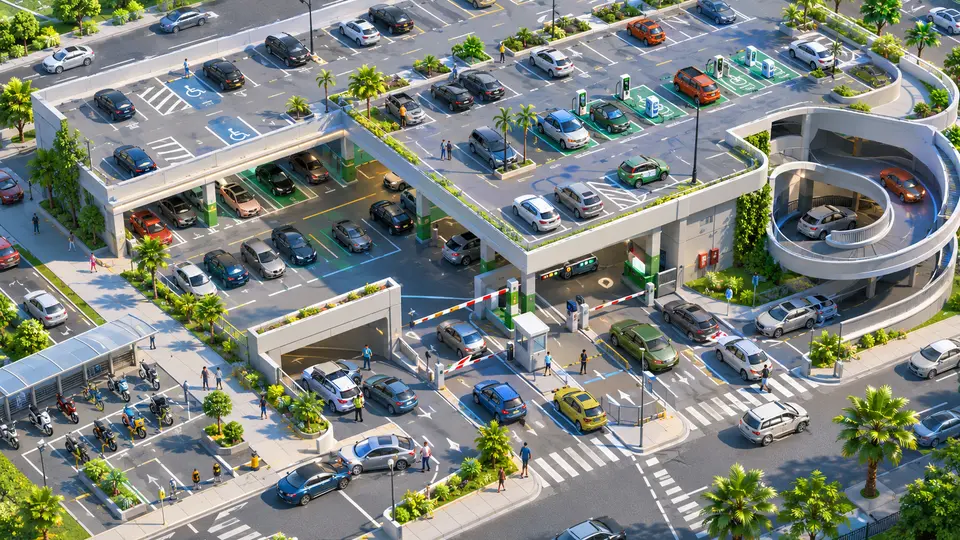
How many bays are free right now?
15 cases: 9 raise an alert when something happens and 6 only measure. You see each image as it is, and then with what IRIS understands on top.

What does a venue with twenty thousand people inside see?
15 cases: 11 raise an alert when something happens and 4 only measure. You see each image as it is, and then with what IRIS understands on top.


And the best part
At four in the morning,the camera is still watching just as it does at noon.
No heavy eyelids, no distractions, no shift change. What happens at night is understood at night, not the next morning.
Tell us your problem and we will say whether IRIS understands it, or not yet.
We reply the same working day.