CAM-95
Bus bays
The bus bays seen from the lamp post at the entrance: eight marked slots on the ground, five with a bus in them and three free, and one bus manoeuvring to leave.

Turn on IRIS Vision
AI-generated image
What IRIS is
IRIS keeps watch over the platform for you.
IRIS looks at the cameras you already have on platforms, gates and entrances and understands what's happening: an overcrowded platform, someone falling onto the tracks, a fight or a forced gate. When something important happens, it alerts you; and whatever can be counted, it counts. All day long, with no one watching a screen.
You tell it what you need to watch, and IRIS does it.
Here, for example, IRIS times how long each bus stays in its bay and how many bays are occupied at any moment. That's how you know which bay gets used fourteen hours a day and which one sits empty half the morning. With that number you decide whether to reassign the bays, and next month you check if the split improved.
Works with the cameras you already have. Nothing to replace.
A person replies, not a form.
- Your footage never leaves your premises.
- It doesn't identify people.
- Certifications →
What IRIS understands
What it recognises in this scene
- bus
- free bay
What this camera gives back
Nobody gets an alert here. Here you get numbers.
- 5 / 8Bays in use
- 11 minAverage time in the bay
- 148Departures
- 17:30Peak hour
- 3Over their slot
- 312Total today
The figures on this screen are an example from the illustration, not any client's measurement.
The series, not one figure
One number says nothing. A curve does.
Bays in use by time slot
- Bays in use
| Slot | Bays in use |
|---|---|
| 06 | 3 / 8 |
| 08 | 7 / 8 |
| 10 | 5 / 8 |
| 12 | 4 / 8 |
| 14 | 5 / 8 |
| 16 | 6 / 8 |
| 18 | 8 / 8 |
| 20 | 6 / 8 |
| 22 | 2 / 8 |
The figures on this screen are an example from the illustration, not any client's measurement.
How the counting works
Counting is not something you ask for. You draw a line.
A single area is painted over the eight bays. IRIS is not counting buses that go past: it measures who is inside each slot and how long they have been there. When a bus enters a bay a clock starts, and when it leaves the clock stops. Three things come out of that: how many slots are in use right now, how long each bus holds its slot on average, and how many go over their allotted time. An outline like that cannot be described in a sentence: it is drawn onto the frame, once, and it stays there.
- bay zone · Dwell zone
What changes
What changes for whoever runs the station
Bays get handed out by habit: this route has always pulled in here and nobody remembers why any more. When a new route arrives, a gap is found by eye and, if there is friction, it gets argued out. With the area in place, the operations manager finally has the real split: which bay is occupied fourteen hours a day and which sits free all morning, at what time they all fill up at once, and how many buses stay longer than their allotted slot. With that, bays are reassigned with a month of data in front of you instead of by custom. And when a route asks to move, the answer stops being an opinion.
What people usually ask
Does IRIS read the bus's plate or route number?
To measure how a bay is used you do not need to know which bus it is: it is enough to know that there is one and since when. That is how this camera is set up, which is why the figure describes the slot, not the vehicle. If the split also had to be broken down route by route, that is a different configuration: it is agreed before installing, what is read and what for is stated, and it goes in writing. We prefer to start with whatever solves the problem with the least, and to read nothing that does not need reading.
What exactly is the time in the bay?
The time in the bay is how long one slot is held by the same bus, from the moment it pulls in to the moment it pulls out. It is not the service dwell time and it is not the delay: it is occupancy of ground. It is useful for what usually breaks: eight bays and forty departures in the peak hour do not fit if each bus holds its slot for eleven minutes, and they do fit if it holds it for six. The counter for buses over their allotted time shows where the allocation jams, without pointing at anyone: it says which slot and at what hour.
Does this work with covered bays and buses parked close together?
It works if the camera can see the ground of each slot, and that is the condition to check before installing, not afterwards. One bus hides another easily, so where the camera goes matters more here than in any other scene in this zone: the higher it sits and the more square-on to the row, the better the slots separate. Under a canopy you lose light and gain hard shadow, and that gets tested at the actual spot before any figure is taken as good. If a stand is not good enough to measure, we say so and we look for another framing, or two cameras instead of one.
A different case every time
Watch what happens. Then watch what IRIS does with it.
Not a recorded video and not a drawing: it is a summary of the real tool, with a different case each time round. The whole tool does not fit in a box.
- It lands in the tray
- You open it
- You confirm or dismiss
See it somewhere else

What can a camera see without pointing at anyone?
13 cases: 9 raise an alert when something happens and 4 only measure. You see each image as it is, and then with what IRIS understands on top.
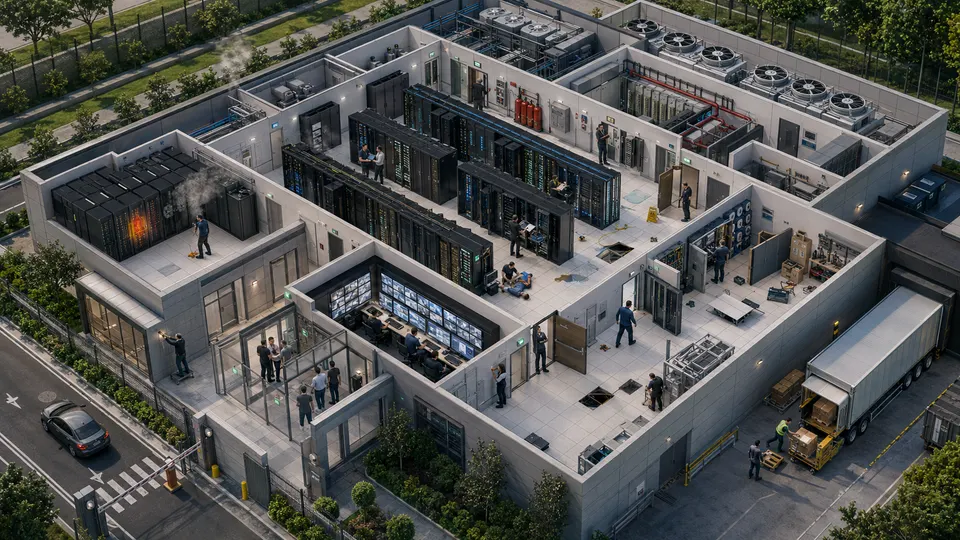
What if the outage does not start with an attack?
13 cases, and in every one of them IRIS raises an alert when something happens. You see each image as it is, and then with what it understands on top.


And the best part
At four in the morning,the camera is still watching just as it does at noon.
No heavy eyelids, no distractions, no shift change. What happens at night is understood at night, not the next morning.
Tell us your problem and we will say whether IRIS understands it, or not yet.
We reply the same working day.