Solutions by typePersonal safety
How many minutes has that child been alone?
He walked out of the gate alone
It is 16:55 at the school gate. Fifty families at once, backpacks, cars double-parked. An infant-class child comes out with the group, does not find anyone he knows and keeps walking towards the pavement. His father is on his way and running late. The teacher on duty is separating two children who are shoving each other. Nobody has seen that child leave, and the road is six metres away.
8 cameras across 2 sectors
What IRIS is
IRIS watches the cameras for you.
IRIS Neural is an artificial intelligence that watches the cameras you already have and understands what happens in front of them. When something important happens —or something you told it you need to keep an eye on—, it alerts you; and whatever can be counted, it counts in numbers. All day long, without anyone having to watch a screen.
You tell it what you need to watch, and IRIS does it.
Works with the cameras you already have. Nothing to replace.
A person replies, not a form.
- Your footage never leaves your premises.
- It doesn't identify people.
- Certifications →
This is how you ask for it
«Tell me if a small child crosses the gate towards the street with no adult beside them.»
What follows is always the same: ten minutes searching the floor and asking people, fifteen to put out a tannoy call, half an hour scrubbing back through cameras with your heart in your mouth. In a shopping centre, tills stop and every member of staff is pulled in. It almost always ends well, so nothing changes, until the day the door leads not to an aisle but to a road with cars on it.
You decide once
The head teacher decides once the window in which pick-up has to be accompanied and who receives the alert. In one sentence: if a small figure crosses the gate towards the street, between half past four and quarter past five, and there is no adult beside them, then tell the front desk and open that camera. Outside that window, the rule says nothing at all.
In a school and in a shopping centre the fear is exactly the same, even if it does not look like it: a child gets separated and minutes go by that cannot be recovered. At the school gate it happens at home time, the busiest and least controlled moment of the day. In a shopping centre aisle it happens in four seconds in front of a window display, while somebody checks a price.
What makes it hard to see is not a shortage of cameras: it is that nobody knows yet that they should be looking. By the time somebody notices, five or ten minutes have gone, and in ten minutes a four-year-old can be two floors down or across a pedestrian crossing. The recording exists in full, but it is spread across forty cameras and has to be scrubbed backwards.
IRIS watches what can be seen. A small figure crossing the gate towards the street with no adult beside them, within the window when pick-up must be accompanied. Or someone small who has been alone and still for too long in a thoroughfare. And if a search is needed, you search with the description the family has just given: the clothing they mentioned, where has that been seen in the last ten minutes. You never search for a person. You search for a description, and you find it in minutes instead of half an hour.
What changes
Before, home time was covered by two people and good intentions, and if a child slipped out towards the street it was noticed by chance. Now the front desk gets the alert while the child is still on the pavement, with the camera open, and somebody goes out to fetch them. And if a search is needed in a shopping centre, you ask about the clothing and get cameras and times in order.
Where we have seen it

CAM-545A child alone in the middle of the walkway, and minutes count
«Show me where you have seen a child on their own over the last ten minutes matching the description the family has just given at the desk.»
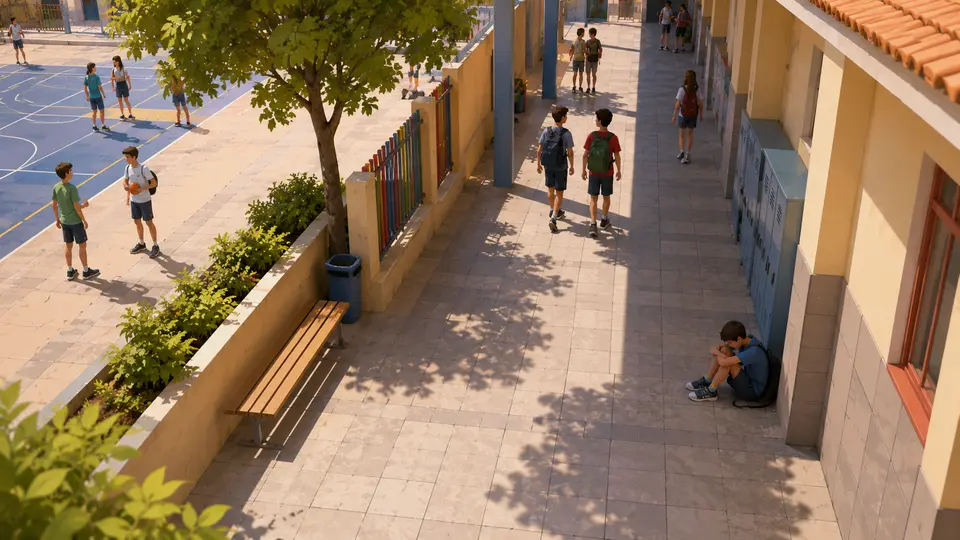
CAM-132The whole break in the same spot
«Tell me if a child spends the whole break in the same spot without going near any group, and tell me too if it repeats day after day.»
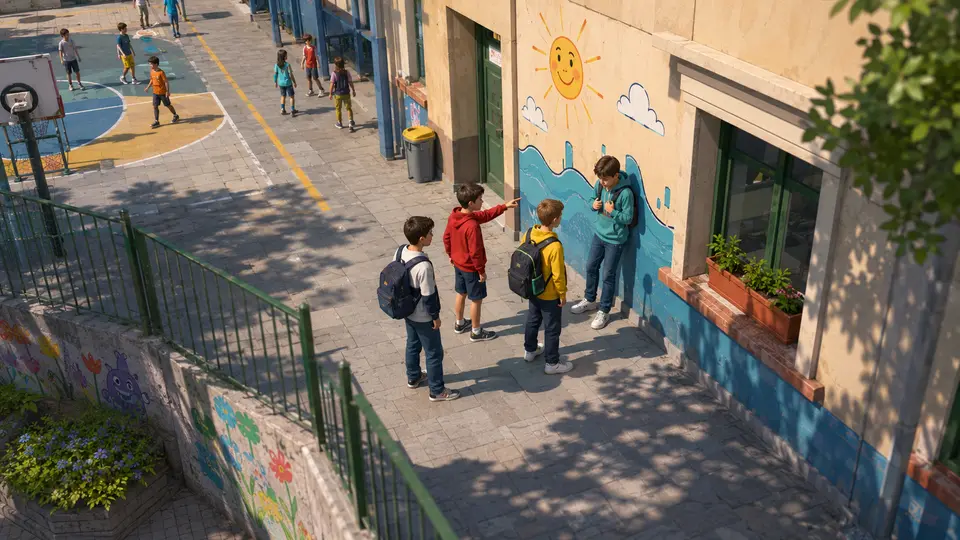
CAM-133A closed circle in a corner
«Tell me if a circle closes around a child in the corners of the yard we can't see from where we stand, and tell me if it repeats in the same place.»
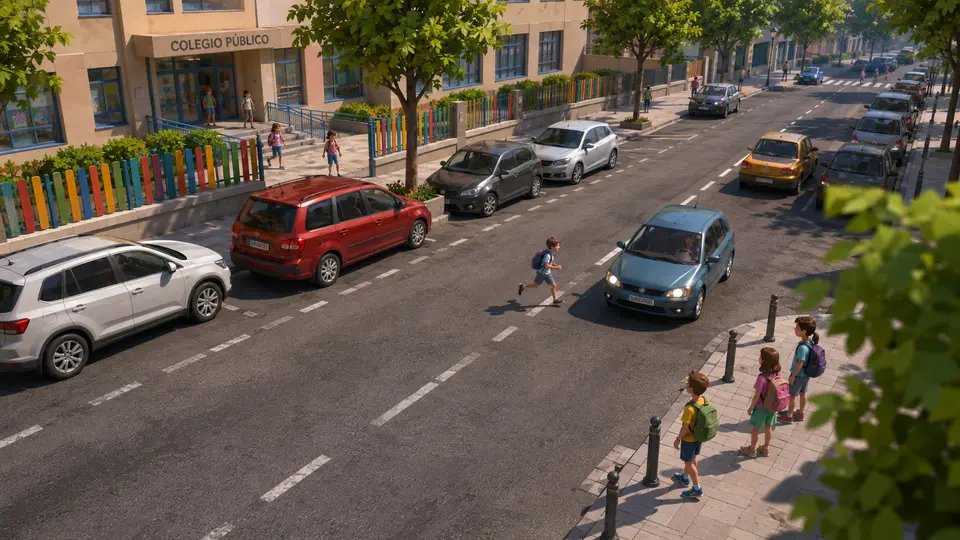
CAM-140A child crosses the road alone
«Tell me when a child steps into the road away from the crossing, and keep me a count of how often it happens, at what hour and at which spot.»
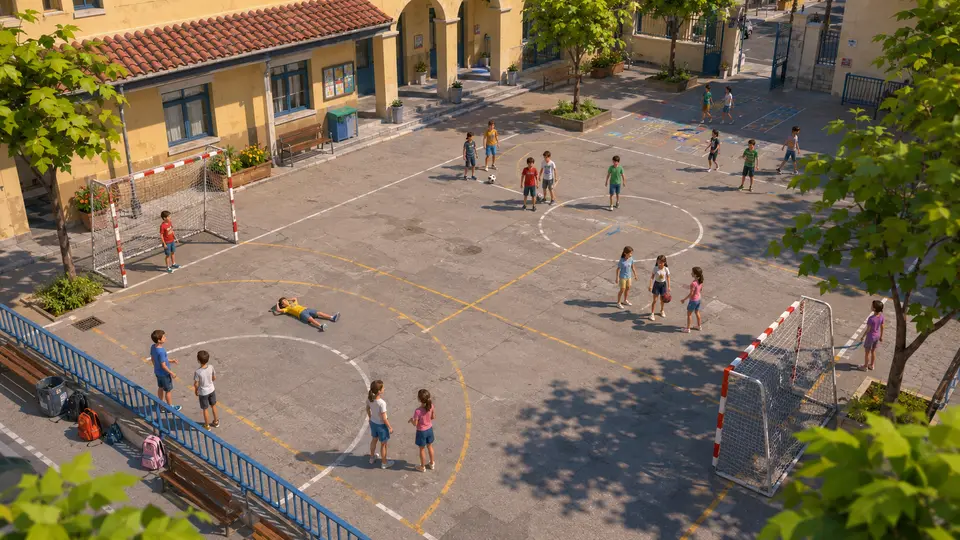
CAM-131A child on the ground in the yard
«Tell me if a child stays down on the ground and doesn't get up, even with a full yard and nobody noticing.»
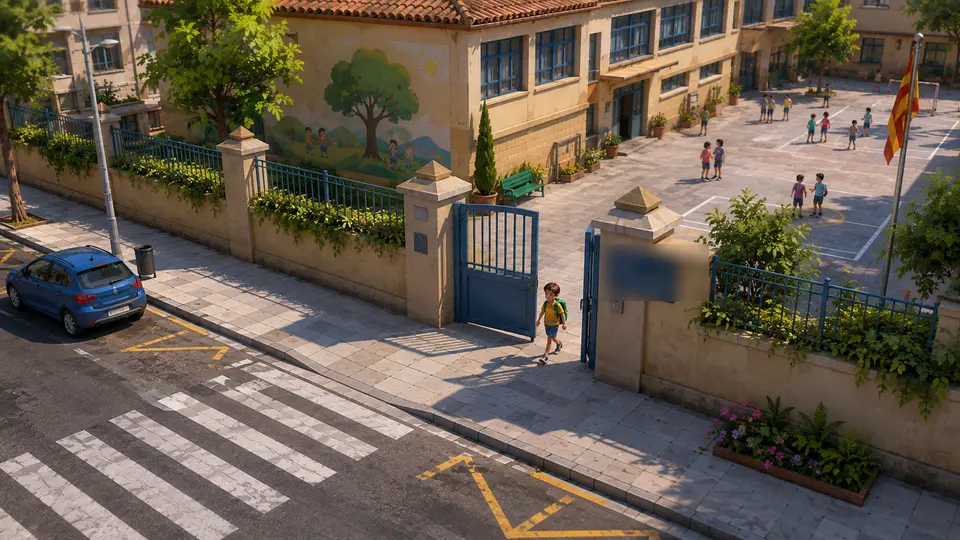
CAM-139A child leaves school on their own
«Tell me if a small child comes through the gate towards the street with no adult beside them, during the slot when leaving has to be accompanied.»
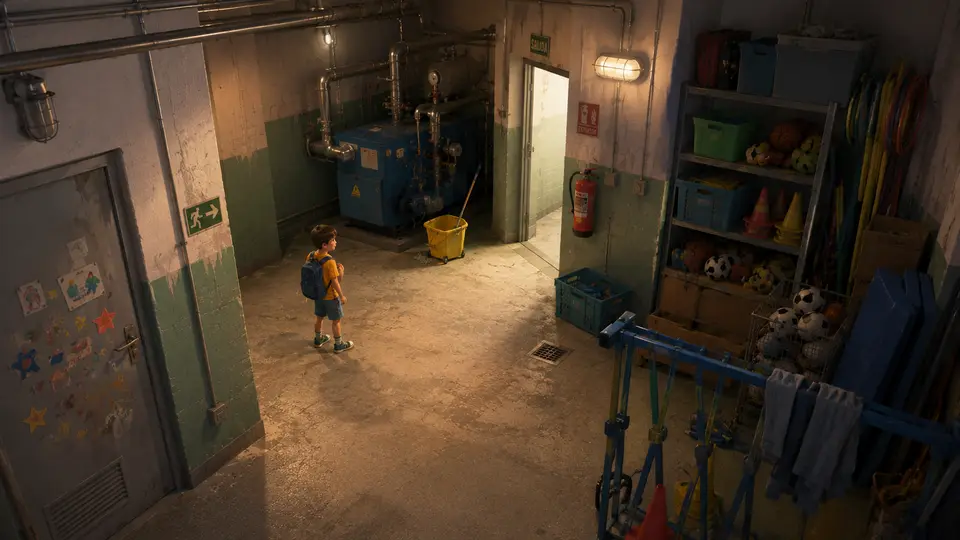
CAM-134A child in a marked-off area
«Tell me if anyone goes into the boiler room or the equipment store — nobody is in there on their own.»
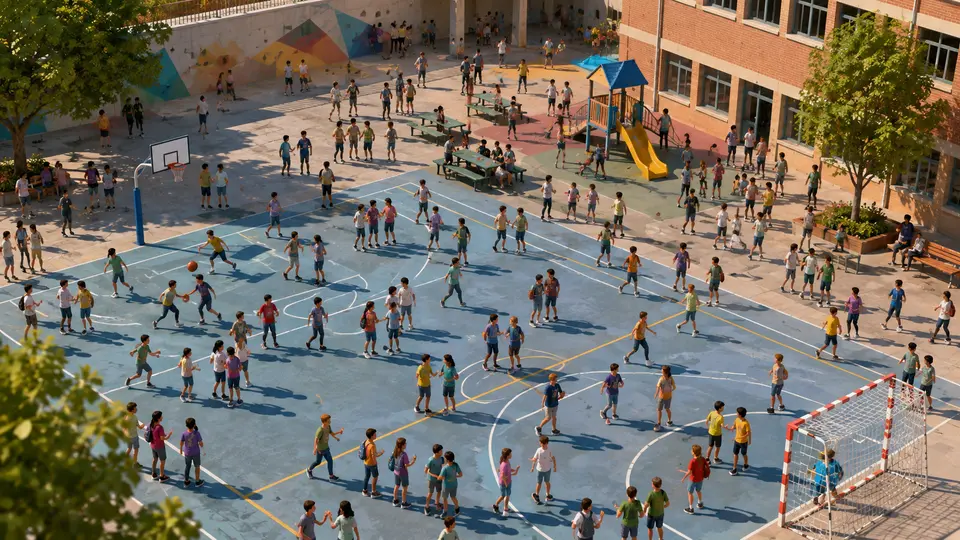
CAM-136The court with no adult in it
«Tell me when the playground court is left with no adult in it for more than two minutes.»


What it does not do
IRIS does not know anyone’s age or which adult belongs with which child. It works with what is visible: height, distance and time. It will get it wrong with a very short adult or a tall child.
And it identifies nobody: it does not recognise faces and does not store who is who. The alert exists so a person looks, never so that anyone acts without looking.
Questions
- Can you search for a child without recognising their face?
- Yes, with the description the family has just given, in their own words: the clothing, the backpack, the height. You ask IRIS where it has seen that in the last ten minutes and it returns the cameras and the times, in order. You never search for a specific person: you search for a description of clothing. It is far faster than scrubbing forty cameras by hand and it does not need to know who anyone is.
- Does it work at the school gate at home time?
- Yes, and that is where it is used most. The rule is limited to the window in which pick-up has to be accompanied, and outside that window it says nothing, so at half past five it does not fire on the older children leaving on their own. What is watched is the gate to the street, not the classroom or the playground. And the alert arrives while the child is still on the pavement, which is the only moment it is any use.
- Is this not too much surveillance of children?
- No, because nobody in particular is being watched here. IRIS does not identify people, does not recognise faces and does not store who is who. It watches a gate and a time window, and reports whether someone small has crossed it with no adult beside them. The camera was already there and already recording. The only change is that somebody now finds out at the time, instead of watching the recording once a child is missing.
- Does it also work inside a shopping centre?
- Yes, and there the search matters most. A child alone and still in the middle of a busy aisle is already an alert in itself. But when someone arrives saying they have lost their child, the urgent thing is knowing which way they went: you ask about the clothing and get the cameras and times from the last ten minutes, in order. A ten-minute head start is the whole difference in a three-floor building.
Every simulation
Something has spilled
Tell me if there is liquid or foam outside its place and it is still there two minutes later.
- The sentence
- Where it applies
- What it finds
- The same rule
Not seeing yours here?
These words are the ones we have built, not the ones IRIS understands. The list falls short on purpose: you ask for it in a sentence, and sentences do not run out. Tell us what is in front of your cameras and we will tell you whether it understands it, or not yet.
And the best part
A whole afternoon in front of a screennow fits into one written sentence.
The video has not changed: it is all still there, in the same place. What has changed is that you can ask it questions, and the answer comes with its camera and its time.
Tell us your problem and we will say whether IRIS understands it, or not yet.
We reply the same working day.