Solutions by typeLogistics efficiency
How many times have you walked past that leaning pallet?
It has leaned for days and nobody sees it
It is 16:00 in the picking aisle. In the middle of the aisle there is a pallet stacked well above head height. The top boxes are not lined up with the ones below: the tower leans towards the aisle and the wrap has come loose on one side and hangs free. It has been like that since the morning shift. Half the workforce has walked past it and nobody has touched it. Now a forklift is coming down that same aisle.
4 cameras across 4 sectors
What IRIS is
IRIS watches the cameras for you.
IRIS Neural is an artificial intelligence that watches the cameras you already have and understands what happens in front of them. When something important happens —or something you told it you need to keep an eye on—, it alerts you; and whatever can be counted, it counts in numbers. All day long, without anyone having to watch a screen.
You tell it what you need to watch, and IRIS does it.
Works with the cameras you already have. Nothing to replace.
A person replies, not a form.
- Your footage never leaves your premises.
- It doesn't identify people.
- Certifications →
This is how you ask for it
«Tell me if there is a leaning pallet or loose wrap in the aisle, especially if a forklift is coming.»
What comes off a tower like that gives no warning. It falls on whoever is walking underneath, or in front of a forklift that cannot stop in three metres. And if it does not fall, you pay anyway: broken goods, an aisle blocked for half an hour and a line in the safety report that says the same thing as last month. The worst part is that nobody is lying when they say they did not see it: it had been there so long it had stopped being new.
You decide once
You decide this once. You say which aisles and which racks are watched, how much lean is too much, how long it may stay that way and who is told: if a pallet is leaning in the aisle and a forklift is approaching, alert the shift supervisor with the camera. If nobody is approaching, the same lean goes onto the end-of-shift review list. One fact, two urgencies, and both decided by you.
Almost nothing that falls in a warehouse fell suddenly. Before it fell it had spent hours, or days, leaning: a tilted pallet in the middle of the aisle, two coils out of the rack with the chocks lying on the floor, a battery pack hanging off-level from the beam. The failure is not that nobody knows it is wrong. It is that everybody has walked past it so many times that they have stopped seeing it. It is called habit and it is the most expensive thing in a warehouse.
And leaning things change slowly. A pallet does not tilt all at once: it tilts a little more each time someone pulls a box out of the bottom layer. The wrap does not come off in one go: one turn comes loose, then another. A coil does not jump out of the rack: the chock tips over, and a week later the coil is on the concrete. Nobody sees the moment because there is no moment. There is only a before and an after, two shifts apart. And it is not only the object: it is where it stands. A leaning pallet in a corner of the building can wait until closing. The same pallet in the aisle a forklift goes down every ten minutes cannot wait at all. What separates the two is not the lean, it is what is around it, and that is exactly what does not fit on a weekly inspection sheet.
IRIS watches exactly that: shape and time. It sees that the tower is leaning more than you said, it sees the loose wrap hanging, it sees the coil out of place, it sees the vial that left the capper with a crooked cap. And it watches what is around it: if a forklift is approaching or somebody is under the path of the load, the alert rises in priority. What it achieves is not discovering something nobody knew. It is making what has been leaning for two days stop being normal.
What changes
Before, this got fixed when somebody with an eye for it walked past and said something. Now the supervisor gets the image of the leaning pallet with the time and the aisle, and sends someone to re-wrap it before the forklift arrives. And because it is recorded, by the end of the week you can see which aisles keep repeating. That is no longer safety: that is knowing where the real problem is.
Where we have seen it
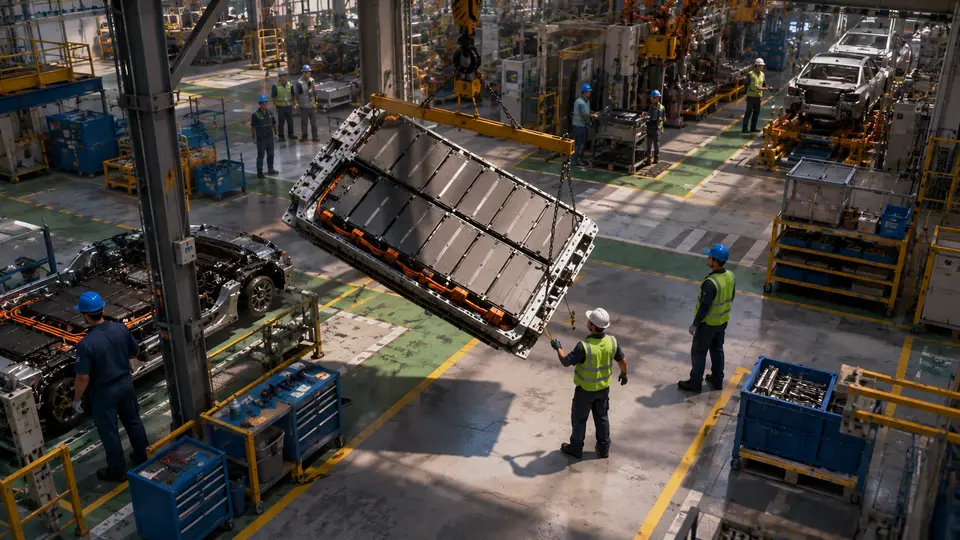
CAM-232A pack hanging at an angle with someone in its path
«Tell me when somebody is under a suspended load in the crane area, and I want to see the whole video.»
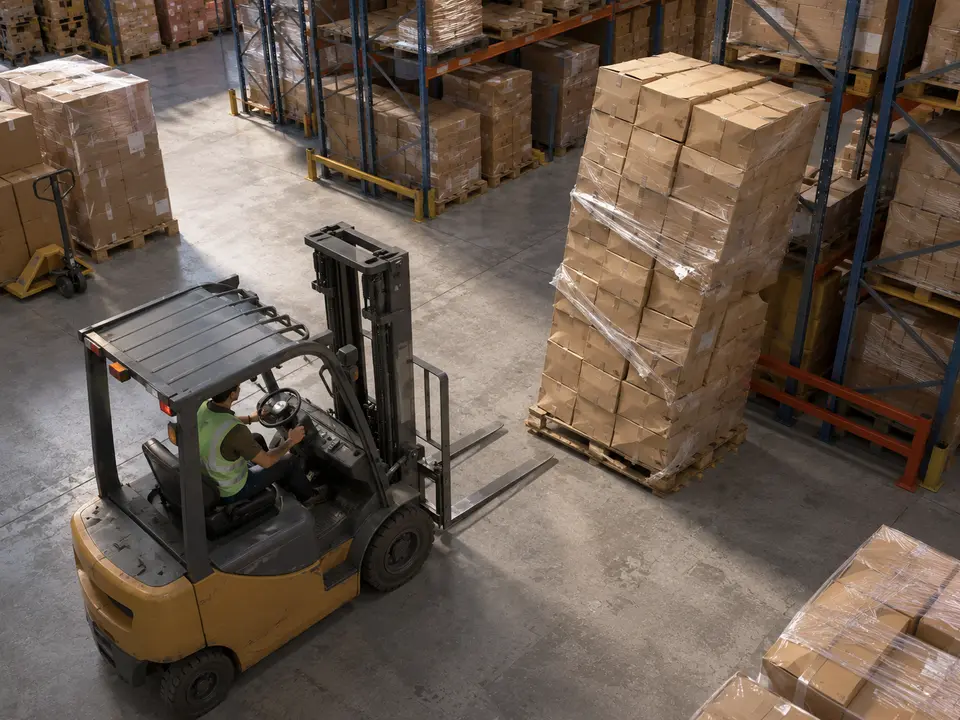
CAM-269A pallet stacked too high, leaning, with the wrap hanging loose
«Tell me if there is a leaning pallet or one with loose wrap in the aisle, especially if a forklift is coming.»
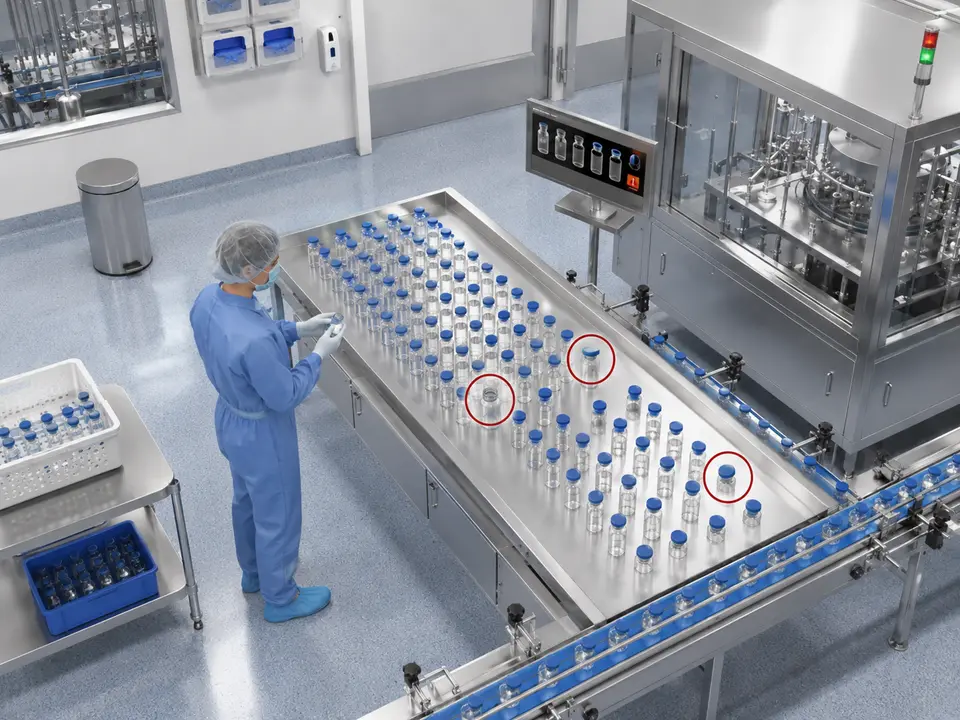
CAM-287Three vials have left the capper with the cap wrong
«Tell me if a vial leaves the capper with no cap or with the cap crooked, and save me the image.»
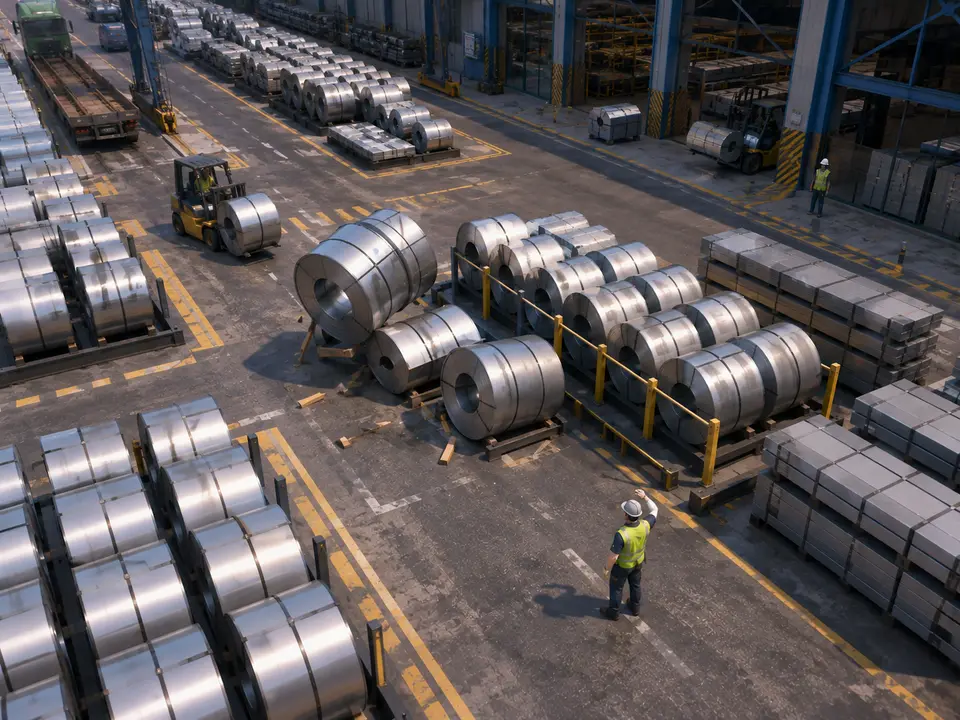
CAM-366Two coils out of the rack, and the chocks lying on the floor
«Tell me if any coil turns up outside the rack, unchocked or resting on the floor.»


What it does not do
IRIS does not calculate whether it is going to fall. It does not know what each box weighs or how it is secured inside. It sees lean, loose wrap and a coil out of place, which is what can be seen from outside.
And it removes nothing. It does not stop a forklift or block an aisle: it alerts whoever you named and leaves the image. What to do about that pallet is decided by a person, and that is not going to change.
Questions
- How does it tell a leaning pallet from a tall, normal one?
- By the lean you set as the limit. IRIS compares the tower with the vertical and with the rest of the aisle: if the top face is displaced more than you said, or if loose wrap is hanging, it flags it. A tall, well-built pallet does not trigger anything. And since you set the limit, a drinks warehouse can use a different one from a warehouse of light boxes. That is the part tuned on day one, by looking together at twenty real cases.
- Won’t it be alerting all the time?
- Not if it is set up properly. An alert that fires a hundred times a day gets switched off within a week, and then it is worth nothing. That is why you set the limit, and why the urgency depends on what is around: the same leaning pallet with a forklift approaching is an immediate alert, and with nobody nearby it is a line on the end-of-shift list. A system that flags everything flags nothing.
- Does it work outside the warehouse, on the shop floor?
- Yes, and it is the same idea with a different object. In a coil park it watches for one out of the rack, unchocked or resting on the concrete. In an assembly bay it watches whether a pack hangs tilted from the beam and whether somebody is inside its path. In a packaging room it watches whether a vial has left the capper with no cap or a crooked one. What is out of true changes; the question does not.
- Isn’t this the same as a badly stacked container?
- They look alike, but they are not the same. A badly stacked container is the moment of placing it: the machine is still holding the load and there is a minute to correct it. This is the opposite: something already in place, that has been like that for hours or days and has become invisible through habit. One is solved by alerting the operator; the other by breaking the routine of whoever walks past. That is why they are two different rules and two different urgencies.
Demo · IRIS at work
A new case each time. Always the same screen.
It plays by itself and shows one case from start to finish. It is a summary: the real screen has far more functions than fit in this box.
- Cameras on the map
- You draw an area
- What passed shows up
Not seeing yours here?
These words are the ones we have built, not the ones IRIS understands. The list falls short on purpose: you ask for it in a sentence, and sentences do not run out. Tell us what is in front of your cameras and we will tell you whether it understands it, or not yet.
And the best part
Video tells you what happened.An alert reaches you while it is happening.
Reviewing the recording helps you explain. Hearing about it at the time helps you get there. Two different things, and until now you only had the first.
Tell us your problem and we will say whether IRIS understands it, or not yet.
We reply the same working day.