Solutions by typeProduction efficiency
Is everything where it should be, or is something missing from its place?
What you see is not the part: it is the gap
It is 13:45 and the workshop is closing. On the wall, the board with every tool hanging in its slot: spanners in size order, screwdrivers, pliers, hammers, files, a saw and a spirit level. One slot is empty. The painted outline shows perfectly and there is nothing on it. Nobody knows since when it has been missing, and until it turns up that workshop does not close and nobody goes home.
11 cameras across 6 sectors
What IRIS is
IRIS watches the cameras for you.
IRIS Neural is an artificial intelligence that watches the cameras you already have and understands what happens in front of them. When something important happens —or something you told it you need to keep an eye on—, it alerts you; and whatever can be counted, it counts in numbers. All day long, without anyone having to watch a screen.
You tell it what you need to watch, and IRIS does it.
Works with the cameras you already have. Nothing to replace.
A person replies, not a form.
- Your footage never leaves your premises.
- It doesn't identify people.
- Certifications →
This is how you ask for it
«Tell me if a tool is missing from the board when the workshop closes, and tell me which slot it is and since what time it has been empty.»
That is where a long afternoon starts: counting the board by hand, going over who was in, checking the benches. In a factory the same gap costs something else: a unit that carries on down the line without its cover, a connector that never clicked home, a body shell leaving the station with an empty fixing point — all found at the customer’s, and then the word that comes up in the meeting is «return».
You decide once
You decide it once and it runs without anyone remembering. You say which board, rack or tray gets checked, when it gets looked at — at shift close, every morning at seven, every time a tray passes that point —, who receives the alert and what comes with it: the photo of the empty slot and the last time it was full. IRIS repeats it every day, on every shift, including the day the supervisor is on holiday and the stand-in has no idea what used to hang there.
There is a whole family of mistakes that look the same in places with nothing in common: a painted outline on a board with no tool on it, a slot marked with yellow and black stripes in a rack of drums, a bottle leaving the capper with its neck bare, a unit moving down the belt with a black rectangle where the cover should be. They are all the same thing: something that was supposed to be there and is not. What you see is not the part. It is the gap.
And every gap is paid for in its own currency. In a prison workshop, a tool missing at closing is not a production problem: it is the reason the workshop does not close, and the afternoon stretches for everybody, whoever it starts with. On an assembly line, a connector that never fully clicked gets closed under a panel and drives out of the gate inside a car.
IRIS looks at the board, the rack, the tray or the belt and compares it with what you told it should be there. When something is missing from its place it says so: which slot is empty, since what time, and on which camera it was last seen full. With that, the workshop supervisor does not start by counting: they start by knowing. On the line it is simpler still: the missing part goes on before the unit reaches packing, and there the fix costs ten seconds instead of a return.
What changes
Before, this was checked by counting by hand at the end of the shift, tired and in a hurry to leave; and if the count did not add up, there was no way of knowing since when. Now the check is done by the camera already looking at that board, and the gap comes with a time: at 11:40 it was full and at 11:55 it was not. That changes the whole conversation, because instead of searching a whole shift you search a quarter of an hour.
Where we have seen it
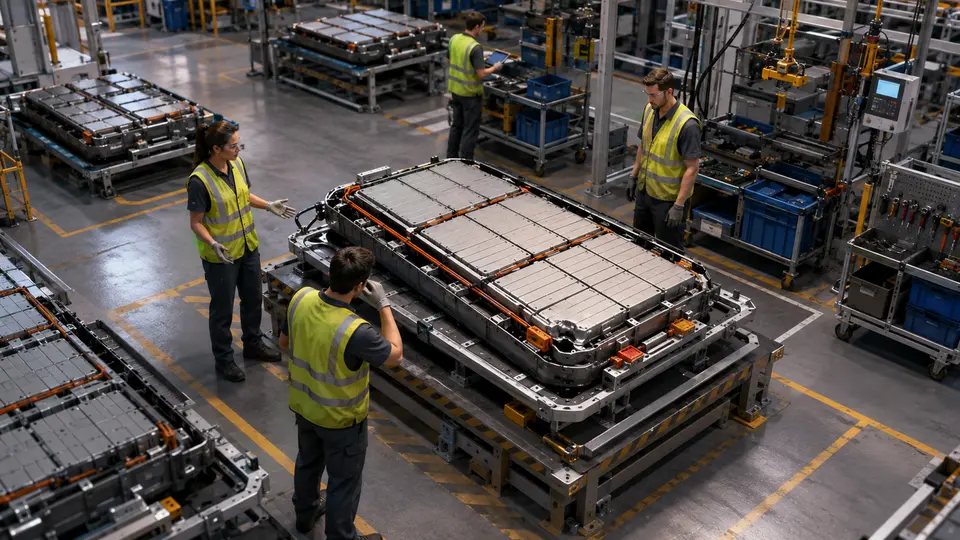
CAM-230The last module has not gone in straight
«Tell me when a module ends up out of line in the tray, before the pack is closed, and show me the picture.»

CAM-41Boulevard: cars, bikes and people
«Also tell me how many people ride past without a helmet, so I know whether we need a road-safety campaign.»
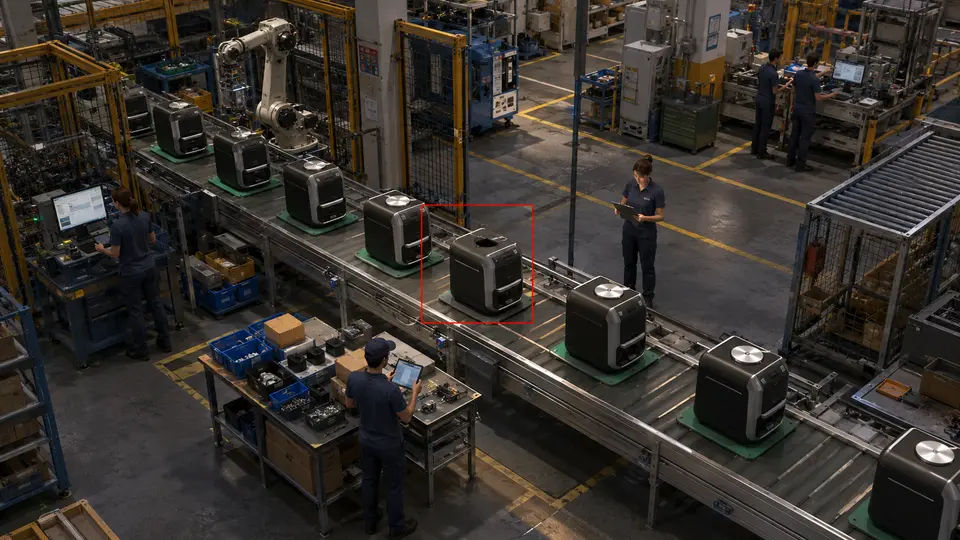
CAM-245A unit moves down the line with no cover on
«Tell me if a unit comes down the line without its top cover on.»
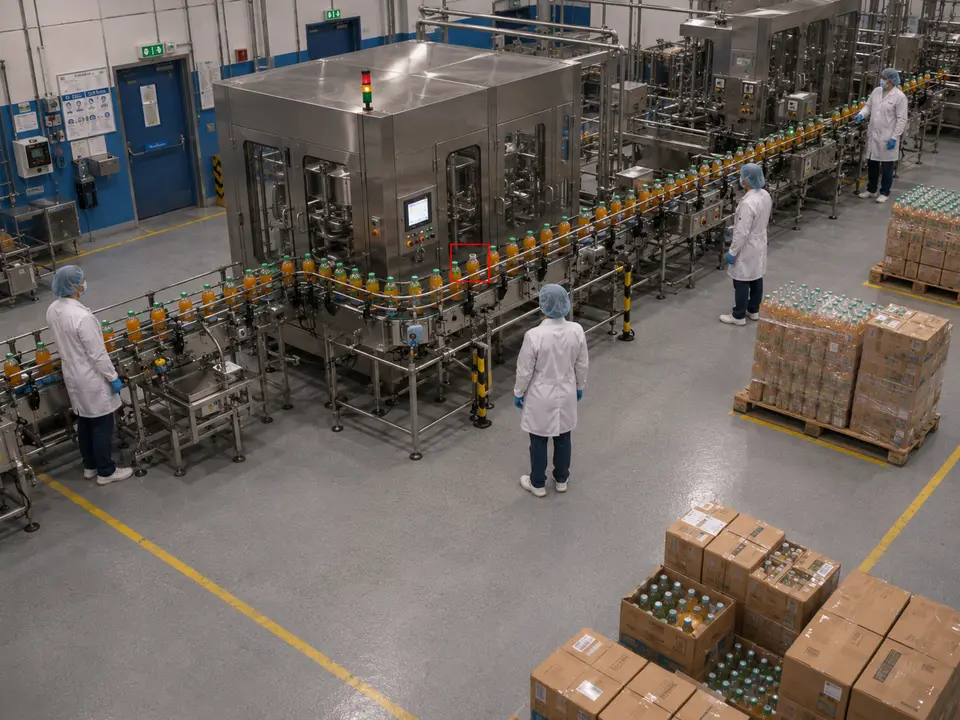
CAM-208A bottle that leaves with no cap
«Tell me the moment a bottle goes past the capper outlet with no cap, and tell me before it reaches packing.»

CAM-155A drum missing from the rack
«Show me the product rack every morning and tell me if anything is missing from its bay, without anyone having to go and count.»
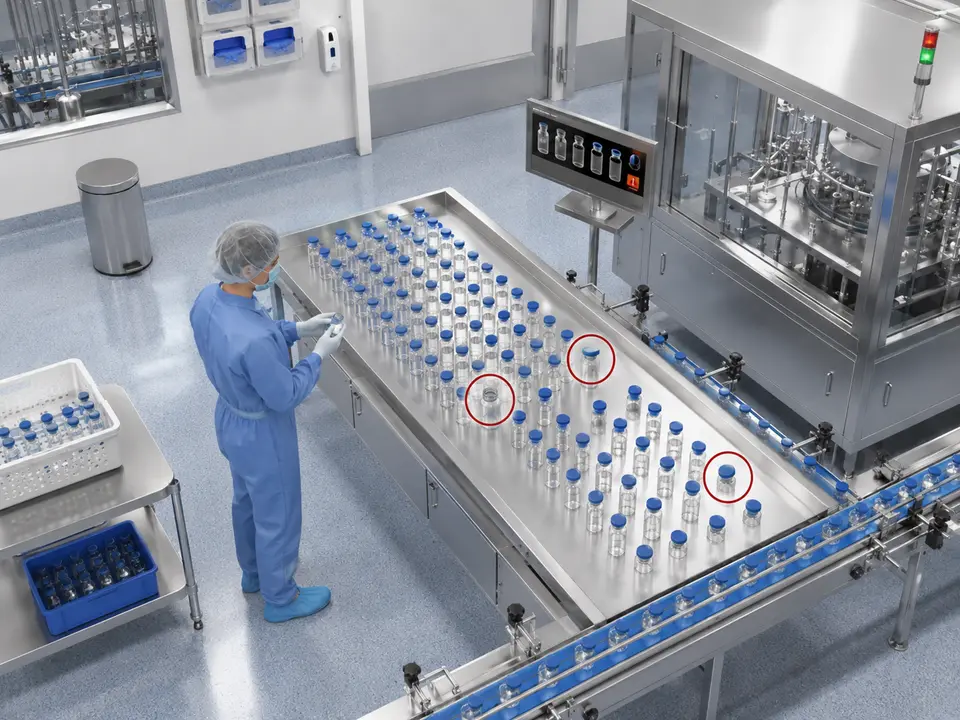
CAM-287Three vials have left the capper with the cap wrong
«Tell me if a vial leaves the capper with no cap or with the cap crooked, and save me the image.»

CAM-225A connector left unmated on the line
«Tell me if a connector is left unmated on the flank before the trim panel goes on.»
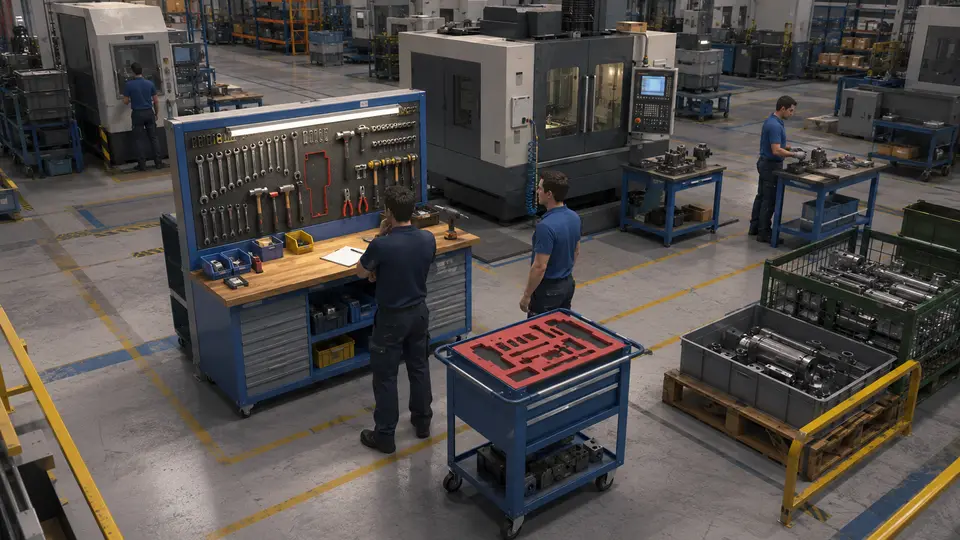
CAM-250One outline on the board is empty: a tool is missing
«Tell me when a board outline is left without its tool at the end of the shift.»
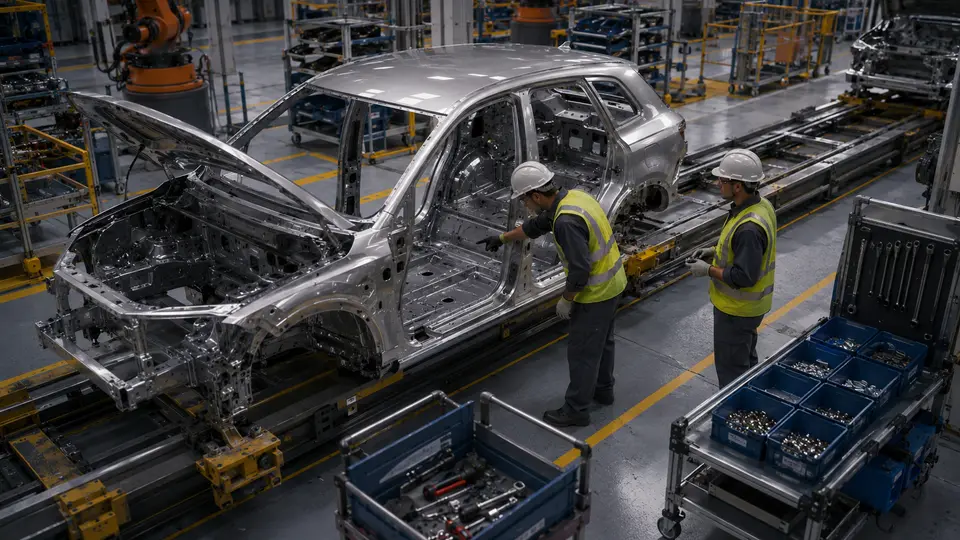
CAM-223A fixing point left empty
«Tell me when a body shell leaves the station with any fixing point still empty.»
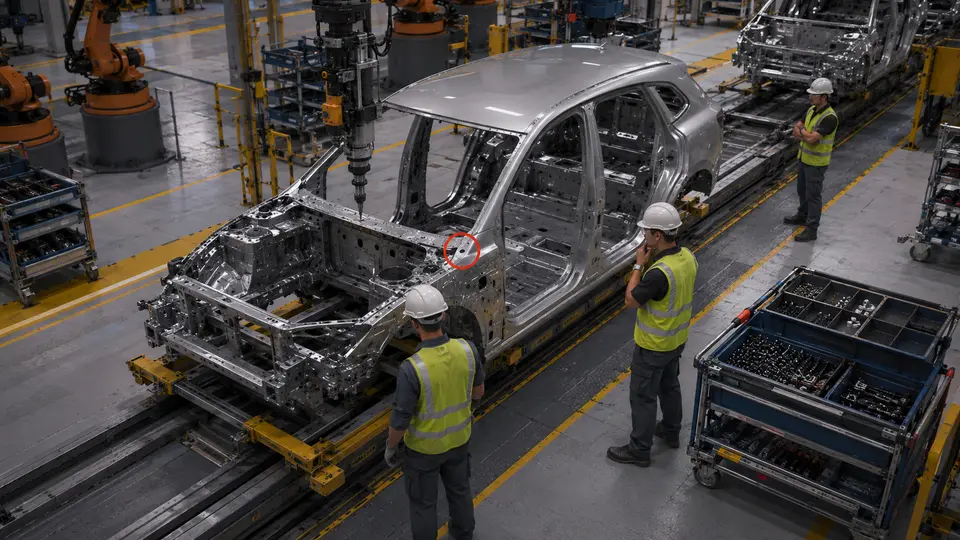
CAM-224The tool never reached one of the points
«Tell me when the tool does not reach one of the points in the sequence.»


What it does not do
IRIS does not know which tool it is or who took it: it sees the gap, says since when it has been empty and on which camera it was last seen full. It does not recognise faces.
And it does not count what it cannot see. If the part is hidden by a box, a hand or a trolley, for IRIS it is not there: that is why the alert reads «not visible in its place», and the first step is to look.
Questions
- Does it know which part is missing?
- It knows which slot is empty, which in practice is the same thing. When the board is set up, each place gets a name: the fifteen spanner here, the hammer here, the level here. From then on the alert does not say «something is missing», it says which slot and shows the photo. On a rack of drums or a tray of modules it works the same way: each position has its name and its reference image. If you have not named the slots, the alert still works, but you will have to look at the photo to know what it was.
- Does it say who took the tool?
- No. IRIS does not recognise faces and identifies nobody: it says the slot emptied at 11:55 and opens the video of that minute. From there a person decides, with the centre’s procedure in front of them and whatever authority they hold. This matters in a prison workshop, where what is needed is to close on time with the count clear, not to point at anyone. Most of the time the tool is on a bench and turns up in three minutes.
- Does it work on a moving line?
- Yes, and that is where it shows most. Every bottle leaves the capper with its cap; the one that comes out without it stands out because it is different from its neighbours. Every unit carries the metal cover; the one without it leaves a black gap that jumps out. The trick is to put the check at the right point in the line: after the machine that fits the part and before the one that closes or packs it. There the fix costs ten seconds; fifty metres further on it costs an opened box.
- What if something covers the part and it looks missing?
- It happens, and that is why the alert is worded carefully: it says the part is not visible in its place, not that anyone has taken it. A box leaning in front of the rack, a hand crossing the board exactly at the check, or a trolley parked in the way will all produce that alert. It is settled by looking at the photo that comes with it. And it drops a lot by choosing the moment well: if the board is checked as the workshop closes, when nobody is moving in front of it, almost every alert is real.
See it for yourself
No extra alarms here. Just what needs looking at.
Not a recorded video, not an explanatory drawing: a summary of the real screen, with a different case every time it starts. There is a lot more behind it.
- You draw the line
- It counts by itself
- A number comes out
Not seeing yours here?
These words are the ones we have built, not the ones IRIS understands. The list falls short on purpose: you ask for it in a sentence, and sentences do not run out. Tell us what is in front of your cameras and we will tell you whether it understands it, or not yet.
And the best part
IRIS only sees what the camera shows.Where we do not reach, we say so.
No software fixes a lens pointing the wrong way or covered in dust. Before promising anything, we say which cameras are in a state to see what you are asking of them.
Tell us your problem and we will say whether IRIS understands it, or not yet.
We reply the same working day.