Solutions by typeIntrusion detection
How do I reconstruct what happened with that money?
The shortfall shows up three days later
Three in the morning. Two collection trolleys leave the floor by the service corridor towards the inner cage: sealed boxes, trays of chips by colour and a guard behind them. The procedure says two people, that corridor and under four minutes. Tonight there is one person, going by the store corridor, and it takes eleven. Nothing happens. On Thursday money is missing.
10 cameras across 5 sectors
What IRIS is
IRIS watches the cameras for you.
IRIS Neural is an artificial intelligence that watches the cameras you already have and understands what happens in front of them. When something important happens —or something you told it you need to keep an eye on—, it alerts you; and whatever can be counted, it counts in numbers. All day long, without anyone having to watch a screen.
You tell it what you need to watch, and IRIS does it.
Works with the cameras you already have. Nothing to replace.
A person replies, not a form.
- Your footage never leaves your premises.
- It doesn't identify people.
- Certifications →
This is how you ask for it
«Show me every cash transfer from tonight with its hour, its route and how many people went, and tell me if any of them departed from the plan.»
The shortfall does not show up that night: it shows up when the count is closed, two or three days later. And then the expensive work begins: somebody sits down to look through hours of recording from six cameras to find four minutes they cannot place. Two days of a person with judgement, spent winding video forward. Half the time nothing is found and the case closes with a note.
You decide once
You decide this once, and here the rule is written by whoever signs the procedure. You say which routes are the right ones, how many people each transfer must have, how long it may take and in what slots it happens. IRIS checks it on every transfer, every night, and keeps each one with its hour even when it goes perfectly. The ones that go well are the proof the procedure is followed; the ones that do not arrive as an alert.
There is always a written procedure around money: two people, this corridor, this time slot, this door. It is usually a good procedure. What does not exist is a way of knowing whether it was followed last night, because checking means somebody sitting down to watch video of things that went well. Nobody has a person for that, so the procedure is followed almost always and checked almost never.
That is why video around cash is only used backwards, and always late. The shortfall shows up at the count, and by then the question is no longer what happened but at what minute it happened. Recording is cheap. Searching is what costs: hours of one person winding images forward to find four minutes of a Tuesday.
And «valuables» is not only money. In a casino it is the collection boxes crossing a service corridor at three in the morning, and chips changing hands three metres from the cage window. In a street branch it is eight metres of pavement between the armoured van and the door, with the rear doors open. In a controlled-product store it is the boxes leaving the steel cabinet at ten at night. In a logistics warehouse it is a cage from the high-value area heading down a restricted aisle. And in a data centre it is a tool case left on the floor when nobody is working there any more. What moves changes; the question does not: at what hour, along which route and with how many people.
IRIS turns those hours into a list. Every transfer, with its hour, its route, how many people went and how long it took. The one that departs from what was agreed arrives as an alert that same night. And the same for everything else around valuables: an ATM open in the street with more than one person in the zone, a cash box crossing eight metres of pavement, a bag left alone in the lobby. IRIS does not count the money and does not see inside a sealed box. It gives back the minutes and who to ask.
What changes
Before, the video around cash was an archive: everything was there and none of it was any use until there was a problem, and then it cost two days of work. Now it is a list of transfers with the hour on it. The security manager opens last night, sees the six movements there were and which one went down another corridor, and in four minutes has the video that matters. What used to be an investigation is a query.
Where we have seen it
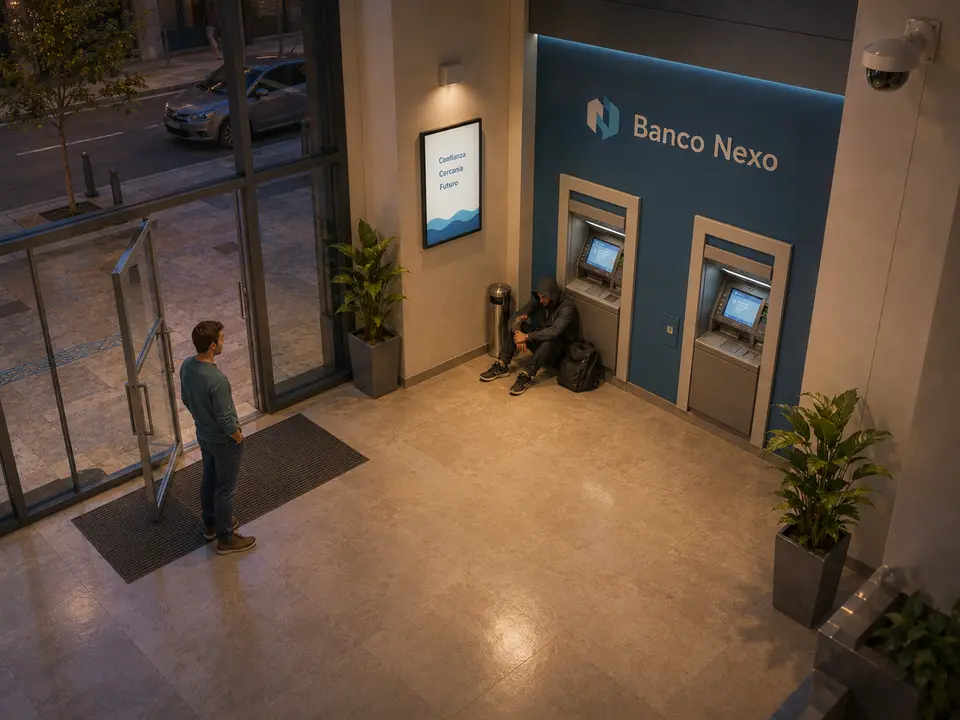
CAM-515Someone has been in the ATM lobby for twenty-two minutes
«Tell me if anyone stays more than fifteen minutes in the ATM lobby between ten at night and seven in the morning, and tell me how many people are inside.»

CAM-533Chips changing hands three metres from the cash window
«Mark the moments when chips pass from one hand to another away from the tables, near the window, and keep them with the time.»
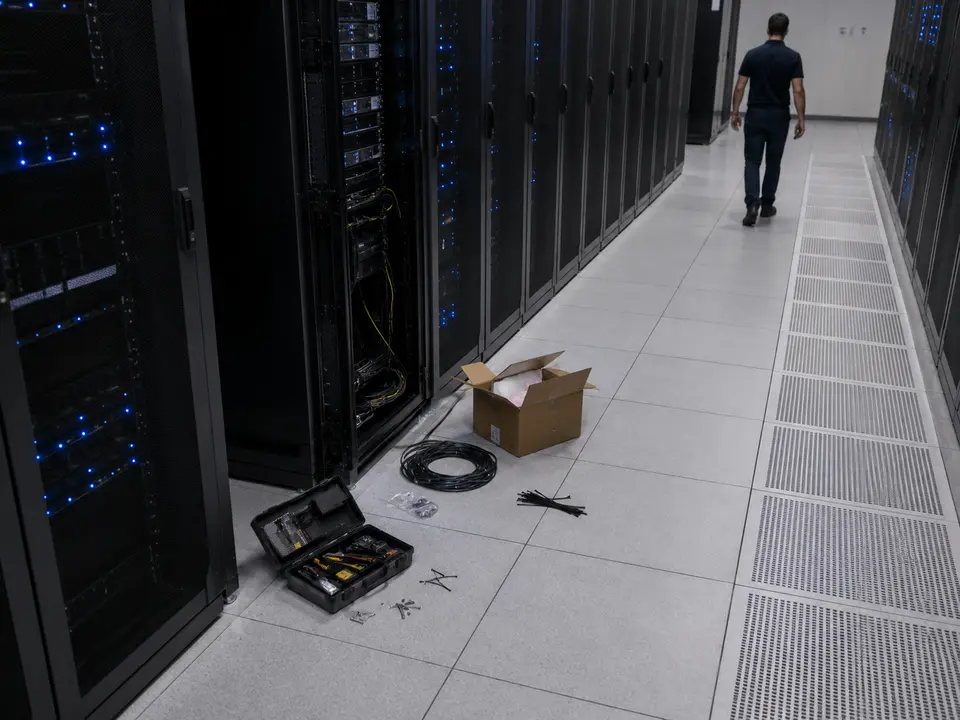
CAM-555A tool case, a coil of cable and some screws in the middle of the aisle
«Tell me if material is left on the floor of an aisle once nobody is working there any more.»
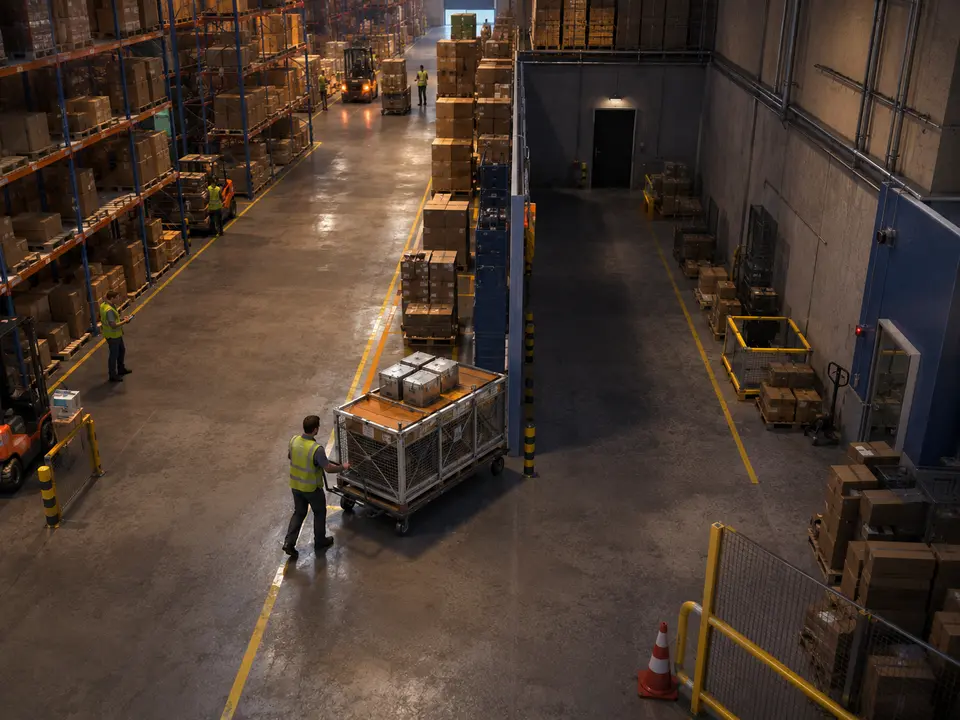
CAM-279A cage of high-value goods leaves the aisle for a restricted area
«Alert me if a cage from the high-value area goes into the restricted aisle, and save me the whole run.»
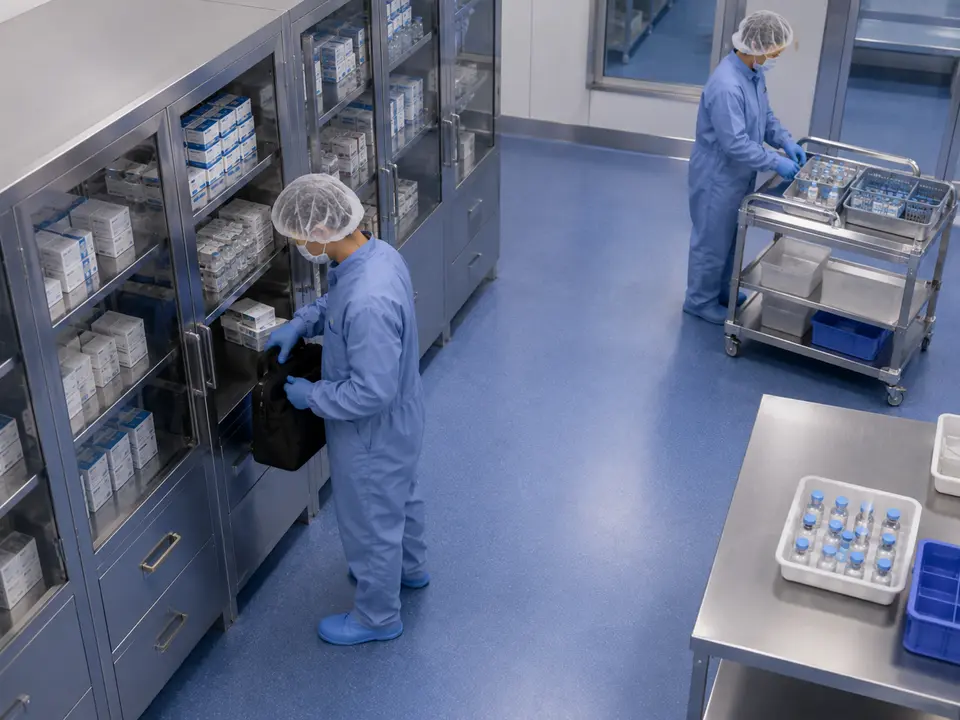
CAM-297Boxes leave the controlled cabinet with no work order open
«Tell me if boxes are taken out of the controlled cabinet when no work order is open for that hour.»
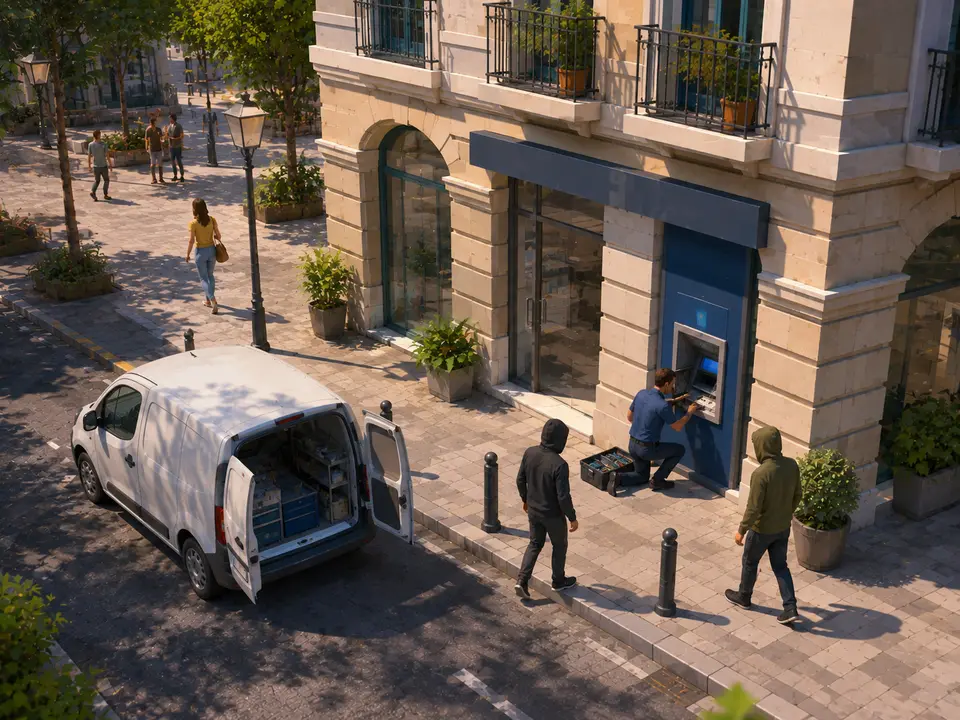
CAM-516A cash machine open in the street and two people inside the zone
«Tell me if the cash machine is open for maintenance and there is more than one person inside the surrounding zone, not counting the technician.»
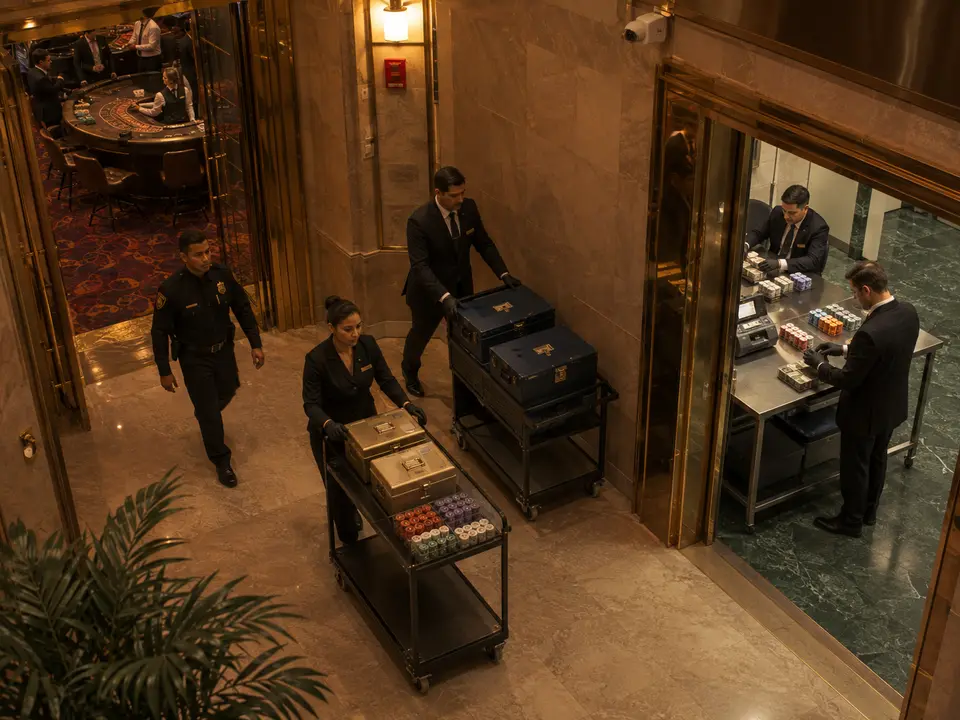
CAM-531Two cash trolleys, three people and a route that does not add up
«Tell me if a cash run takes another corridor, goes with fewer people than it should or takes longer than expected.»
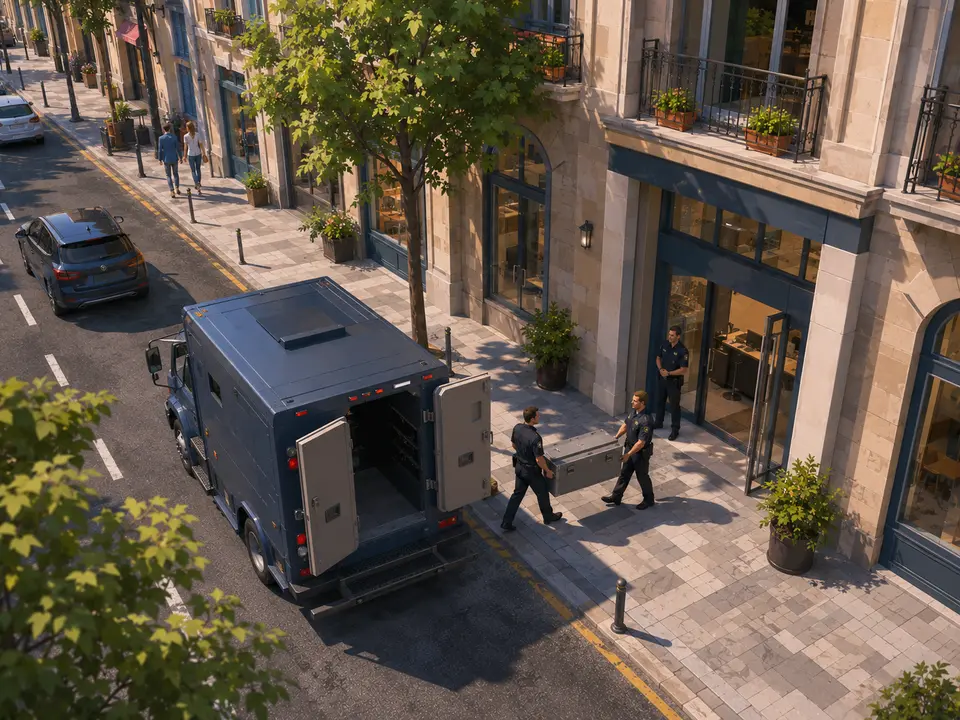
CAM-517A cash box crosses eight metres of pavement
«Tell me if the van’s rear door stays open more than a minute with nobody from the crew beside it, and keep the time of every collection for me.»
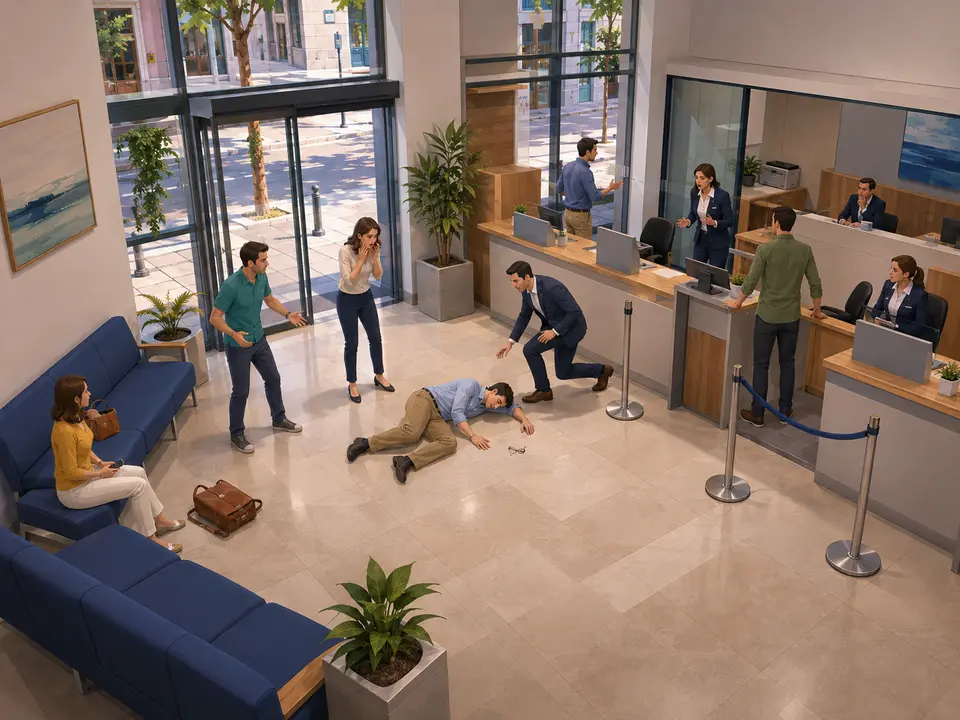
CAM-519Someone on the floor and a briefcase nobody comes back for
«Tell me if somebody has been lying still on the lobby floor for more than thirty seconds, and tell me too if a bag is left alone in the public area for more than five minutes.»


What it does not do
IRIS does not count money. It does not know how much was in the box, it does not see inside a sealed bag and it cannot say whether anything is missing: the shortfall comes from the count, not from the camera. What it adds is the exact minute and the route.
Nor does it accuse anybody. It says a transfer went down another corridor or that one person went instead of two, not why. And it does not recognise faces: who was pushing that trolley is known from the roster, not from IRIS.
And it only lists the part of the route the cameras see. If a stretch of the corridor has none, that piece is not in the transfer, and that gets said before starting, not on the day somebody misses it.
Questions
- Does IRIS know if money is missing?
- No. IRIS does not count notes or chips and does not see the inside of a sealed box. What it does is everything on the outside: at what hour each transfer left, which way it went, how many people were with it and how long it took. The shortfall still comes from the count, as always. The difference is that when it appears there is no longer any hunting through hours of recording: you open the night of the shortfall and the movements are listed with their hour and their video beside them.
- Does it work if the procedure changes from day to day?
- Yes, and that is the normal case. A weekend transfer is not a Tuesday one, and the morning route is not the small-hours route. The rules are written by time slot: in this window the right route is this one and two people go; in that one, a different route. They are changed when the procedure changes, and from that moment they apply on their own across every camera on the route. Nobody has to be retrained or reminded at each shift.
- Does it work for a cash machine out in the street?
- Yes, and it is one of the places where it is used most. A cash machine open for servicing, with the door swung out and the inside on view, is a delicate moment, and the rule is written exactly like that: if the machine is open and there is more than one person inside the zone, not counting the technician, alert me. Likewise the one next to it: somebody staying a long time in the ATM lobby in the small hours. In neither case does IRIS say anybody is suspicious: it says how many people there are and since when.
- Can this be shown to an auditor?
- Yes, and for many clients that is half the value. Every transfer is recorded with its hour, its route and its video, whether it goes well or badly, not only the ones that fail. That turns «we follow the procedure» into something you can show: here are the hundred and twenty movements of the month and these four departed from it. Whoever audits no longer depends on somebody remembering a particular night or on the video not having been recorded over.
Every simulation
Something has spilled
Tell me if there is liquid or foam outside its place and it is still there two minutes later.
- The sentence
- Where it applies
- What it finds
- The same rule
Not seeing yours here?
These words are the ones we have built, not the ones IRIS understands. The list falls short on purpose: you ask for it in a sentence, and sentences do not run out. Tell us what is in front of your cameras and we will tell you whether it understands it, or not yet.
And the best part
Sometimes you do not need an alarm:you need a number.
How many people came in, and when. You draw a line over the image and the camera counts. People counting is certified by the Centro Español de Metrología through NeuralPax.
Tell us your problem and we will say whether IRIS understands it, or not yet.
We reply the same working day.