CAM-531
Two cash trolleys, three people and a route that does not add up
Three in the morning. Two trolleys leave the floor down the service corridor towards the inner window: sealed cash boxes, trays of chips sorted by colour and a guard walking alongside. The casino wrote down once how this run is done — which way it goes, how many people go with it and how long it should take — and IRIS compares what it sees against that. Tonight there are three people where the procedure says four, the run stopped once halfway down the corridor and it took two minutes forty longer than expected.

Turn on IRIS Vision
AI-generated image
What IRIS is
IRIS watches the casino floor for you.
IRIS is an artificial intelligence that looks at the cameras you already have and understands what's happening at the tables and the floor. When a table fills up, a seat opens, or drinks need restocking, it alerts you right away; and whatever can be counted, it counts in numbers. All day long, without anyone having to stare at a screen.
You tell it what you need to watch, and IRIS does it.
Here, for example, IRIS checks the cash run against the written plan: how many people go, which route it takes and how long it should take. Tonight it flags that one person was missing and that the run stopped two minutes forty longer than planned. From that alert, the floor manager decides — not the camera.
Works with the cameras you already have. Nothing to replace.
A person replies, not a form.
- Your footage never leaves your premises.
- It doesn't identify people.
- Certifications →
What IRIS understands
What it recognises in this scene
- Front trolley
- Sealed cash boxes
- Chip trays
- Staff member pushing the trolley
- Second trolley
- Guard escorting the run
- Corridor ceiling camera
- Inner service window
What this camera measures
An alert says something is happening. The reading says how much.
- 3People on the run
- 4People the procedure asks for
- 6 min 40 s+2 min 40 sTime the run took
- 4 minTime the procedure allows
- 1Stops along the way
- 02:14:06Video from
The figures on this screen are an example from the illustration, not any client's measurement.
The rule
You decide once. IRIS applies it always.
If
a cash run departs from the route, the number of people or the time laid down
Then
- alert the floor manager with the camera, the time and what it departed from
- save the video of the whole run, from the moment it leaves to the moment it reaches the window
- log the run with its time for the shift report
The instruction that set it up«Tell me if a cash run takes another corridor, goes with fewer people than it should or takes longer than expected.»
What changes
What changes for the floor manager and for compliance
The cash run is the moment when the most hands touch the most money, and it is also the most repeated one: several times a night, every night. Today it is checked by pulling up recordings when somebody asks, and by the time somebody asks, days have gone by. IRIS checks it while it is happening, and across every run, not just the ones somebody has time to review. Here it pays to be exact: IRIS does not know what is inside the boxes, does not count money, does not open anything and does not accuse anybody. All it says is that this run was not done the way it is written down. The person who looks at it and decides is the floor manager.
What people usually ask
Does IRIS know how much money is in the boxes?
No, and it does not need to. The boxes travel closed and sealed, and that is how they stay in front of the camera. What IRIS looks at is the run: which way it went, how many people went with it, how long it took and whether it stopped. The money is counted in the count room, with its own procedure and its own people. They are two separate things on purpose, and they should stay that way.
Does this accuse anybody of anything?
No. IRIS says the run did not match the procedure, and that has perfectly ordinary explanations: one person short because of a shift change, a stop because a guest walked across, a door that took a while to open. What it adds is that the deviation shows up the same day, with the video beside it, instead of three weeks later when nobody remembers. The person who weighs it up is the floor manager. Detecting is not deciding.
Do the corridor cameras have to be replaced?
No. IRIS works with the cameras already installed, and a service corridor usually has one from day one. What changes is not the hardware: it is that the camera stops being a recording nobody watches and starts checking every run, every night, without anybody having to sit in front of a screen. The same camera that only records today can start checking your procedure.
Other cameras
- CAM-523 · A full table and an open one with nobody, five metres away
- CAM-524 · Every seat taken and seventeen people standing around the table
- CAM-525 · The hand is going nowhere and the dealer's spot is empty
- CAM-526 · One dark screen in the middle of a bank of machines that are all lit
- CAM-527 · Three windows open, two dark, and the queue still waiting
- CAM-528 · A player raises a complaint and the table stops
Simulation · how IRIS works
No extra alarms here. Just what needs looking at.
Not a recorded video, not an explanatory drawing: a summary of the real screen, with a different case every time it starts. There is a lot more behind it.
- You draw the line
- It counts by itself
- A number comes out
See it somewhere else
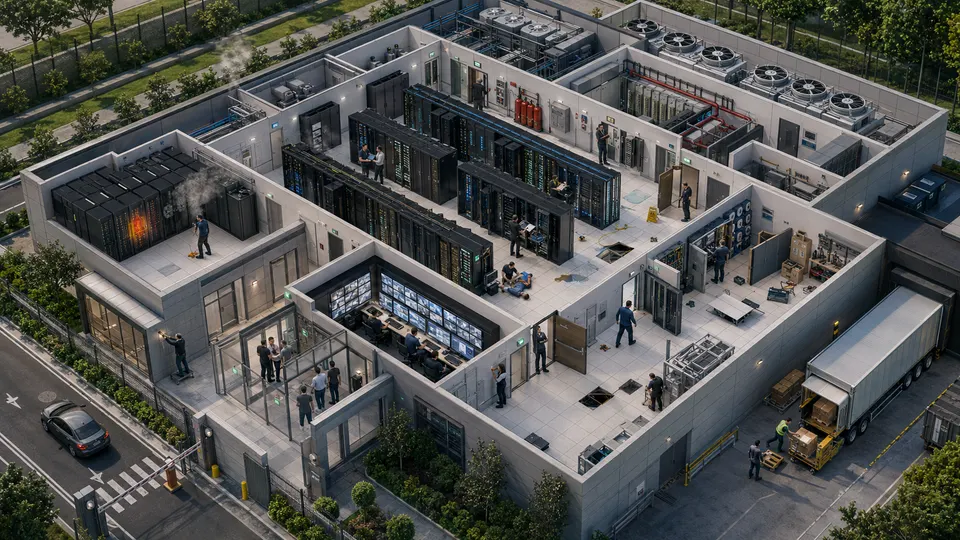
What if the outage does not start with an attack?
13 cases, and in every one of them IRIS raises an alert when something happens. You see each image as it is, and then with what it understands on top.
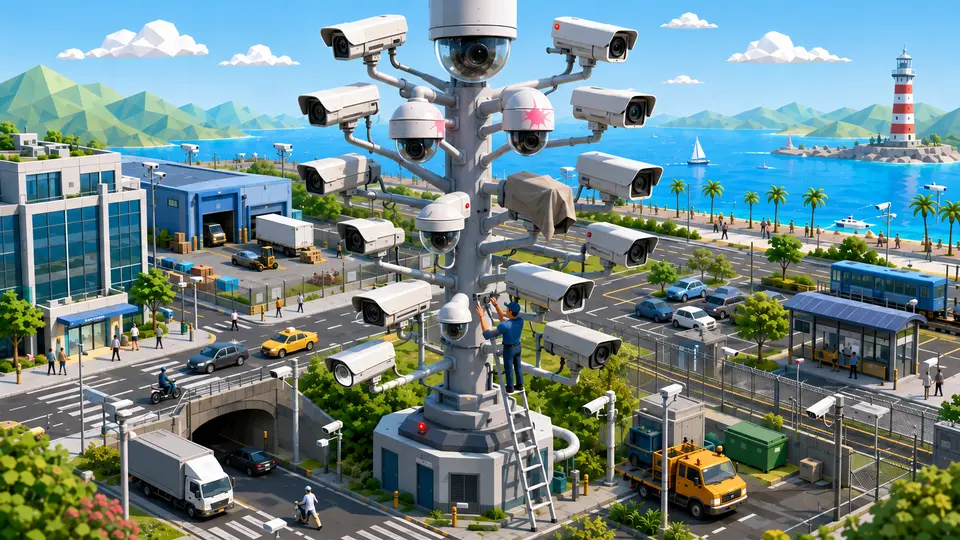
And who watches the cameras?
34 cases, and in every one of them IRIS raises an alert when something happens. You see each image as it is, and then with what it understands on top.


And the best part
“The white van, Tuesday afternoon.”That is enough to find it.
You type it the way you would tell a colleague, and the matching minutes come back, each with its camera and its time. You do not need to remember the exact moment.
Tell us your problem and we will say whether IRIS understands it, or not yet.
We reply the same working day.