Solutions by typeIntrusion detection
Who or what has gone in where nothing should go?
The line is painted, but nobody is watching it
07:20 in the materials warehouse. Two zones are marked on the floor with tape: the red one is quarantine, the green one is released stock. A pallet loaded with metal drums is sitting inside the green one, one corner over the red tape. A forklift left it there forty minutes ago, in the first free gap it found. Nobody has walked in where they should not: a pallet has.
13 cameras across 7 sectors
What IRIS is
IRIS watches the cameras for you.
IRIS Neural is an artificial intelligence that watches the cameras you already have and understands what happens in front of them. When something important happens —or something you told it you need to keep an eye on—, it alerts you; and whatever can be counted, it counts in numbers. All day long, without anyone having to watch a screen.
You tell it what you need to watch, and IRIS does it.
Works with the cameras you already have. Nothing to replace.
A person replies, not a form.
- Your footage never leaves your premises.
- It doesn't identify people.
- Certifications →
This is how you ask for it
«Tell me if any pallet from the red quarantine area shows up inside the green area or over the line.»
A quarantine pallet inside the released area is not a scare: it is a deviation to be written up, investigated and closed, and a batch that gets reviewed from scratch. If somebody spots it, you lose two days. If nobody does, it is worse: unreleased material can end up in production, and that surfaces much later and much more expensively. The tape on the floor was there. It is just that at twenty past seven nobody was looking at it.
You decide once
You decide this once. You draw the zone on the image, say what may be inside and what may not, how long is tolerated and who gets told: only released material in the green zone, alert the warehouse manager as soon as a pallet from the red one enters. IRIS watches that line all day, on every shift, with the same criteria at seven in the morning as at eleven at night.
A restricted area exists twice. On the drawing it is a clear boundary, with its colour and its legend. On the floor it is a half-peeled strip of tape that everyone crosses with their hands full. And most of the times it gets crossed there is no bad intent behind it: the free space was right there, the shortcut was obvious, the operator was going to be thirty seconds.
The trouble with a line is that it only means something if somebody is watching it in the exact second it is crossed. Crossing takes two steps. A round at ten does not see it, and a camera recording does not either, because recording is not watching. With objects it is the opposite and just as bad: the pallet, the drum or the cage do not cross and move on, they stay inside for hours, and by dint of being there they stop standing out. By the end of the week the yellow markings in front of the emergency shower are full of things and nobody remembers when it started.
IRIS watches the line you drew and flags both: what crosses it and what stays inside. A crossing is an immediate alert, with video from a few seconds before, because if it is a person without a helmet walking into the fuel area, what you want is to talk to them now, not watch the video tomorrow. An object left inside is an alert with a clock: still there after ten minutes, it speaks up.
What changes
Before, the line was checked on the round or on audit day, and what happened on a Tuesday at twenty past seven was known to nobody. Now the alert arrives when the line is crossed, with the video, and the pallet gets moved before anyone has to open a deviation. And a figure appears that did not exist before: how many times a month that zone is stepped on, on which shift and at which point.
Where we have seen it

CAM-513A restricted door standing open and someone waiting outside
«Tell me when the restricted-area door stays open for more than a minute, or when more than one person is in front of it while it is open.»
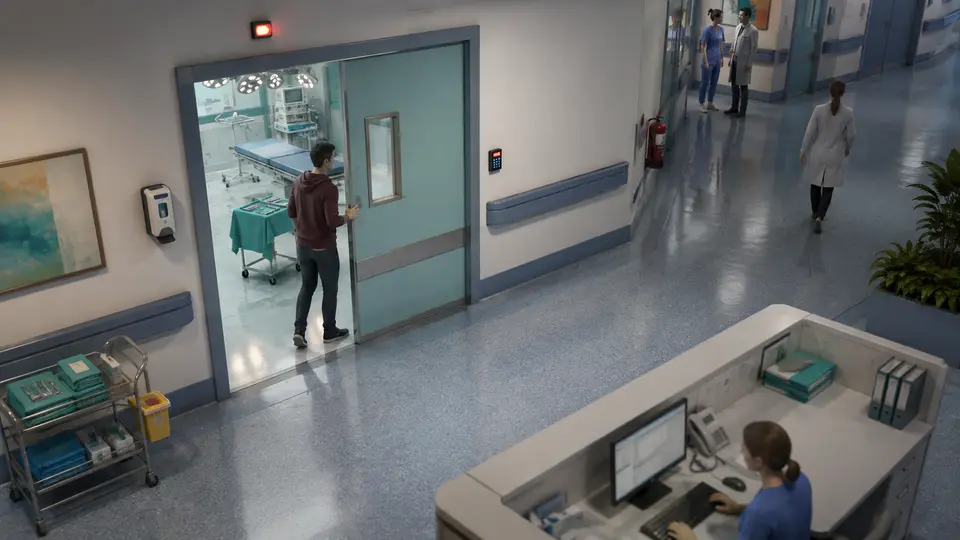
CAM-125Street clothes in a restricted area
«Tell me if somebody goes through the restricted-area door without work clothes, and tell me while they are still in the doorway, not once they have been inside a while.»
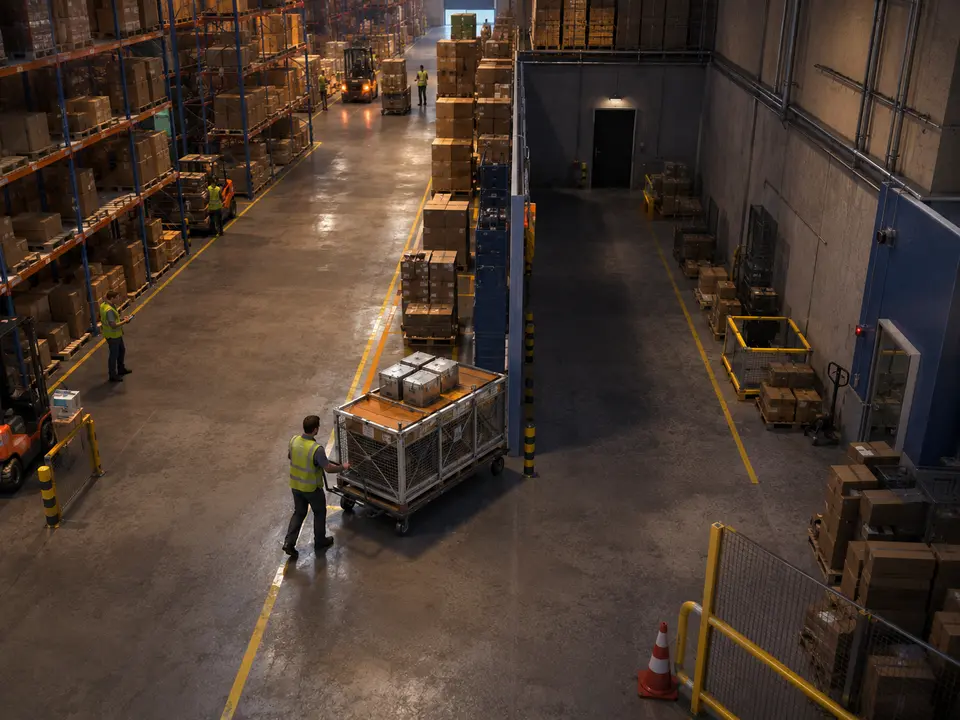
CAM-279A cage of high-value goods leaves the aisle for a restricted area
«Alert me if a cage from the high-value area goes into the restricted aisle, and save me the whole run.»
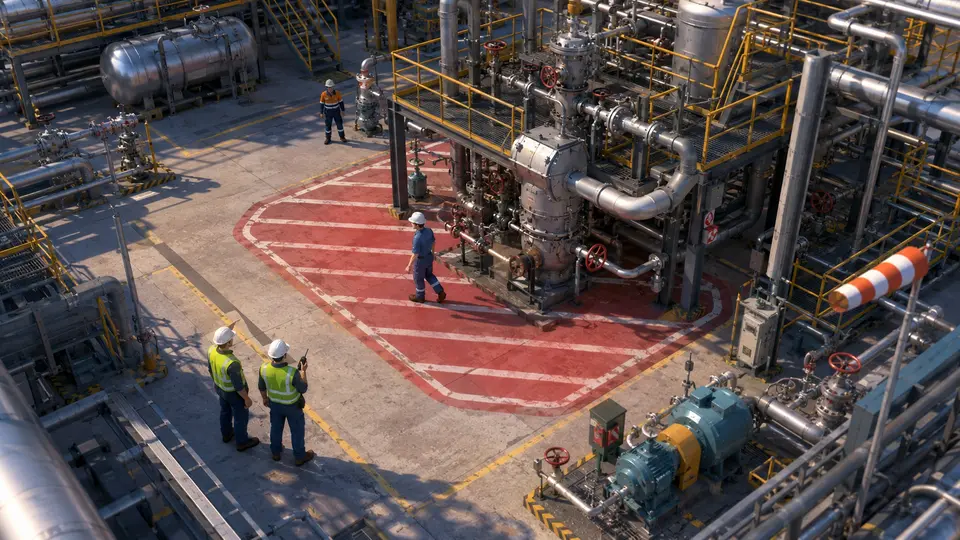
CAM-330Someone has walked into the red zone around the valve skid
«Tell me if someone walks into the red zone around the valve skid and stays there.»
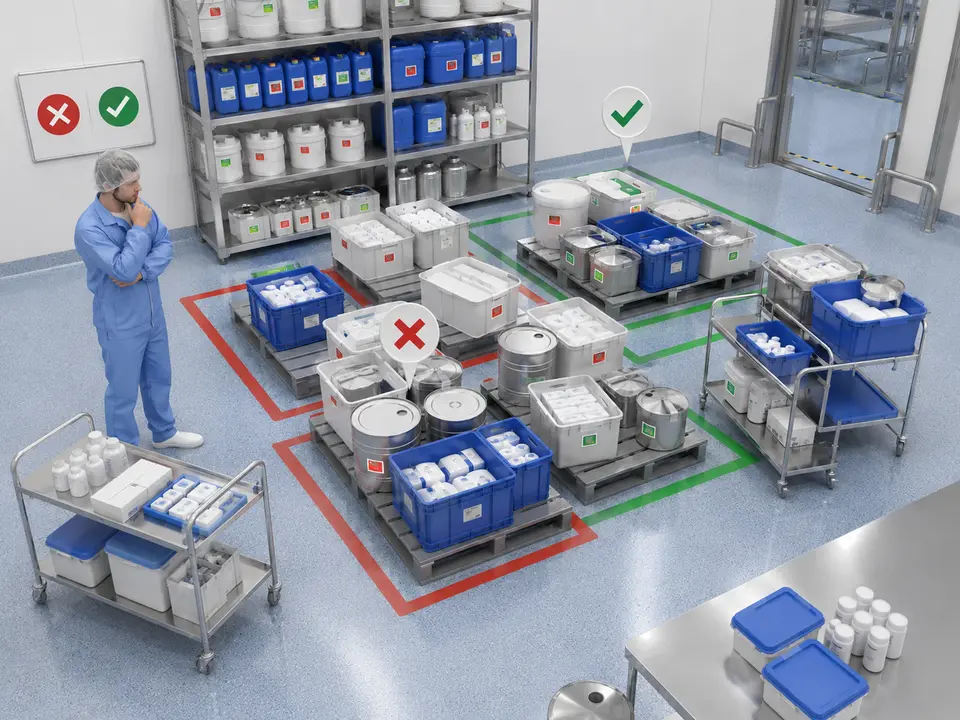
CAM-286A quarantine pallet sitting on the released zone line
«Tell me if any pallet from the red quarantine zone shows up inside the green zone or on the line.»
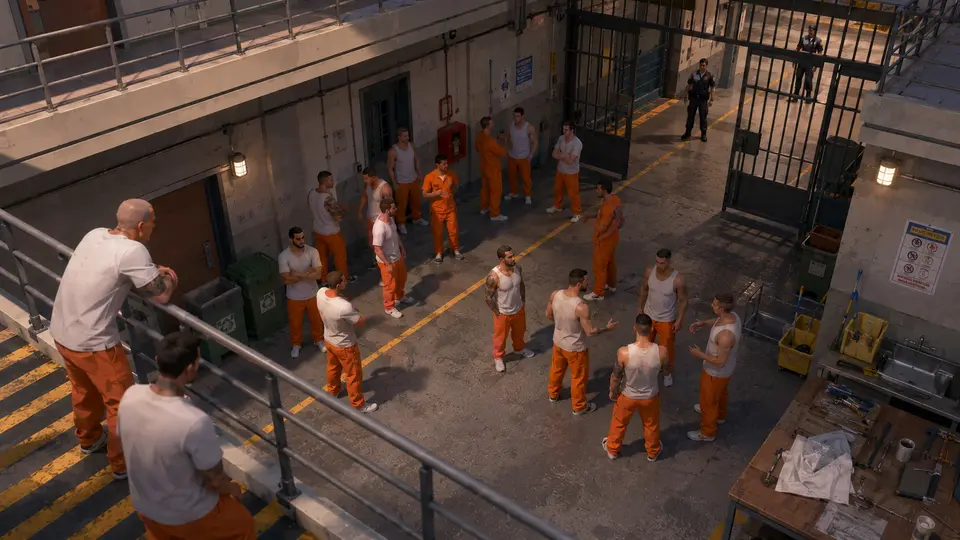
CAM-104A group in a closed area
«Tell me if a group gathers in the workshop area outside workshop hours, because nobody should be standing around there.»
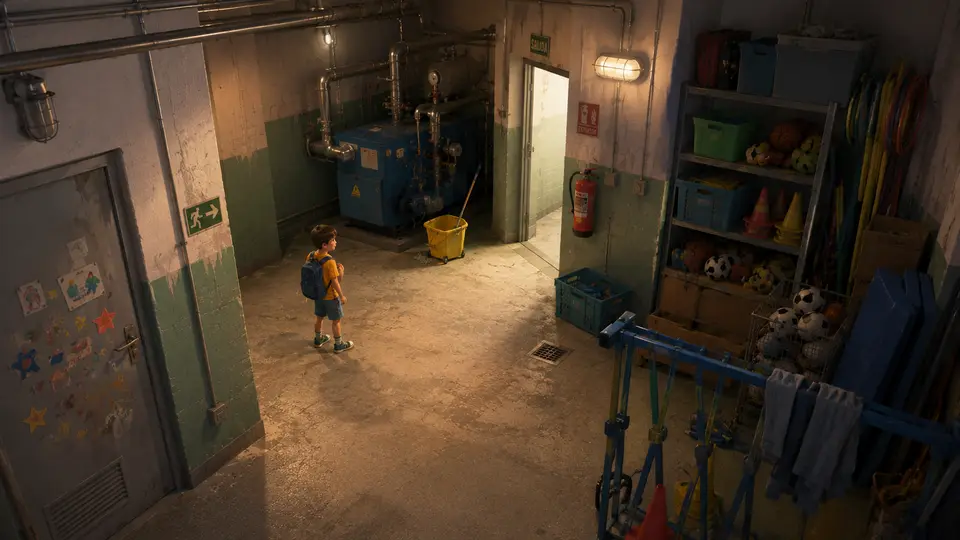
CAM-134A child in a marked-off area
«Tell me if anyone goes into the boiler room or the equipment store — nobody is in there on their own.»


What it does not do
IRIS does not know who may enter and who may not. It does not recognise faces, does not read cards and does not hold your list of authorised people: it knows where the line you drew is, and says who or what crosses it, or what is sitting inside and since when.
And it does not see what the camera cannot. If the zone has a corner outside the frame, that piece is not protected, and saying so up front beats discovering it at the first audit.
Questions
- Does it work for objects too, not just people?
- Yes, and in many places it is the main use. A quarantine pallet in the released area, a drum inside the markings of an emergency shower, six pallets in front of an exit, a cage of valuables entering an aisle it has no business in: those are things, not people, and none of them walks away on its own. That is why the rule has a clock: still inside after the minutes you set, it alerts. With people the alert is immediate, because a crossing lasts two steps.
- Can it flag two people going through on one badge?
- Yes. IRIS counts how many people cross the door and, if your access control tells it there was a single opening, the mismatch shows up on its own. What IRIS does not know is whose card it was, or who the second person is: the access system supplies that and a human reads it. Most of the time it is a colleague following through because their hands were full, and that is not an incident: it is a habit worth measuring, because in a restricted area it ends up being a hole.
- Do we have to paint the zone on the floor?
- For IRIS, no: the zone is drawn on the camera image with the mouse and changed in a minute. For people, yes, and no system fixes that: if there is nothing on the floor, people do not know where the boundary is and will cross it anyway. The sensible thing is for the line to exist in both places, on the floor so it is seen and in the image so it is measured. And when the layout changes, you change both.
- What about zones that must always stay empty?
- It is the same rule written backwards, and it is one of the most commonly used. The markings around an emergency shower, the space for an extinguisher, the metre and a half in front of an exit, the approach to a hydrant: these are zones that do not restrict who enters but require that nothing sits inside. They are drawn the same way and carry a clock, because leaving a pallet there for ten seconds while manoeuvring is not the same as leaving it all shift. And when the alert fires it comes with the photo: you see what is there and who can move it.
Demo · IRIS at work
We won't just tell you. We'll show you.
It is a summary of the real screen: it plays by itself, step by step, and shows only the path of one case. The actual tool has far more than fits in here.
- The alert fires
- It lands in the tray
- You open it
- You confirm or dismiss
Not seeing yours here?
These words are the ones we have built, not the ones IRIS understands. The list falls short on purpose: you ask for it in a sentence, and sentences do not run out. Tell us what is in front of your cameras and we will tell you whether it understands it, or not yet.
And the best part
Nothing to drill, nothing to rip out:the cameras already on your walls can start understanding.
No building work, no new cabling, no swapping equipment. It connects to what is already there, and what is already there starts telling you what it sees.
Tell us your problem and we will say whether IRIS understands it, or not yet.
We reply the same working day.