Solutions by typeLogistics efficiency
How long has that pallet been in front of the exit?
The fire exit is behind six pallets
Mid-morning in the despatch area. In front of the exit door there are six pallets of boxes stacked up to head height, two steel cages and a tool trolley. On the floor, the yellow band that says nothing gets left here shows underneath it all. Nobody put it there on purpose: it built up, pallet by pallet, since eight o’clock. And at eight it was empty.
16 cameras across 6 sectors
What IRIS is
IRIS watches the cameras for you.
IRIS Neural is an artificial intelligence that watches the cameras you already have and understands what happens in front of them. When something important happens —or something you told it you need to keep an eye on—, it alerts you; and whatever can be counted, it counts in numbers. All day long, without anyone having to watch a screen.
You tell it what you need to watch, and IRIS does it.
Works with the cameras you already have. Nothing to replace.
A person replies, not a form.
- Your footage never leaves your premises.
- It doesn't identify people.
- Certifications →
This is how you ask for it
«“Tell me when anything stays in the yellow zone in front of the exit for more than ten minutes.”»
Almost always nothing happens, which is exactly why it keeps happening. On the day something does, the door that was on the plan does not exist: people head for it, find the stack and turn back the way they came. And before that day there is the other thing, the one that arrives for certain: the inspector’s visit, the photograph in the report, the non-conformity in the customer audit and the usual talk, which lasts a week and is then forgotten.
You decide once
This is the textbook case of deciding once. The plant decides which floor markings have to stay clear — the exit, the fire lane, the hydrant, the extinguisher, the green bay for released stock — how many minutes are tolerated, and who gets told: the shift supervisor, not security. It is drawn once on the image and written once. After that IRIS watches all eighty spots at the same time, every shift, without anyone having to remember on a Friday afternoon.
A pallet is not dangerous. What is dangerous is where it ends up. In a warehouse there are painted areas that must always stay clear, and everyone knows it: in front of the fire exit, on the fire lane, around the hydrant, under the hose cabinet. And everyone, at some point, leaves something there “for a second”.
The “for a second” is the whole problem. Nobody decides to block an exit: someone sets down a pallet to make room, someone else puts a cage next to it because there is already one there, and two hours later there is a stack. The same happens with marked bays: a pallet from the red quarantine zone standing on the green released zone is not a silly slip, it is held stock about to leave through the door with everything else. And in an evidence store, a custody cage left open a minute too long is a chain of custody with a hole in it.
IRIS watches the floor, not the people. It knows which area must stay clear because someone drew it on the image, it sees there is something inside it and it counts the minutes. When it goes past the time the plant has decided, it says so with the camera, the time and how long it has been there. It does not know who left it, it does not look, and it does not need to: what has to happen is that it gets moved, and for that the supervisor only needs to know while the shift is still running. And on audit day, the record of how many times it was cleared and how quickly is worth more than any promise.
What changes
Before, this was controlled with the supervisor’s walk-round and Monday’s safety talk. The walk-round was good, but it happened once, and the pallet turns up at eleven. Now the alert arrives after ten minutes, to the person who can move it, and it gets moved before it becomes a stack of six. And there is something that did not exist before: the number. How many times that exit was blocked this month, in which shifts, and how long it took to clear — which is exactly what an auditor asks.
Where we have seen it
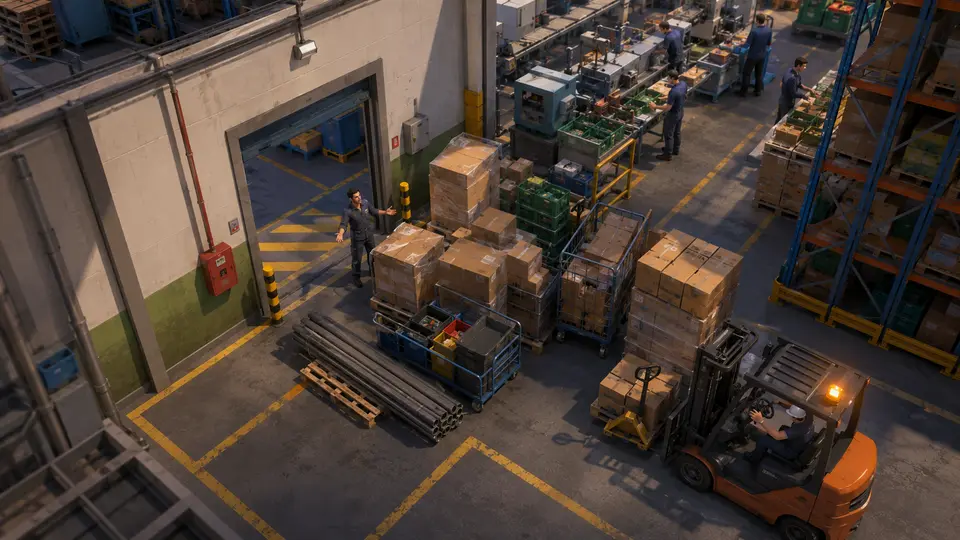
CAM-255The emergency exit is behind six pallets
«Tell me when something is left in the yellow zone in front of the exit for more than ten minutes.»
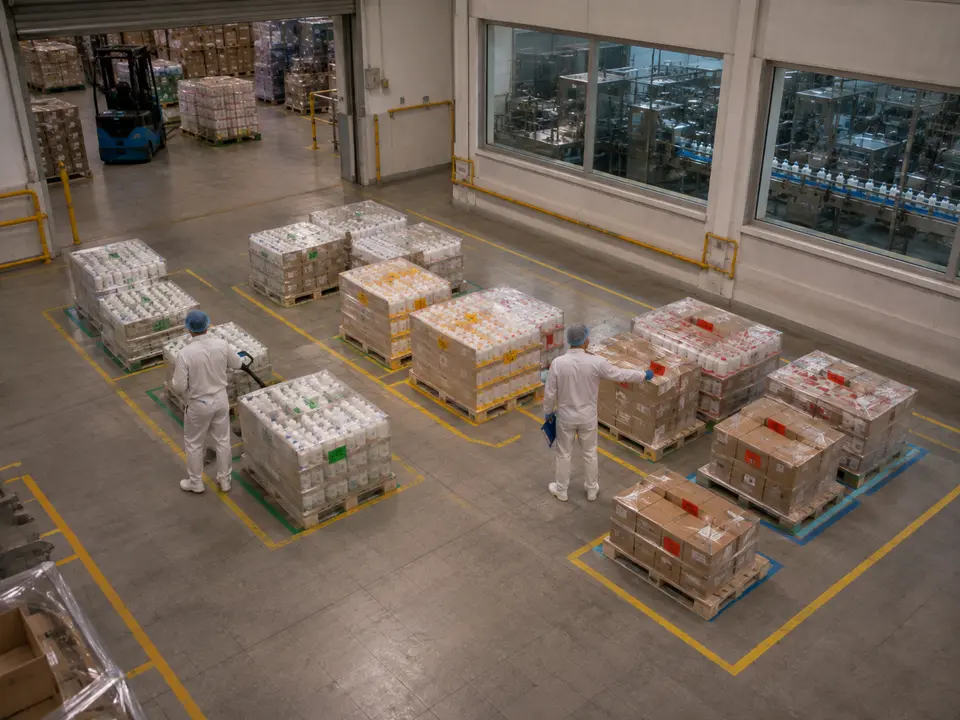
CAM-217A pallet outside its bay in dispatch
«Tell me if a pallet ends up outside its bay, or if a pallet from the held area shows up among the released ones.»
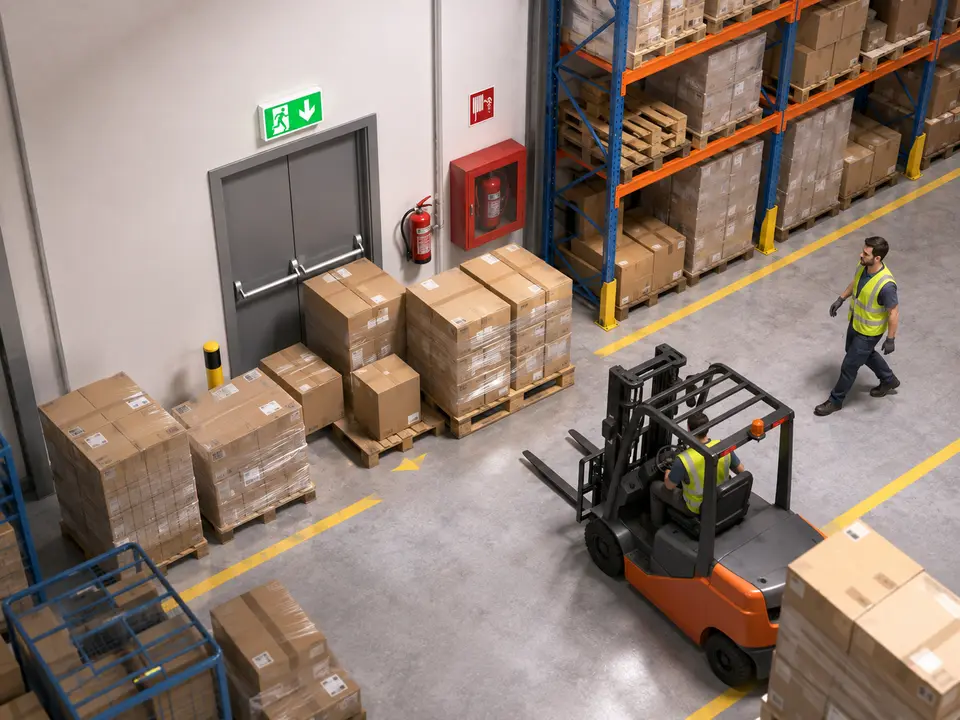
CAM-274Pallets in front of the emergency exit
«Tell me when there are goods in front of the emergency exit or covering the extinguisher for more than five minutes.»
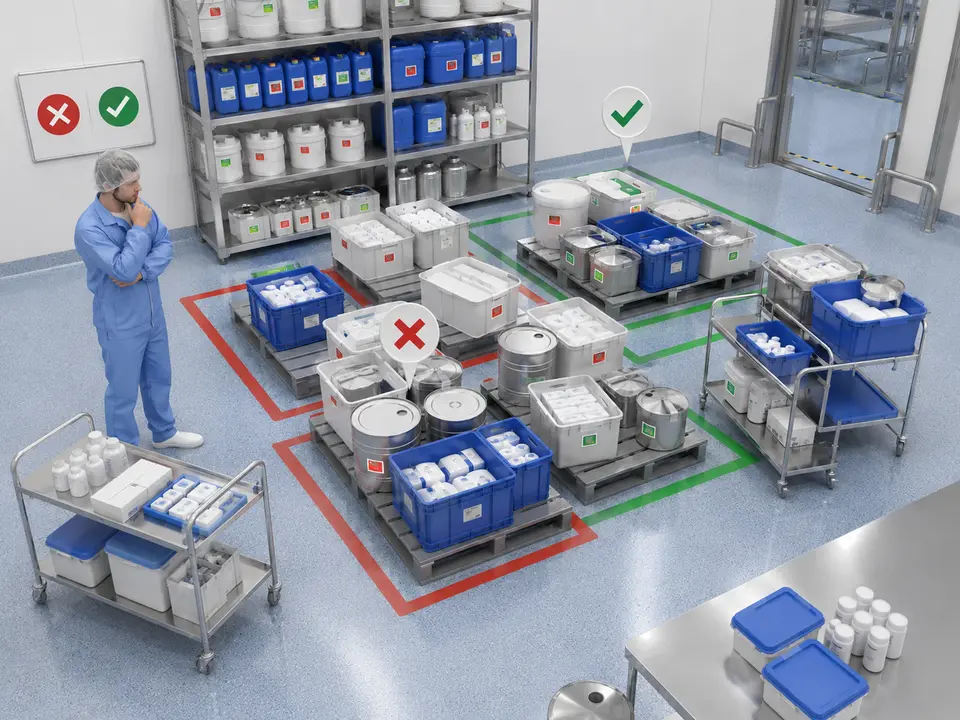
CAM-286A quarantine pallet sitting on the released zone line
«Tell me if any pallet from the red quarantine zone shows up inside the green zone or on the line.»
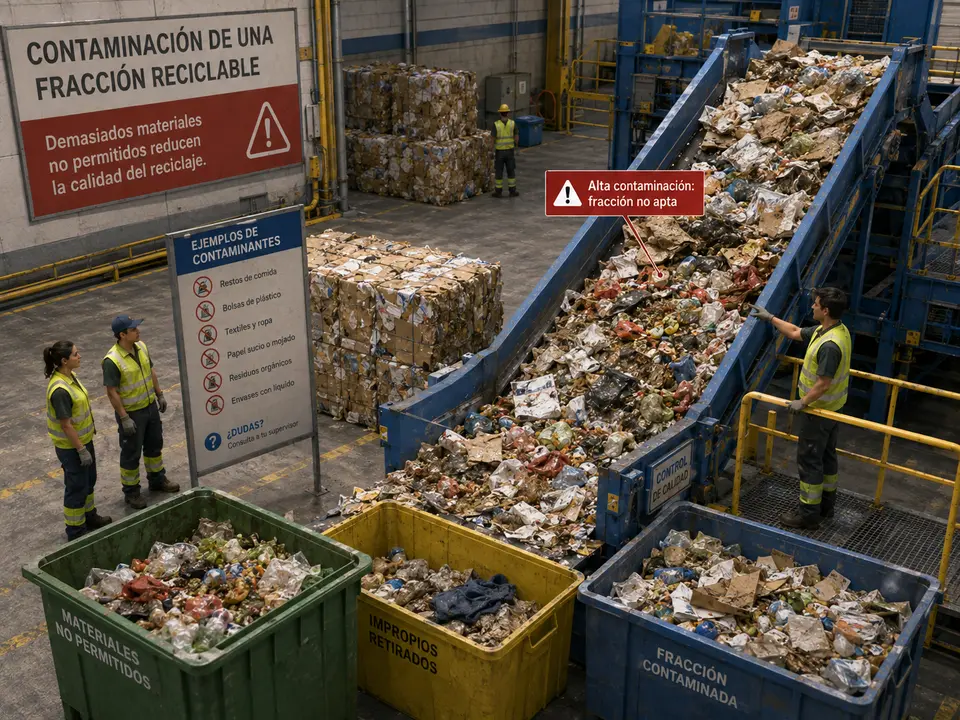
CAM-425The buyer wants to know how much contamination is in the bale
«Alert me when the paper and cardboard stretch is carrying more contamination than usual, and tell me how many there are so far this shift.»
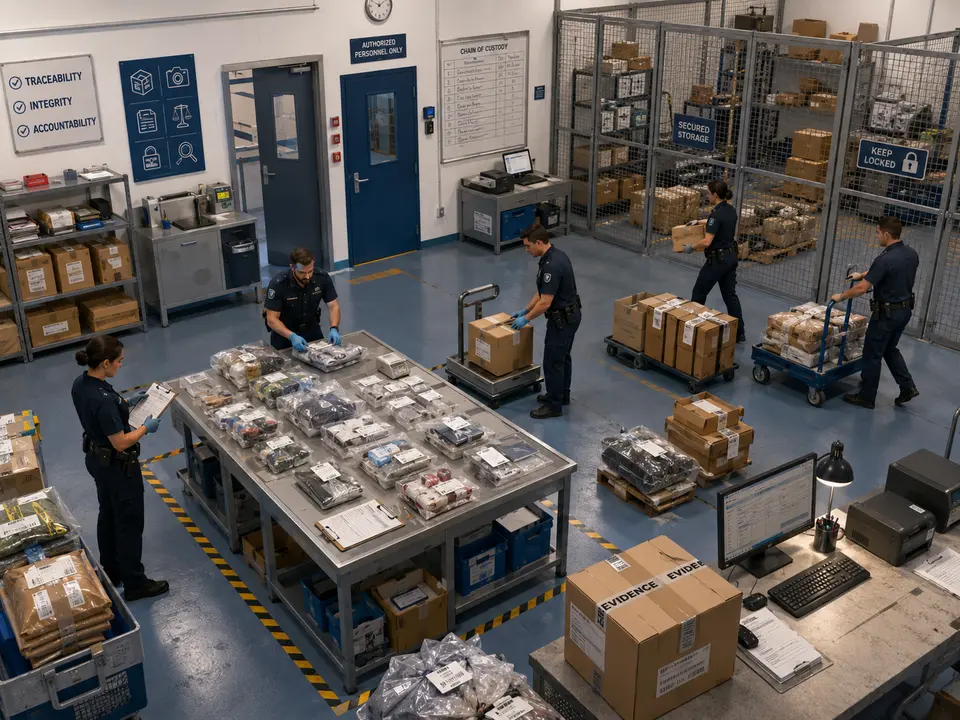
CAM-565Who went into the store, when, and what can be proved
«Tell me if the cage door opens outside service hours or stays open for more than a minute.»
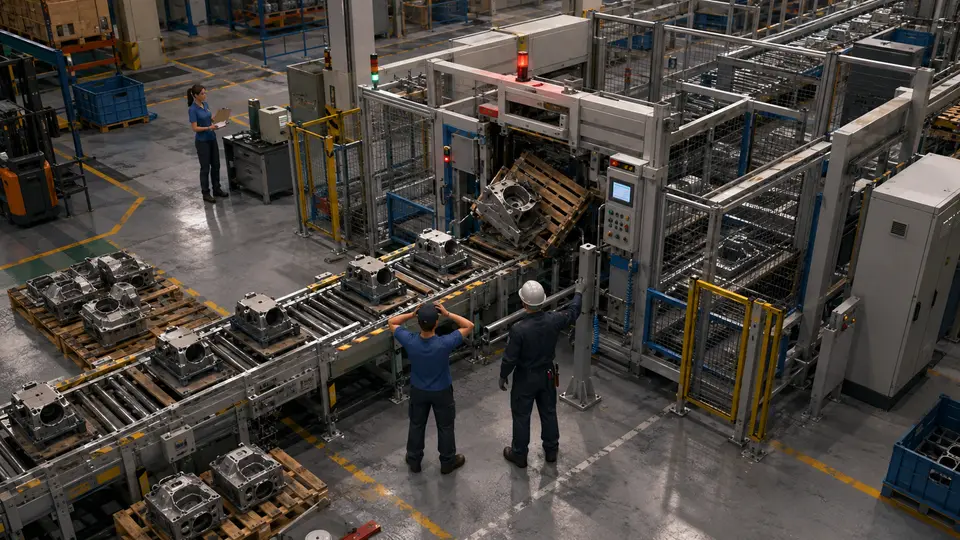
CAM-240The line has stopped with a pallet jammed inside
«Tell me when the line stops moving parts for more than a minute, and keep me the video from just before.»
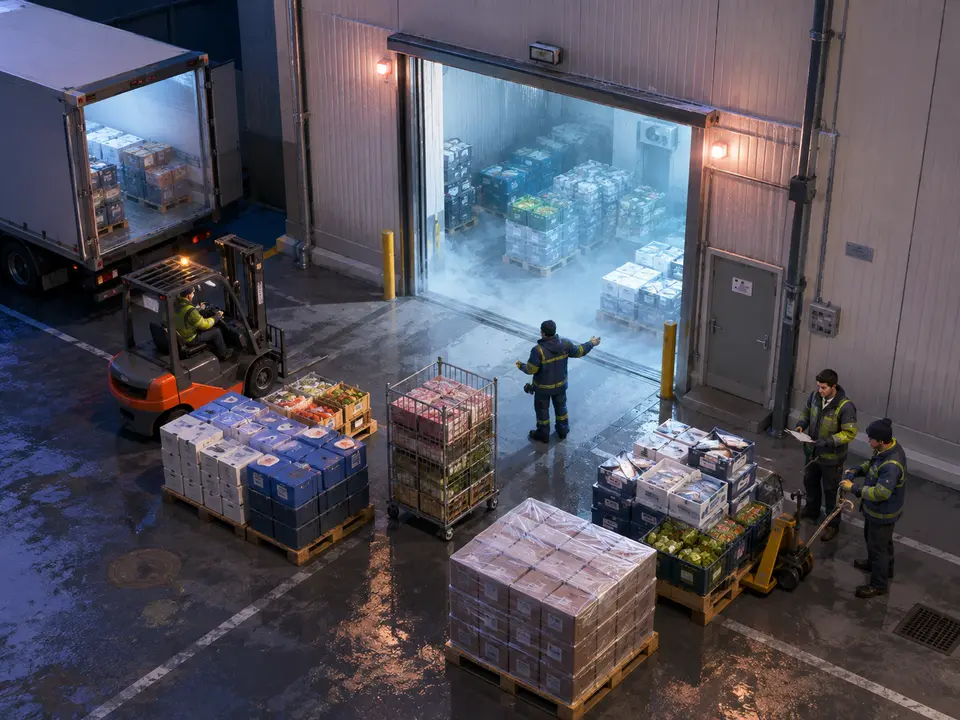
CAM-277The cold store standing open and the fish waiting outside
«Tell me how long the cold store door has been open and how long the pallets have been outside, and alert me if it goes past five minutes.»
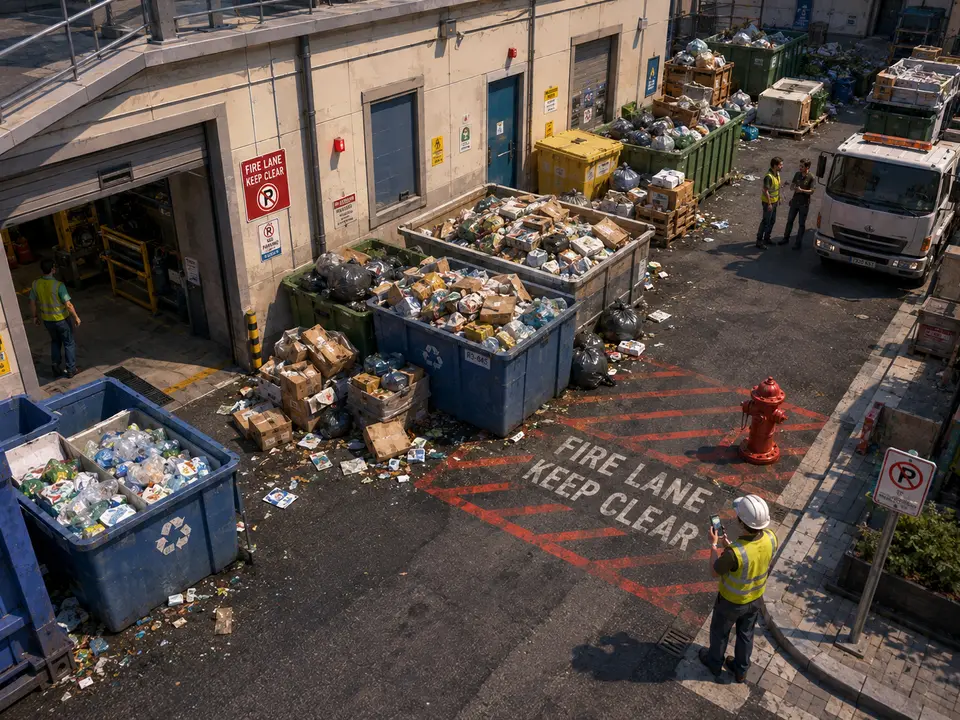
CAM-437The emergency lane is packed with skips and pallets
«Tell me if anybody leaves something on the painted emergency lane or in front of the hydrant.»
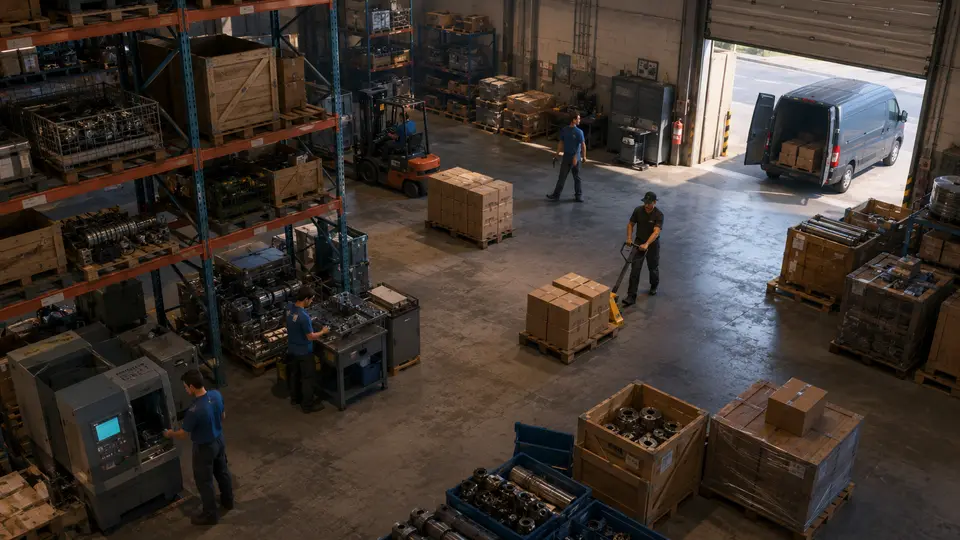
CAM-259A pallet heading out the door to a van
«Tell me if a pallet goes out the shipping door when no load is scheduled.»


What it does not do
IRIS moves nothing off the floor. It does not know whose pallet it is, cannot read the label from a distance and cannot tell two identical pallets apart: it knows there is an item inside an area that must stay clear, and how long it has been there. Nor does it decide how many minutes are too many, because that depends on the building and the plant sets it. And if the area is not visible from any camera, no rule helps: you look first at which spots are covered.
Questions
- Does the floor have to be painted for this to work?
- It does not have to be painted, it has to be drawn. The area that must stay clear is traced once on that camera’s image, and from then on IRIS knows where to look. If the floor is already painted, better, because it matches what people see and the rule explains itself in the safety briefing. But an unpainted area in front of an electrical panel can be traced just the same, and it works just the same. What you cannot do is describe it in a sentence: a line is not told, it is drawn.
- What if the pallet is only passing through?
- That is why the rule carries minutes. A forklift crossing the fire lane is nothing, and if the alert fired on that, within two days nobody would look at it. What gets reported is what stays: ten minutes in front of the exit, five covering the extinguisher, whatever the plant decides for each spot. That number is the difference between a rule people respect and a rule that ends up switched off, and that is why it is set by the person who knows the building, not by us.
- Can it tell a quarantined pallet from a released one?
- It tells the zone apart, not the pallet. If the floor has a red quarantine zone and a green released zone, IRIS sees that an item is inside the green one or standing on the line, and says so. What it does not do is read the pallet label from the ceiling or know which batch is inside: the warehouse system is there for that. The camera supplies what that system lacks, which is seeing where the pallet actually is, rather than where the paperwork says it is.
- Does this help with passing an audit?
- It helps you arrive with something to show. An auditor does not ask whether the exits are clear: they ask how you know. With this you answer with a number — how many times that area was occupied, in which shifts, how long it took to clear — and with the video of each occasion. It is not a certificate and does not replace one, and we do not sell it as one. It is the evidence that the rule is watched every day and not only the week before the visit.
See it for yourself
This isn’t a video. It’s a slice of the real screen.
A summary of the real interface, played hands-free. You see one case from start to finish; what you do not see are the other screens, and there are many.
- Four cameras at once
- Each understands its own view
- The numbers climb by themselves
Not seeing yours here?
These words are the ones we have built, not the ones IRIS understands. The list falls short on purpose: you ask for it in a sentence, and sentences do not run out. Tell us what is in front of your cameras and we will tell you whether it understands it, or not yet.
And the best part
We would rather promise less.Let the first week be the surprise, not the brochure.
What it cannot do gets said on day one, not on the last day. A short list that holds beats a long one that falls apart the moment it is switched on.
Tell us your problem and we will say whether IRIS understands it, or not yet.
We reply the same working day.