Solutions by typeMobility analysis
How do you know how many people are inside without going to count them?
Nobody knows how many people are inside
Quarter past seven, event evening in the atrium. Below, a solid mass in front of the stage; above, both balconies packed end to end with people leaning on the rail. The escalators keep coming up full. At the control desk somebody looks at the screen and says a number: «about three thousand». It is a number said out loud, not a number measured. Nobody has counted anything.
17 cameras across 10 sectors
What IRIS is
IRIS watches the cameras for you.
IRIS Neural is an artificial intelligence that watches the cameras you already have and understands what happens in front of them. When something important happens —or something you told it you need to keep an eye on—, it alerts you; and whatever can be counted, it counts in numbers. All day long, without anyone having to watch a screen.
You tell it what you need to watch, and IRIS does it.
Works with the cameras you already have. Nothing to replace.
A person replies, not a form.
- Your footage never leaves your premises.
- It doesn't identify people.
- Certifications →
This is how you ask for it
«Alert me if the atrium approaches its safe capacity or if a balcony fills up.»
That number is what the security manager is given and what goes into the event report. If it is too low, people keep being let onto a floor that cannot take them. If it is too high, an entrance gets closed that did not need closing, and the queue in the street becomes the next problem. And the day something happens, the report will ask how many people were inside and at what time. «About three thousand» is not an answer.
You decide once
The limit is not set by IRIS: it is set by the organisation, with its licence and its safety plan in front of it. It decides once which zone is which, what each limit is, at what percentage it wants the first warning and who receives it. It also decides where the counting line goes, because a line is not described in words: it is drawn. From then on IRIS counts the same way every day, without anyone explaining it again.
Occupancy has always been counted by hand, and by hand means three bad ways. With a clicker at the door, which gets tired. With the turnstile figure, which counts who comes in and forgets who goes out. Or with the eye of someone who has done it for twenty years, who gets it roughly right and cannot prove it. None of the three works when the number has to be on a screen at quarter past seven in the evening.
Counting is not the same as watching, and so it is asked for differently. An alert is asked for by speaking, in one sentence. A count is asked for by drawing: a line across the door, a zone on the atrium floor. Nobody can describe a line in words, it has to be traced, and that is exactly why the number is repeatable: the same thing is always counted, it can be re-checked on the same video and it does not depend on who was looking.
And there is a small version of this word that matters just as much. The filling room validated for six people that has eight in it. The airlock meant for one person at a time where two go through on the same opening. The staff door opened with one card that two people cross. There the capacity is not five thousand: it is one. The counting is identical; the limit changes everything.
What changes
Occupancy used to be an estimate said out loud and written down by hand, and when somebody questioned it there was nothing to answer with.
Now there is a number on screen, by zone, rising and falling with the crowd, warning before the limit rather than after. And the next day that same number is the curve of the event: how many came in, when the peak was and how long the floor took to clear.
Where we have seen it
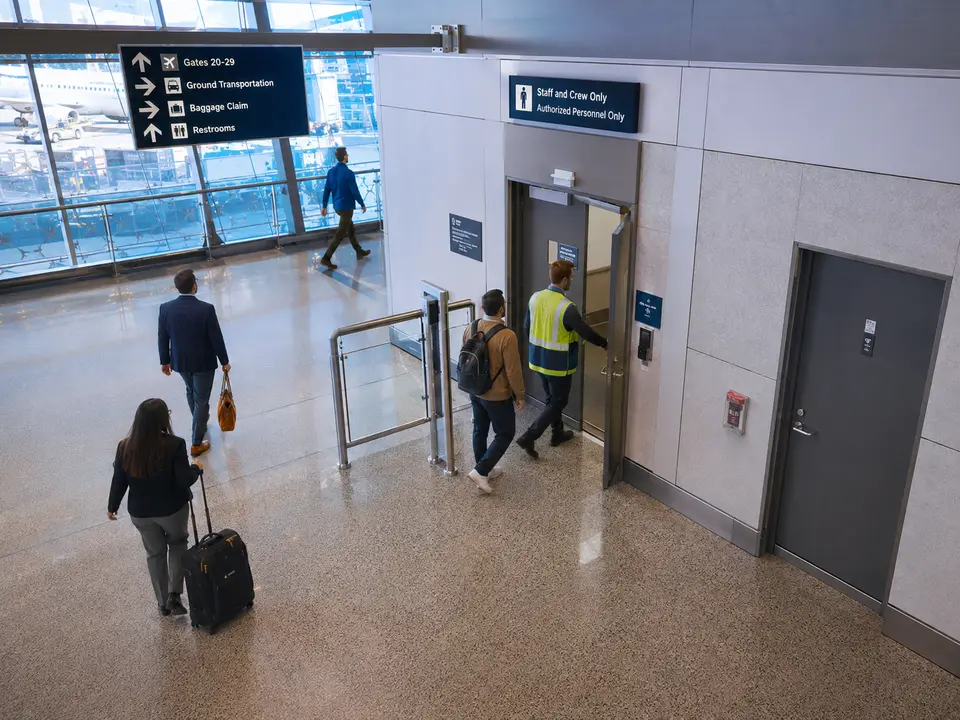
CAM-588One door, one badge and two people through
«Tell me if two people go through a staff door on a single opening.»
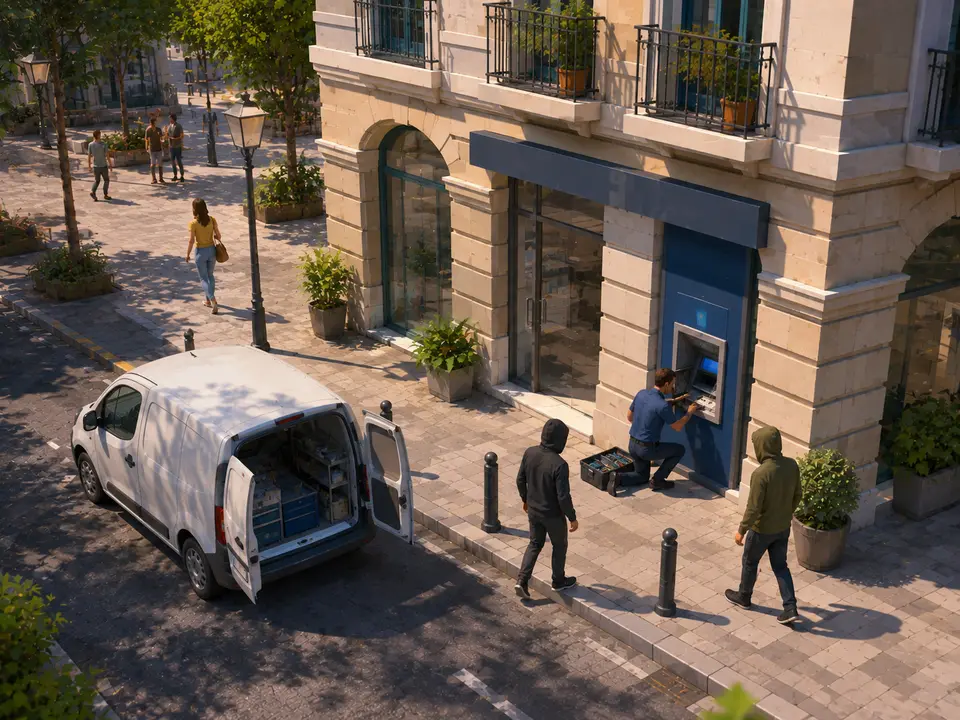
CAM-516A cash machine open in the street and two people inside the zone
«Tell me if the cash machine is open for maintenance and there is more than one person inside the surrounding zone, not counting the technician.»

CAM-25Beach capacity at its limit
«Tell me when the beach reaches capacity, and alert me to fires or jet skis inside the swimming area.»

CAM-21Fight in a public space
«Tell me if there is a fight in the street, and how many people are gathering around it.»

CAM-503How many are inside the room and how many are still at the coffee
«Tell me when the wait at the accreditation desk goes over five minutes.»
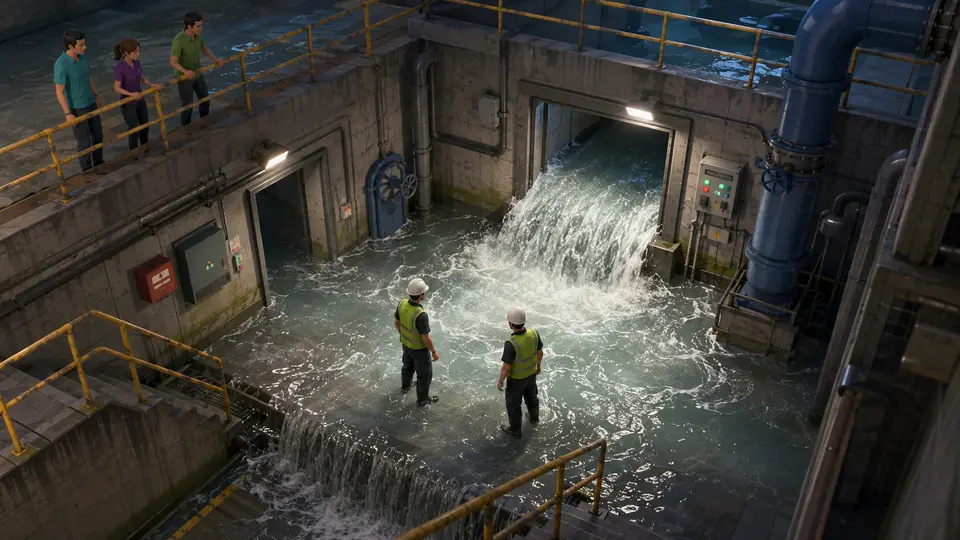
CAM-166Water pouring into the underground chamber
«Alert me the moment water comes in through the chamber opening, and tell me how many people are inside right then.»

CAM-542Almost five thousand people inside, and you need to know on which floor
«Tell me if the atrium gets close to safe capacity or if one of the balconies fills up.»
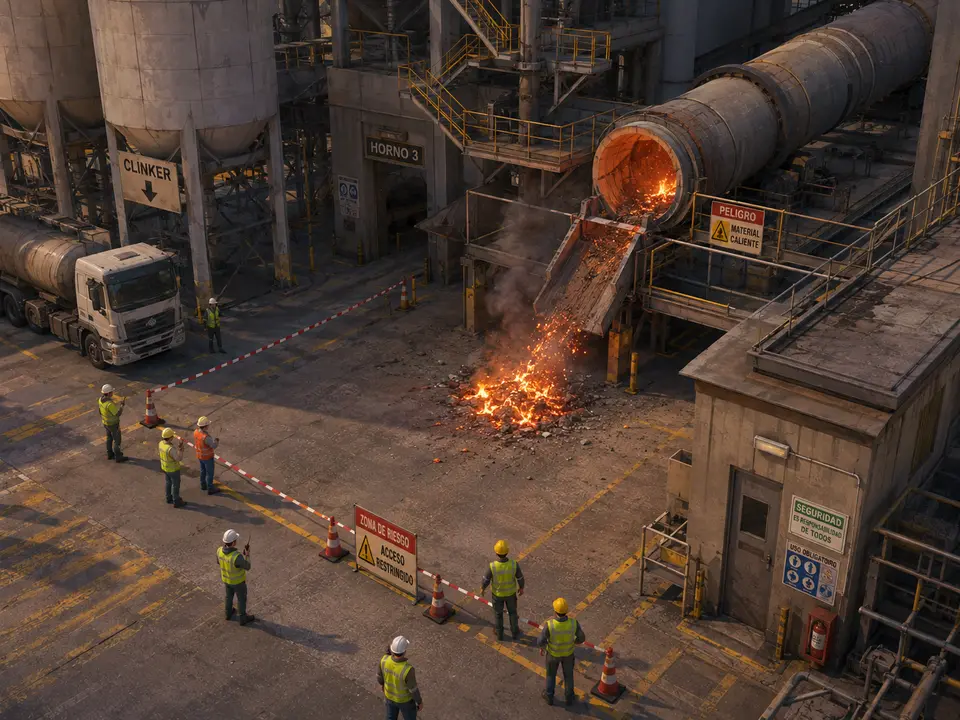
CAM-398Red-hot clinker spilled outside the kiln
«Tell me right away if hot material comes out past the kiln mouth or if there is fire in the yard, and tell me how many people are nearby.»
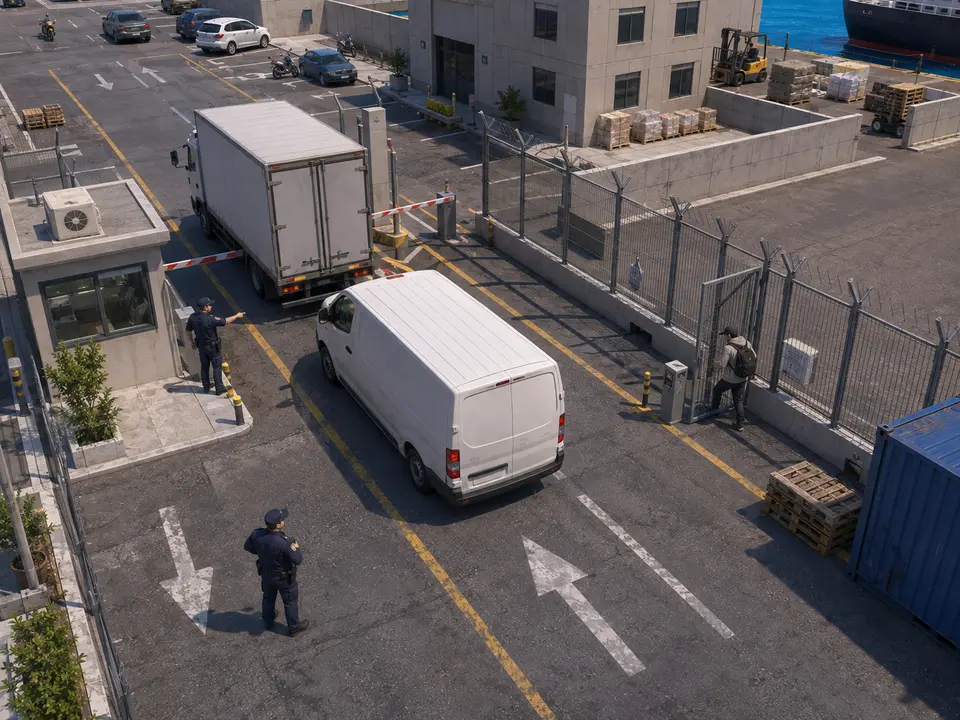
CAM-561How many people are inside the compound right now
«Tell me if the turnstile stops adding people during the shift change.»

CAM-361The ladle stream has missed and molten metal is running across the floor
«Alert me the moment metal falls outside the mould or the runner, and tell me how many people are in the bay right then.»


What it does not do
IRIS identifies nobody: it counts people, does not know who they are and keeps no record of anyone.
Nor is it a turnstile. When people pass tightly bunched or the camera is badly placed, the figure suffers, which is why a counting camera’s position is chosen before installing. And it does not close doors: closing an entrance is decided by whoever runs the room.
Questions
- Does IRIS know who came in?
- No. It counts people, it does not identify them: no face recognition, no names, no record of anyone. For occupancy there is no need to know who is who, only how many there are. That is the difference between a counter and an access control: access control asks who you are, a counter only adds and subtracts. Here there is a number per zone and the time it was measured.
- Does this number count as the legal capacity figure?
- No, because legal capacity is not set by a camera: it is set by the licence, the design and the authority that approves them. What IRIS does is measure how many people are inside against that limit and warn before it is reached. The figure is always measured the same way over the same drawn zone and can be re-checked on the video, so it serves to operate and to explain afterwards what happened. Setting the limit, no.
- Does it count people leaving as well?
- Yes, and that is what makes the number useful. A counter that only adds entries produces a figure that grows all evening and by nine claims there are three times as many people inside as there are. The counting line has a direction: it tells who crosses inwards and who crosses outwards, and occupancy is the difference between the two. That is why the number falls when a session ends and rises when the next one starts.
- What if one camera has to cover a large hall?
- Then it is better to count doors, not floor area. Counting heads in a dense crowd at the back of a large hall is the hardest thing there is: people occlude one another, perspective flattens the scene and the number starts to be an estimate. Counting who crosses each door is far more solid, because at a door people pass one or two at a time. That is why well-measured occupancy is almost always built on the entrances.
See it for yourself
No extra alarms here. Just what needs looking at.
Not a recorded video, not an explanatory drawing: a summary of the real screen, with a different case every time it starts. There is a lot more behind it.
- You draw the line
- It counts by itself
- A number comes out
Not seeing yours here?
These words are the ones we have built, not the ones IRIS understands. The list falls short on purpose: you ask for it in a sentence, and sentences do not run out. Tell us what is in front of your cameras and we will tell you whether it understands it, or not yet.
And the best part
By the eighth hour of a shiftnobody watches the way they did in the first. That is not a flaw.
It is being human. A camera has no eighth hour: at four in the morning it understands what it understood at noon, and it speaks up just the same.
Tell us your problem and we will say whether IRIS understands it, or not yet.
We reply the same working day.