CAM-588
One door, one badge and two people through
A restricted door at the end of a boarding concourse, with its staff-only sign. A worker in a hi-vis vest has opened it with his badge and is going in, holding the leaf as he passes. Behind him, using the open leaf, a second person goes through, and that person has not opened anything. On the left there is a low gate, which is the normal way in, and passengers with luggage keep walking down the concourse. IRIS sees two bodies crossing on a single opening, notes the time and saves the video. Nothing else.

Turn on IRIS Vision
AI-generated image
What IRIS is
IRIS keeps watch over the airport for you.
IRIS is an artificial intelligence that looks at the cameras you already have and understands what's happening at security checkpoints, the baggage belt and the access points. If a queue grows, the belt stops, or something you need to watch happens, it alerts you right away; and whatever can be counted, it counts in numbers. All day long, without anyone having to stare at a screen.
You tell it what you need to watch, and IRIS does it.
Here, for example, IRIS sees that two people went through on a single card swipe and saves the eleven-second video, without saying who anyone is. So you know the log says one and reality says two. With that alert you decide whether the case needs checking, and the video tells you exactly what happened.
Works with the cameras you already have. Nothing to replace.
A person replies, not a form.
- Your footage never leaves your premises.
- It doesn't identify people.
- Certifications →
What IRIS understands
What it recognises in this scene
- restricted door open and held
- worker who opened it with his badge
- second body on the same opening
- staff-only sign
- badge reader on the doorframe
- low gate on the normal route
- passenger walking down the concourse
- second service door, closed
What this camera measures
An alert says something is happening. The reading says how much.
- 2Bodies that crossed
- 1Openings recorded
- 11 sTime with the leaf open
- 20 sTime since the alert
- 16:07:44Video starts at
The figures on this screen are an example from the illustration, not any client's measurement.
The rule
You decide once. IRIS applies it always.
If
two bodies cross through a restricted door
And alsoonly one opening has been recorded
Then
- alert the duty supervisor with the door, the time and the number of bodies
- save the eleven seconds of video from before the leaf was opened
- leave the episode open until a person reviews it and closes it
The instruction that set it up«Tell me if two people go through a staff door on a single opening.»
What changes
What changes for operations, for the passenger and for maintenance
Almost always it is two colleagues going in together, and nothing is wrong. But the access log has one entry and two people went through that door, and that is exactly what has to be reviewable afterwards: if tomorrow you have to reconstruct who was in that area, the log says one and reality said two. With the alert, the duty supervisor watches an eleven-second clip and closes the matter in a minute. Without it, the gap between the log and reality is never found.
What people usually ask
Does IRIS know who went through that door?
No. IRIS counts bodies and openings: two bodies, one opening. It does not recognise faces, does not know whose badge it was and names nobody. The alert is a fact with a time and a video, not an accusation. Who it was and whether they were authorised is worked out by a person with the access log in front of them, which is where that information comes from, not from the camera.
And what if the person going in behind also works there?
Then almost always that is exactly what it is, and the episode is closed in a minute. The rule does not say anybody did anything wrong: it says two people went through that door and the log recorded one. It is a gap between what the paperwork says and what happened, and in a restricted area that gap has to be resolvable. It is resolved by a person watching eleven seconds of video, not by the camera.
Other cameras
- CAM-580 · The kerb jams before the terminal does
- CAM-581 · Eighteen minutes in one queue, four in the one beside it
- CAM-582 · How long the security wait really is, measured not guessed
- CAM-583 · An open lane nobody has gone through in nine minutes
- CAM-584 · Fifty-two minutes of queue and seven booths switched off
- CAM-585 · The aisle is clear and ten metres on, nobody moves
The real interface, step by step
You set the rule once. IRIS applies it every time.
You will see a summary of the interface, played step by step and hands-free. Each round starts with another case. The complete tool does not fit in a demo.
- The hour, as a grid
- You look where it's dark
- You jump to that minute
See it somewhere else
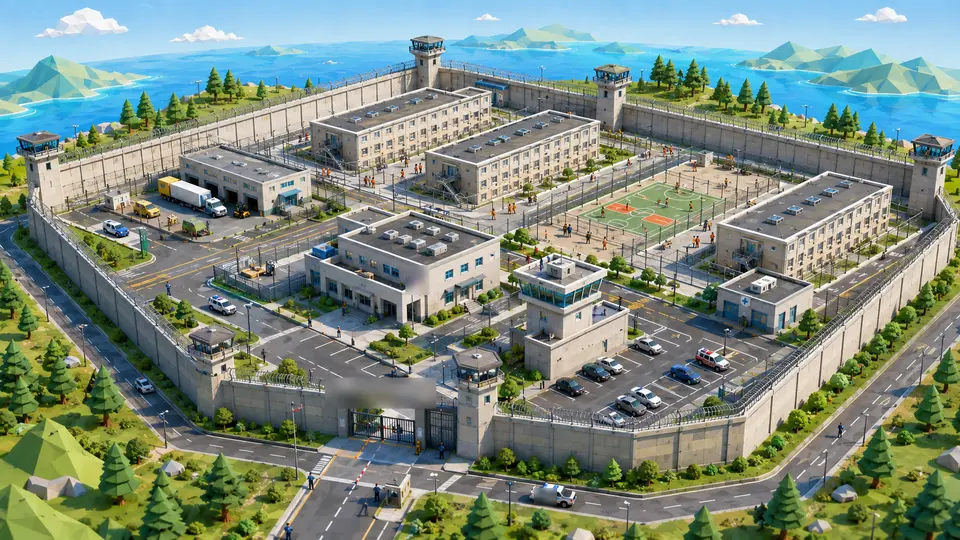
Who is watching the yard screen when the fight starts?
17 cases: 16 raise an alert when something happens and one only measures. You see each image as it is, and then with what IRIS understands on top.

How long before somebody comes down that corridor at four in the morning?
13 cases: 12 raise an alert when something happens and one only measures. You see each image as it is, and then with what IRIS understands on top.


And the best part
The cameras you bought years agostill hold up. What they were missing was not image quality.
It was someone to look. IRIS connects to the installation you already have — same equipment, same cabling — and those images go from being stored to being understood.
Tell us your problem and we will say whether IRIS understands it, or not yet.
We reply the same working day.