CAM-584
Fifty-two minutes of queue and seven booths switched off
International arrivals, nearly eleven at night. The passport control snake is full across all four of its runs and the queue disappears down the far corridor: six hundred and twenty people. Of the fourteen booths, seven have somebody behind the glass; the other seven are dark. On the left, a wide empty corridor with room for another whole queue. IRIS measures how many minutes the wait is, how many people are inside the queue and how many booths are open while they wait. And nothing else: it looks at no document, at no face, and it does not know who anybody is.

Turn on IRIS Vision
AI-generated image
What IRIS is
IRIS keeps watch over the airport for you.
IRIS is an artificial intelligence that looks at the cameras you already have and understands what's happening at security checkpoints, the baggage belt and the access points. If a queue grows, the belt stops, or something you need to watch happens, it alerts you right away; and whatever can be counted, it counts in numbers. All day long, without anyone having to stare at a screen.
You tell it what you need to watch, and IRIS does it.
Here, for example, IRIS measures how many minutes people have been waiting in the queue and how many of the fourteen booths are open. That's how you know that at eleven at night the wait is fifty-two minutes with only seven booths working. With that number you decide whether to open more booths or change the shift, then check the next day whether the wait went down.
Works with the cameras you already have. Nothing to replace.
A person replies, not a form.
- Your footage never leaves your premises.
- It doesn't identify people.
- Certifications →
What IRIS understands
What it recognises in this scene
- body of the queue, four full runs
- tail of the queue, down the far corridor
- open booths
- booths switched off
- staff working at the booths
- empty corridor with room for another queue
- member of staff walking the corridor
- seating area at the side
What this camera gives back
Nobody gets an alert here. Here you get numbers.
- 52 min+18 minWait right now
- 620People in the queue
- 7 / 14Booths open
- 6 / minPeople going through per minute
- 1 h 05 minLongest wait today
- 22:40Last updated
The figures on this screen are an example from the illustration, not any client's measurement.
IRIS incorporates NeuralPax, a separate licence certified by the Spanish Metrology Centre for people counting, occupancy and crowd-flow control. That the figure is right is guaranteed by a third party, not by us: the occupancy figure you show is measured and approved, not estimated. The certification covers that measurement — counting people — not the whole product.
How the counting works
Counting is not something you ask for. You draw a line.
There is a line at the mouth of the queue and another in front of the booths: the first says when somebody starts waiting and the second when they stop. The difference is the wait. There is a zone over the floor of the snake, telling you how many people are inside, and another in front of the booths, telling you how many are working. All of this is drawn once on the image and there it stays: that is why a Thursday in August and a Tuesday in November are measured the same way. Counting people is the only measurement we hold certified by the Spanish Centre for Metrology, and it is done by NeuralPax, an independent licence that sits inside IRIS.
- line at the mouth of the queue · Counting line
- line in front of the booths · Counting line
- queue floor zone · Dwell zone
- zone in front of the booths · Dwell zone
And also, one rule
You decide once. IRIS applies it always.
If
the control wait goes over forty minutes
And alsothere are booths still closed
Then
- alert the hall duty manager with the wait and the booths open at that moment
- log the slot with both figures together, the wait and the booths
- build up the month's series for the resourcing meeting
The instruction that set it up«Tell me if the control wait goes over forty minutes and there are booths still closed.»
What changes
What changes for operations, for the passenger and for maintenance
Fifty-two minutes of queue at eleven at night is the first impression somebody takes away of an entire country, and it is also a missed connection and a crew left waiting. Today that figure is estimated. Measured with a line drawn on the image, it stops being an impression and becomes a series: how many minutes, at what hour, with how many booths open, every day of the year. With that you ask for staff, spread them across the slots and justify the shift, with a figure that stands up to anybody's review.
What people usually ask
Does IRIS look at documents or faces at this control?
No, and there is no nuance to add. IRIS does not recognise faces, does not read documents, does not match against any list and does not know where anybody has come from. What is in front of this camera is a queue, and what it measures is a queue: how many people, how many minutes, how many booths open. It is exactly the same measurement it makes at the door of a shopping centre. Anything to be decided about a person is decided by the person at the booth, with their own means and their own procedure.
Is it useful if the booths are not run by the airport?
Yes, and that is probably where it is most useful. The airport is responsible for the hall even when it is not responsible for the booths, and it is the airport that gets the complaints. Having a measured figure for how many minutes people wait and with how many booths open turns an awkward conversation into a conversation with numbers on the table. IRIS measures the space, not anybody's work.
Why are the open booths counted as well?
Because a wait without that figure beside it explains nothing. Fifty minutes with all fourteen booths open and fifty minutes with seven are two different situations: the first says you need more space or more staff, the second says you need to open up. Both figures are measured at once, in the same image, and shown together so nobody has to guess which of the two it was.
Other cameras
- CAM-580 · The kerb jams before the terminal does
- CAM-581 · Eighteen minutes in one queue, four in the one beside it
- CAM-582 · How long the security wait really is, measured not guessed
- CAM-583 · An open lane nobody has gone through in nine minutes
- CAM-585 · The aisle is clear and ten metres on, nobody moves
- CAM-586 · Three minutes stood at the board is not walking slowly
See it for yourself
No extra alarms here. Just what needs looking at.
Not a recorded video, not an explanatory drawing: a summary of the real screen, with a different case every time it starts. There is a lot more behind it.
- You draw the line
- It counts by itself
- A number comes out
See it somewhere else
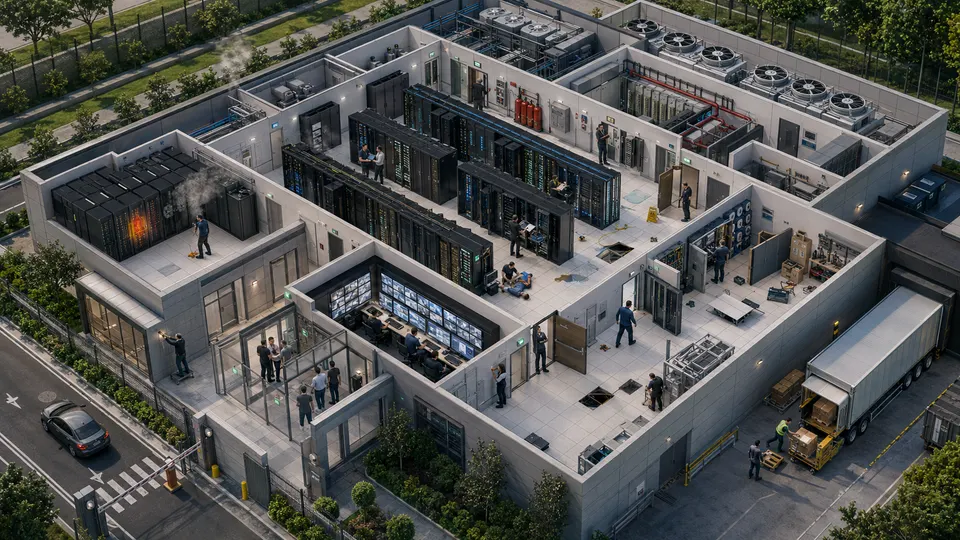
What if the outage does not start with an attack?
13 cases, and in every one of them IRIS raises an alert when something happens. You see each image as it is, and then with what it understands on top.
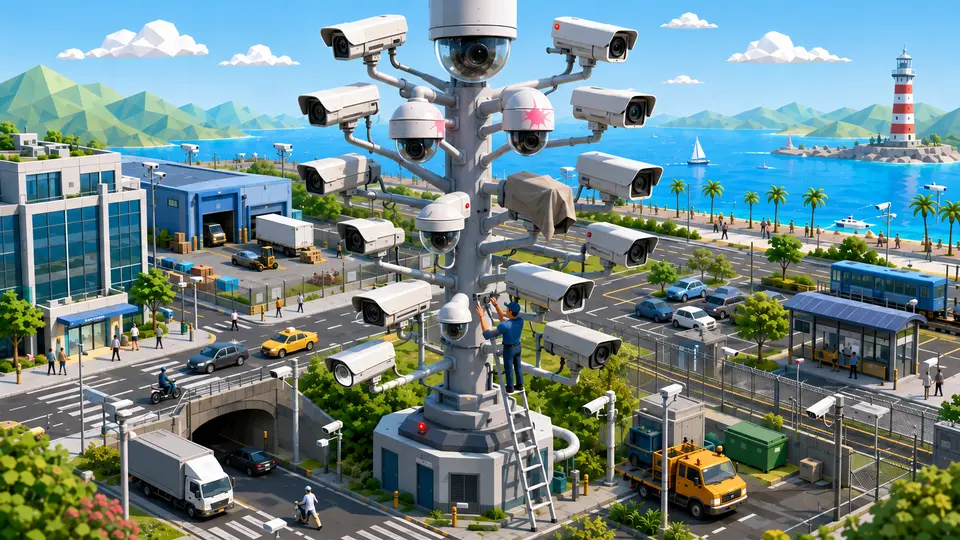
And who watches the cameras?
34 cases, and in every one of them IRIS raises an alert when something happens. You see each image as it is, and then with what it understands on top.


And the best part
What happens outside the framedoes not exist for IRIS. No camera sees the whole world.
So the first thing we do is check what each camera covers and write it down: from here you can understand this, and not that. A dull hour that saves a lot of misunderstandings.
Tell us your problem and we will say whether IRIS understands it, or not yet.
We reply the same working day.