Public safetyMobility analysis
CAM-571
Thirty-eight boats an hour cross the mouth of the cove
The same cove, measured instead of watched. A line is drawn across the mouth, from edge to edge of the image, and another further in. Every vessel crossing the first is added; one that also crosses the second has come in rather than merely passed by. And a zone is painted over the water, telling you how many stay inside and for how long. In the image there is a yacht, a fishing boat and a sailing boat under way offshore, and one boat stopped in the middle. IRIS counts hulls: it does not know who is aboard any of them.

Turn on IRIS Vision
AI-generated image
What IRIS is
IRIS looks after the city for you.
IRIS is an artificial intelligence that uses the cameras you already have in the control room and understands what's happening on the streets and in public spaces. When an incident happens, or something you want to track occurs, it alerts you right away instead of someone having to watch a hundred screens at once; and whatever can be counted, it counts in numbers. All day long.
You tell it what you need to watch, and IRIS does it.
Here, for example, IRIS draws a line across the mouth of the cove and counts every boat that comes in, and with a second line further inside it knows how many stay and for how long. That's how you know forty boats came in over two hours one August Sunday. With that number you decide whether you need a cap, more mooring buoys, or someone on duty at that time.
Works with the cameras you already have. Nothing to replace.
A person replies, not a form.
- Your footage never leaves your premises.
- It doesn't identify people.
- Certifications →
What IRIS understands
What it recognises in this scene
- coastal surveillance camera
- yacht crossing the mouth
- fishing boat under way
- sailing boat passing by
- vessel lying still inside the cove
- person scanning with binoculars
- person checking the image
- cliff closing the cove
What this camera gives back
Nobody gets an alert here. Here you get numbers.
- 38 / h+9Vessels crossing the mouth per hour
- 4Vessels inside the cove now
- 52 minAverage time they stay
- 12:00 – 15:00Busiest entry slot of the day
- 2Crossings after dark
- 13:05Last updated
The figures on this screen are an example from the illustration, not any client's measurement.
How the counting works
Counting is not something you ask for. You draw a line.
Two lines and one zone, drawn on the image. A line over water cannot be described in a sentence: you have to decide exactly where it runs and in which direction it counts, and only a stroke settles that. It is drawn once and there it stays, which is why the figure for a Tuesday in May and the one for a Saturday in August compare without argument and anybody can repeat the count. Vessels are counted here, not people, so this camera does not carry the Spanish Metrology Centre certification: that covers people counting and nothing else.
- line across the mouth of the cove · Counting line
- inner line of the cove · Counting line
- zone over the water surface · Dwell zone
And also, one rule
You decide once. IRIS applies it always.
If
there are more than six vessels inside the cove at once
Then
- alert whoever manages the marine area, with the number and the time
- put the day's curve alongside, to see whether more keep coming in
- save the slot in the season series
The instruction that set it up«Tell me if there are more than six vessels inside the cove at once.»
What changes
What changes for whoever goes out, whoever decides and whoever justifies it later
First Sunday in August, eleven in the morning: forty boats have come into the cove in two hours and not one of them is written down anywhere. A cove is not managed on the neighbours’ impressions, it is managed on a series. How many come in per hour, how many stay and for how long is what decides whether a mooring buoy field is needed, whether the seabed can take what it is taking, and at which hours it is worth having somebody nearby. And when the coastal officer has to defend a decision somebody is not going to like — a cap, a closure, a buoy — what she puts on the table is a series measured the same way every time, not a memory of last August.
What people usually ask
Is each vessel that comes in identified?
No. Counting does not require identifying anything: a vessel crossing the line is a hull that adds one. No hull registration is read, nothing is stored attached to a particular boat and nothing is cross-checked against any register. What is left is a number per hour and an average dwell time, which is exactly what you need to decide whether mooring buoys are required.
Does it count properly at night?
It depends on the camera and on how much light there is, and the honest thing is to say that rather than promise it does. With a daytime camera and no moon, a boat without lights is hard to count; with a sensor built for low light, it counts. What we do is test it on site before writing the rule and state which framing and which camera it works with. Promising the same figure by night as by day would be selling something that is not there.
Can this figure be used to restrict access to the cove?
It supports the decision with a figure, but the decision is neither taken nor proposed by IRIS. Restricting access to a place is a public power with its own procedure and deadlines, and a camera is no part of that. What the number contributes is that the argument stops being about whether there are a lot of people or not many, and starts being about what to do with this series. That is different, and it is fairer to everybody.
Other cameras
- CAM-560 · The gate has been blocked by a stopped vehicle for eight minutes
- CAM-561 · How many people are inside the compound right now
- CAM-562 · Two cars in the lane with the red cross above it
- CAM-563 · Thirty-four minutes of waiting, and only three lanes open
- CAM-564 · Something crosses the wall from above and drops a package inside
- CAM-565 · Who went into the store, when, and what can be proved
See it for yourself
Watch what happens. Then watch what IRIS does with it.
Not a recorded video and not a drawing: it is a summary of the real tool, with a different case each time round. The whole tool does not fit in a box.
- Four cameras at once
- Each understands its own view
- The numbers climb by themselves
See it somewhere else
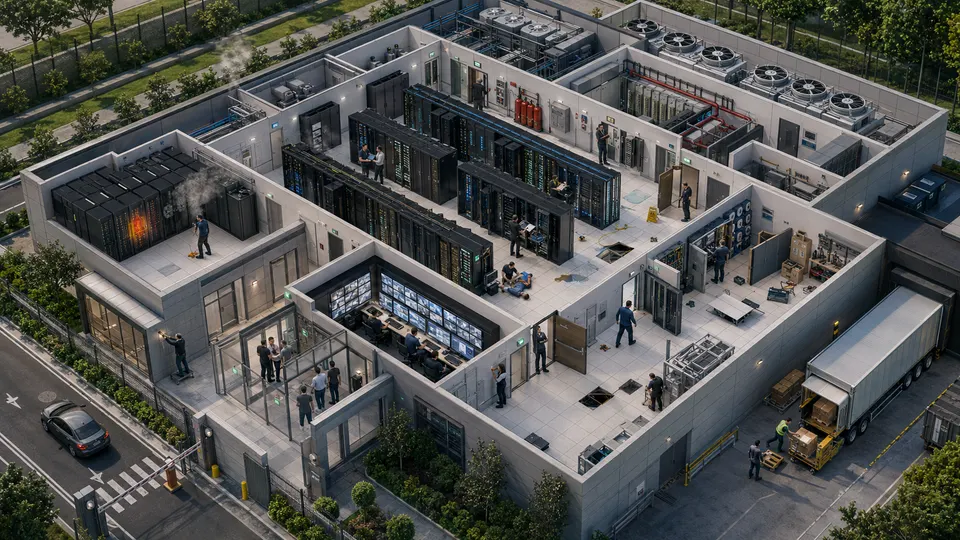
What if the outage does not start with an attack?
13 cases, and in every one of them IRIS raises an alert when something happens. You see each image as it is, and then with what it understands on top.
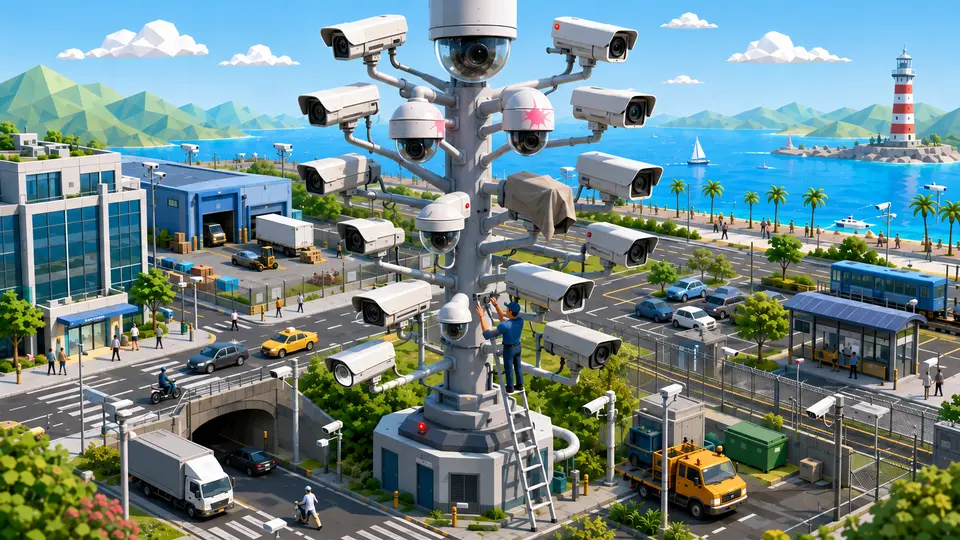
And who watches the cameras?
34 cases, and in every one of them IRIS raises an alert when something happens. You see each image as it is, and then with what it understands on top.


And the best part
IRIS only sees what the camera shows.Where we do not reach, we say so.
No software fixes a lens pointing the wrong way or covered in dust. Before promising anything, we say which cameras are in a state to see what you are asking of them.
Tell us your problem and we will say whether IRIS understands it, or not yet.
We reply the same working day.