Public safetyMobility analysis
CAM-560
The gate has been blocked by a stopped vehicle for eight minutes
Mid-morning at the gate of a restricted compound. A rigid truck has just come through and is still in the passage; behind it, a white van has been sitting still in the middle of the lane with the barrier up. Someone on duty points at it from the booth; another person is down in the lane itself. On the far side of the fence, a pedestrian turnstile. IRIS does not say who is driving that van or why it has stopped. It says there is a vehicle standing in the access lane and has been for eight minutes, and that the gate has gone unused for exactly as long.

Turn on IRIS Vision
AI-generated image
What IRIS is
IRIS looks after the city for you.
IRIS is an artificial intelligence that uses the cameras you already have in the control room and understands what's happening on the streets and in public spaces. When an incident happens, or something you want to track occurs, it alerts you right away instead of someone having to watch a hundred screens at once; and whatever can be counted, it counts in numbers. All day long.
You tell it what you need to watch, and IRIS does it.
Here, for example, IRIS sees a van sitting in the access lane and raises the alert right away, instead of waiting for a queue to build. That way you know exactly how long it's been stopped and since when the gate has gone unused. With that alert you decide whether to wait, open the other lane, or call a tow truck.
Works with the cameras you already have. Nothing to replace.
A person replies, not a form.
- Your footage never leaves your premises.
- It doesn't identify people.
- Certifications →
What IRIS understands
What it recognises in this scene
- van standing still in the lane
- truck that has just come through
- barrier in the up position
- control booth
- person on duty at the booth
- person on duty in the lane
- pedestrian turnstile
- compound fence
- pallets stacked inside
The rule
You decide once. IRIS applies it always.
If
a vehicle stands still for more than three minutes in the access lane
Then
- alert the booth with the camera, the lane and the time it stopped moving
- save the video from the minute the vehicle came to a stop
- open an incident if the queue reaches the public road
The instruction that set it up«Tell me if a vehicle stands still for more than three minutes in the gate lane.»
What changes
What changes for whoever goes out, whoever decides and whoever justifies it later
Eight minutes of blocked gate is eight minutes of queue growing towards the public road, and the queue is what ends up on the boss's phone. The alert arrives with the camera, the lane and the time, so whoever is in the booth walks down knowing what they will find instead of finding out when someone leans on a horn. And the person who decides what to do — wait, open the other lane, call a tow truck — is that person, not the camera: detecting is not deciding. If the next day somebody argues about how long the access was blocked, the answer is not one person's word against another's: it is the sequence with its timestamp, and it works just as well to back up whoever was on duty as to contradict them.
What people usually ask
Does IRIS know whose vehicle that is?
No. This camera does not read plates, does not query any database and does not know who is driving. All it knows is that a vehicle of that shape and size has been standing in the lane since a specific time. Who they are and why they are there is something a person finds out by walking down and asking. That is the difference between detecting a fact and pointing at somebody, and in this sector that line is not crossed.
What if the vehicle is stopped for a perfectly normal reason?
It happens constantly, which is exactly why the alert is not an accusation. The alert says «there is a vehicle standing here and has been for eight minutes», and nothing else. It could be a breakdown, an authorised delivery or somebody waiting for someone. IRIS does not tell those three apart and does not try to: it reports the fact so that a person looks. Looking takes ten seconds; finding out late costs half an hour of queue.
Why three minutes and not one?
Because one minute is what it takes anybody to show a document at the booth, and alerting on that would mean alerting on everything. The threshold goes where the fact stops being ordinary, and it is changed by talking: you rewrite the sentence and that is it. A threshold that alerts too much ends up being switched off, and a switched-off camera has been no use to anyone.
Other cameras
- CAM-561 · How many people are inside the compound right now
- CAM-562 · Two cars in the lane with the red cross above it
- CAM-563 · Thirty-four minutes of waiting, and only three lanes open
- CAM-564 · Something crosses the wall from above and drops a package inside
- CAM-565 · Who went into the store, when, and what can be proved
- CAM-566 · A truck tipping rubble on waste ground, in broad daylight
Demo · IRIS at work
A camera looks. IRIS understands what it sees.
An extract of the real screen, no voice-over and hands-free. Each round poses another situation. What sits behind it is a good deal bigger than what you see.
- The rule gets built
- It goes to every camera
- Published, it watches alone
- And then it fires
See it somewhere else
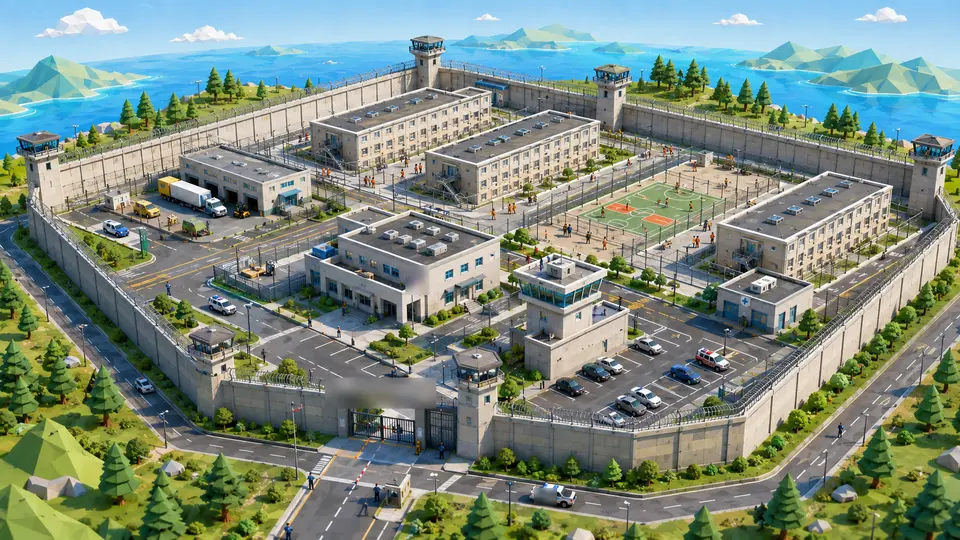
Who is watching the yard screen when the fight starts?
17 cases: 16 raise an alert when something happens and one only measures. You see each image as it is, and then with what IRIS understands on top.

How long before somebody comes down that corridor at four in the morning?
13 cases: 12 raise an alert when something happens and one only measures. You see each image as it is, and then with what IRIS understands on top.


And the best part
You can add more cameras;you cannot add more hours to anyone’s day.
Cameras can be multiplied; a person’s hours cannot. IRIS looks at everything coming in and leaves them the one thing no machine does better: deciding what to do.
Tell us your problem and we will say whether IRIS understands it, or not yet.
We reply the same working day.