Public safetyInfrastructure integrity
CAM-562
Two cars in the lane with the red cross above it
The apron of a vehicle crossing at midday. Four lane signals hang from the canopy: three green arrows and a red cross over the one on the right. Under the cross there are two cars, one behind the other. Across the rest of the apron, lorries waiting in line, a row of cones separating the directions and somebody on duty in the middle of the roadway directing traffic. IRIS does not say those cars have done anything: it says the lane is signalled as closed and there are two vehicles inside it, and it says so while it is happening.

Turn on IRIS Vision
AI-generated image
What IRIS is
IRIS looks after the city for you.
IRIS is an artificial intelligence that uses the cameras you already have in the control room and understands what's happening on the streets and in public spaces. When an incident happens, or something you want to track occurs, it alerts you right away instead of someone having to watch a hundred screens at once; and whatever can be counted, it counts in numbers. All day long.
You tell it what you need to watch, and IRIS does it.
Here, for example, IRIS sees two cars sitting in a lane marked as closed, right as it happens. It alerts immediately, with the exact lane and the time, so staff can stop them before a truck comes from the other direction. From there you decide whether to act now.
Works with the cameras you already have. Nothing to replace.
A person replies, not a form.
- Your footage never leaves your premises.
- It doesn't identify people.
- Certifications →
What IRIS understands
What it recognises in this scene
- red cross over the closed lane
- car inside the closed lane
- second car behind it
- green arrows of the open lanes
- person on duty directing traffic
- person crossing towards the closed lane
- row of cones between directions
- lorry waiting in the next lane
- lorry in front of the booth
- articulated lorry turning out
The rule
You decide once. IRIS applies it always.
If
a vehicle enters a lane signalled as closed
Then
- raise a red alert to the control room and to whoever is directing traffic, with the lane
- save the video from thirty seconds before it entered
- attach the sequence to the report, in case it has to be explained later
The instruction that set it up«Give me a red alert if a vehicle enters a lane with the cross lit.»
What changes
What changes for whoever goes out, whoever decides and whoever justifies it later
Midday at the vehicle crossing. The officer directing traffic has his back turned, sorting out the line of lorries, and two cars have slipped into the lane under the red cross, one behind the other. A closed lane with vehicles in it is the silliest way to have a crash in a place where only lorries move. The alert arrives at the moment, with the lane and the camera, and he can stop them by hand before the vehicle coming the other way runs into them. That is what this sector is buying: arriving earlier, and arriving knowing where. And if a report has to be written, the sequence is saved with its timestamp, so what happened does not depend on what each person remembers.
What people usually ask
How does IRIS know that lane is closed?
Because the signal is in the same image. The red cross is visible from this camera, so IRIS compares two things it has in front of it: which signal is lit and what is underneath it. It queries no external system, needs no integration with anything and does not depend on somebody remembering to say the lane has been closed. If the signal changes, the rule changes with it.
Are the plates of those cars read?
From this framing, no. This camera is set up to see the whole apron and the lane signals, and at that distance there is no plate to read. IRIS can read plates when a camera is set up for it and whoever operates it has a legal basis to do so, but that is a different camera and a different decision. What is here is a traffic fact, and for that you do not need to know whose car it is.
Can the camera close the lane or stop the cars?
No. IRIS sees and reports; it does not act. It can raise an alert, open an incident and save the video, and that is where it ends. Stopping a car is done by a person with the authority to do it, and deciding to open or close a lane is done by whoever carries that responsibility. Detecting is not deciding, and here that sentence is not decoration: it is the reason this system can be put in a public place at all.
Other cameras
- CAM-560 · The gate has been blocked by a stopped vehicle for eight minutes
- CAM-561 · How many people are inside the compound right now
- CAM-563 · Thirty-four minutes of waiting, and only three lanes open
- CAM-564 · Something crosses the wall from above and drops a package inside
- CAM-565 · Who went into the store, when, and what can be proved
- CAM-566 · A truck tipping rubble on waste ground, in broad daylight
See it for yourself
Watch what happens. Then watch what IRIS does with it.
Not a recorded video and not a drawing: it is a summary of the real tool, with a different case each time round. The whole tool does not fit in a box.
- Four cameras at once
- Each understands its own view
- The numbers climb by themselves
See it somewhere else
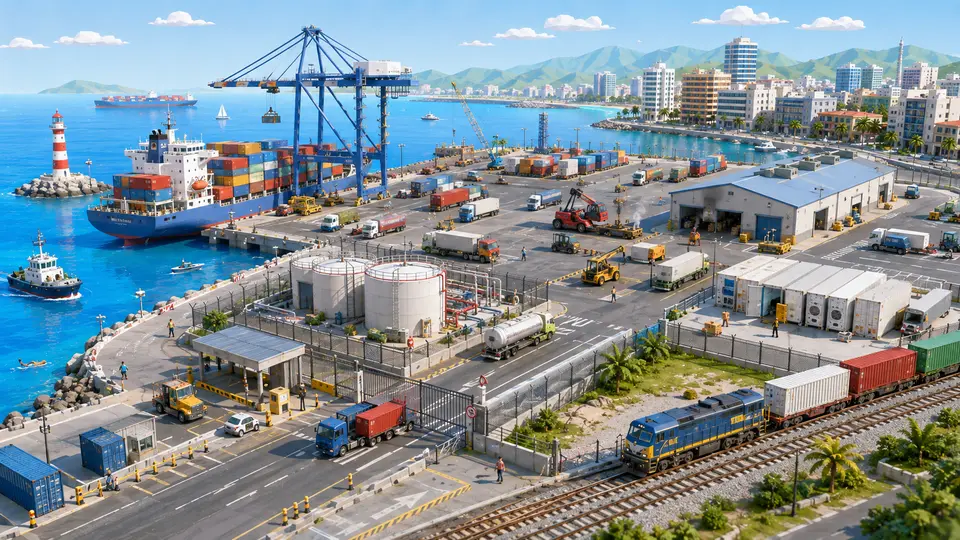
Who is watching a whole quay at three in the morning?
14 cases: 13 raise an alert when something happens and one only measures. You see each image as it is, and then with what IRIS understands on top.

Who is watching the cameras of a whole branch network?
13 cases: 12 raise an alert when something happens and one only measures. You see each image as it is, and then with what IRIS understands on top.


And the best part
If the camera does not show it,IRIS does not see it. We say so up front, not afterwards.
No camera sees through a wall or in complete darkness. We would rather show you where the limit is, and place what you have well, than promise something that never appears on screen.
Tell us your problem and we will say whether IRIS understands it, or not yet.
We reply the same working day.