CAM-387
A truck coming head-on down the wrong lane
Mid-afternoon on the quarry haul road, dust in the air. A loaded red truck is coming head-on down the left lane, and the arrow painted on that lane points the other way. The blue signs on the verge set the direction of each lane. On the right, a yellow dump truck loaded with rock is running as it should. A wheel loader is working further back. IRIS sees which lane each vehicle is in and where it is heading, and compares that with the marked direction.

Turn on IRIS Vision
AI-generated image
What IRIS is
IRIS watches the plant for you.
IRIS looks at the cameras you already have on the plant floor and understands what it sees: a stopped line, someone inside a robotic cell, someone without their safety gear on, jammed parts. When something like that happens, it alerts right away; and whatever can be counted, it counts in numbers. All day long, with no one needing to watch the screen.
You tell it what you need to watch, and IRIS does it.
Here, for example, IRIS sees which lane each truck is in and which way it's heading, and checks that against the direction marked by the signs. As soon as it spots one coming head-on, it alerts the pit foreman with the vehicle and the time while it's still happening, not when someone reports it at shift change. With that alert you decide whether to close the road or talk to the driver.
Works with the cameras you already have. Nothing to replace.
A person replies, not a form.
- Your footage never leaves your premises.
- It doesn't identify people.
- Certifications →
What IRIS understands
What it recognises in this scene
- truck going the wrong way
- lane arrow painted on the road
- sign giving the direction of the lane
- loaded dump truck running the right way
- wheel loader working beside the road
What this camera measures
An alert says something is happening. The reading says how much.
- 25 sTime going the wrong way
- 6Vehicles on the stretch
- 2Wrong-way movements counted today
- 31Passes through the stretch in the last hour
- 17:05Time of the pass
The figures on this screen are an example from the illustration, not any client's measurement.
The rule
You decide once. IRIS applies it always.
If
a vehicle drives down a lane against the marked direction
Then
- alert the road supervisor with the camera, the lane and the time
- save the video from the moment the vehicle enters the stretch
- add the pass to the day’s count of wrong-way movements
The instruction that set it up«Tell me the moment a truck enters the haul road the wrong way, and show me where it came in.»
What changes
What changes for whoever answers for the plant
On a haul road two loaded machines do not simply swerve past each other: one of them has to stop. And there is the mechanism: from a high cab, with dust and the sun straight ahead, whatever is coming the other way shows up late, and a loaded machine needs tens of metres to pull up. That is why every lane has its direction marked. With the camera, the road supervisor hears about it while it is happening, not when somebody mentions it at handover. And the video is there to talk it through with the driver.
What people usually ask
Does IRIS also measure speed on the haul road?
Yes, against a physical reference on the ground: two marks a known distance apart and the time the vehicle takes to go from one to the other. That is a repeatable measurement, not a guess. It is set up by drawing the lines on the image, the same way a count is, which is why the figure can be checked afterwards with the video in front of you.
Does it know who was driving?
No. IRIS does not recognise faces or identify anyone. It sees a vehicle going the wrong way and keeps the time, the lane and the image. Who was at the wheel comes from the company’s shift record. The camera is there to talk about the event, not about the person, and that is the order that works on a haul road.
Does it warn before a collision happens?
No. IRIS does not predict. It reports what is happening: there is a vehicle going the wrong way right now, in this lane, on this stretch. The alert arrives while the manoeuvre is still under way, which is when something can still be done. What happens next is decided by a person, with the video in front of them.
Other cameras
- CAM-380 · A loaded truck leaves by a way that is not a way out
- CAM-381 · Dark material going into the bay for pale aggregate
- CAM-382 · Good ore heading for the waste dump
- CAM-383 · A bucket of grey gravel on top of the wrong stockpile
- CAM-384 · A boulder too big for the crusher mouth going in anyway
- CAM-385 · A tanker loading under the wrong silo
Every simulation
Someone on the ground
Tell me if someone stays on the ground for more than twenty seconds and does not get up.
- The sentence
- Where it applies
- What it finds
- The same rule
See it somewhere else
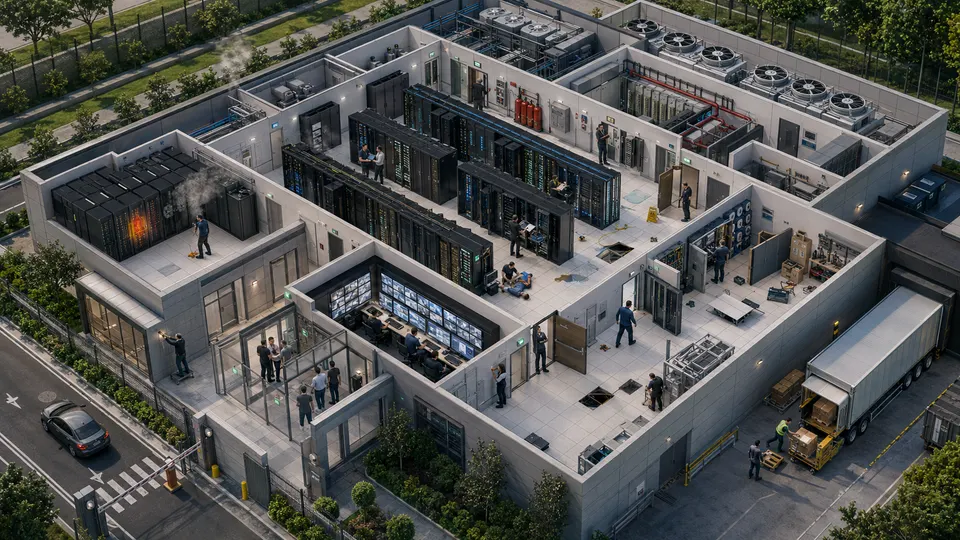
What if the outage does not start with an attack?
13 cases, and in every one of them IRIS raises an alert when something happens. You see each image as it is, and then with what it understands on top.
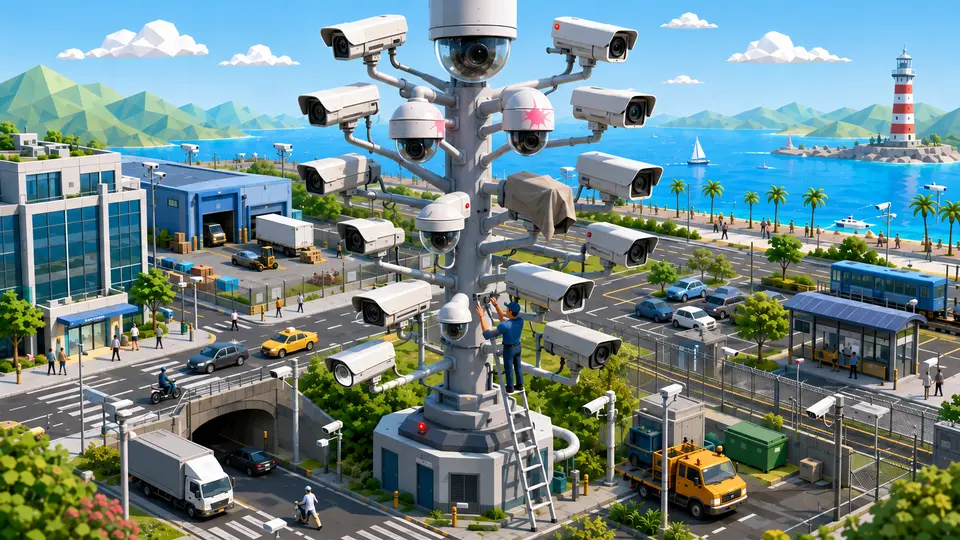
And who watches the cameras?
34 cases, and in every one of them IRIS raises an alert when something happens. You see each image as it is, and then with what it understands on top.


And the best part
What happens in the small hoursdoes not have to wait for the morning report.
IRIS understands it there and then and tells whoever is on call, with the camera and the time. The next day there is nothing to reconstruct: it is already written down.
Tell us your problem and we will say whether IRIS understands it, or not yet.
We reply the same working day.