Solutions by typeEnvironment and cleanliness
How many times a month is that corner like this, and since when?
The bin was full, so the pavement became the bin
It is 07:15 on a Monday. The truck came on Saturday at 05:40 and is not back until tomorrow. The bins are full and around them sit eighteen hours of things left beside them: open cardboard boxes, tied bags, a loose pile that already takes up half the pavement and the corner of the crossing. Someone with a pram steps into the road to get round it. The junction camera has watched it grow all weekend.
12 cameras across 6 sectors
What IRIS is
IRIS watches the cameras for you.
IRIS Neural is an artificial intelligence that watches the cameras you already have and understands what happens in front of them. When something important happens —or something you told it you need to keep an eye on—, it alerts you; and whatever can be counted, it counts in numbers. All day long, without anyone having to watch a screen.
You tell it what you need to watch, and IRIS does it.
Works with the cameras you already have. Nothing to replace.
A person replies, not a form.
- Your footage never leaves your premises.
- It doesn't identify people.
- Certifications →
This is how you ask for it
«Tell me if rubbish is piling up outside the bins and how long it has been there.»
A pile like that is not paid for in one go: the city pays for it in instalments. The street crew sweeps where the calendar says, not where it is needed, and that corner gets cleaned two days late. Meanwhile the neighbours phone in, the photos go online and the complaint reaches the councillor. And at the end of the month nobody can say whether that corner is a one-off or a weekly problem.
You decide once
You say which stretch of pavement has to stay clear around each bin island, how long something can sit there and what happens then: if there are items outside the bin at the junction island for more than two hours, a job is opened for the cleaning service with the camera attached; if they also block the corner of the crossing, the alert goes out straight away. And every day, without anyone asking, it is recorded how many hours each island spent like that.
A full bin is an invitation. The first person who cannot lift the lid leaves the box beside it, propped up, with the best intentions in the world. By the fourth bag it is nobody’s slip any more: it is a dumping spot that created itself, and it will happen again next Saturday at the same hour, because what failed is not the people, it is that the bin was full when it should have been empty.
The same thing happens where nobody is looking. At a waste plant, a skip filled to the rim and left uncovered sheds bags and film with the first north wind; they cross the mesh fence and end up in the ditch and on the neighbour’s pavement, and the neighbour is the one who calls. It is the same scene: something that had a place and is no longer in it, in a route people walk, growing slowly and without a sound.
IRIS watches the space that has to stay clear — the pavement around the island, the strip in front of the fence, the aisle by the cell — and says two things. First, that something is outside it and what minute it got there. The second is the one that really changes next year: how many hours a month that spot has looked like this. With the first you clean today; with the second you argue about collection frequency with a number on the table, instead of with the photo a resident sent in this morning.
What changes
This used to arrive by phone. Nobody knew how long it had been there, and at the end of the year collection frequency was argued over with impressions.
Now the alert comes from the junction itself, with the time the first item appeared and the camera to see it. And every bin island has its own record: how many hours a month it overflows, which days and at what time. The crew goes where it is needed, and the next contract is negotiated with figures.
Where we have seen it

CAM-22Night gathering in the square
«Tell me if people gather in the square above the threshold at night, and how full the bins are.»

CAM-248The rework area has swallowed the aisle
«Tell me if, mid-afternoon, there are more stillages than usual in the rework area.»
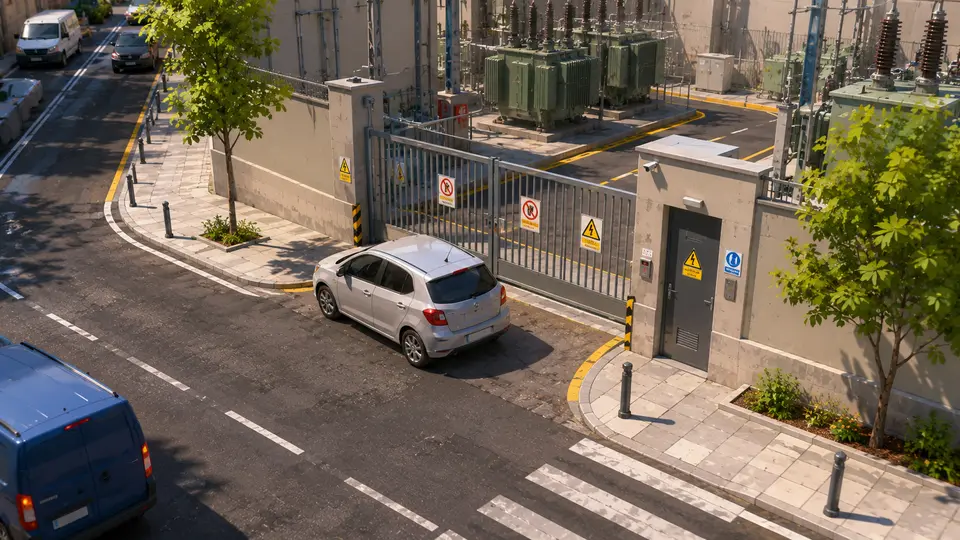
CAM-160A car parked across the access
«Tell me if anything stays parked across the gate for more than a few minutes: a car, a skip or a pile of materials, it doesn't matter.»
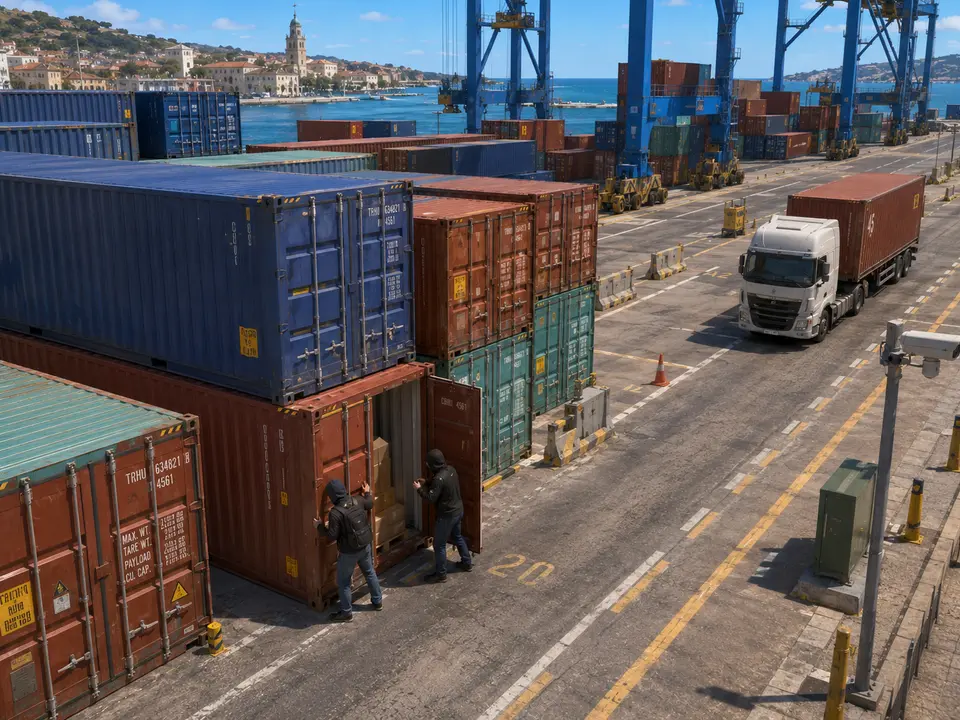
CAM-444A container opened outside the working window
«Tell me if a container door is opened in the block outside operating hours.»

CAM-436The bags clear the fence and end up on the neighbour’s pavement
«Tell me if plastics start blowing over the fence towards the street.»
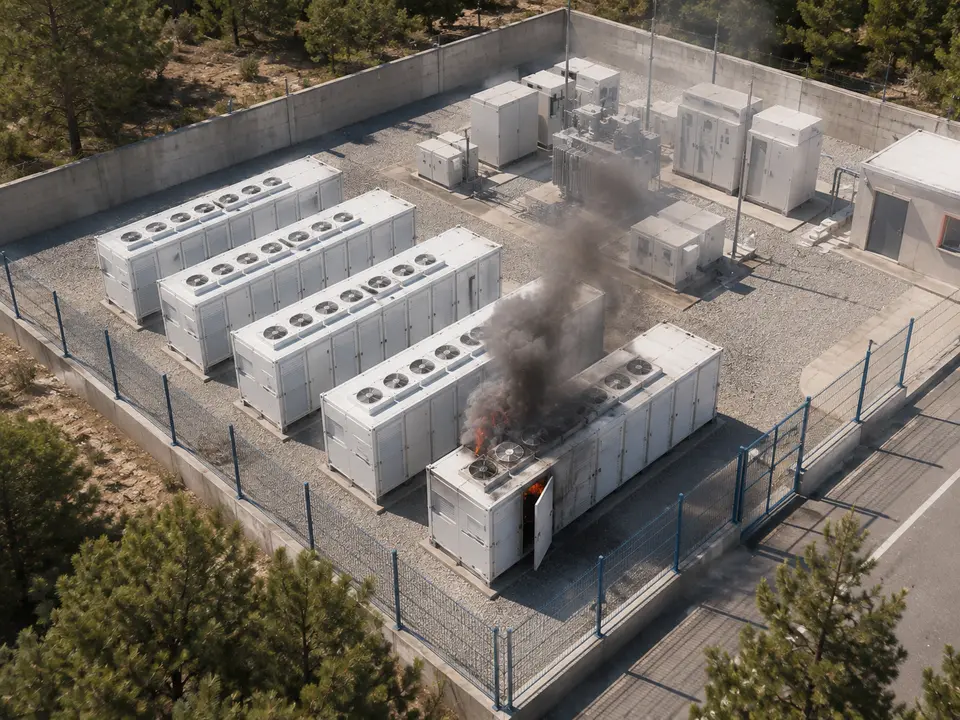
CAM-353Black smoke pouring out of a battery container
«Alert me right away if smoke or flame comes out of a battery container, or if a door opens on its own.»

CAM-24Waste dumped outside the bin
«Tell me if rubbish is piling up outside the bins, and how long it has been there.»
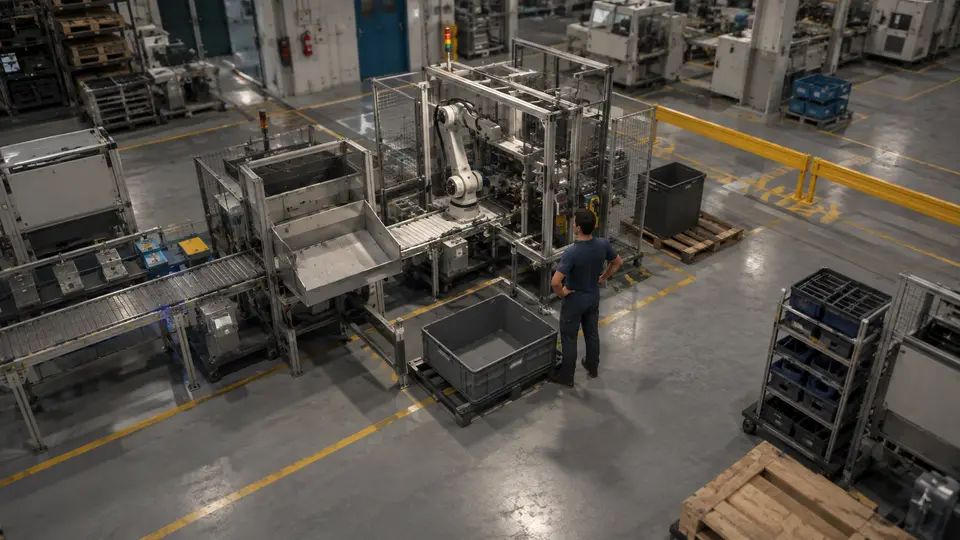
CAM-243The cell is ready and the bin is empty
«Tell me if the bin at the cell runs empty and the robot goes more than five minutes without putting out a part.»

CAM-146Logs piling up against the spillway
«Tell me when wood or rubbish builds up against the spillway screens, and tell me whether the pile is still growing.»

CAM-452A reefer with its doors open and the cable on the ground
«Tell me when a reefer has been more than five minutes with a door open or with its cable out of the socket.»


What it does not do
IRIS does not say who left the bag. It does not identify people and does not recognise faces: it says something is outside the bin, what minute it got there and which camera sees it. Whether that adds up to a case is decided by a person, under your council’s rules.
And if the pile is behind the bin itself, hidden from the camera, it is not there.
Questions
- Can it be used to fine whoever leaves the bag outside?
- No. IRIS reports that rubbish is outside the bin, what minute it got there and which camera sees it. It does not identify anyone, does not recognise faces and does not open cases. If a council wants to go further, that is its own decision, under its own rules and with a person looking at the video. And in practice the saving is not in the fine: it is that the corner gets cleared the same day instead of two days later, and that you know which corners keep coming back.
- Can it count how many times a month each bin island overflows?
- Yes, and for a cleaning service this is worth more than the alert. Every island builds up its own hours: how many times a month there are items outside, which days of the week, what time it starts. That shows straight away what everybody suspected but could not prove: that three spots always overflow on Sunday afternoon and the rest of the city does not have that problem. Asking is for searching; counting is for measuring, and to measure you draw the area on the image rather than describe it.
- Does it tell a bag from a mattress or a pile of cardboard?
- Yes, well enough for the decision at hand. IRIS separates a bulky item — a mattress, a sofa, a builder’s skip bag — from a heap of bags or stacked cardboard, because they are not collected the same way or by the same crew. What it does not do is classify the waste stream or say whether the cardboard was properly flattened: that cannot be seen from a lamppost. For the alert it is enough to know that something is outside, roughly how big it is and how long it has been there.
- Does it alert every single time somebody leaves a bag?
- No, unless you ask for that. An alert per bag would be noise, and within three days nobody would read them. The normal setup is a threshold: how much space taken up, or how long you tolerate it, before it counts as an alert, and during which hours. One bag at eleven at night, a quarter of an hour before the truck comes, is not a problem. The same bag on Sunday at ten in the morning, with two boxes on top and no truck until Monday, is. You decide that difference once, and IRIS applies it always.
Demo · IRIS at work
A new case each time. Always the same screen.
It plays by itself and shows one case from start to finish. It is a summary: the real screen has far more functions than fit in this box.
- Cameras on the map
- You draw an area
- What passed shows up
Not seeing yours here?
These words are the ones we have built, not the ones IRIS understands. The list falls short on purpose: you ask for it in a sentence, and sentences do not run out. Tell us what is in front of your cameras and we will tell you whether it understands it, or not yet.
And the best part
Nobody was hired to stare at a screen.They were hired to know what to do.
Watching is what a machine does best; deciding is what only a person does. IRIS watches all four thousand at once and hands over only what calls for a decision.
Tell us your problem and we will say whether IRIS understands it, or not yet.
We reply the same working day.