Solutions by typePersonal safety
What if someone goes into the water with nobody watching?
He walked into the channel, the water is coming
It is 19:30 on a stormy day. The channel has been dry for three weeks and half the neighbourhood uses it as a shortcut to the other side. Someone walks down the concrete ramp with a bike on their shoulder. Twenty kilometres upstream it has been raining hard for an hour. From the promenade the water is not visible yet, and from down there you cannot hear it either. The bridge camera is watching them go down.
5 cameras across 4 sectors
What IRIS is
IRIS watches the cameras for you.
IRIS Neural is an artificial intelligence that watches the cameras you already have and understands what happens in front of them. When something important happens —or something you told it you need to keep an eye on—, it alerts you; and whatever can be counted, it counts in numbers. All day long, without anyone having to watch a screen.
You tell it what you need to watch, and IRIS does it.
Works with the cameras you already have. Nothing to replace.
A person replies, not a form.
- Your footage never leaves your premises.
- It doesn't identify people.
- Certifications →
This is how you ask for it
«Tell me the moment anyone is inside the channel, and tell me before they reach the water.»
Today, the normal thing is that nobody is watching that camera. It is recording, but the control room has forty screens and one operator dealing with something else. When the alert arrives, it arrives by phone: someone who saw something and cannot say which stretch of the channel it was. While that gets sorted out, two crews head off to search the wrong place. That quarter of an hour of confusion is the cost, and it is not measured in euros.
You decide once
The council decides once which stretches count as water, when an alert is needed and who gets it. If a person enters the channel or the dock basin, at any moment, and there is a flood warning or the water level is rising, then the local police are alerted with the camera open and the exact spot. It is decided before the storm season, in one meeting, and it runs by itself every time it rains, including on a Sunday night.
Water kills quietly and fast. A dry channel looks like a path, a dock basin looks like a quay, and a swimming area looks safe because there are people in it. What is watching all that is two lifeguards covering two hundred metres of beach, or one operator with forty cameras in front of him. It is not a problem of attention: nobody can watch everything at once, and water gives no warning before it rises.
The day it goes wrong, things happen in order and very fast. Someone walks down into the channel by the usual ramp. A jet ski enters the marked swimming area because from the sea the buoys are invisible. A car drives into a flooded ford because the water looks a hand deep. In all three cases the alert comes late, and comes badly: by phone, with no exact point and no image.
IRIS watches the edge, not the water. It sees the person while they are still coming down the ramp, sees the craft as it crosses the line of buoys, sees the car stopped in the water and says exactly where. It does not know whether someone is drowning and it will never claim to. What it does is put the right camera in front of the right person while it still makes a difference.
What changes
Before, a rising river was followed by radio and by looking at the gauge painted on the wall. If someone was inside the channel, you found out when a passer-by saw them and called. Now the alert arrives while the person is still coming down the ramp, not once they are in, and it arrives with the exact point and the camera open. The patrol sets off knowing which access to use, and that is ten minutes that used to be lost searching.
Where we have seen it
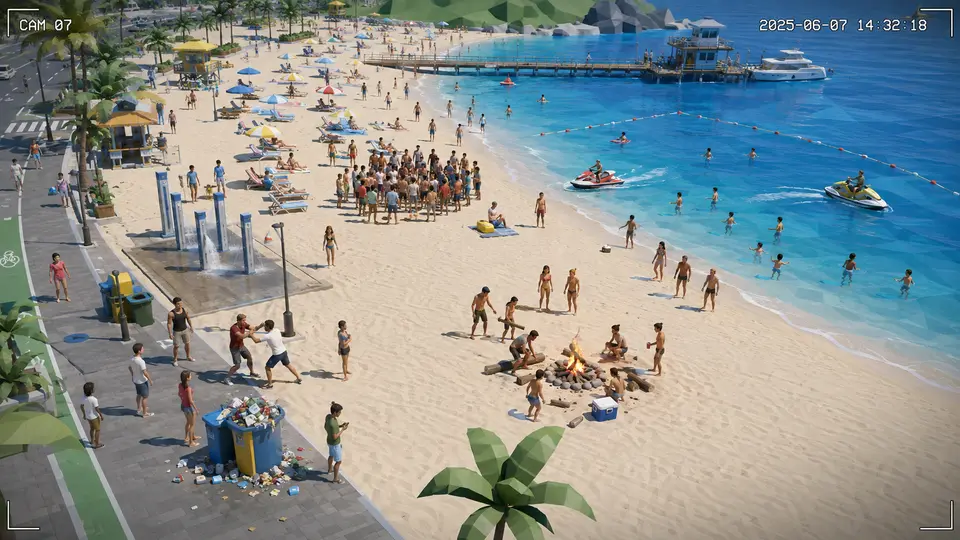
CAM-25Beach capacity at its limit
«Tell me when the beach reaches capacity, and alert me to fires or jet skis inside the swimming area.»
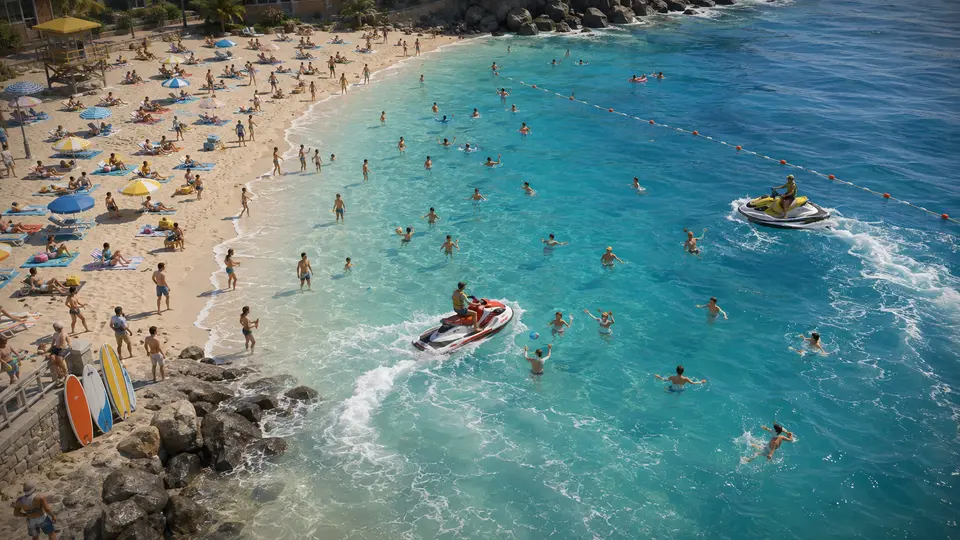
CAM-26Jet ski inside the swimming zone
«Tell me the moment a craft of any kind comes inside the buoyed swimming zone.»
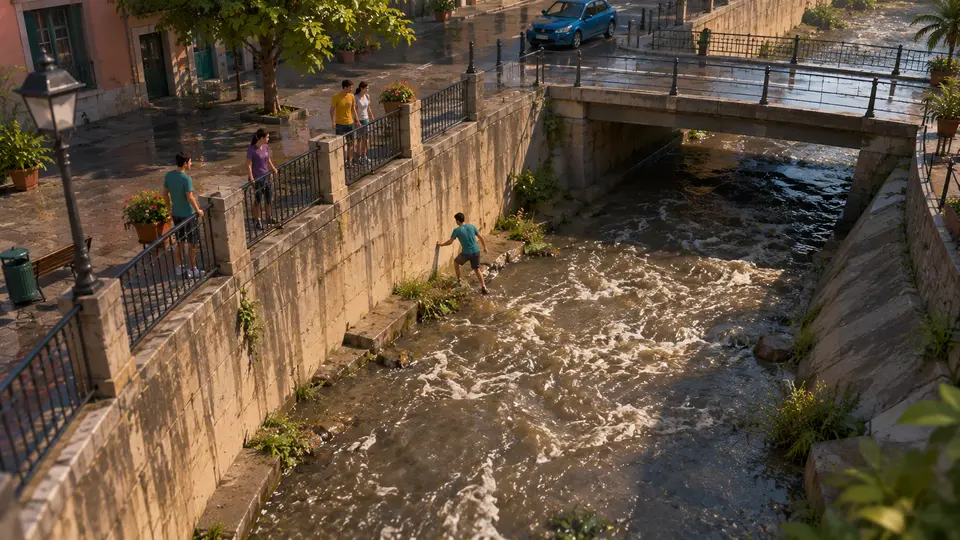
CAM-173Someone down in the channel
«Tell me the moment somebody is down in the channel, and tell me before they reach the water, not once they are already in it.»
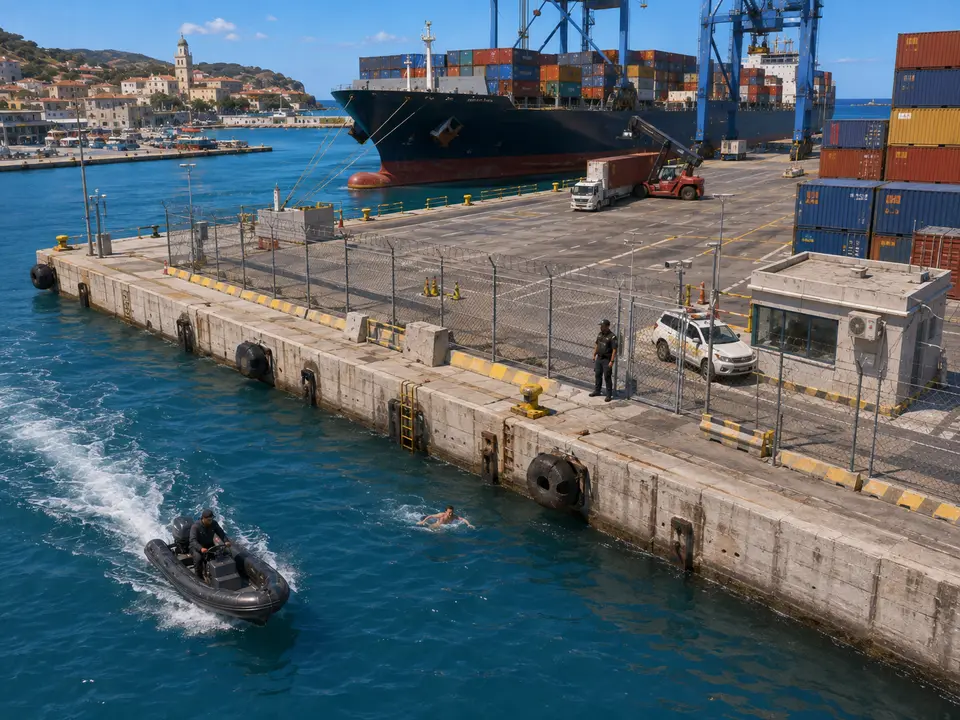
CAM-441Someone is swimming towards the quay
«Tell me if somebody swims into the basin or a small boat comes close to the quay.»
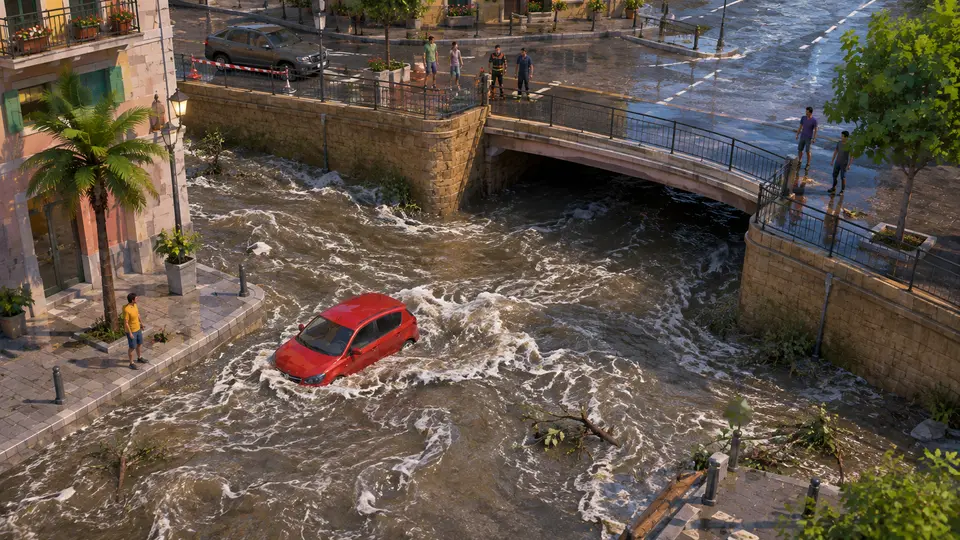
CAM-178A car caught in the water
«Tell me the moment there is a vehicle stopped in the water, and tell me exactly where it is.»


What it does not do
IRIS does not detect drowning. It does not know whether someone in the water is fine or in trouble, and below the surface it sees nothing.
What it does is more modest and more useful: it flags that someone has gone in where they should not, while there is still time to reach them. It does not replace a lifeguard or a rescue service.
Questions
- Does it detect that someone is drowning?
- No, and it matters to say so before anyone asks. IRIS cannot tell a relaxed swimmer from someone in trouble, and below the surface it sees nothing. What it does see is a person going somewhere they should not be: down into a channel, across the line of buoys, into a dock basin. That alert comes earlier, which is when it can still make a difference.
- Does it work for the marked swimming area?
- Yes, and it is one of the clearest uses. The marked area is drawn once on the camera image, and from then on IRIS alerts whenever any craft enters it, whether a jet ski, a small boat or a powered board. From the sea the buoys are hard to make out and the pilot often crosses without realising. The alert reaches the lifeguard post with the camera and the point of entry.
- Does it flag a car trapped by water?
- Yes, and it is usually the most urgent scene. A vehicle stopped in water is a person inside a vehicle, and the clock starts from the first minute. IRIS sees the car halted at a point it knows is flooded and says exactly where it is, with the camera open. That spares the emergency service the slowest part of the call, which is working out the location.
- Does it replace the lifeguard?
- No. A lifeguard watches, understands and goes into the water; IRIS only watches, and does not even understand what is happening to the person in it. What it adds is covering the places where nobody is watching: the stretch of channel at seven in the evening, the dock basin at night, the flooded ford out of town. And the part of the beach that falls outside the tower’s field of view.
Demo · IRIS at work
We won't just tell you. We'll show you.
It is a summary of the real screen: it plays by itself, step by step, and shows only the path of one case. The actual tool has far more than fits in here.
- The alert fires
- It lands in the tray
- You open it
- You confirm or dismiss
Not seeing yours here?
These words are the ones we have built, not the ones IRIS understands. The list falls short on purpose: you ask for it in a sentence, and sentences do not run out. Tell us what is in front of your cameras and we will tell you whether it understands it, or not yet.
And the best part
Sometimes you do not need an alarm:you need a number.
How many people came in, and when. You draw a line over the image and the camera counts. People counting is certified by the Centro Español de Metrología through NeuralPax.
Tell us your problem and we will say whether IRIS understands it, or not yet.
We reply the same working day.