Critical infrastructureMobility analysis
CAM-178
A car caught in the water
The water is forcing out through the bridge arch and spreading across the open ground in front. In the middle of the flow sits a red hatchback, slewed round, the water breaking against its door: it did not park there, the water moved it. From the bridge parapet four people are looking down; on the pavement that is still dry there is one more. Torn branches are coming down past the car. IRIS sees that there is a vehicle stopped in the water and exactly where it is.

Turn on IRIS Vision
AI-generated image
What IRIS is
IRIS watches over critical infrastructure.
IRIS looks at the cameras you already have at the dam, the water plant or the power plant, and understands what it sees: someone entering where they shouldn't, a strange vehicle, an overflow, the perimeter. When something like that happens, it alerts right away; and whatever can be counted, it counts in numbers. All day long, with no one needing to watch the screen.
You tell it what you need to watch, and IRIS does it.
Here, for example, IRIS sees that a car is stuck in the water and exactly where it is. That way the officer on duty knows minutes before the first neighbour calls. With that they send the crew straight to the right street from the start, not out searching blind.
Works with the cameras you already have. Nothing to replace.
A person replies, not a form.
- Your footage never leaves your premises.
- It doesn't identify people.
- Certifications →
What IRIS understands
What it recognises in this scene
- vehicle in the water
- bridge outlet
- people on the parapet
- person on dry ground
- branches coming down the flow
What this camera measures
An alert says something is happening. The reading says how much.
- 1Vehicles stopped in the water
- 50 sStopped for
- 65 cmWater depth over the kerb
- 7People visible along the edge
- 3Clumps of branches coming down
- 17:26Time of the alert
The figures on this screen are an example from the illustration, not any client's measurement.
The rule
You decide once. IRIS applies it always.
If
a vehicle ends up stopped or shifted inside the sheet of water
Then
- alert the emergency officer with the camera, the exact spot and the video of the moment
- say how long it has been stopped and how deep the water is over the kerb
- say how many people are visible along the edge
The instruction that set it up«Tell me the moment there is a vehicle stopped in the water, and tell me exactly where it is.»
What changes
What changes for whoever answers for the site
Quarter past seven in the evening, and the red car has been sitting sideways in the current for three minutes: it did not park there, the water moved it. IRIS does not rescue anyone. It is worth saying that plainly, because this is the scene on the whole site where the temptation to promise it is strongest. All it does is put the camera and the exact spot in front of the duty officer, minutes before the first neighbour phones in. Those minutes are the whole of it: they are the difference between sending the crew to the right street and sending it to look for “a car in the water, somewhere near the bridge”. Whoever goes, goes anyway. They go sooner, and knowing what to.
What people usually ask
Can IRIS stop this from happening?
No. A vehicle shifted by the water is something that has already happened by the time the camera sees it, and no camera prevents it. What changes is the timing: today this is known when somebody sees it and phones, and that call arrives with the location described from memory. With IRIS the alert goes out on its own, with the image and the location, and whoever is coordinating the response starts working sooner. Promising more than that would be a lie.
Does it read the plate to find out who is inside?
No. IRIS does not identify anyone: it does not read number plates and does not recognise faces. It sees that there is a vehicle stopped in the water, how long it has been there and exactly where it is. Who owns it, it does not know — and for what has to be done in the next few minutes, it is not needed either.
And if the water carries it out of shot?
The alert has already gone out and the video of the moment is kept, with the time and the camera. That is what gets passed to the crew on its way: where it came in, where it was and which way the flow was going. What IRIS will not do is say where it is now if it cannot see it: outside the frame there is no data, and inventing one here would be the worst thing it could do.
The real interface, step by step
A new case each time. Always the same screen.
It plays by itself and shows one case from start to finish. It is a summary: the real screen has far more functions than fit in this box.
- The alert fires
- It lands in the tray
- You open it
- You confirm or dismiss
See it somewhere else
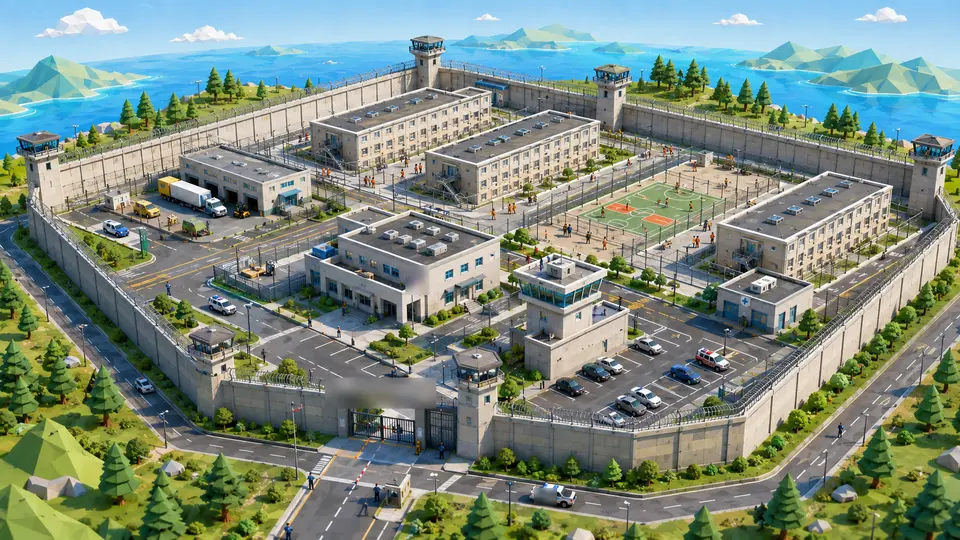
Who is watching the yard screen when the fight starts?
17 cases: 16 raise an alert when something happens and one only measures. You see each image as it is, and then with what IRIS understands on top.

How long before somebody comes down that corridor at four in the morning?
13 cases: 12 raise an alert when something happens and one only measures. You see each image as it is, and then with what IRIS understands on top.


And the best part
You can add more cameras;you cannot add more hours to anyone’s day.
Cameras can be multiplied; a person’s hours cannot. IRIS looks at everything coming in and leaves them the one thing no machine does better: deciding what to do.
Tell us your problem and we will say whether IRIS understands it, or not yet.
We reply the same working day.