Solutions by typeInfrastructure integrity
What happens inside the tunnel when a lane gets blocked?
Inside a tunnel you cannot see what lies ahead
It is 08:20. A truck has shed part of its load of rubble inside the tunnel and the debris covers the left lane. Two cars have braked behind it and the rest of the traffic changes lane on the move. Two hundred metres back, at the portal, vehicles keep coming in at road speed without seeing any of this. The fourteen cameras in the tube are recording it all. Not one of them is telling anybody.
14 cameras across 5 sectors
What IRIS is
IRIS watches the cameras for you.
IRIS Neural is an artificial intelligence that watches the cameras you already have and understands what happens in front of them. When something important happens —or something you told it you need to keep an eye on—, it alerts you; and whatever can be counted, it counts in numbers. All day long, without anyone having to watch a screen.
You tell it what you need to watch, and IRIS does it.
Works with the cameras you already have. Nothing to replace.
A person replies, not a form.
- Your footage never leaves your premises.
- It doesn't identify people.
- Certifications →
This is how you ask for it
«Tell me if an obstacle appears on the carriageway inside the tunnel, and which lane it is in.»
A tunnel has no hard shoulder and no way out. Whatever comes in behind arrives blind, at road speed, and every second the obstacle stays there is another vehicle about to meet it. By the time the phone rings, there is a rear-end shunt, a closed lane and a queue standing under the vault. Then come the hours until reopening, the diversion of every vehicle on the road, and the report asking what time it was first seen.
You decide once
You decide this once. You say which tube, which lanes, how big an object has to be to count, how many seconds it must stay put and who gets told: an obstacle on the carriageway inside the tunnel, more than ten seconds, alert the control room with the camera, the lane and the chainage. IRIS applies that on all fourteen cameras in the tube, day and night, at rush hour and at four in the morning. If a lane is closed for works tomorrow, you change the rule, not the watching.
A tunnel is the one stretch of road you cannot get out of. No hard shoulder, no verge, no view past the curve of the tube and no signal to call anyone. Everything that is just a scare out in the open becomes a chain reaction inside: an object on the carriageway, a hard brake, a rear-end shunt, a queue standing under the vault with engines running. That is why tunnels are full of cameras. And that is why, in almost every one of them, those cameras end up as a wall of images nobody can watch whole for eight hours straight.
What needs seeing in there is not always a crash. It is a pedestrian walking on the carriageway near the portal. It is a stretch of vault whose lights have gone out while traffic keeps coming in. It is smoke from the front of a stopped van, the worst of them all, because in a tube the smoke arrives long before the fire does. And it is a welder working alone in the new bore, track already laid, half an hour from the next person due to pass.
IRIS watches the cameras that are already there and checks the rules the operator has written. When something appears on the carriageway and stays, it says so: camera, lane, chainage and video from the first second. It does not decide to close the tunnel; the control room decides that, because the control room is the one that can. What changes is the minute at which that person finds out.
What changes
Before, an obstacle inside the tube became known because a driver phoned in, or because the traffic count collapsed. The operator then went hunting for the right camera, and often found it after the collision. Now the camera opens by itself with the lane and the chainage already written down, and whoever is on duty decides within the same minute: sign it, drop the speed limit or close it. Most of the time it is a cardboard box and nothing happens. That needs seeing too.
Where we have seen it
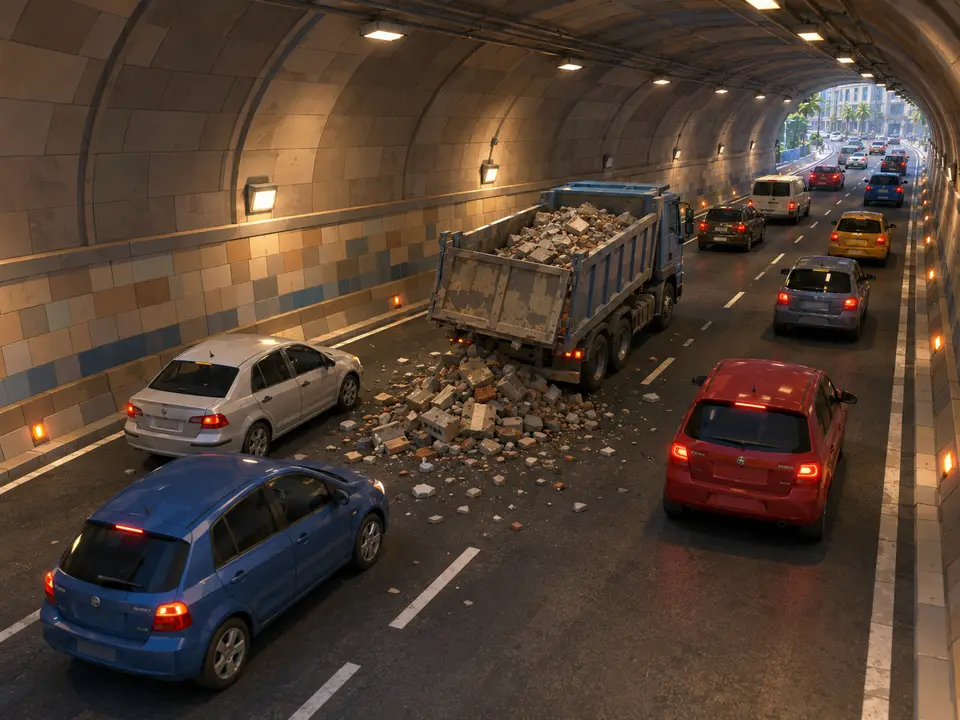
CAM-35Debris inside the tunnel
«Tell me if an obstacle appears on the tunnel roadway, and which lane it is in.»
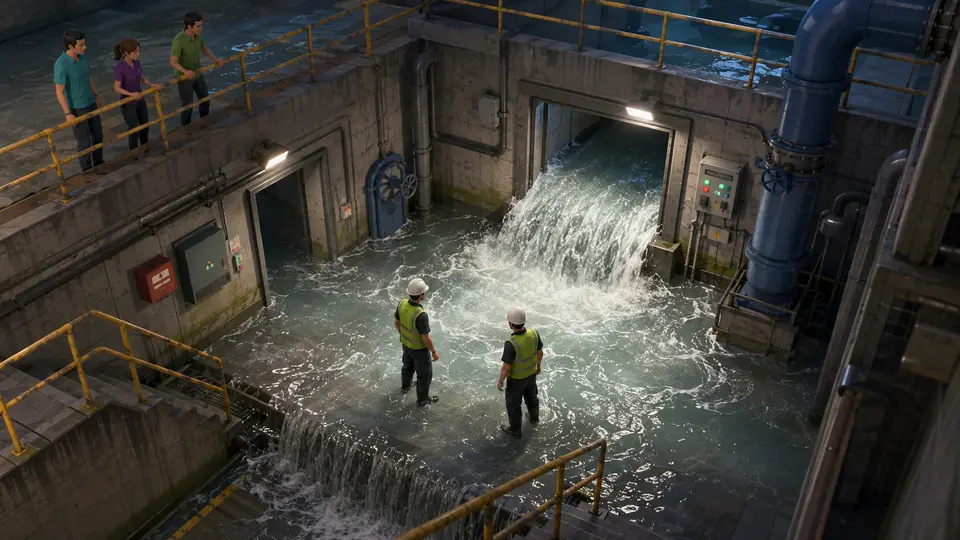
CAM-166Water pouring into the underground chamber
«Alert me the moment water comes in through the chamber opening, and tell me how many people are inside right then.»
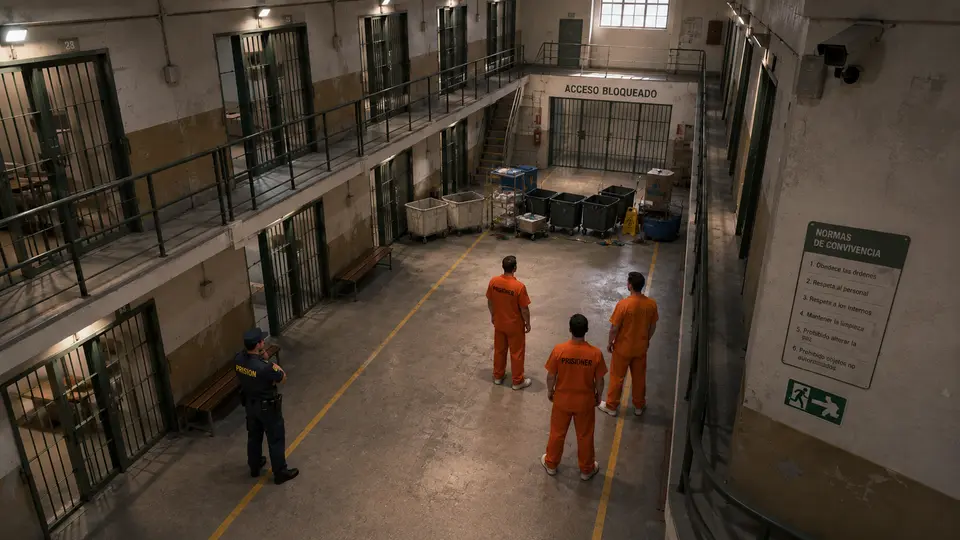
CAM-101Blocked access on the landing
«Tell me if anything is left in front of a door or a barred gate and stays there, because that is the way we have to get through.»
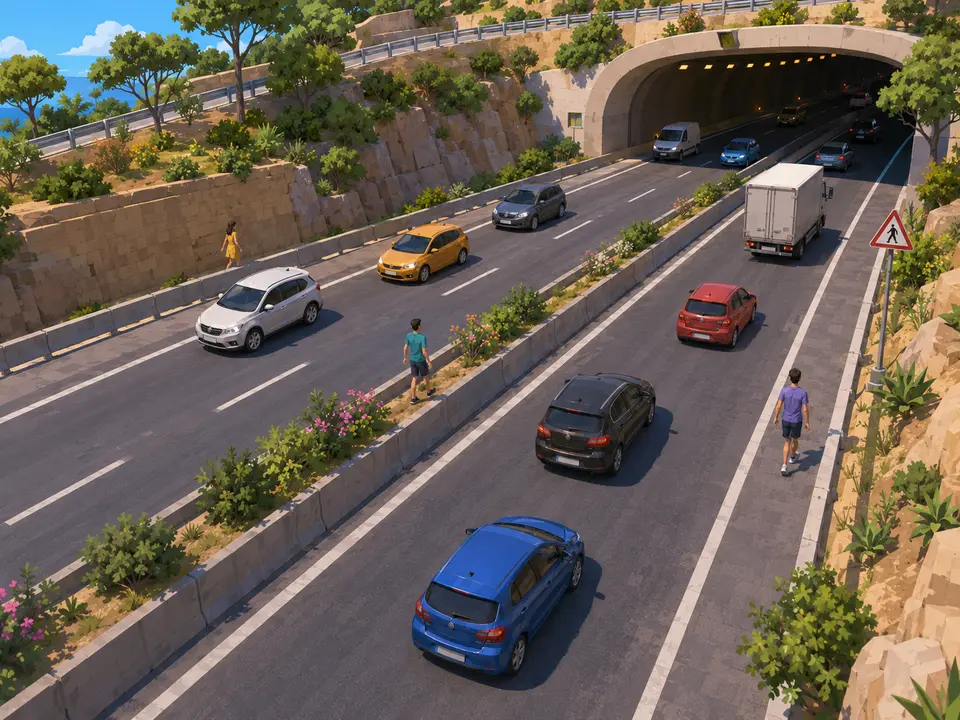
CAM-63People walking on the carriageway
«Tell me right away if you see anyone walking on the carriageway, and all the more so near the tunnel.»
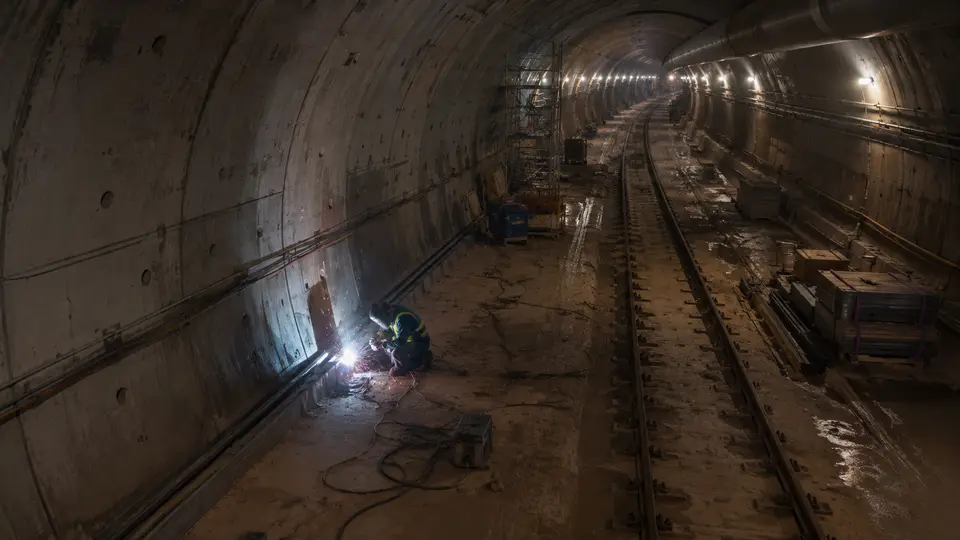
CAM-59A welder working on his own
«Tell me if someone is left welding alone in the tunnel, because down there that job is done by two people.»
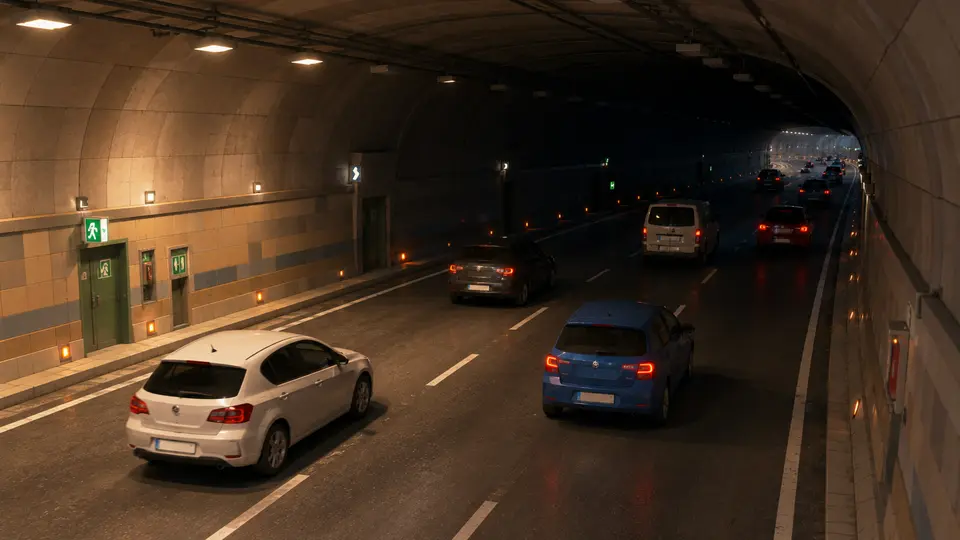
CAM-185A stretch of tunnel in the dark
«Tell me if a stretch of the tunnel loses its lighting, even when nothing else has happened.»
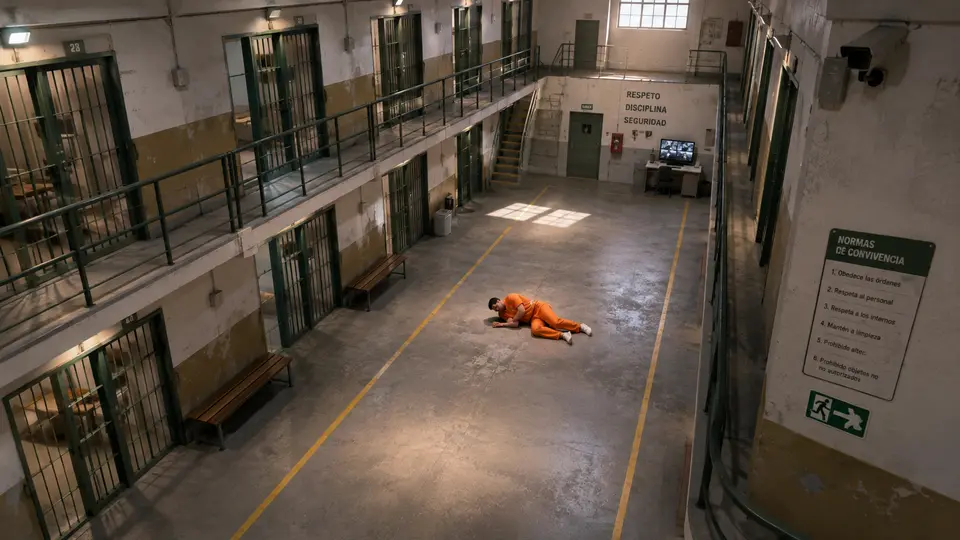
CAM-106Someone on the floor of the wing
«Tell me if someone ends up on the floor and does not get up, at any hour and anywhere on the wing.»
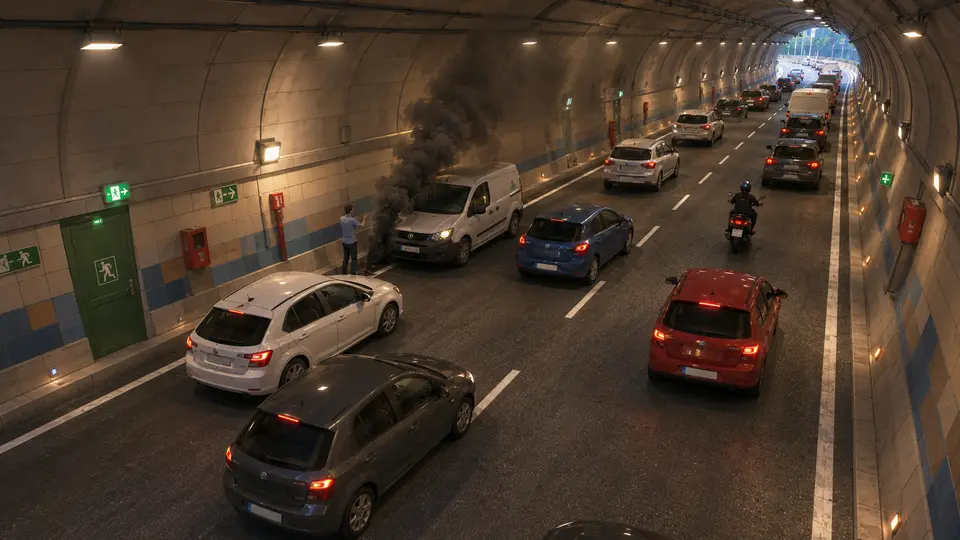
CAM-183Vehicle on fire inside the tunnel
«Tell me the moment there is smoke or flame inside the tunnel, and tell me where and what is behind it.»
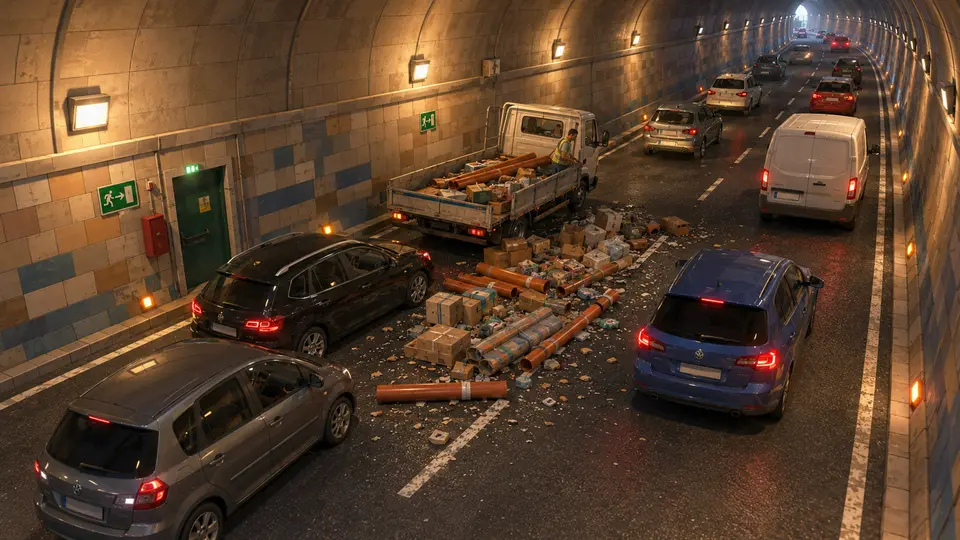
CAM-184Load spilled in the tunnel
«Tell me if a load or any object ends up on the carriageway inside the tunnel.»
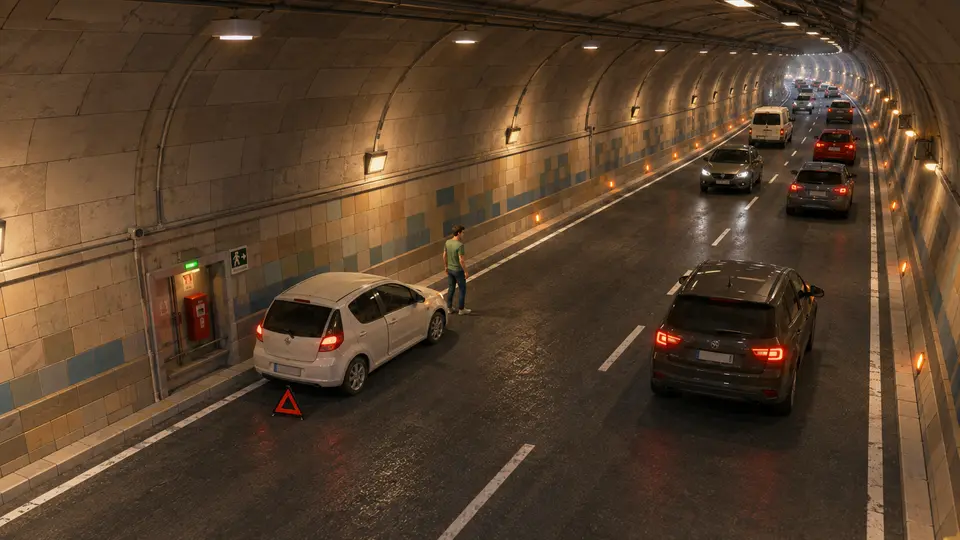
CAM-186Person out of the car in the tunnel
«Tell me if somebody gets out of their car and walks on the carriageway inside the tunnel.»


What it does not do
IRIS does not close the tunnel, does not change the speed on the message signs and does not call the fire service. It reports what it sees, with the camera and the location, and the control room orders the manoeuvre.
Nor does it work out what the object is or which lorry dropped it. It can tell that something is on the carriageway that was not there before and is still there. Naming it is the job of the person who opens the video.
Questions
- Can IRIS see smoke before the fire detection system reacts?
- Often yes, because it is looking at something else. A detector waits for the smoke to reach it; the camera sees the plume where it starts, even a hundred metres from the nearest sensor. That does not replace the fire detection system: it works alongside it. And it adds what a sensor cannot give you: the picture of the exact spot, the lane, whether anyone is out of the vehicle and what traffic is trapped behind. In a tunnel, those four things are what decide the response.
- Do the cameras we already have inside the tunnel work for this?
- Generally yes, if the setup allows it and the framing covers the whole carriageway. Tunnels are usually well equipped: the difficulty is not the cameras, it is that nobody can watch fourteen of them at once for a full shift. What does need checking first is the light. A tube with dead luminaires, or with the glare of the portal at midday, gives a different image from the one it gives at three in the morning. A rule is signed off by looking at that camera at that hour, not by assuming.
- What about false alerts from a plastic bag or a shadow?
- You cut them down with the rule, not with a promise. You set how big an object has to be to count, and how many seconds it has to stay put before anyone is told: a bag blown across the lane never lasts ten seconds, a pallet does. Some alerts will turn out to be nothing when you open the video, and that is fine. In a tunnel, spending ten seconds on an alert that turns out to be a cardboard box costs far less than finding out too late that it was a tyre.
- Does IRIS decide to close the tunnel?
- No. IRIS alerts; the control room closes. The difference matters, because closing a tube has consequences a camera cannot weigh up: what traffic is inside, what diversion exists, what works are running in the other bore. What IRIS puts on the table is the situation with the camera open, the lane, the location and the video from the first second, so that the person who can decide does it with what is happening in front of them instead of what someone describes over the phone.
The real interface, step by step
You set the rule once. IRIS applies it every time.
You will see a summary of the interface, played step by step and hands-free. Each round starts with another case. The complete tool does not fit in a demo.
- The rule gets built
- It goes to every camera
- Published, it watches alone
- And then it fires
Not seeing yours here?
These words are the ones we have built, not the ones IRIS understands. The list falls short on purpose: you ask for it in a sentence, and sentences do not run out. Tell us what is in front of your cameras and we will tell you whether it understands it, or not yet.
And the best part
Counting is not watching over anyone.It is knowing how many went through, and when.
It is what lets you compare: two Tuesdays, two doors, two seasons. Because it is measured the same way every day, the comparison stands on its own.
Tell us your problem and we will say whether IRIS understands it, or not yet.
We reply the same working day.