Solutions by typeIntrusion detection
How long has that door been open, and who knows?
One wooden wedge and the door never closes
06:15, service corridor. The room door is wide open and it is not coming back: somebody has jammed a wooden wedge under the edge and the closer has been taken out of the equation. There is nobody in the corridor. Nobody forced anything either: the wedge was put there at four by the technician carrying boxes in and out, who then went for breakfast. The access log shows one opening, at 04:10.
22 cameras across 10 sectors
What IRIS is
IRIS watches the cameras for you.
IRIS Neural is an artificial intelligence that watches the cameras you already have and understands what happens in front of them. When something important happens —or something you told it you need to keep an eye on—, it alerts you; and whatever can be counted, it counts in numbers. All day long, without anyone having to watch a screen.
You tell it what you need to watch, and IRIS does it.
Works with the cameras you already have. Nothing to replace.
A person replies, not a form.
- Your footage never leaves your premises.
- It doesn't identify people.
- Certifications →
This is how you ask for it
«Tell me if a room door stays open for more than thirty seconds.»
As long as the wedge stays there, that room is not closed, whatever the paperwork says. The access control you paid for counts openings, not minutes held open. If the door belongs to a cold room, the bill arrives in degrees and in wasted product. If it is a fire door, it arrives on inspection day. And if it is the switchgear room, it arrives the day somebody walks in who had no business there.
You decide once
You decide this once, door by door. You say how many seconds each one may stay open, during which hours and who gets told: the switchgear room, thirty seconds always; the cold room, three minutes during dock hours and thirty seconds outside them; the hotel service door, never wedged. IRIS watches those doors all day, every day, and the clock starts on its own. Nobody has to remember anything, and the alert arrives while the wedge can still be removed, not on the ten o’clock round.
Almost no propped door is an attack. It is a workaround. The technician going in and out with boxes, the waiter taking down the rubbish, the operator fetching another pallet of drums: they have all done the same thing and none of them meant any harm. The wedge saves twenty seconds a trip and nobody thinks it is serious. The problem is that the wedge stays, and the person does not.
What makes that door dangerous is that nobody is counting it. The card reader logged one opening and went quiet; from then on, an open door is exactly the same as a closed one for every system in the building. In a cold room the thermometer will notice, late. In an electrical room nobody will notice until somebody walks in. And in a fire door nobody will ever notice, until the day it needs to close.
IRIS watches the door and counts how long it has been open. When it passes the seconds you set for that particular door, it alerts with the camera, the time and the video, so whoever gets the alert also sees why it will not close: the wedge, the box, the trolley leaning against it. It does not know who put it there, and it does not need to. Most of the time the call lasts twenty seconds and somebody goes and removes the wedge. That is exactly why it works: checking costs so little that it always gets checked.
What changes
Before, a wedged door was found on the round, if there was a round that night, or the day the thermometer went past its limit. Now, after thirty seconds somebody gets the camera with the open door and the wedge on the floor, makes one call, and it is over. And it is logged: after a month you can see which doors get wedged, at what time and on which shift, and that list usually says more about how the work is organised than about the doors.
Where we have seen it
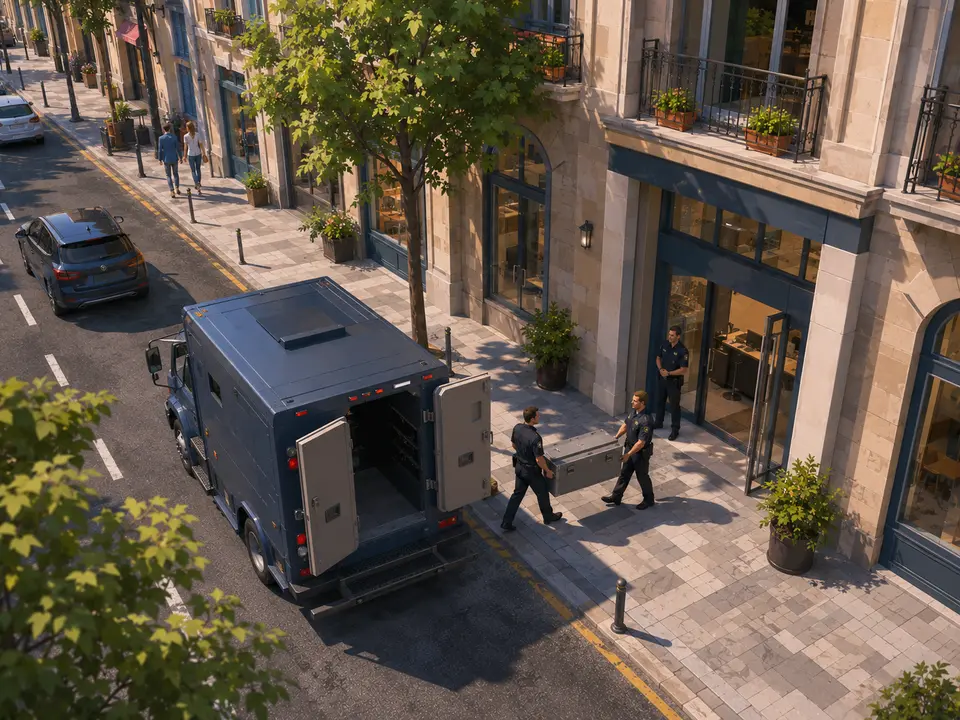
CAM-517A cash box crosses eight metres of pavement
«Tell me if the van’s rear door stays open more than a minute with nobody from the crew beside it, and keep the time of every collection for me.»
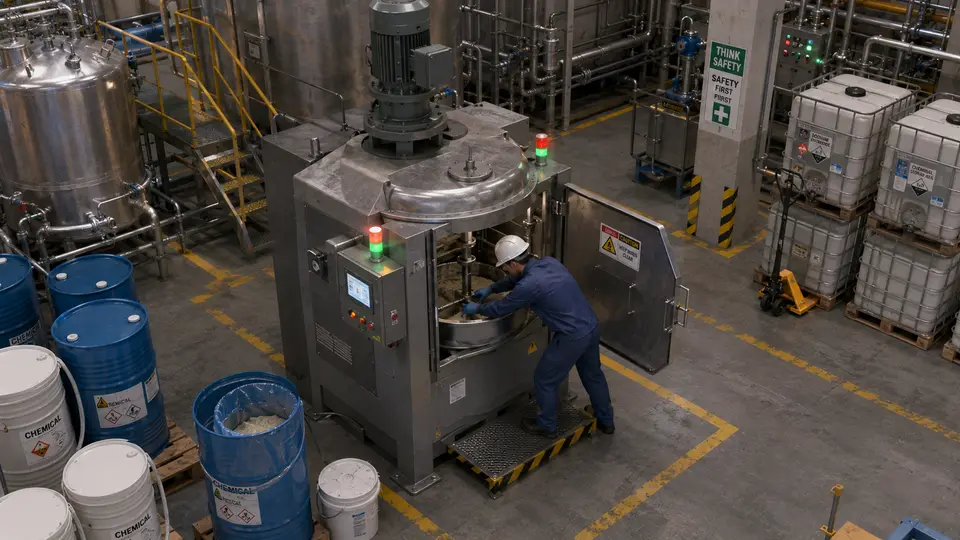
CAM-315Hands inside the mixer with the beacon still green
«Tell me if somebody puts their hands into the mixer with the door open and the beacon green.»
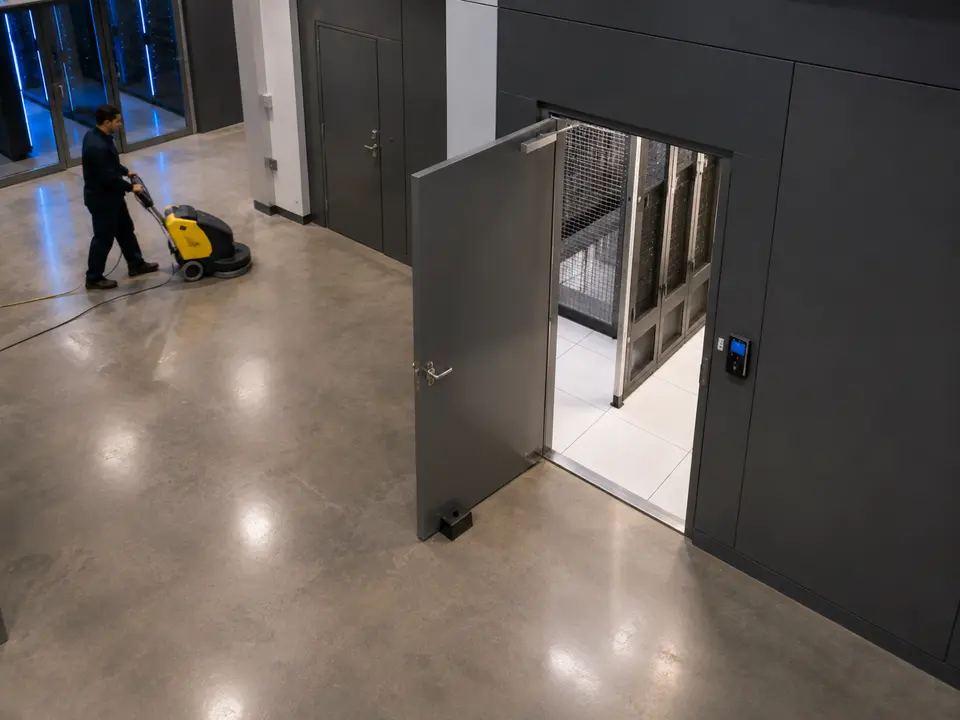
CAM-550A wooden wedge holding the hall door wide open
«Tell me if a hall door stays open for more than thirty seconds.»
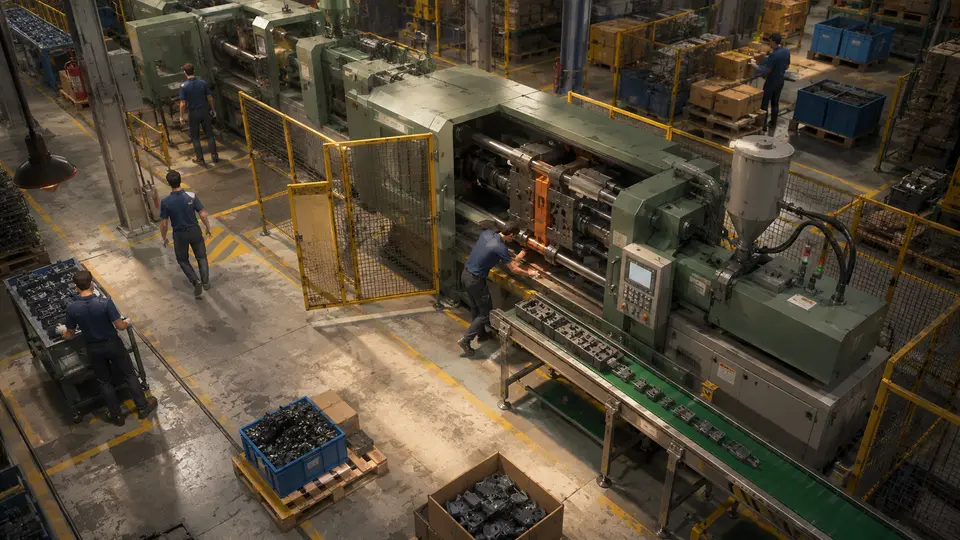
CAM-251The guard door is open and there are hands inside the machine
«Alert me straight away if someone comes through the guard gate or reaches into the mould area while the machine is not locked out.»
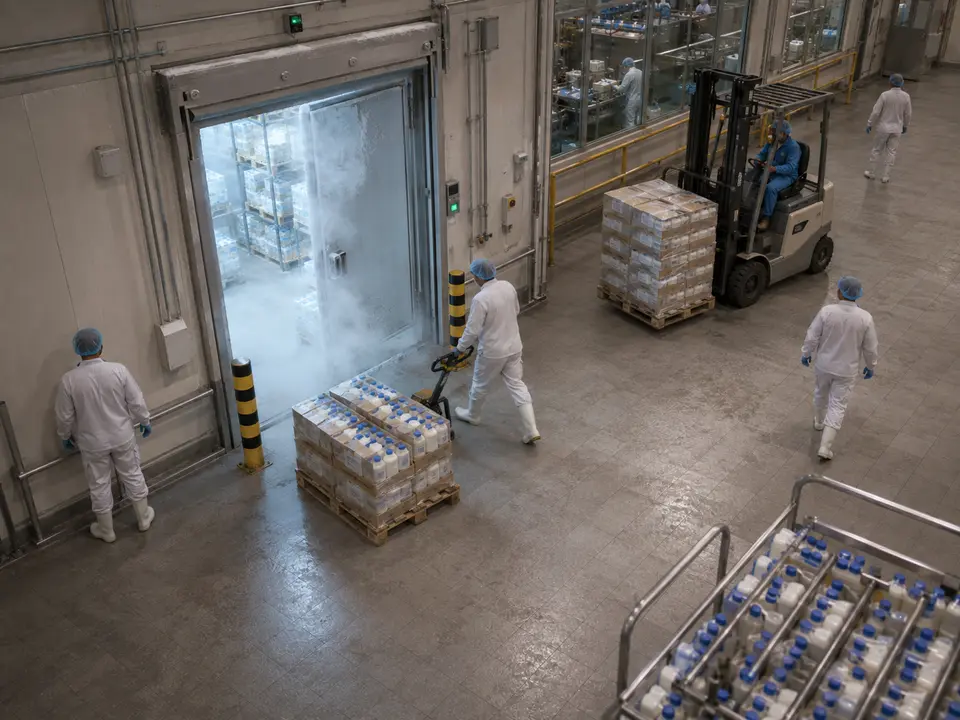
CAM-214The cold-store door has been open too long
«Tell me when the cold-store door has been open for more than three minutes, and tell me too if a pallet has been out of the cold too long.»

CAM-156Critical room door left open
«Tell me if the switchroom door is left open for more than a few minutes.»

CAM-277The cold store standing open and the fish waiting outside
«Tell me how long the cold store door has been open and how long the pallets have been outside, and alert me if it goes past five minutes.»

CAM-452A reefer with its doors open and the cable on the ground
«Tell me when a reefer has been more than five minutes with a door open or with its cable out of the socket.»

CAM-324The tank hatch is open and nobody is up there
«Tell me if a tank hatch has been open for more than ten minutes with nobody working up there.»
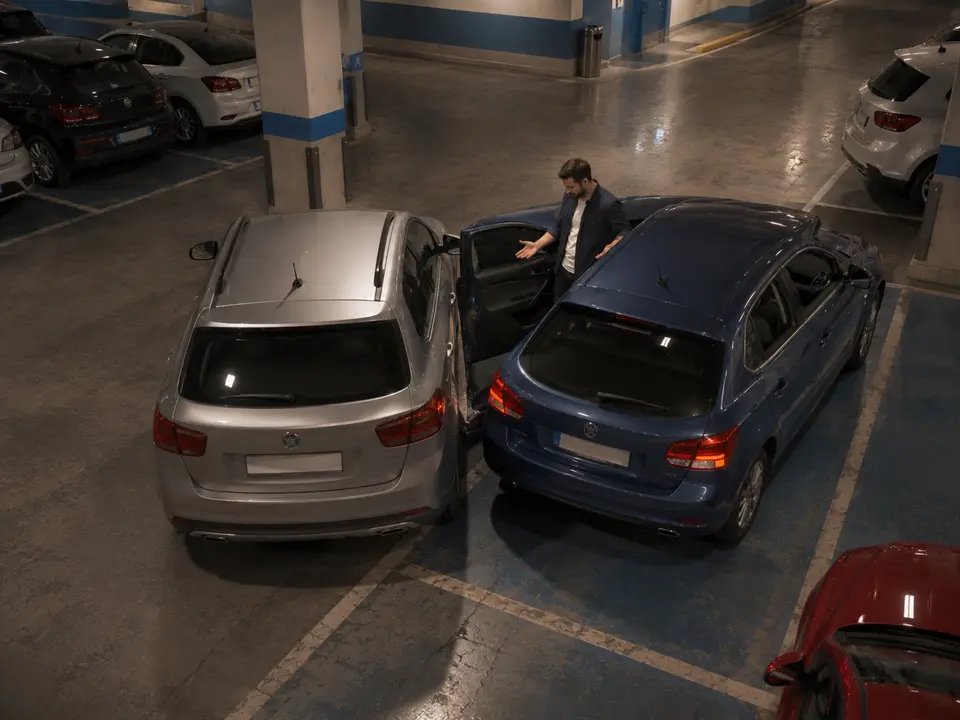
CAM-471A door opened wide against the car in the next bay
«Show me the contacts between vehicles on level -2 on Tuesday afternoon.»


What it does not do
IRIS does not close the door and does not know who put the wedge there. It sees the door is open, counts the time and alerts with the video; closing it is a job for a person.
And if that door already has a working magnetic contact, that contact is cheaper and sharper than a camera. Where IRIS adds value is on doors that have nothing, and in seeing what is stopping this one from closing.
Questions
- Would a magnetic contact on the door not be enough?
- For telling open from closed, often yes, and if you already have one there is no reason to remove it. A contact is cheap and it does not fail. What a contact does not give you is the video: it does not tell you whether there is a wedge, a box or a trolley, or whether somebody is waiting on the other side. And there are doors where nothing can be fitted, or where the contact gets bypassed. That is where a camera you already have adds what the contact cannot: the whole scene, with the time.
- Can each door have its own time limit?
- Yes, and you should, because a loading dock door and an electrical room door have nothing in common. The dock door is open all morning and that is normal; the electrical room door should not be open for a minute. Each door gets its own number of seconds, its own hours and its own recipient. Set the same time for all of them and you either drown in useless alerts or miss the only one that mattered.
- What about doors that have to stay open while work is on?
- You give them their hours, and outside those hours the rule changes by itself. The dock door can stay open from six to two with nobody saying a word, and from two the clock runs: still open at three, it alerts. Same for weekends and holidays. It can also be tied to an open work order, so the door is allowed while the job is under way and stops being allowed when the job is closed.
- Does IRIS know who wedged the door?
- No. IRIS does not recognise faces and identifies nobody. It sees an open door, counts the time and sends the video of the moment it was left like that. If your organisation wants to know who it was, the person watching the video cross-checks it with what you already have: the access log, the shift report, the work order. That decision is yours and it is made by looking; IRIS does not make it. And in most cases it does not matter who it was: what matters is that the door closes.
See it for yourself
No extra alarms here. Just what needs looking at.
Not a recorded video, not an explanatory drawing: a summary of the real screen, with a different case every time it starts. There is a lot more behind it.
- You draw the line
- It counts by itself
- A number comes out
Not seeing yours here?
These words are the ones we have built, not the ones IRIS understands. The list falls short on purpose: you ask for it in a sentence, and sentences do not run out. Tell us what is in front of your cameras and we will tell you whether it understands it, or not yet.
And the best part
There is a moment when you can still act.It is while it is happening, and it is short.
After that, all you can do is tell the story. IRIS speaks up at that moment — camera, time and images — and whoever is on call decides what to do with it.
Tell us your problem and we will say whether IRIS understands it, or not yet.
We reply the same working day.