Solutions by typePersonal safety
What if something happens to them and nobody is around?
Alone, and nobody knows it
It is 03:20. One person covers the night shift at the water plant. He goes down to the pump room to check a noise, slips on the wet floor and stays there, one leg folded under him. His phone is upstairs, on the desk. The corridor camera has been recording him since the first second. The next person to walk past that spot clocks in at six.
54 cameras across 10 sectors
What IRIS is
IRIS watches the cameras for you.
IRIS Neural is an artificial intelligence that watches the cameras you already have and understands what happens in front of them. When something important happens —or something you told it you need to keep an eye on—, it alerts you; and whatever can be counted, it counts in numbers. All day long, without anyone having to watch a screen.
You tell it what you need to watch, and IRIS does it.
Works with the cameras you already have. Nothing to replace.
A person replies, not a form.
- Your footage never leaves your premises.
- It doesn't identify people.
- Certifications →
This is how you ask for it
«Tell me if someone is left alone in an area where two people are required.»
Nobody misses him until the shift change. By the time someone finds him almost three hours have gone by, and what was a broken leg has turned into months off work. Then comes the rest: the incident report, the inspector’s visit and the meeting to explain why there was one person alone in the plant that night, and why the video existed from the first second and nobody watched it.
You decide once
You decide this once. You say where the area is, how many people must be inside it, what hours it applies and who gets told: if only one person is left in the pump room for more than two minutes between ten at night and six in the morning, tell the shift supervisor and open the camera. IRIS applies that every night, on every shift and on every camera covering the area, with nobody having to remember. If the shift pattern changes, you change the rule, not the habit.
Working alone is not unusual: after ten at night it is the normal state of half the country. A water plant, a substation, a cash counting room, a fifty-room hotel with one person on reception. And some tasks always call for two people on paper: entering a tank, counting cash, opening a live panel. In practice the second one steps out for a spanner, gets called on the radio and never comes back. Nobody broke a rule on purpose. There is simply nobody keeping track of how many are left inside.
The day it goes wrong makes no noise. A dizzy spell, a slip, a head against a handrail. The person ends up on the floor, half conscious, unable to reach a phone. What decides how that ends is not the fall: it is the hours that pass before anyone notices they are missing. On a night shift, those hours can be three.
IRIS watches the area and counts how many people are inside it. When the number drops to one where it should be two, it says so: camera, time and video. It does not know who either of them is, and it does not need to. And it says so in the minute the person is left alone, not once they have been on the floor for half an hour, because a late alert is only good for writing the report. The point is not knowing what happened. The point is not having to tell that story at all.
What changes
Before, the supervisor found out at shift change, and the video was there to reconstruct what had happened. Now, two minutes after the person is left alone, someone gets the camera open with the exact time and picks up the radio. Most of the time nothing is wrong and the call lasts ten seconds. That is exactly why it works: checking costs so little that it always gets checked.
Where we have seen it

CAM-589A suitcase standing alone, and nobody within two metres
«Tell me if a bag is left on its own for more than five minutes with nobody within two metres.»
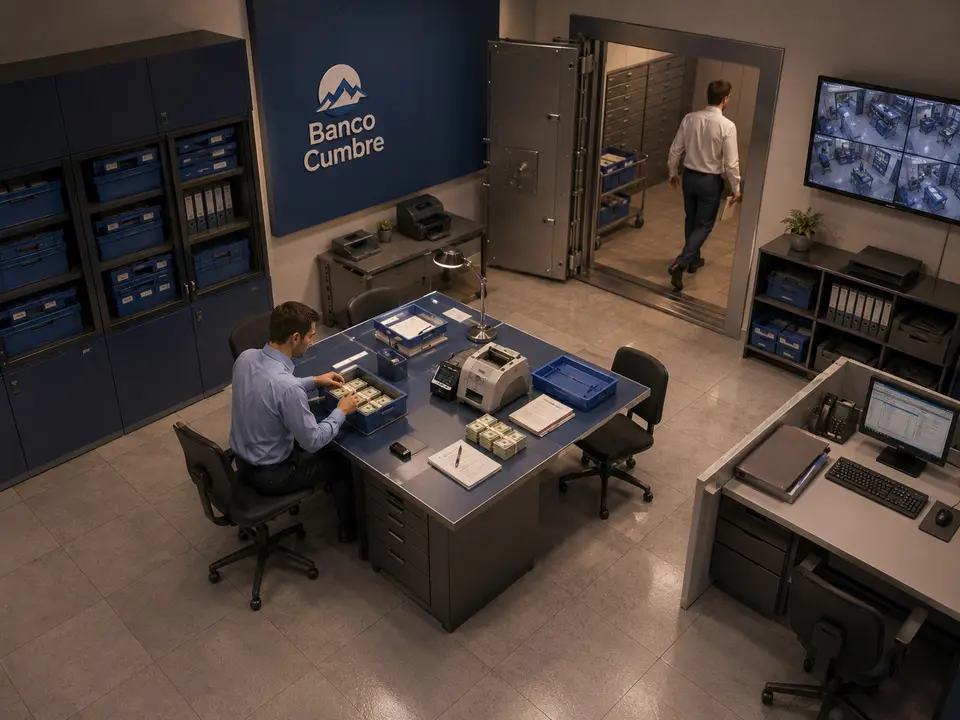
CAM-514An operation that takes two people, and there is one in the room
«Tell me when only one person is left in the cash room while there is cash on the table.»
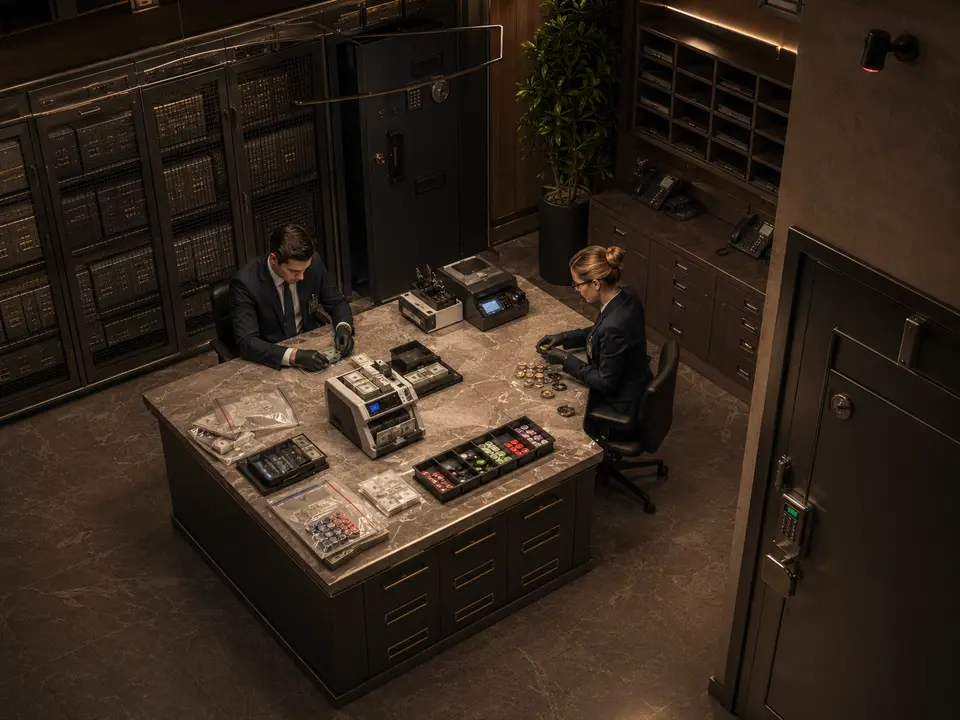
CAM-532In the count room, nobody is ever left alone
«Tell me if only one person is left in the count room while the count is open.»
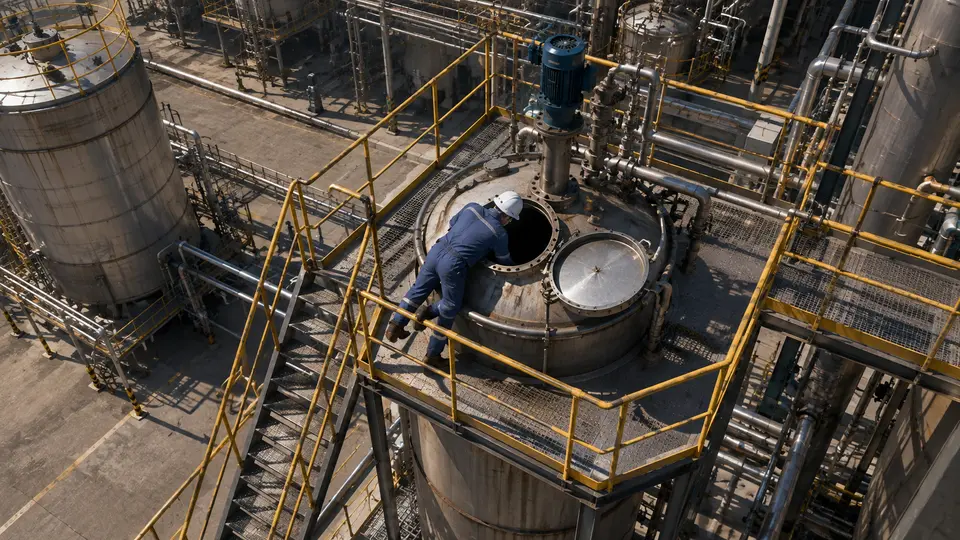
CAM-312Someone leaning into the reactor and nobody outside
«Tell me if anyone climbs into an open reactor and there is no second person on the platform.»
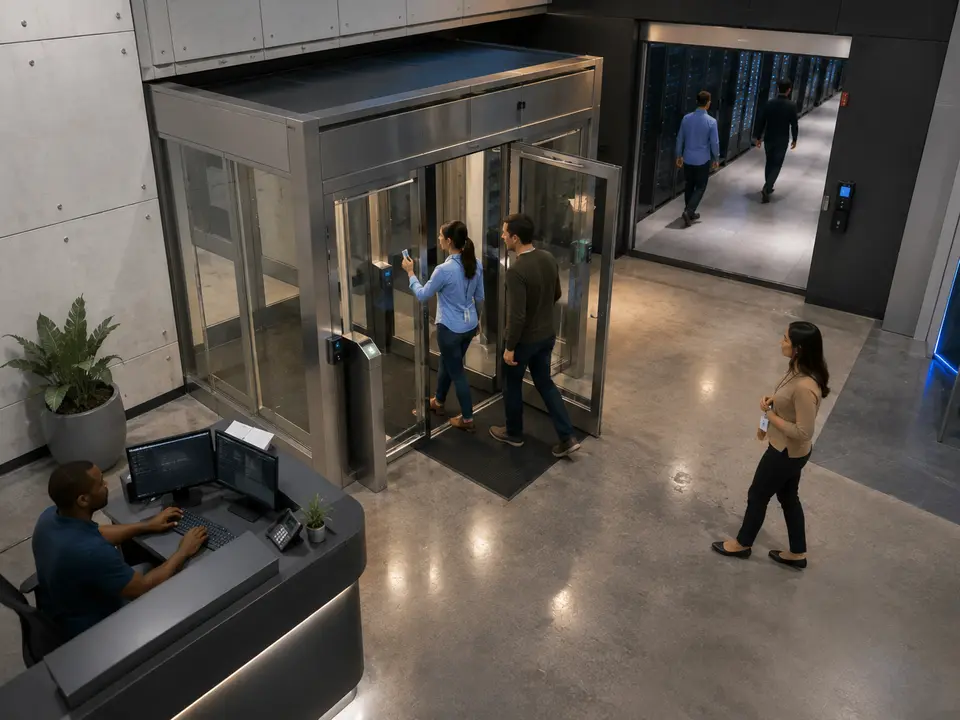
CAM-547Two people go through and only one showed a badge
«Tell me when more people go through an access door than badges were presented.»
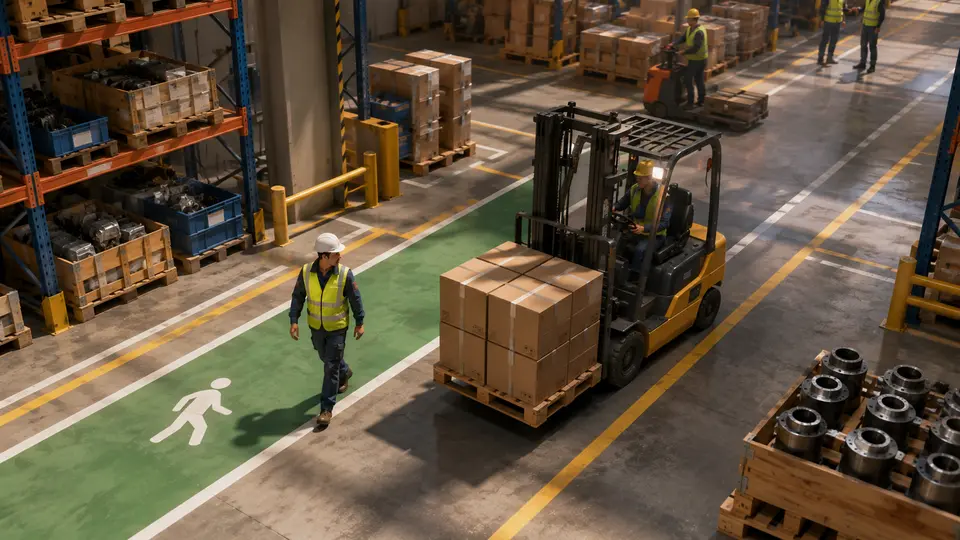
CAM-254Only a white line separates the pedestrian from the forklift
«Tell me when a forklift and a person are in the same stretch of aisle at once, and count how often it happens each day.»
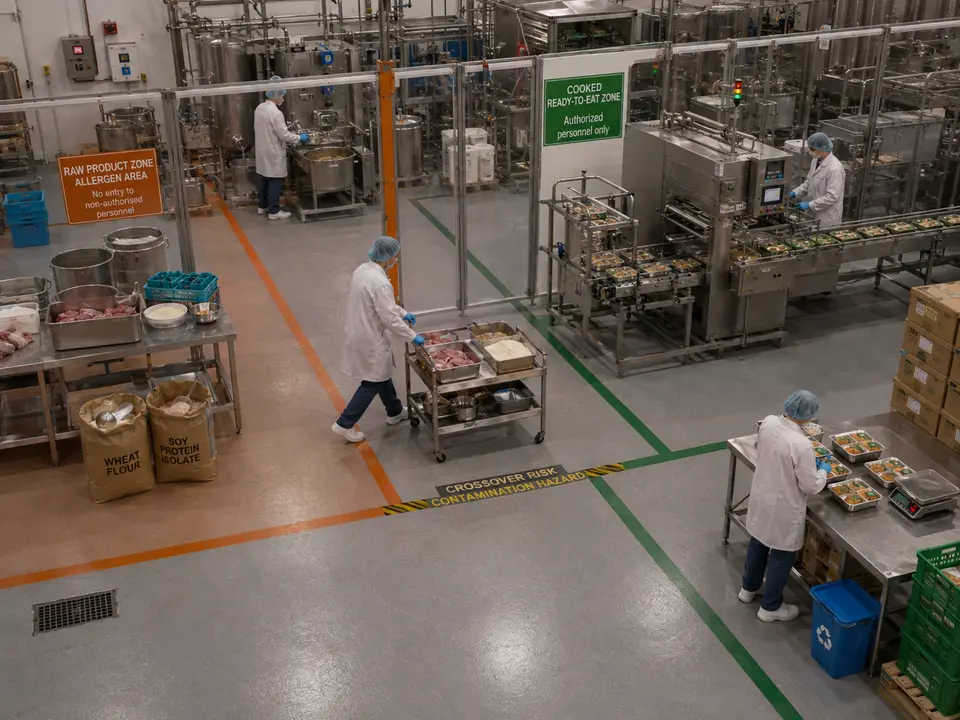
CAM-207A raw trolley crossing into the cooked zone
«Tell me if anyone takes material from the raw side into the cooked packing side, even if they only cross for a second.»
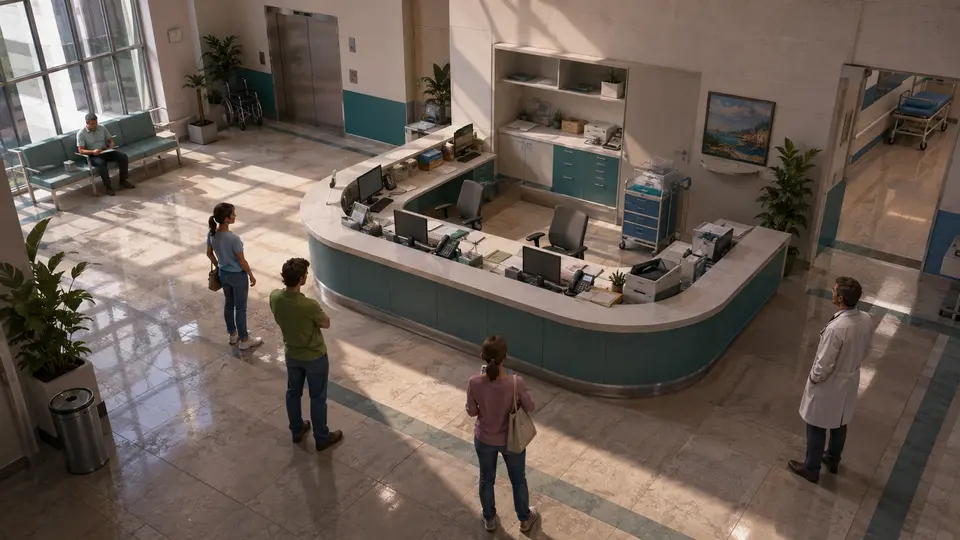
CAM-126Nobody behind the reception desk
«Tell me if the reception desk has nobody behind it for longer than we agreed, and above all if there are people waiting in front of it.»

CAM-497Nineteen people waiting and a single desk open
«Tell me if more than ten people are waiting at reception and fewer than two desks are staffed.»
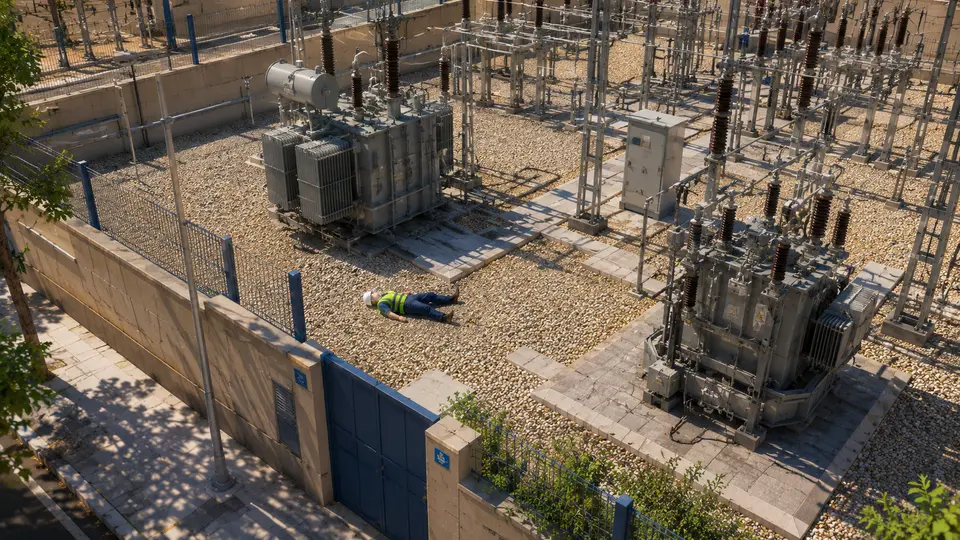
CAM-164A worker on the ground, not moving
«Tell me if somebody stays still on the ground for more than a few minutes, especially if they are alone on the site.»


What it does not do
IRIS does not know who that person is, whether they are cleared to be there, or whether their task may be done alone. It counts how many are inside the area and speaks up when one is left.
And it cannot see what the camera cannot see. If someone steps into a room with no coverage, as far as IRIS is concerned they have left the area. That is why cameras go where the risk is, not where there happened to be a spare cable.
Questions
- Does IRIS identify the person who is left alone?
- No. IRIS does not recognise faces and does not know who anyone is. It counts how many people are inside the area you drew on the camera image and alerts when that number drops to one where two are required. The alert arrives with the camera, the time and the video of the exact moment the person was left alone. Who they were and what they were doing is added by whoever looks, not by the system.
- Does it work at night and at weekends?
- Yes, and that is when it matters most. The empty shift is precisely the one with nobody watching a screen, and it is where the accidents that take hours to be discovered pile up. The rule applies in whatever window you choose: only from ten at night to six in the morning, only at weekends, or always. IRIS looks just as carefully at three in the morning as at noon, because it does not depend on anyone being awake in front of a monitor.
- Does it replace a lone-worker safety device?
- No, and it is worth saying plainly. A device carried on the body catches things a camera cannot see: someone going still inside a cabinet, in a basement or in a blind spot. What IRIS adds is that it works without anyone having to remember to put anything on, and that it watches the whole place rather than only the person carrying the device. The two get along: one watches the person, the other watches the place.
- Do we have to replace our cameras?
- Not necessarily. IRIS is built to make use of the cameras already installed, when the setup allows it and the framing shows the whole area. What is required is a camera where the lone work happens: if the pump room has none, no rule can cover it. Before signing off an area, you look at that camera at that hour, in the light of that hour. You do not assume.
Every simulation
Something has spilled
Tell me if there is liquid or foam outside its place and it is still there two minutes later.
- The sentence
- Where it applies
- What it finds
- The same rule
Not seeing yours here?
These words are the ones we have built, not the ones IRIS understands. The list falls short on purpose: you ask for it in a sentence, and sentences do not run out. Tell us what is in front of your cameras and we will tell you whether it understands it, or not yet.
And the best part
Nothing to drill, nothing to rip out:the cameras already on your walls can start understanding.
No building work, no new cabling, no swapping equipment. It connects to what is already there, and what is already there starts telling you what it sees.
Tell us your problem and we will say whether IRIS understands it, or not yet.
We reply the same working day.