CAM-126
Nobody behind the reception desk
A hospital lobby mid-morning, sun coming through the window wall. In the middle, the curved reception counter: monitors on, phones in place, folders on the worktop and both chairs empty. In front of it, three people stand waiting, looking at the desk; on the right, a professional in a white coat is waiting too. In the seating area by the window there is a single person sitting. IRIS does not look at who is missing: it looks at whether the area behind the counter has anyone attending it.

Turn on IRIS Vision
AI-generated image
What IRIS is
IRIS watches the hospital's cameras for you.
IRIS looks at the cameras you already have in the hospital and understands what it sees: a fall, a patient on the floor, someone left alone for too long, a long queue at admissions. When something like that happens, it lets you know; and whatever can be counted, it counts in numbers. All day long, with no one needing to watch the screen.
You tell it what you need to watch, and IRIS does it.
Here, for example, IRIS watches the reception counter and sends an alert the moment nobody's left attending it, with the camera and the time. That way you find out there are people waiting with no one to help them, instead of hearing about it three days later through a complaint. With that alert you decide whether to send someone to cover it, and by the end of the month you have the data on what times it happens most, to fix the schedule.
Works with the cameras you already have. Nothing to replace.
A person replies, not a form.
- Your footage never leaves your premises.
- It doesn't identify people.
- Certifications →
What IRIS understands
What it recognises in this scene
- unattended position
- people waiting
- waiting at the counter
- professional waiting too
- waiting area
What this camera measures
An alert says something is happening. The reading says how much.
- 9 minPosition empty for
- 0 / 2Positions covered
- 3People waiting in front
- 6 minLongest anyone has waited
- 1Seated in the waiting area
- 12:37Time of the alert
The figures on this screen are an example from the illustration, not any client's measurement.
The rule
You decide once. IRIS applies it always.
If
the desk position has nobody at it for more minutes than the hospital has set, and there are people waiting in front
Then
- alert the duty supervisor with the camera and the desk that has been left uncovered
- say how many people are waiting in front and since when
- close the alert only when somebody is back at the desk, not when somebody looks at it
The instruction that set it up«Tell me if the reception desk has nobody behind it for longer than we agreed, and above all if there are people waiting in front of it.»
What changes
What changes for whoever runs the ward
A desk is left alone for good reasons. Someone goes down for a wheelchair, someone walks a patient to the lift, someone takes a two-minute call that lasts twenty. Nobody did anything wrong, but people pile up in front who do not know where to go, and the first one to ask is usually the one in the worst shape. Today the supervisor hears about it through a complaint, three days later. With IRIS she knows while it is happening, with the camera and the desk, and sends someone to cover. And at the end of the month she has the figure that does not exist today: which hours of the day that desk is left uncovered — which is what you need to fix a rota instead of asking people to try harder.
What people usually ask
Is this for finding out whether somebody left their post?
No, and it cannot be used that way. IRIS does not identify anyone: it does not know who was at the desk, it does not know whether the person there now is the same one as an hour ago, it does not recognise faces and it keeps no file on anyone. What it looks at is the AREA: whether the position has someone attending it or not. The question it answers is «is there anyone at reception right now?», not «who walked off?». The first one lets you cover a shift; the second it does not answer, because the camera does not know.
How does it know the person behind the desk works there?
By where they are and what they are wearing, not by who they are. The area drawn here is the inside of the counter, not the queue in front, and the hospital can also require whoever is there to be in uniform. It is exactly the same mechanism that recognises a helmet on a building site: a garment and a place. If someone slips behind the counter in street clothes, the area does not count as covered — and that is worth knowing too.
What if the desk is meant to be empty, at night?
Then there is no rule there and nothing fires. The hospital writes the schedule, desk by desk and band by band: how many positions have to be covered, how many minutes of not being covered are tolerated, and when the rule switches off entirely. That is what keeps the alert meaningful. An alert that fires every night stops being read within a week, and then it is no use on the night it matters either.
The real interface, step by step
A new case each time. Always the same screen.
It plays by itself and shows one case from start to finish. It is a summary: the real screen has far more functions than fit in this box.
- The rule gets built
- It goes to every camera
- Published, it watches alone
- And then it fires
See it somewhere else
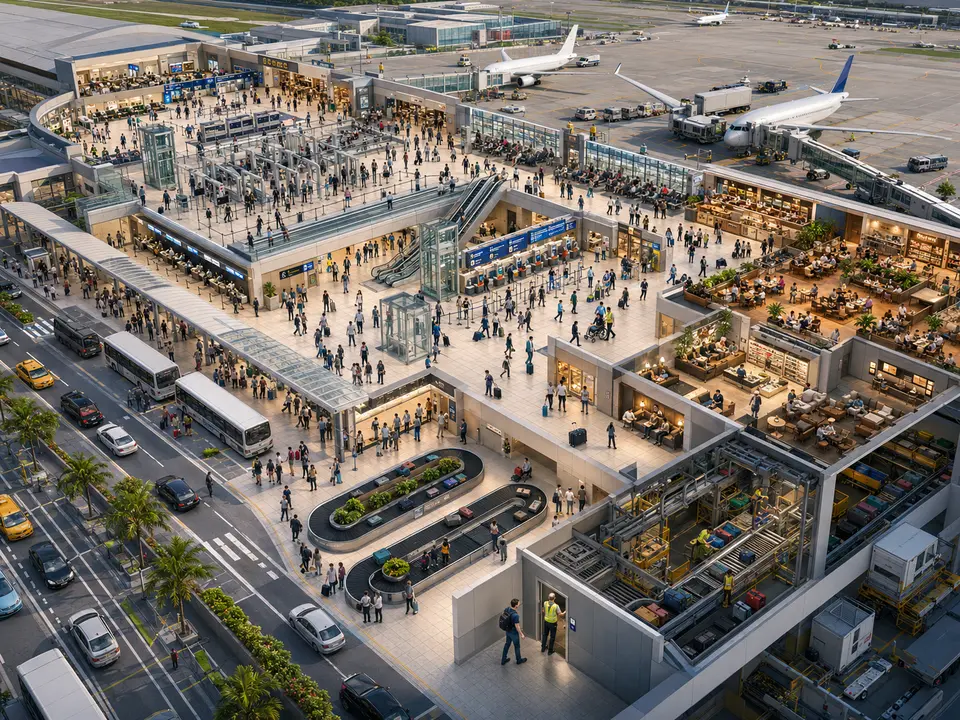
What does an airport see before the queue forms?
14 cases: 7 raise an alert when something happens and 7 only measure. You see each image as it is, and then with what IRIS understands on top.

What can a camera see without pointing at anyone?
13 cases: 9 raise an alert when something happens and 4 only measure. You see each image as it is, and then with what IRIS understands on top.


And the best part
What happens in the small hoursdoes not have to wait for the morning report.
IRIS understands it there and then and tells whoever is on call, with the camera and the time. The next day there is nothing to reconstruct: it is already written down.
Tell us your problem and we will say whether IRIS understands it, or not yet.
We reply the same working day.