Solutions by typeIntrusion detection
How long has it been standing there, and why there?
Eleven minutes standing where nobody stops
17:30 on an ordinary Tuesday. A white van is standing in the road, right against the substation gate, engine off, nobody at the wheel. Beside it, someone on the pavement is looking in through the mesh. They have been like that for eleven minutes. People walk down that street all day and nobody ever stops: no shops, no doorways, nothing to look at. That is the entire fact.
15 cameras across 8 sectors
What IRIS is
IRIS watches the cameras for you.
IRIS Neural is an artificial intelligence that watches the cameras you already have and understands what happens in front of them. When something important happens —or something you told it you need to keep an eye on—, it alerts you; and whatever can be counted, it counts in numbers. All day long, without anyone having to watch a screen.
You tell it what you need to watch, and IRIS does it.
Works with the cameras you already have. Nothing to replace.
A person replies, not a form.
- Your footage never leaves your premises.
- It doesn't identify people.
- Certifications →
This is how you ask for it
«Tell me if a vehicle stands still for more than four minutes at the gate or against the fence.»
Eleven minutes is no crime, and most likely nothing will come of it. That is not where the cost is. The cost is that if cable goes missing from a chamber two weeks from now, the video will exist but nobody will know which day to look at: somebody would have to scrub through forty days of recording by eye, and they will not. And the cost is also the alert that did matter and never arrived, because at half past five the guard was watching another of the ninety cameras.
You decide once
You decide this once, and what you decide is two numbers and a place. You say where standing still is unusual —the patrol road, the ATM lobby, the dirt track by the tanks—, how many minutes stop being normal there, during which hours and who gets told: by the tank fence, more than five minutes standing, alert the control room with the camera open. IRIS measures that on every camera covering the spot, day and night, without tiring and without changing its mind at four in the morning.
Start with what IRIS does not do: IRIS calls nobody suspicious. It does not know anyone’s intentions, does not identify them, and never will. Standing in the street is not doing anything wrong, and neither is eleven minutes of it. All IRIS measures here is time and place: how long something has been still at a point where normally nothing stays still. That is not an accusation: it is a reason for a person to watch ten seconds of video and decide.
And somebody does need to look, because the place matters. Nobody stops for eleven minutes on the dirt track around a fuel tank farm. Nobody leaves a van against a substation gate with the engine off. Neither of those is a crime, and both are the kind of scene that turns up months later in a report starting with «the week before, a vehicle had been seen…».
The curious thing about this word is that the same measurement serves the opposite purpose. In a car park, the time a car spends circling without finding a space is not a threat: it is your average search time, and with it you decide whether you need better signs or one more open level. It is the same figure —how long something has been still somewhere— read with a different intent. Which is why it is worth thinking hard about where you put the clock.
What changes
Before, the guard saw that van only if at 17:30 he happened to be watching that camera and not one of the other ninety. Now, after four minutes he gets the image with the time counted and decides in twenty seconds: go down, call, or just log it. And even if nothing comes of it, the moment is kept. The day it matters, the video does not need finding: it is already marked with its time.
Where we have seen it

CAM-586Three minutes stood at the board is not walking slowly
«Tell me if the average time stood at the board goes over five minutes for a whole hour.»
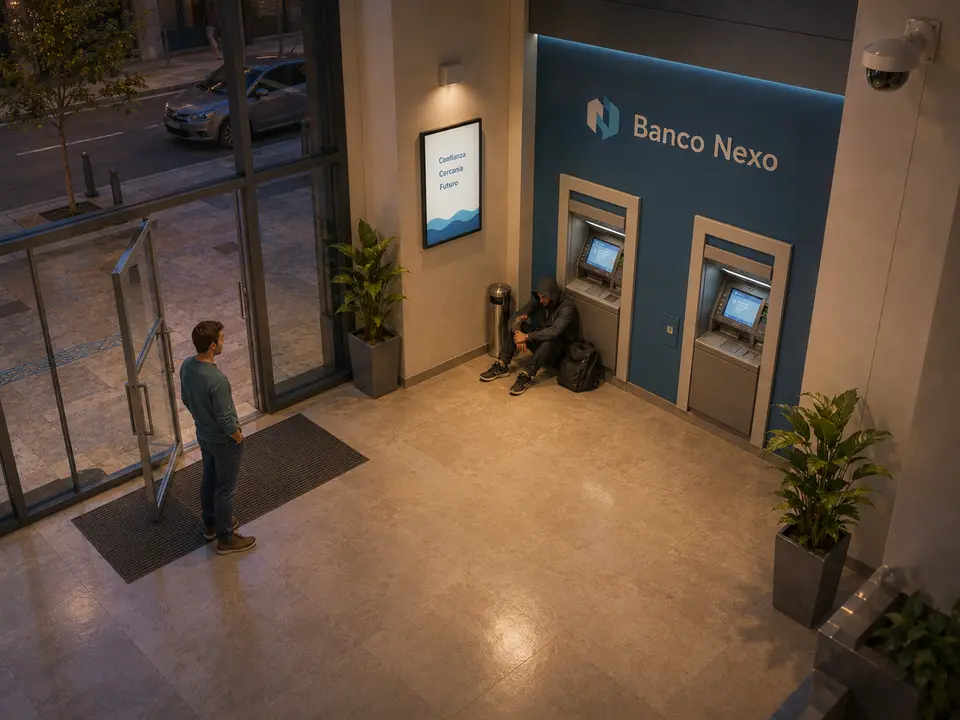
CAM-515Someone has been in the ATM lobby for twenty-two minutes
«Tell me if anyone stays more than fifteen minutes in the ATM lobby between ten at night and seven in the morning, and tell me how many people are inside.»

CAM-505A suitcase on its own in the lounge, nobody beside it
«Tell me when a bag is left on its own for more than ten minutes in the lobby, or when it leaves the left-luggage room with someone other than the person who dropped it off.»
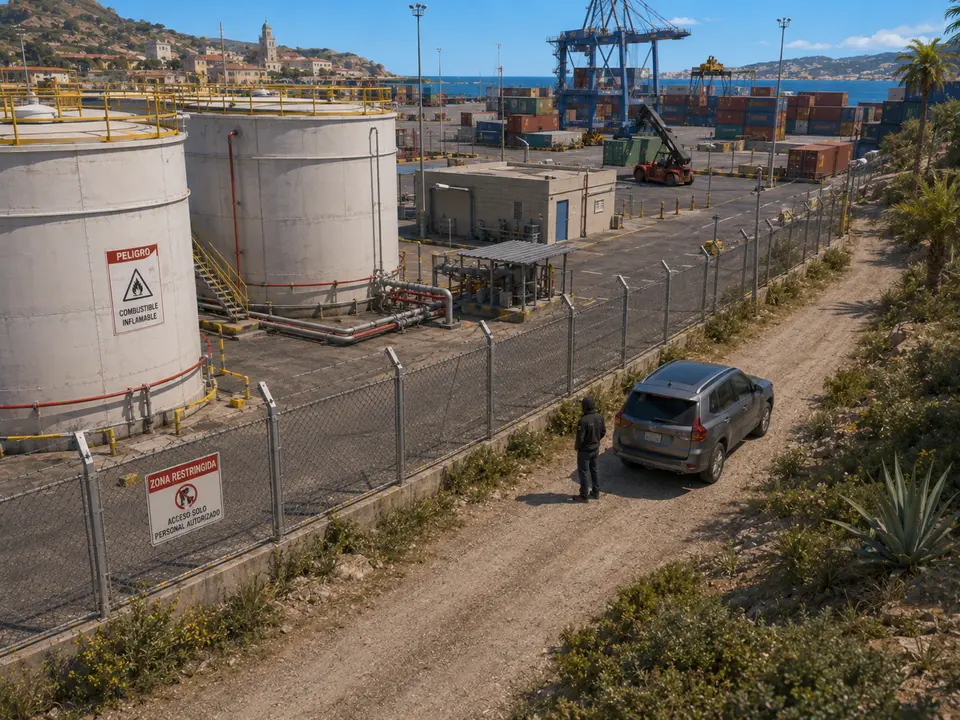
CAM-442A car has sat eleven minutes where nobody ever stops
«Tell me if a vehicle or a person stays more than five minutes by the tank farm fence.»
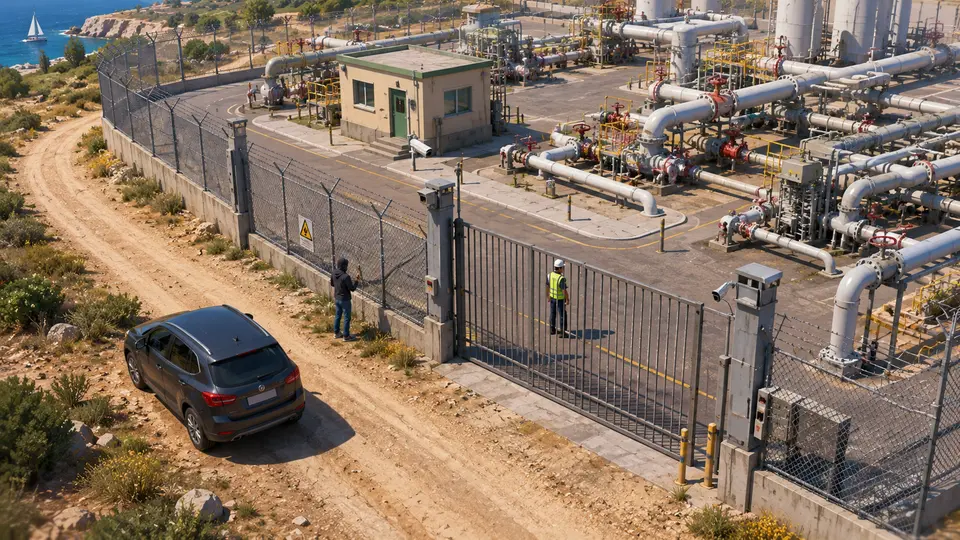
CAM-336Someone has been standing at the fence for four minutes
«Tell me if somebody stays at the fence for more than two minutes, or if a vehicle stops on the perimeter track.»
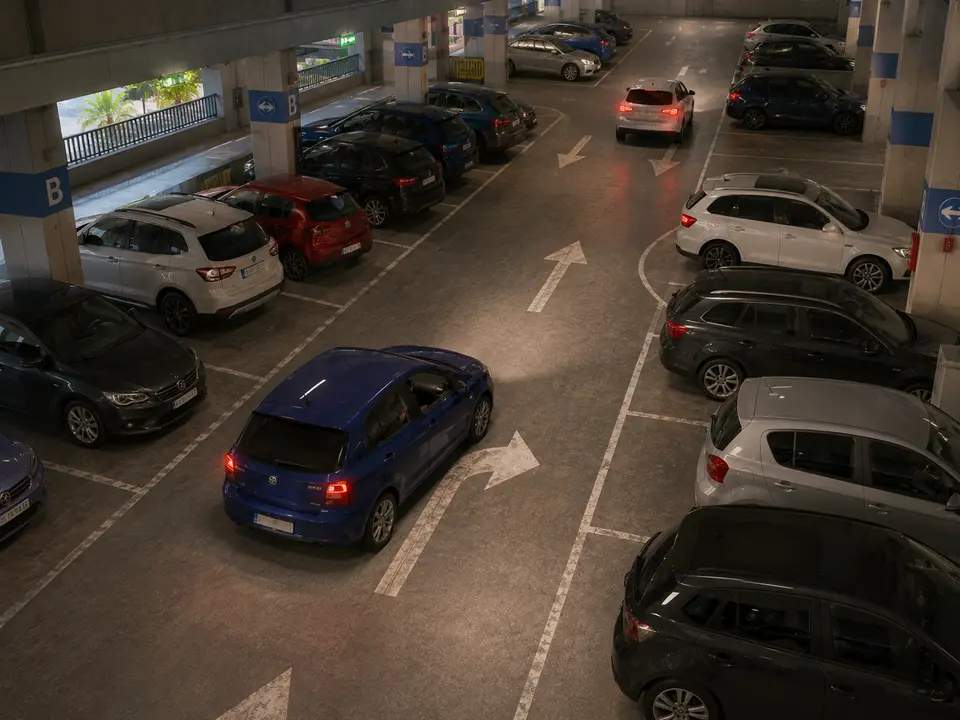
CAM-461Four minutes going round and not one free space
«Tell me how long it takes a driver to park on this level on average, by time of day.»
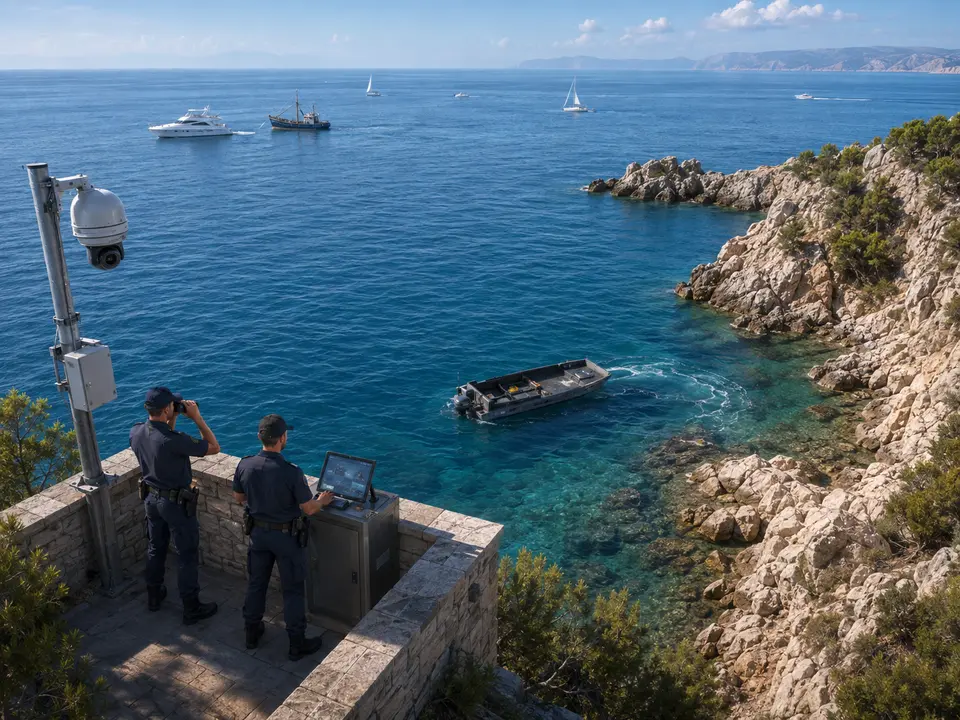
CAM-570A boat that stops where there is no anchorage, and stays there
«Tell me if a vessel stops making way inside the cove for more than four minutes.»
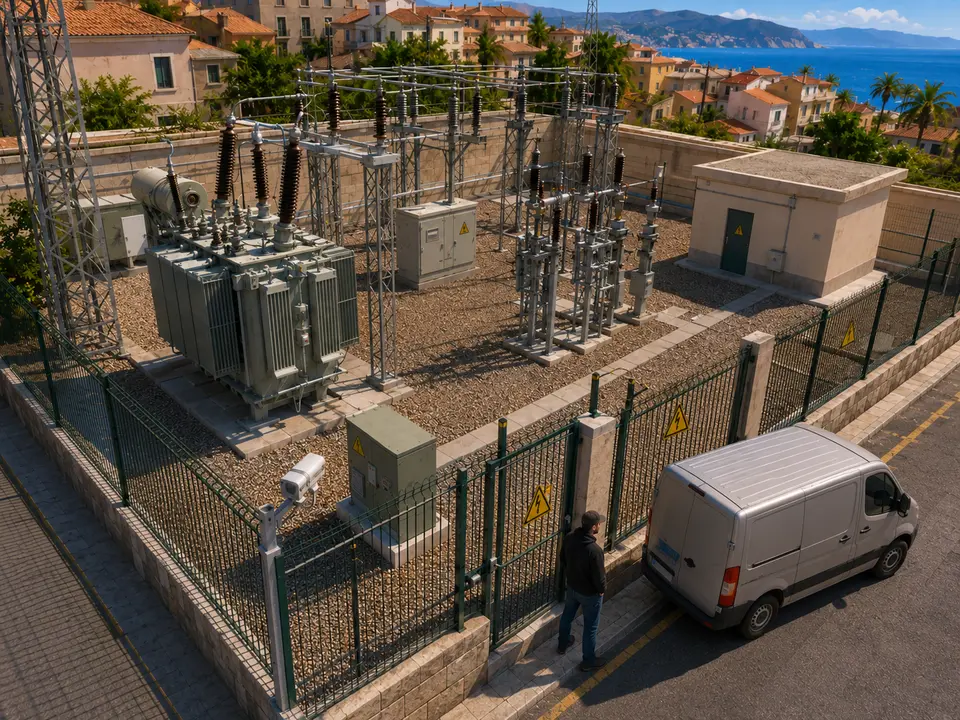
CAM-342Eleven minutes parked where nobody ever stops
«Tell me if a vehicle stays stopped for more than four minutes in front of the gate or up against the fence.»

CAM-580The kerb jams before the terminal does
«Tell me if a car has been stopped in the drop-off lane for more than ten minutes and others are waiting for a gap.»

CAM-501The dish has been ready for four minutes and still has not left
«Tell me when a dish has been sitting on the pass for more than two minutes and three or more floor staff are waiting.»


What it does not do
IRIS does not know what that person is doing or why they are there, does not recognise faces and does not label them in any way. It measures how long they have been still in the spot you marked, and says so. Nothing else, deliberately.
And you set the number. Put two minutes on a pavement where people wait for the bus and you will get alerts all day that nobody will read, which is the worst way to break this.
Questions
- Does IRIS decide that someone is up to no good?
- No, and it is not designed to. IRIS does not call anyone suspicious: that word appears in no alert. What it states is a measurable fact: there is a vehicle standing for eleven minutes at a point where you said four is already a lot. From there a person decides, by watching the video. Standing in the street is not doing anything wrong, which is why the alert is an invitation to look, not a conclusion about anybody.
- What about people waiting for a bus or smoking outside?
- Those places simply do not carry this rule. Loitering is not measured across the whole image: it is measured in the patch you draw, and that patch goes where standing still is genuinely unusual. The bus shelter stays out. The doorway where people go for a cigarette stays out. The patrol road along the fence, in. If, once it is running, you get alerts about people who are just waiting, either the area is drawn wrong or the number is too short, and it takes five minutes to fix.
- Is this only useful for security?
- No, and it is often bought for the other reason. The same measurement —how long something has been still somewhere— is an alert next to a fence and a service figure in a car park, where it tells you how long people take to find a space by time of day. In an airport, minutes spent standing in front of the flight boards tell you whether the information is well placed. Not everything that matters is an alarm: sometimes it is a number.
- How many minutes should we set?
- Start with a high number and bring it down by looking at what comes out. Better to miss something in the first week than to fill the screen with alerts nobody will read, because when that happens the rule switches itself off in the head of whoever receives it. On a city pavement, ten minutes is usually a good starting point; along the fence of an isolated site, two or three will do. After a week you look at what came out, drop what was not useful and leave it tuned.
A different case every time
Watch what happens. Then watch what IRIS does with it.
Not a recorded video and not a drawing: it is a summary of the real tool, with a different case each time round. The whole tool does not fit in a box.
- You ask
- IRIS searches
- It shows you
Not seeing yours here?
These words are the ones we have built, not the ones IRIS understands. The list falls short on purpose: you ask for it in a sentence, and sentences do not run out. Tell us what is in front of your cameras and we will tell you whether it understands it, or not yet.
And the best part
No building work, no trenches, no new cabling:the cameras are already up and already looking.
What changes is what happens to the picture. It used to be stored and never seen; now it is understood while it happens, on the same equipment you bought years ago.
Tell us your problem and we will say whether IRIS understands it, or not yet.
We reply the same working day.