Solutions by typePersonal safety
How many near misses came before the accident?
The near miss nobody writes down
It is 11:15 in aisle 4. The forklift comes out of the junction with a tall pallet blocking half the driver’s view. A picker appears from the right, scanner in hand, eyes on the screen. They see each other at the same instant, a metre and a half apart. The picker jumps back against the racking; the forklift carries on. Nobody was hurt, so nobody writes it down.
12 cameras across 8 sectors
What IRIS is
IRIS watches the cameras for you.
IRIS Neural is an artificial intelligence that watches the cameras you already have and understands what happens in front of them. When something important happens —or something you told it you need to keep an eye on—, it alerts you; and whatever can be counted, it counts in numbers. All day long, without anyone having to watch a screen.
You tell it what you need to watch, and IRIS does it.
Works with the cameras you already have. Nothing to replace.
A person replies, not a form.
- Your footage never leaves your premises.
- It doesn't identify people.
- Certifications →
This is how you ask for it
«Tell me when a person on foot and a forklift meet at the junction, and keep me the video.»
The near miss costs nothing on the day it happens. It costs on the day of the accident, when the investigation shows it had already happened there several times and there is not one line written down. Then come the time off work, the inspection and the uncomfortable question: if it was known, why was it not fixed. And the honest answer is that it was not known anywhere you could look it up. It lived in the memory of four people.
You decide once
It is decided once, on the plan. If a person on foot and a forklift are inside the same stretch of aisle at the same time, then the video is kept and one is added to that junction’s count. And if a shift builds up more than the number you have set, the supervisor is alerted. The organisation marks the stretches and the threshold; IRIS watches them every day, in every aisle, without losing interest in week three.
A struck-by inside a warehouse is almost never the first one. Ten near misses came before it at the same spot, and not one is written down anywhere. The person who jumped back goes on working with their heart pounding and says nothing, because after all nothing happened. The driver often never noticed. And the incident log only records what has already cost blood.
The day it goes wrong, the investigation always turns up the same sentence: this had happened here before, several times. Nobody was lying. That fact existed nowhere; it lived in the memory of four people and on no sheet of paper. And with it goes the only lesson that comes free, the one that tells you where it is going to happen before it does.
IRIS does both things at once. It alerts when a person on foot and a machine share the same stretch, and it keeps the video. Then it adds up: how many times per junction, at what hour, on which shift. Next month the meeting is no longer a clash of opinions, it is a floor plan with three points marked on it. That is where the railing goes, rather than where it looks tidy.
What changes
Before, the only way to know where the danger was, was to wait for somebody to get hurt. Now the monthly meeting starts with a floor plan and three points marked: this junction, at this hour, with this machine. You paint the line, fit the mirror or change the direction of travel, and next month you look at whether the count went down. It is the first time a safety measure can be checked without waiting for an accident.
Where we have seen it
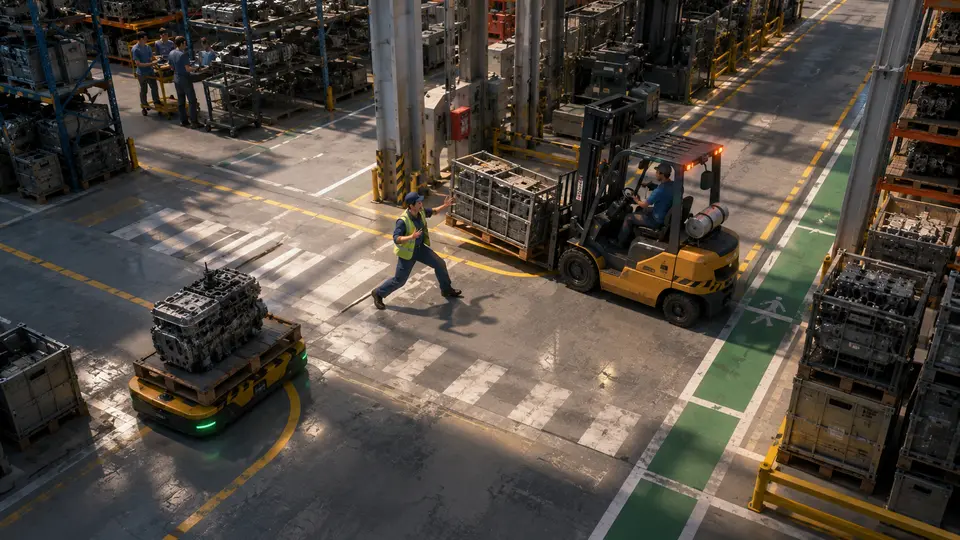
CAM-236A pedestrian jumps back at the crossing
«Tell me when a person and a vehicle meet at the crossing, and save me the video.»
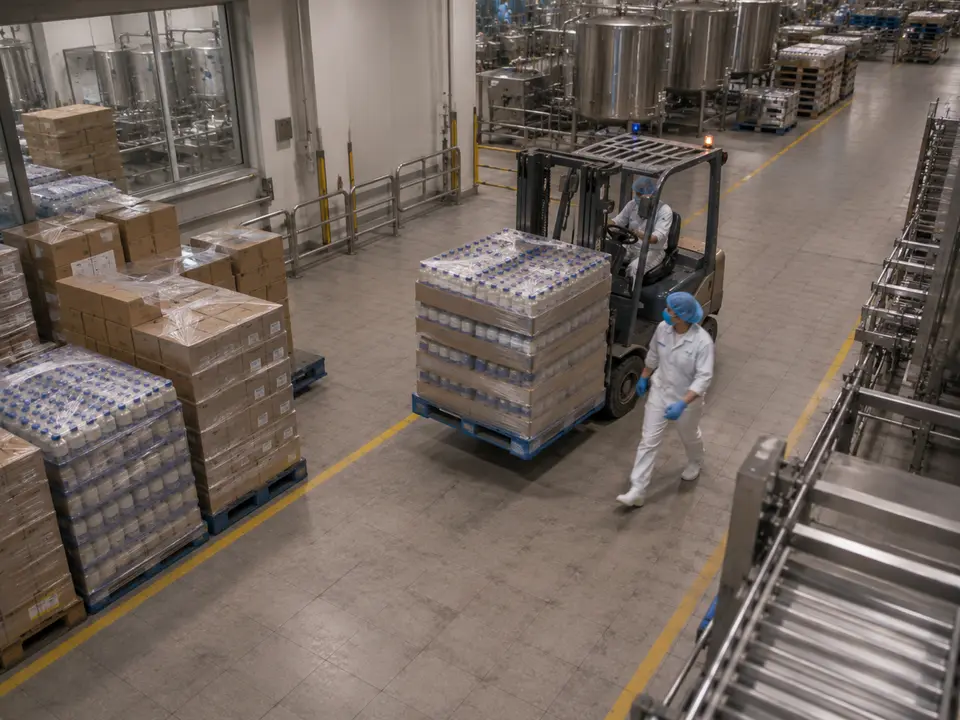
CAM-218The forklift passes right beside a person
«Tell me if a forklift and a person on foot get too close in the aisle, especially when the load blocks the driver's view.»
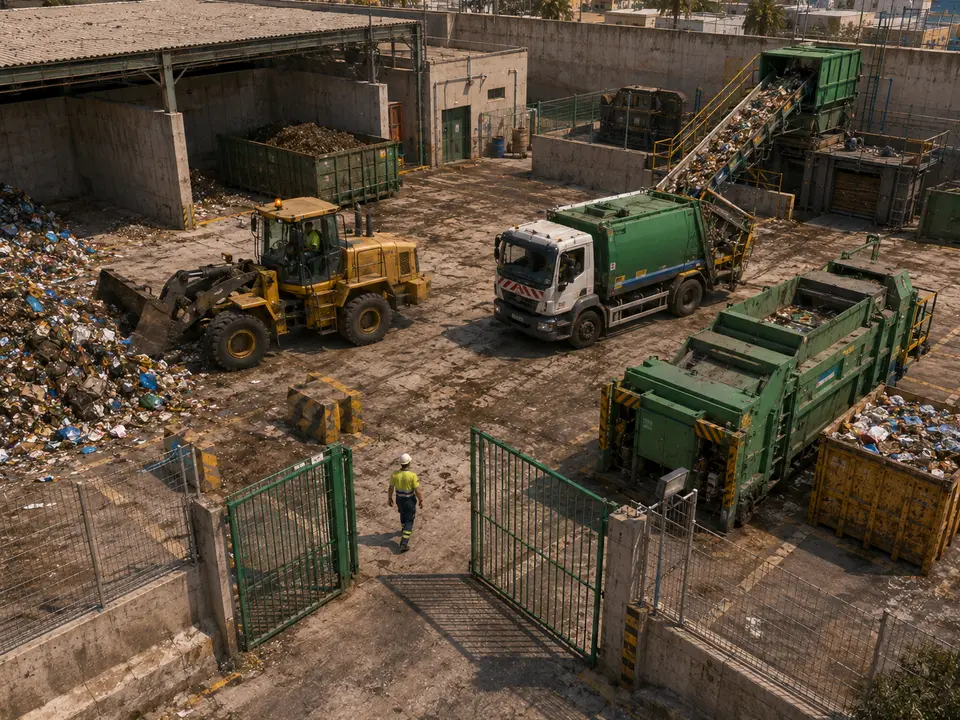
CAM-180Person on foot among machines
«Tell me if anyone walks into the yard while machines are manoeuvring.»
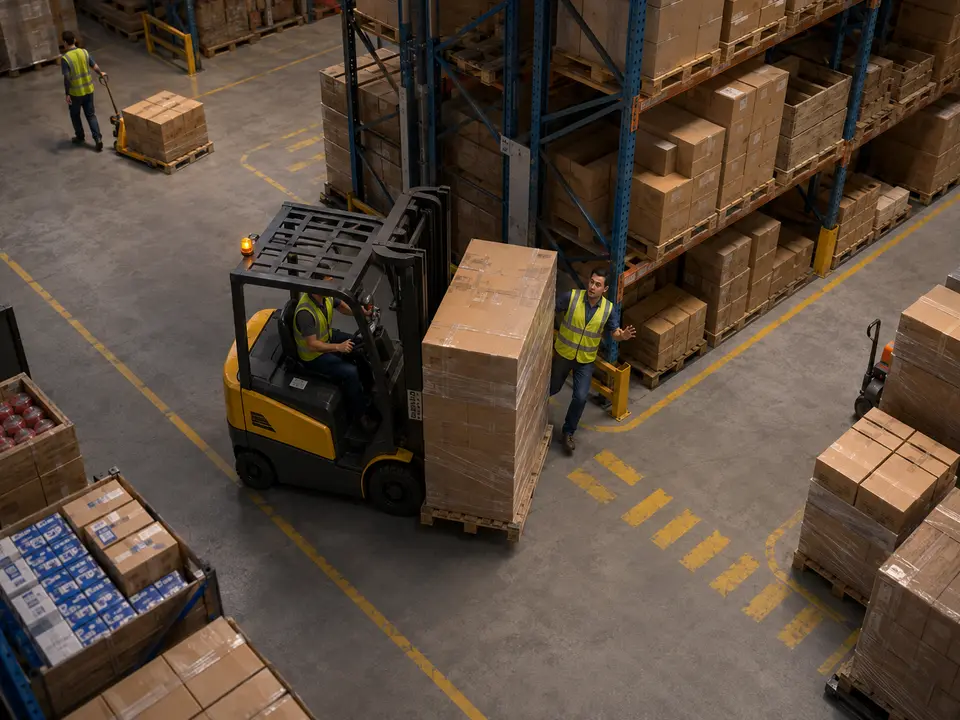
CAM-271The pedestrian jumps clear at the crossing
«Tell me when a person and a forklift are in the aisle 4 crossing at the same time, and save me the video.»
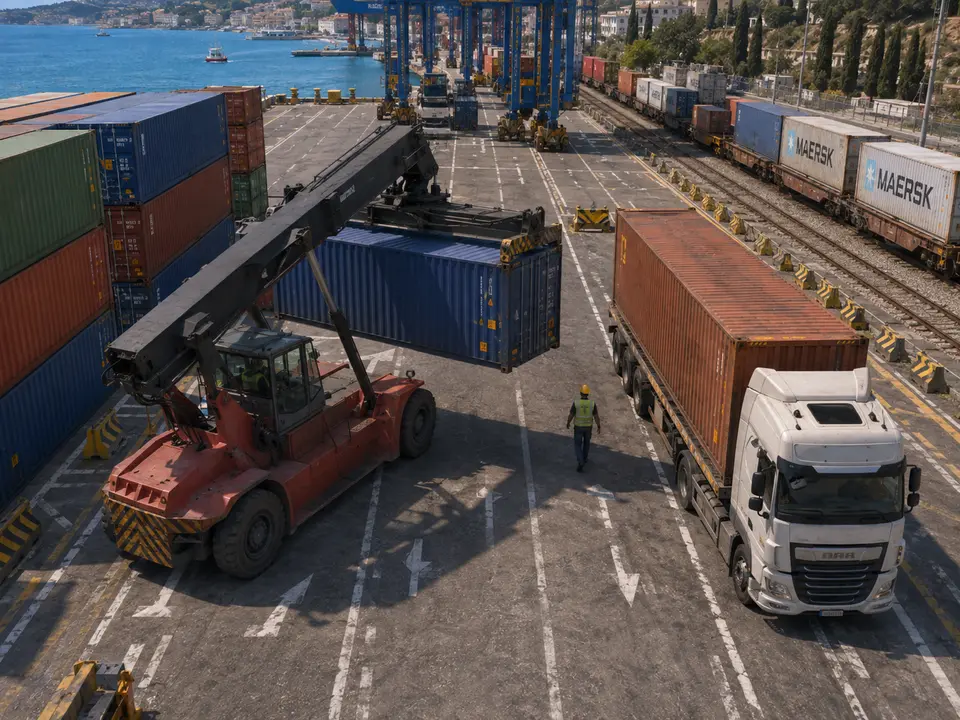
CAM-447A worker on foot between the machine and the truck
«Tell me if a person on foot enters the machine lane while a machine is working or moving.»
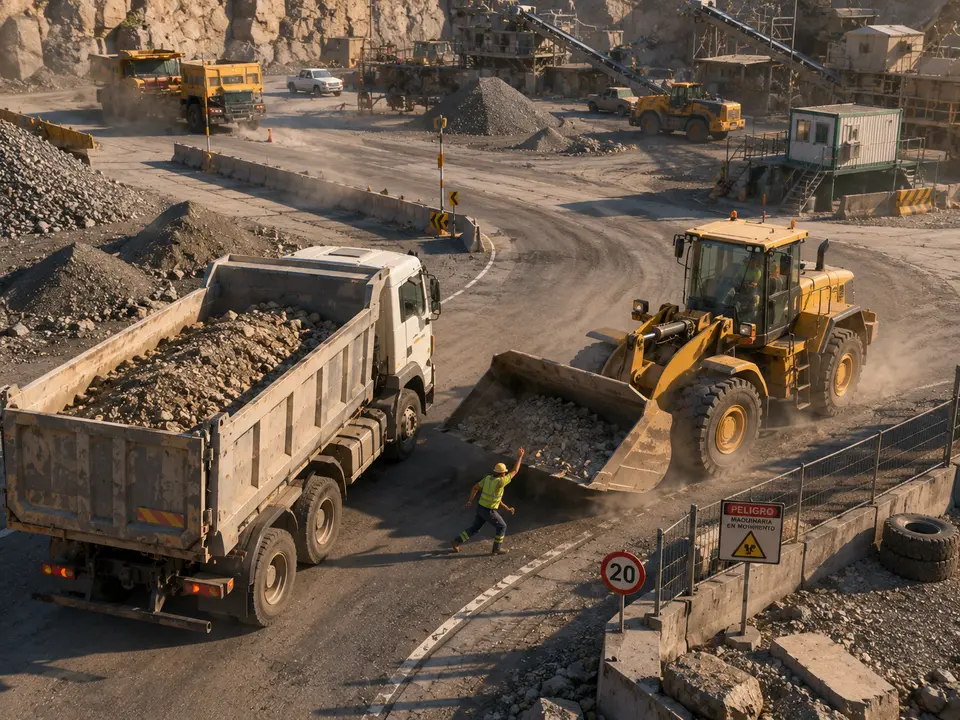
CAM-388A worker on foot between a truck and a loader
«Tell me the moment anyone is on foot in the machine area of the yard, even briefly.»
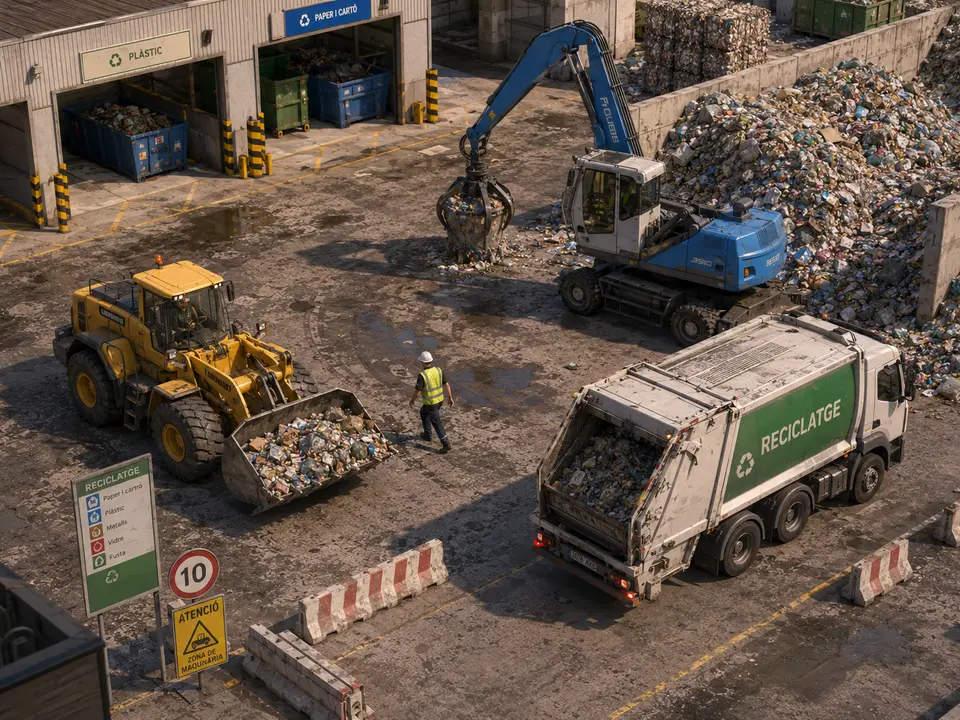
CAM-429A worker on foot between three machines that cannot see them
«Alert me if there is a person on foot on the tipping floor while the machinery is working.»
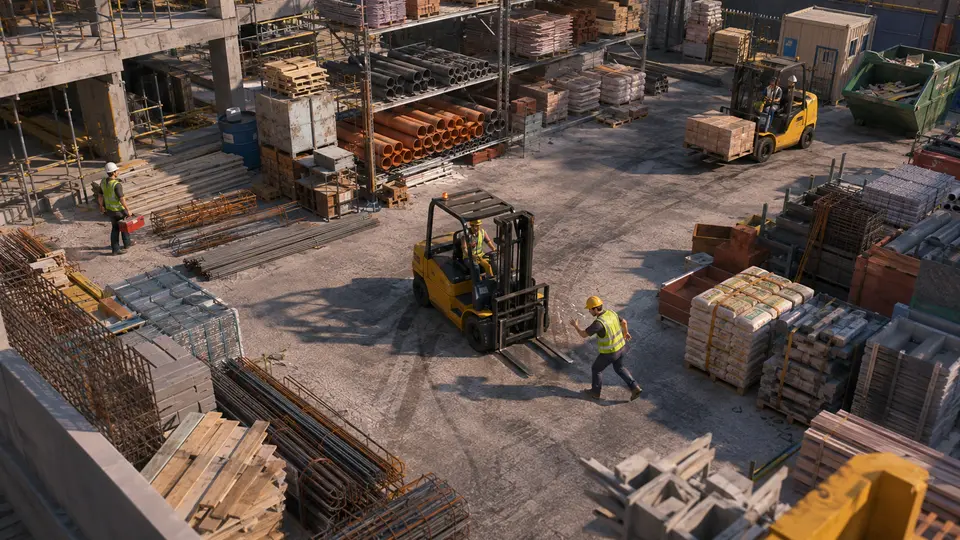
CAM-56On foot in front of the forklift
«Tell me when somebody is walking where the forklifts run, and tell me before the machine is right on top of him.»
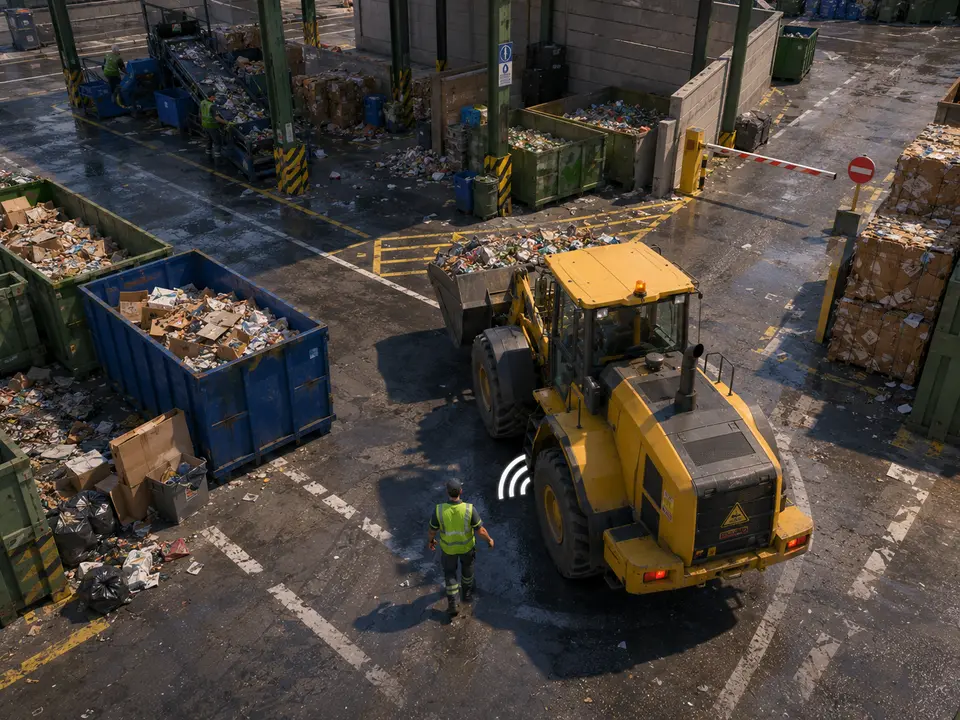
CAM-430A loader is reversing and someone is walking behind it
«Tell me when a machine reverses and there is someone on foot in the same lane.»
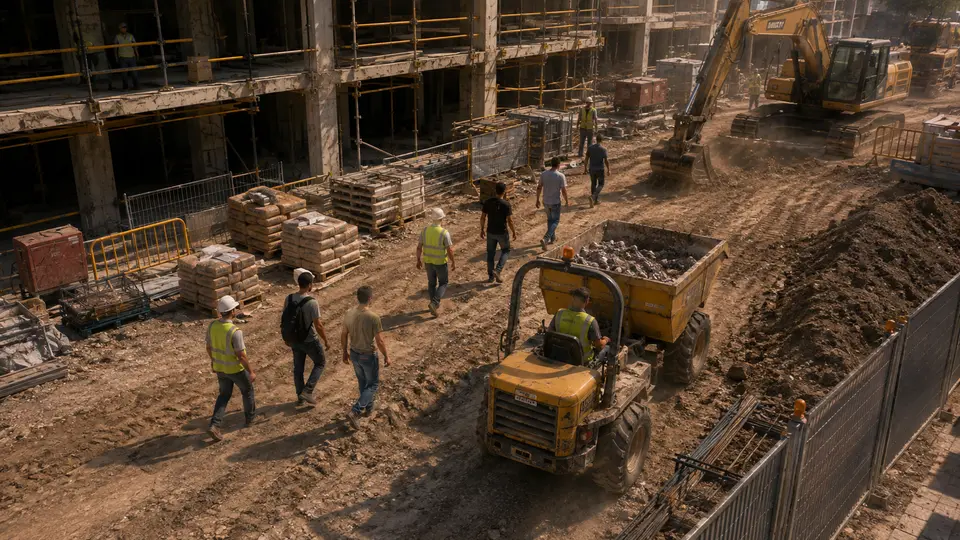
CAM-52Bare-headed among the machines
«Tell me when somebody walks across the area where the machines are working without a helmet on, and tell me while they are crossing — there is no second chance there.»


What it does not do
IRIS does not measure exact centimetres and does not know whether the driver ever saw the person. It flags that the two shared the same stretch and keeps the video for someone who knows the place to judge.
And it does not identify the driver or read the machine’s number. It talks about people and machines in a stretch of aisle, not about names.
Questions
- Does there have to be contact for it to count as a near miss?
- No. What gets counted is a person on foot and a machine being inside the same stretch of aisle or the same junction at the same time, with no contact and no emergency braking required. The value is precisely in the ones that never touched: they are the ones nobody records today and the only ones you can learn from without it costing anybody a finger. You mark the stretch yourself on the image.
- Is it useful for deciding where to put a barrier?
- Yes, and that is what it is best for. A single alert is an anecdote. The same count repeated over a month tells you which junction concentrates the close calls, at what point in the shift and with which kind of machine. With that, the railing, the mirror or the one-way change goes where it is genuinely needed. And next month you check whether the count went down, which is the only honest way to know it worked.
- Does it work outside a warehouse?
- Yes. The same scene repeats in very different places: a quarry yard with haul trucks and someone walking between them, the tipping floor of a recycling plant, the loading bay of a prison during a delivery, a construction site with machines manoeuvring. The machine changes and the ground changes, but the question is the same: is anyone walking where something that weighs twenty tonnes is moving?
- Does IRIS identify the forklift driver?
- No. IRIS does not identify people and does not read the forklift’s number: it talks about a person on foot and a machine inside a stretch of aisle. That is deliberate. A count that points at individual drivers becomes an industrial-relations problem in week two and stops being used; a count that points at junctions becomes civil works and fixes the place for everybody who walks through it.
See it for yourself
This isn’t a video. It’s a slice of the real screen.
A summary of the real interface, played hands-free. You see one case from start to finish; what you do not see are the other screens, and there are many.
- Four cameras at once
- Each understands its own view
- The numbers climb by themselves
Not seeing yours here?
These words are the ones we have built, not the ones IRIS understands. The list falls short on purpose: you ask for it in a sentence, and sentences do not run out. Tell us what is in front of your cameras and we will tell you whether it understands it, or not yet.
And the best part
Video is late by definition:you watch it once the thing has already happened.
IRIS tells you while it is happening, with the camera, the time and what it saw. Arriving in time changes the end of almost any story, and no new cameras are needed for that.
Tell us your problem and we will say whether IRIS understands it, or not yet.
We reply the same working day.