Solutions by typeLogistics efficiency
How many minutes a day does a dock stand idle?
No alarm here, just a number
It is 09:00 in the yard. Seven trucks are lined up nose to tail on the access road, from the blue tractor at the front to the two by the trees at the back. Facing them, the dock apron: nine doors, and at none of them a forklift, a pallet or any movement. Nobody has done anything wrong. There are simply seven trucks waiting and nine docks standing idle at the same time, and there is nowhere that this is being written down.
4 cameras across 2 sectors
What IRIS is
IRIS watches the cameras for you.
IRIS Neural is an artificial intelligence that watches the cameras you already have and understands what happens in front of them. When something important happens —or something you told it you need to keep an eye on—, it alerts you; and whatever can be counted, it counts in numbers. All day long, without anyone having to watch a screen.
You tell it what you need to watch, and IRIS does it.
Works with the cameras you already have. Nothing to replace.
A person replies, not a form.
- Your footage never leaves your premises.
- It doesn't identify people.
- Certifications →
This is how you ask for it
«Show me the minutes the berth spends with no crane cycle, by hour and by shift, and tell me if it goes past twenty in a row.»
An idle dock never lights up a screen. At the end of the day somebody says it went badly and cannot say why, or for how many minutes, or at which doors. The hauliers charge for the wait, the next day’s bookings pile up, and the argument about whether you are short of docks or short of forklifts is settled on gut feeling. It is the most expensive conversation in the warehouse and it is held without a single figure.
You decide once
You decide this once. You say what counts as activity at each dock — a forklift going in, a pallet crossing the door, a crane cycle — how many minutes of stillness are allowed and who gets the alert: if a dock goes twenty minutes without a single movement during an open operation, tell operations. And what never reaches an alert is still recorded: at the end of the shift you have the number.
This word is not about alarms. It is about a number. An idle dock breaks nothing, hurts nobody and shows up in no report. It just sits there, door open and nothing inside, while seven trucks wait outside. And because it makes no noise it does not get measured; and because it does not get measured, the end-of-month argument — short of docks, short of forklifts or short of order — is settled by whoever spoke loudest.
Measuring this is not done by talking. Asking is for finding; counting is for measuring, and the two are not done the same way. You cannot describe a line with a sentence: you have to draw it. That is why counting is set up by drawing on the image — this is the door, this is the line, this is the berth — and that is why the number it produces is repeatable, checkable and defensible in front of a haulier or a director. And that difference shows exactly when it is needed. An estimate gets argued about; a measured number gets checked. If somebody doubts that dock 7 stood idle for forty minutes on Tuesday, you do not have to convince them: you open that hour and look. Anyone who has spent years negotiating waiting time with hauliers knows exactly what that is worth, because until now the argument always ended in one person’s word against another’s.
IRIS watches the dock and counts what happens and what does not: minutes with activity, minutes without, how many trucks are waiting on the access road and how long each one has been there, how many doors are free at the same time. The next day that is not an impression: it is a table by hour and by shift. And when the standstill runs longer than you decided, it also alerts, because twenty minutes of a still dock with a queue outside is a decision somebody has to make now, not tomorrow.
What changes
Before, dock occupancy was estimated by eye and argued about at month end. Now whoever plans opens yesterday’s table and sees at which hours the waits pile up and which doors sit still while there is a queue. With that you move a booking, change a forklift shift or open one more door. Nobody has to be convinced: the number is there and it can be checked against the video.
Where we have seen it
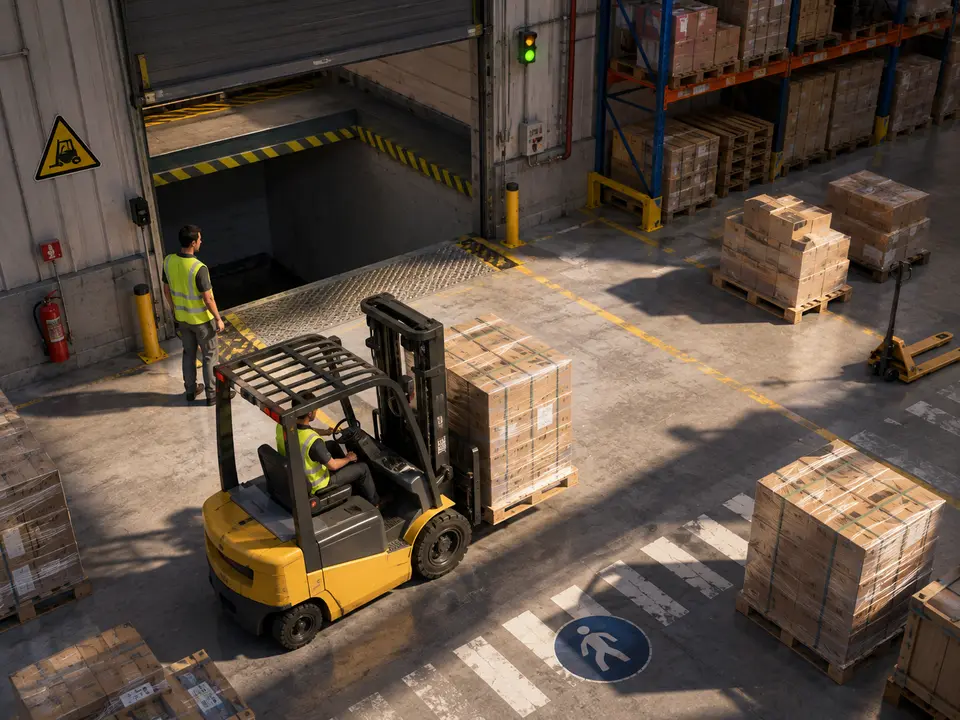
CAM-273Dock door open, and there is no truck behind it
«Tell me when a dock door is open with no truck behind it and a forklift or a person comes near.»
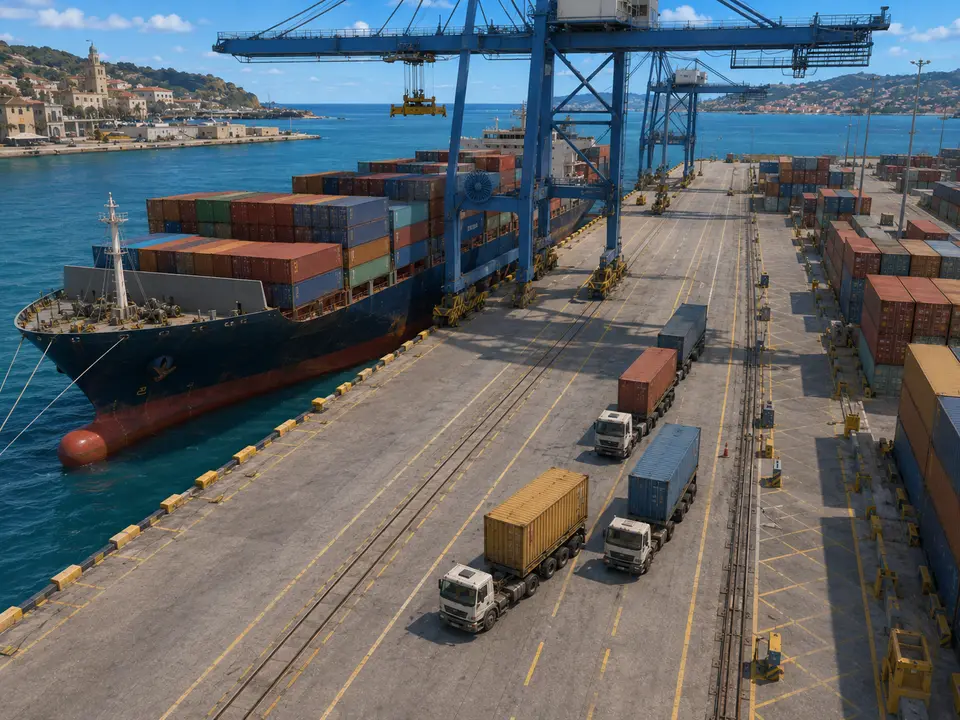
CAM-449Half an hour of quay with not one crane move
«Show me the minutes the quay spends with no crane move, by hour and by shift, and tell me if they go past twenty in a row.»
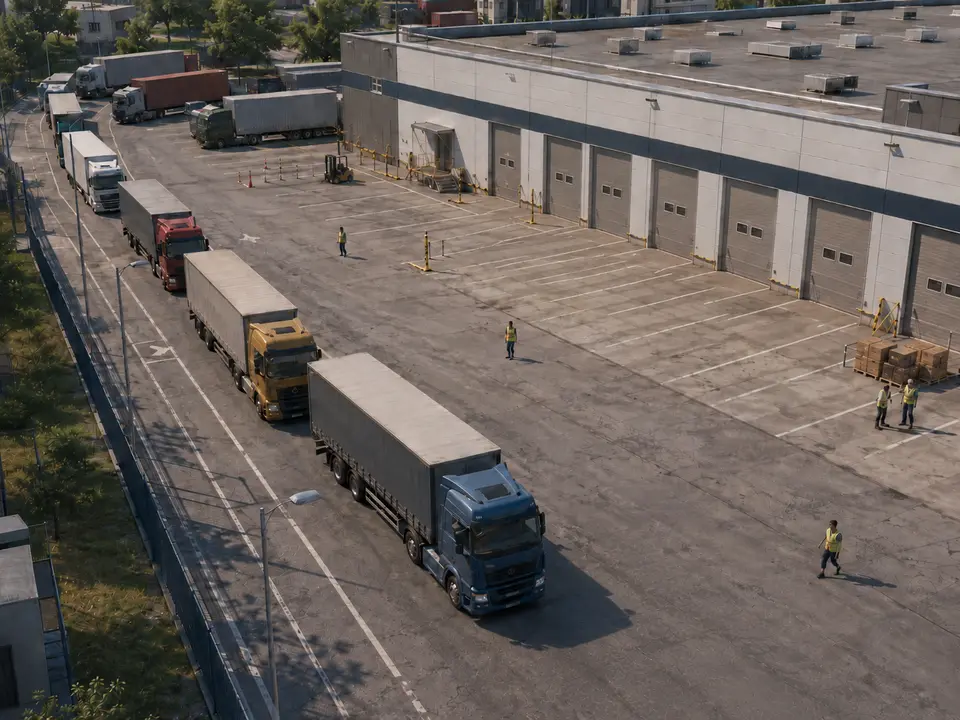
CAM-278Seven trucks waiting on the lane, nine docks standing idle
«Count how many trucks are waiting on the lane, how long each one waits and how many docks are free at the same time.»

CAM-260A cage goes out through the wrong door
«Tell me when a cage or a pallet goes out through a door that is not the one for its route and there is no outbound order open for those goods.»


What it does not do
IRIS does not know why the dock is idle. A forklift may be missing, a delivery note may be missing, the driver may be on his break or the load may not have arrived. IRIS measures the time and shows the image; the reason is supplied by whoever knows the operation.
And the number is only as good as the framing. If the camera does not see the whole door, it does not count what happens outside it. That is why counting lines are drawn once, with somebody who knows the dock, and then left alone: a number whose criteria change halfway through the month is worth nothing.
Questions
- Is this an alert or a number?
- Both, and they are not set up the same way. Here the number is what matters: minutes of idle dock by hour and by shift, trucks waiting, doors free at the same time. That is measured by drawing a line or a zone on the image, and the figure comes out repeatable. The alert is an addition: if the standstill passes the limit you set, somebody hears about it at once. But the value of an idle dock is in the table, not in the alert.
- Who decides what counts as activity?
- You decide it, by drawing it. At a warehouse dock it is usually a pallet or a forklift crossing the door; at a berth, a complete crane cycle. You mark on the image where that line runs and what counts as a cycle, and from then on the criterion does not drift. It is exactly the opposite of a sentence: you cannot describe a line by talking, you have to draw it, and that is why the number can be audited.
- Can the number be used in a claim against a haulier?
- Yes, on one condition: that the criterion is clear from the start and is left alone. If the counting line was drawn once, if everyone knows what counts as activity, and if every counted minute has its video behind it, the number holds up in front of anybody. That is what separates a measured figure from an estimate: not that it looks good, but that it can be checked twice and comes out the same.
- What if the dock is idle simply because there is no work?
- Then the number says so and nothing happens. An empty dock at three in the afternoon on a slow Tuesday is not a problem; a still dock with seven trucks waiting outside is. That is why IRIS counts both at once: dock standstill and queue on the access road. It is the two numbers together that matter, because they are what tells you whether you are short of capacity or short of organisation.
Demo · IRIS at work
We won't just tell you. We'll show you.
It is a summary of the real screen: it plays by itself, step by step, and shows only the path of one case. The actual tool has far more than fits in here.
- The alert fires
- It lands in the tray
- You open it
- You confirm or dismiss
Not seeing yours here?
These words are the ones we have built, not the ones IRIS understands. The list falls short on purpose: you ask for it in a sentence, and sentences do not run out. Tell us what is in front of your cameras and we will tell you whether it understands it, or not yet.
And the best part
Adding a camera costs what it costs;adding someone to watch it costs every single month.
Past a certain number, almost nobody is watching anything. IRIS watches them all at once and only calls you when something you said mattered happens in one of them.
Tell us your problem and we will say whether IRIS understands it, or not yet.
We reply the same working day.