Solutions by typeInfrastructure integrity
Who sees the water at four in the morning?
By the time anyone sees it, it has been in for hours
Four in the morning in a plant room. A thin jet drips from a downpipe running against the column, and a sheet of water is already spreading across the tiles towards the raised-floor grilles. On one side of the aisle sit the cooling units; on the other, the cabinets. Nobody sets foot on the floor until seven. The aisle camera has been recording that puddle since it was the size of a sheet of paper.
11 cameras across 4 sectors
What IRIS is
IRIS watches the cameras for you.
IRIS Neural is an artificial intelligence that watches the cameras you already have and understands what happens in front of them. When something important happens —or something you told it you need to keep an eye on—, it alerts you; and whatever can be counted, it counts in numbers. All day long, without anyone having to watch a screen.
You tell it what you need to watch, and IRIS does it.
Works with the cameras you already have. Nothing to replace.
A person replies, not a form.
- Your footage never leaves your premises.
- It doesn't identify people.
- Certifications →
This is how you ask for it
«Tell me if water shows up on the floor of any plant room, however little, and say which aisle.»
Water makes no noise and trips nothing until it touches something. By the time someone walks in at seven it has been running for three hours and has already reached under the raised floor, which is exactly where everything that must not get wet is routed. From then on you are not paying for the leak: you are paying for the pump-out, the shutdown, the equipment that has to be replaced and a whole day spent explaining it. And the video shows the first trickle at seven minutes past four.
You decide once
You decide this once. You say in which rooms the floor must always be dry, how large a sheet of water has to be to count, what hours it applies and who gets told: if water shows up on the floor of a plant room, alert maintenance with the camera, the aisle and the time, whatever the hour. IRIS checks that around the clock on every camera in those rooms. Nobody has to remember to go down and look before going home.
Water always comes in where nobody is looking. A joint that gives, a downpipe that blocks, a manhole cover lifted by the storm, a gate left open on a bad night. And it does something fire never does: it advances slowly and in silence. A fire announces itself; a leak has to be discovered. That is why almost every flood that wrecks a facility began as a trickle that sat for hours in front of a camera.
The places change and the pattern does not. The pump room of a water plant at five in the morning, water covering the whole floor with the motor plinths as the last dry step. An underground chamber with two crews inside and water pouring in through the opening in the far wall. All of them have cameras. In almost all of them, the warning arrived by phone.
What IRIS does is watch the floor. It checks whether there is a sheet of water where the floor must be dry, says which aisle and since what time, and speaks up again if the water reaches a height you marked beforehand on the image itself: the plinths, the kerb wall, the gauge. It also says how many people are inside at that moment, which in an underground chamber is the first question anyone asks. Then a person decides, because a person is the one who can stop a pump or order someone out.
What changes
Before, you found out in one of two ways: someone went down and saw it, or something tripped that was already wet. Between those two lay hours. Now, while the puddle still fits on a single tile, someone gets the camera open with the aisle and the time, decides whether to go down, and often goes down with a spanner instead of a pump. The difference between those two tools is three hours of water.
Where we have seen it

CAM-557Water falling in the aisle and creeping towards the floor grilles
«Tell me if water shows up on the floor of any plant room, even a little, and tell me which aisle.»
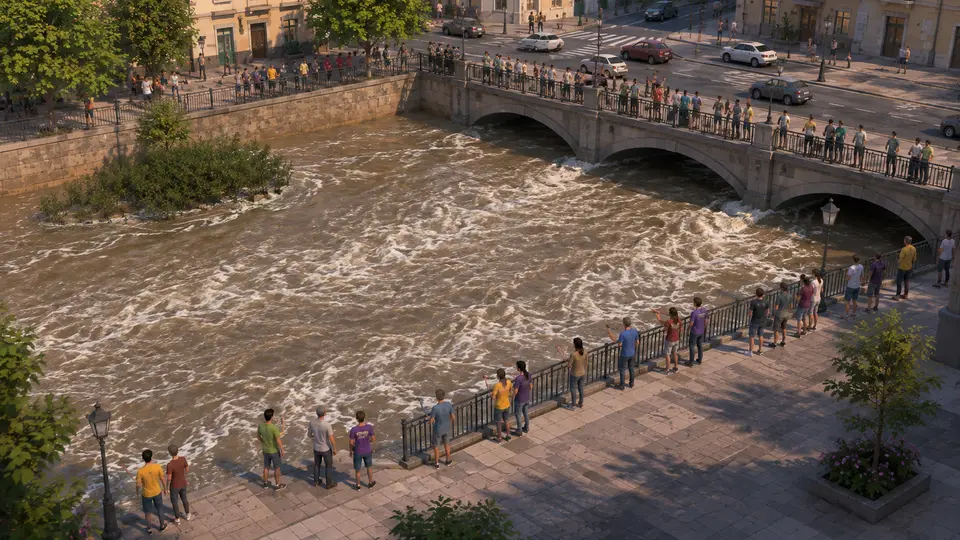
CAM-177A crowd out to watch the flood
«Tell me when too many people gather against the walkway railing with the river up, and tell me while they are still gathering.»
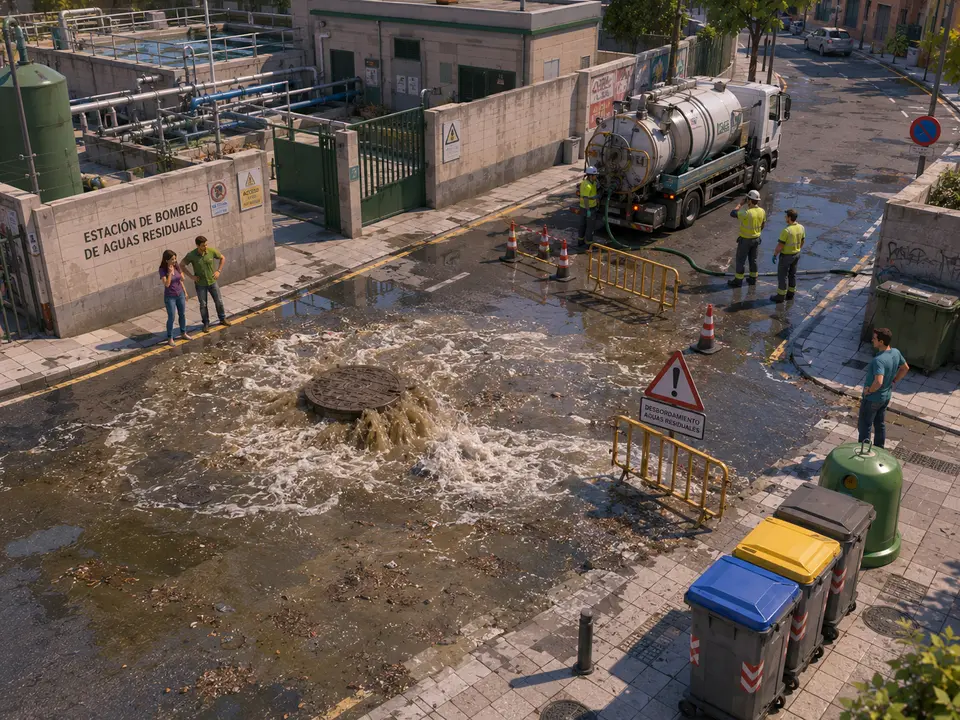
CAM-400Water is coming up through the cover and the street is a river
«Tell me if water comes up through a manhole or a cover and spreads across the street.»
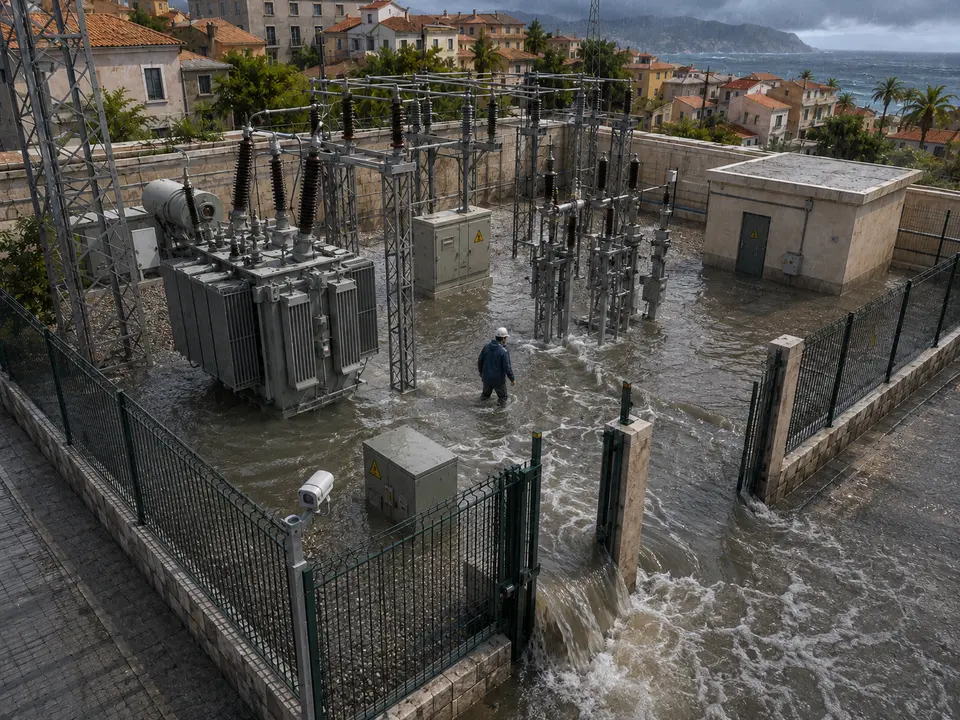
CAM-349Water is coming in through the gate and still rising
«Tell me the moment water gets inside the compound, and keep telling me how many courses of the low wall it has covered.»
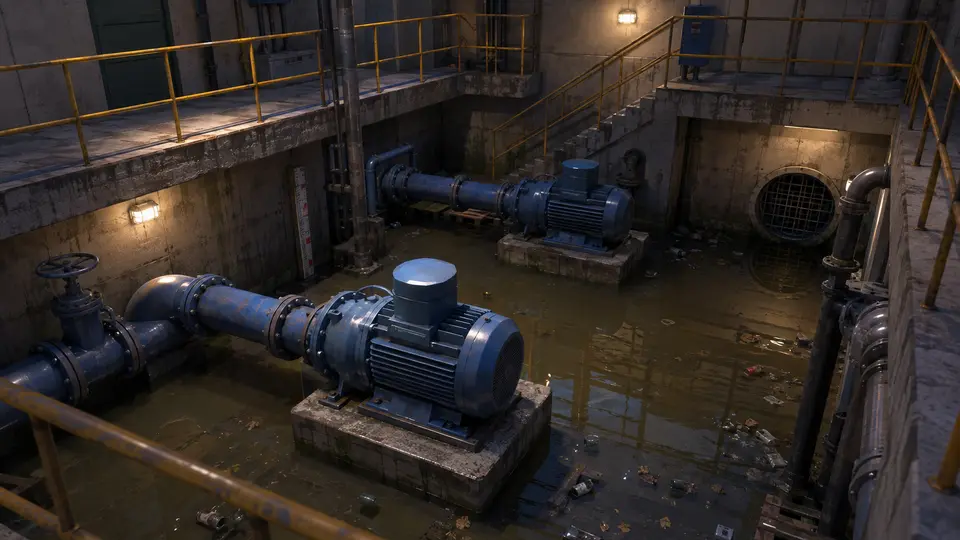
CAM-168Water above the pumps
«Tell me if the water in the pumping station goes above the plinths and just stays there without dropping.»
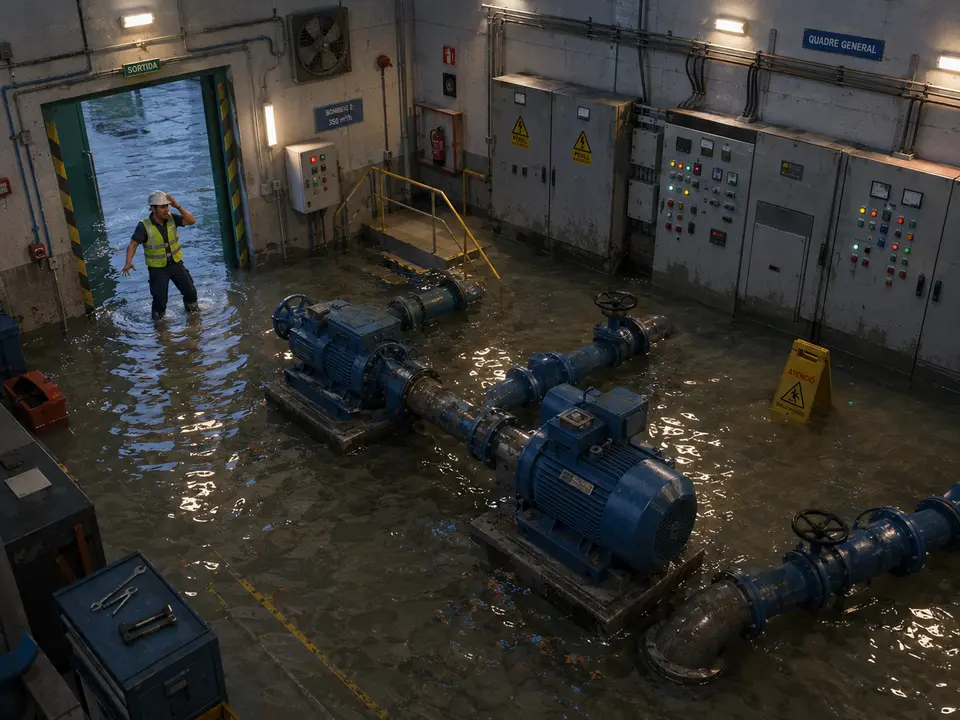
CAM-415The water covers the whole floor and is climbing towards the switchboard
«Tell me as soon as there is water on the floor of the pump room, and again if it reaches the height of the motor plinths.»
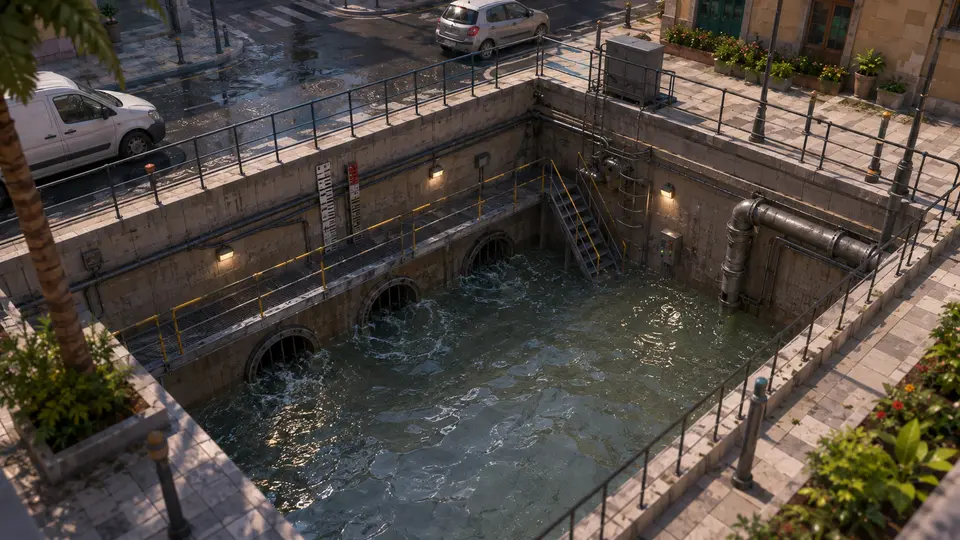
CAM-165The storm tank close to the brim
«Tell me when the water in the tank goes over the alert mark on the gauge and keeps rising, even at four in the morning with nobody in the office.»
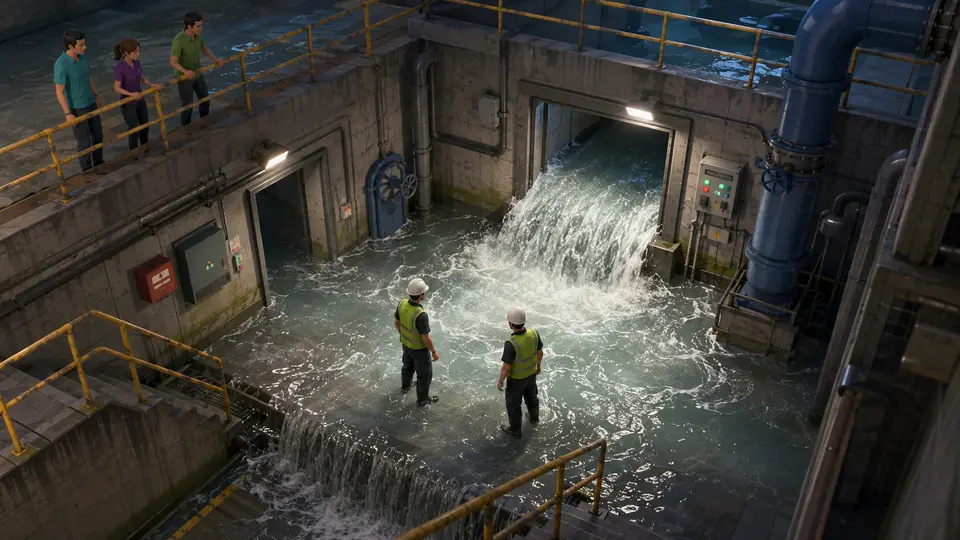
CAM-166Water pouring into the underground chamber
«Alert me the moment water comes in through the chamber opening, and tell me how many people are inside right then.»
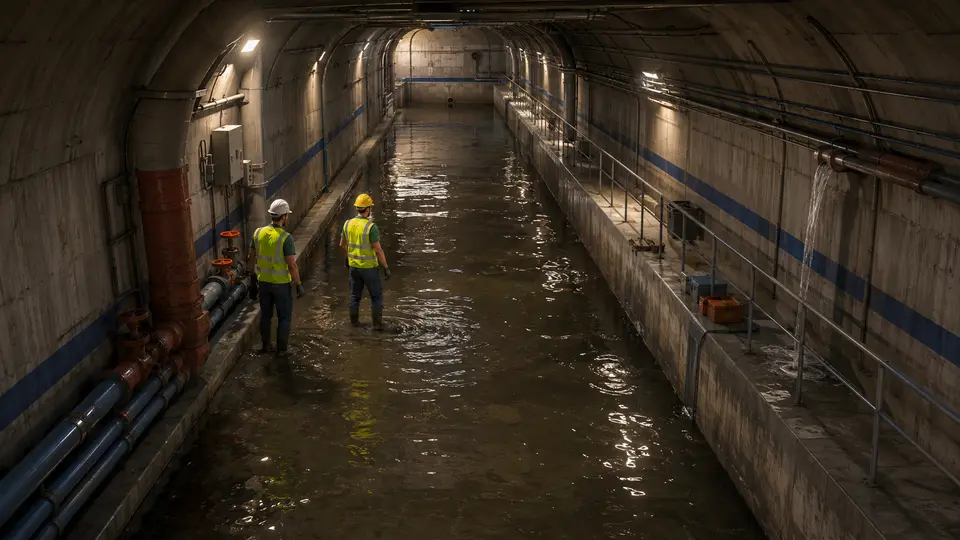
CAM-172Water building up in the tunnel
«Tell me if water builds up on the tunnel invert while there are people inside, and tell me how far it still is from the painted band.»
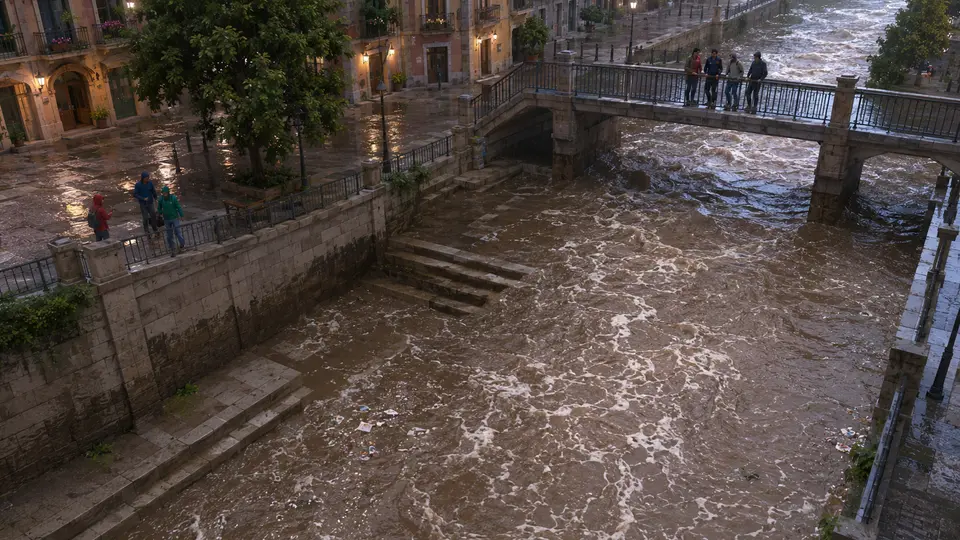
CAM-175The water climbing the steps
«Tell me which tread of the steps the water has reached, and alert me when it passes the one we have marked.»


What it does not do
IRIS does not close a valve, does not start a pump and does not cut the power to a room. It sees water where there should be none and says so; a person carries out the manoeuvre.
And it does not measure litres or flow: it is not a level sensor. It says there is a sheet of water, where it is heading and whether it has passed the height you marked on the image. To know exactly how much water there is, you still need the usual instrument.
Questions
- Isn’t it cheaper to put water sensors on the floor?
- Water sensors are good and cheap, and you should install them. But they only know what happens where they sit: if the water comes in two metres away and runs the other way, the sensor never learns of it. The camera watches the whole aisle, and it shows you the picture too: where it is coming in, where it is heading, whether anyone is inside. The sensible setup has both. By the time the sensor trips, the camera has already said where the water is coming from.
- Does it work at night, with the lights off?
- It depends on the camera, and you check it site by site. With emergency lighting or infrared, a sheet of water shows up very clearly because it reflects. In total darkness nobody sees anything, neither IRIS nor a person. So before signing off a rule, you open that camera at four in the morning and look at what is actually visible. If it is not visible, you change the lighting or you change the camera. What you do not do is assume.
- Can it tell a puddle from a stain on the floor?
- Yes, because what it looks at is the change. An oil stain has been there for months and is part of the floor; a sheet of water appears, grows and moves. IRIS compares what it sees with how that floor always looks, and speaks up when something new spreads. Even so, some alerts will turn out to be a bucket knocked over by the cleaners. Ten seconds of video to rule it out is a very low price for finding out at four instead of seven.
- Can it say how many people are inside when the water comes in?
- Yes, and it is the part that gets used most. It counts how many people are inside the area at that moment and puts it in the same alert, without knowing who they are: it does not recognise faces and it identifies nobody. In an underground chamber or a pump room that changes the whole phone call, because sending a crew to pump out is not the same as sending them to get two people out with water up to their knees.
The real interface, step by step
You set the rule once. IRIS applies it every time.
You will see a summary of the interface, played step by step and hands-free. Each round starts with another case. The complete tool does not fit in a demo.
- The rule gets built
- It goes to every camera
- Published, it watches alone
- And then it fires
Not seeing yours here?
These words are the ones we have built, not the ones IRIS understands. The list falls short on purpose: you ask for it in a sentence, and sentences do not run out. Tell us what is in front of your cameras and we will tell you whether it understands it, or not yet.
And the best part
A recollection cannot be checked.A number can, and it comes out the same every day.
The number does not depend on who was on shift or how they remember it. It is measured the same way every day, and that is why people counting is certified by the Centro Español de Metrología.
Tell us your problem and we will say whether IRIS understands it, or not yet.
We reply the same working day.