Critical infrastructureInfrastructure integrity
CAM-165
The storm tank close to the brim
An urban storm tank, sunk below the square and open at the top, seen from the edge. Water is still coming in through the three pipes in the left-hand wall and the basin is nearly full: the red and white gauge bolted to the far wall already has its lower marks under water. Up above, the street carries on with its cars and its flower pots. IRIS reads how high the water reaches on that gauge; it does not know who walks past up there and it is not looking.

Turn on IRIS Vision
AI-generated image
What IRIS is
IRIS watches over critical infrastructure.
IRIS looks at the cameras you already have at the dam, the water plant or the power plant, and understands what it sees: someone entering where they shouldn't, a strange vehicle, an overflow, the perimeter. When something like that happens, it alerts right away; and whatever can be counted, it counts in numbers. All day long, with no one needing to watch the screen.
You tell it what you need to watch, and IRIS does it.
Here, for example, IRIS reads the gauge painted on the tank wall and tells how high the water has reached, without anyone climbing down while it's raining. That way you know at every moment whether the level is rising fast or slow, not just how much water is there. With that, you decide whether to call someone before it fills up completely.
Works with the cameras you already have. Nothing to replace.
A person replies, not a form.
- Your footage never leaves your premises.
- It doesn't identify people.
- Certifications →
What IRIS understands
What it recognises in this scene
- water level
- gauge on the wall
- inlet pipes
- margin to the top
- access stairs
What this camera measures
An alert says something is happening. The reading says how much.
- 88 %+6 ptTank level
- 8 / 10Marks under water
- 80 %Alert mark
- +6 pt / 30 minHow fast it rises
- 4 hRising for
- 20:35Time of the reading
The figures on this screen are an example from the illustration, not any client's measurement.
The series, not one figure
One number says nothing. A curve does.
The afternoon's rise and the alert mark
- Tank level
- Alert mark
| Slot | Tank level |
|---|---|
| 16:30 | 10% |
| 17:00 | 14% |
| 17:30 | 21% |
| 18:00 | 33% |
| 18:30 | 46% |
| 19:00 | 58% |
| 19:30 | 70% |
| 20:00 | 82% |
| 20:30 | 88% |
| Alert mark | 80% |
The figures on this screen are an example from the illustration, not any client's measurement.
The rule
You decide once. IRIS applies it always.
If
the water in the tank rises above the alert mark on the gauge and stays there
Then
- alert the standby crew, with the camera, the time and the height on the gauge
- keep the video of the last stretch, so you can see how fast it rose
- repeat the alert for as long as it keeps rising instead of dropping
The instruction that set it up«Tell me when the water in the tank goes over the alert mark on the gauge and keeps rising, even at four in the morning with nobody in the office.»
What changes
What changes for whoever answers for the site
A storm tank sits empty and dark almost all year, and on the day that really counts it is raining and nobody can go down and look. Today the level is checked by walking there, and whoever walks there sees a level, not a slope: they come back knowing how much there is, not how fast it is rising, which is the only thing that decides whether to call someone. The camera has been there since the tank was built. What is missing is not another camera: it is somebody watching it during the one stretch when there is something to see.
What people usually ask
Does this replace a level sensor?
No. This is a reading taken off a gauge that is already on the wall: the camera looks at where the water reaches against marks somebody set once on the image. It is good for warning you with time to spare and for showing the slope, not for certifying a volume. A submerged sensor measures better, and where there is a sensor the camera does not replace it: it shows the scene the number cannot show, and it keeps warning when the sensor is out for maintenance or the reading does not arrive. Claiming anything else would be selling what we do not do.
What about at night, in the rain, with the water moving?
Night, rain and a moving surface are exactly when this camera has to work, so the rule does not fire on the first wave. What counts is the height held for a while, not the instant, and the gauge on the wall is the same reference with or without daylight. If the picture gets so bad that the gauge cannot be read, the honest thing is to say so: it reports that it has lost the reading rather than inventing a number.
Does the camera identify the people walking past up above?
No. This camera does not identify anyone: it does not recognise faces, it does not read number plates, it does not compare against any database and it does not store who anybody is. It watches a water height against a gauge. The street and the cars up above are background, not what is being measured, and no data comes out of them.
Simulation · how IRIS works
Watch what happens. Then watch what IRIS does with it.
Not a recorded video and not a drawing: it is a summary of the real tool, with a different case each time round. The whole tool does not fit in a box.
- Four cameras at once
- Each understands its own view
- The numbers climb by themselves
See it somewhere else

When does a bad review get decided?
15 cases: 11 raise an alert when something happens and 4 only measure. You see each image as it is, and then with what IRIS understands on top.
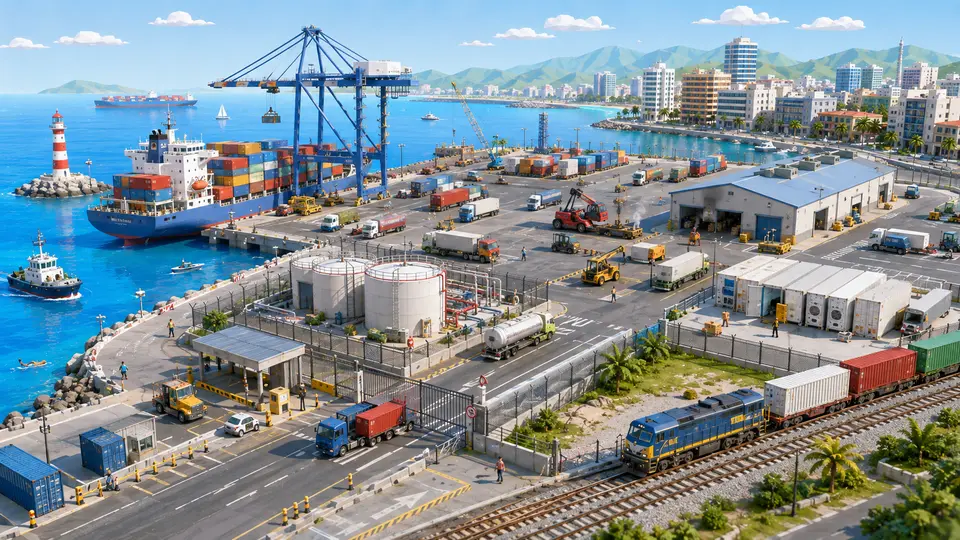
Who is watching a whole quay at three in the morning?
14 cases: 13 raise an alert when something happens and one only measures. You see each image as it is, and then with what IRIS understands on top.


And the best part
Nothing changes on the wall.On the screen, everything changes.
Same brackets, same cabling, same cameras. The only difference is that those images are now understood as they come in, instead of waiting for someone to open them.
Tell us your problem and we will say whether IRIS understands it, or not yet.
We reply the same working day.