Solutions by typeIntrusion detection
Do I hear about it while they are on top, or once they are in?
Somebody is on top of the fence right now
21:40 on a Friday in June, still light. A hoarded building site in the middle of town. At the corner of the wooden hoarding somebody is halfway up: one foot on the boarding, both hands on the top edge. There is nobody inside; the crane is parked, the materials stacked, the machines locked. It took eleven seconds to reach the top, and people are walking along that pavement without noticing.
12 cameras across 8 sectors
What IRIS is
IRIS watches the cameras for you.
IRIS Neural is an artificial intelligence that watches the cameras you already have and understands what happens in front of them. When something important happens —or something you told it you need to keep an eye on—, it alerts you; and whatever can be counted, it counts in numbers. All day long, without anyone having to watch a screen.
You tell it what you need to watch, and IRIS does it.
Works with the cameras you already have. Nothing to replace.
A person replies, not a form.
- Your footage never leaves your premises.
- It doesn't identify people.
- Certifications →
This is how you ask for it
«Tell me if someone climbs the fence or gets in where nobody gets in, at any hour, and show me the camera so I know where they came through.»
What they take is almost never the expensive part: copper, an angle grinder, the diesel out of the machine tank. The expensive part comes after. Monday starts with an incident report, a machine that will not start and a lost day on site that nobody gets back. And there is a consequence nobody talks about: if the person who climbed over is a teenager, inside there is a lift shaft, an open trench and a site distribution board, and then the problem stops being theft.
You decide once
You decide this once, and there is barely any nuance, because on a fence no timetable applies: nobody comes in here, ever. You say which stretches are perimeter, who gets told by day and who by night, and what you want kept: video from ten seconds before, the camera and the exact point. IRIS applies it to all twelve stretches alike, at nine on a Friday evening and at four on a Tuesday morning, and it never tires of watching a fence where nothing happens for months.
Of everything a camera can see, this is the one with the least room for debate. Nobody climbs a fence by mistake. The fence is already a decision, made and written on the ground: you do not come through here. So there is nothing to interpret and nobody’s intentions to wonder about; all that is needed is for somebody to find out, and to find out soon.
And «soon» is the whole story. Finding out once they are inside is good for writing a report. Finding out while they are on top of the fence, both hands on the top rail and one leg over, is good for somebody to make a call, switch on a light, speak over the PA or send a guard who is four minutes away. Same camera, same video, same fact: the only thing that changes is how many seconds it takes to reach a human being.
IRIS watches the fence line and alerts at the moment of contact, not once the person is already walking about inside. The alert carries the camera, the point and video from a few seconds before, which is the part you need afterwards: how they got there, through where, and whether they came alone. And all of it accumulates. After a few months, the list of climbs does not tell you who comes in: it tells you where, and it is almost always two of the twelve stretches. With that you fix a fence, which is still the only thing that actually stops anyone.
What changes
Before, the perimeter alarm went off at three in the morning with no image behind it. Somebody had to decide, half asleep, whether to send a car on a forty-minute drive to find a plastic bag caught in the mesh. Now the alert arrives with the image of the moment, and in twenty seconds you can see whether there is a person on the fence or the wind has moved a tarpaulin.
Where we have seen it
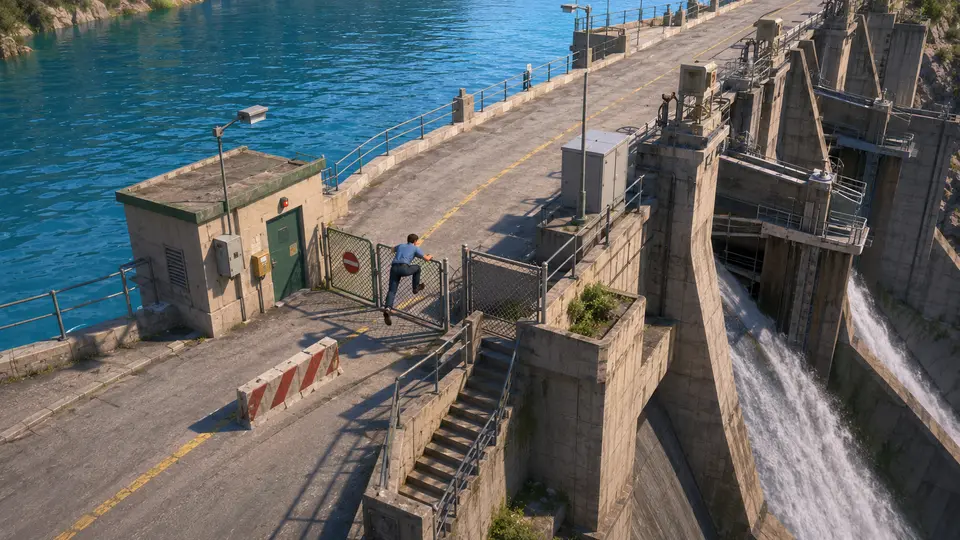
CAM-144Someone climbs the gate onto the dam crest
«Tell me the moment anyone climbs over the fence onto the crest, at any hour, and tell me which camera and where they got in.»
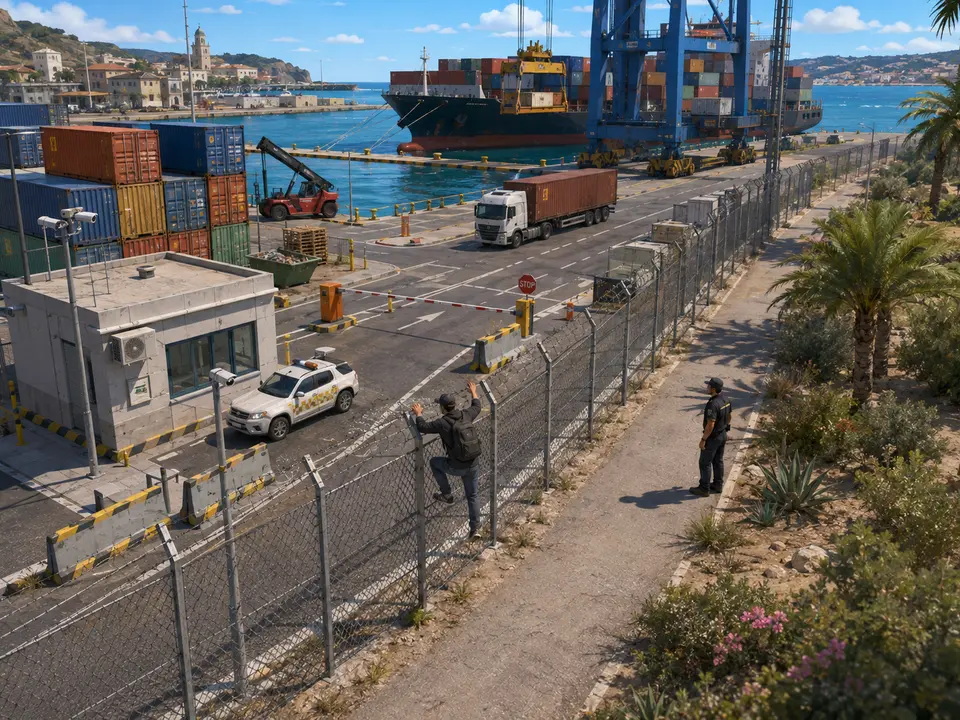
CAM-440Somebody has come over the perimeter fence
«Tell me if somebody climbs or crosses the fence, and show me where and at what time.»
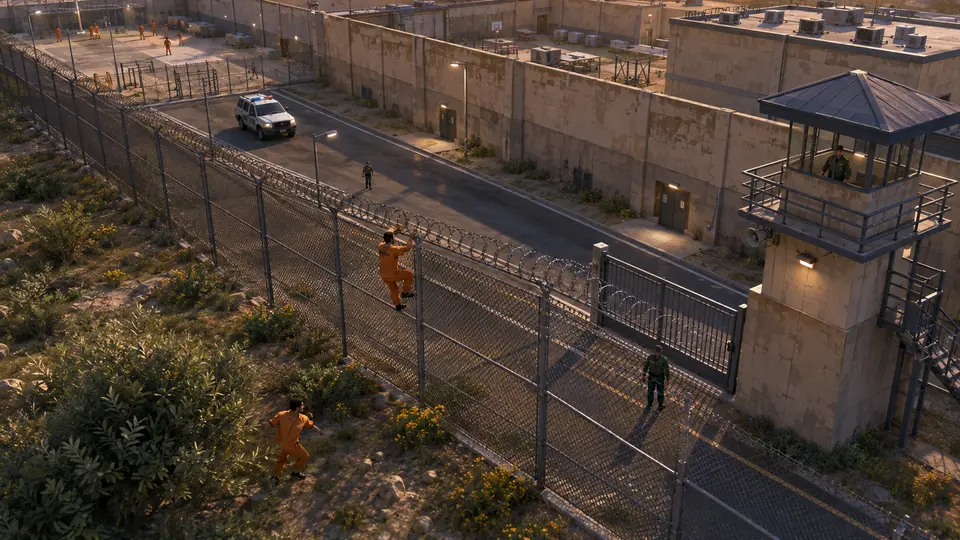
CAM-105Someone on the perimeter fence
«Tell me the moment anyone touches the perimeter fence, not once they are already over it.»
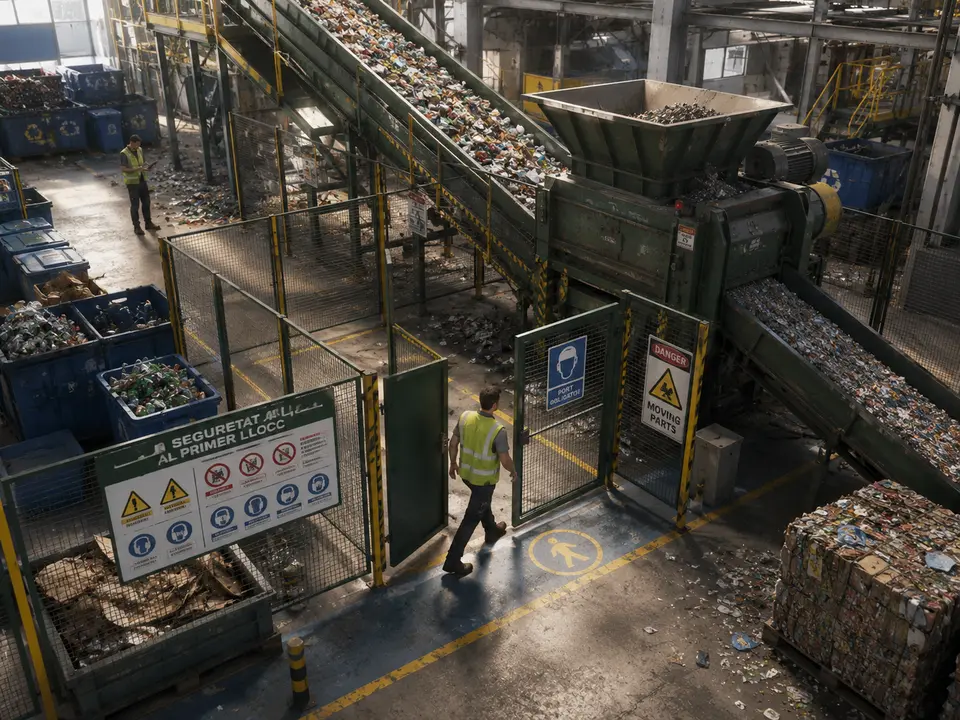
CAM-431Someone has walked into the shredder enclosure
«Tell me if someone enters the shredder enclosure while the machine is running.»
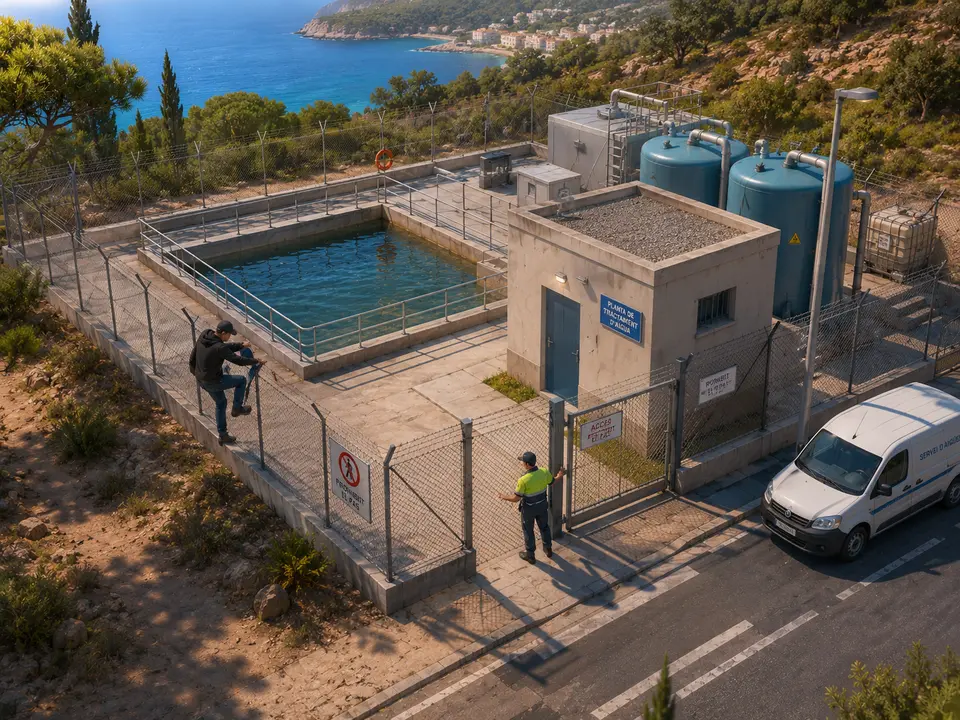
CAM-408Somebody came over the fence and is among the tanks
«Tell me the moment somebody crosses the fence where there is no gate, at any hour.»
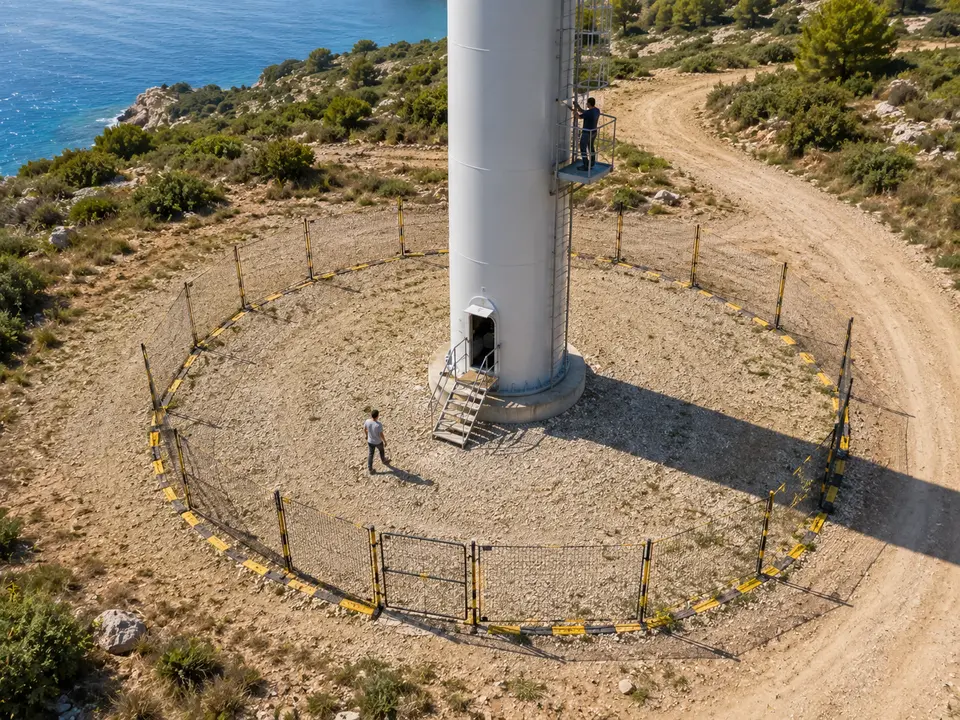
CAM-355Someone is on the turbine platform with no harness
«Tell me if anyone is on a tower ladder or platform without a harness, or if someone enters the fence of a tower with no work scheduled today.»
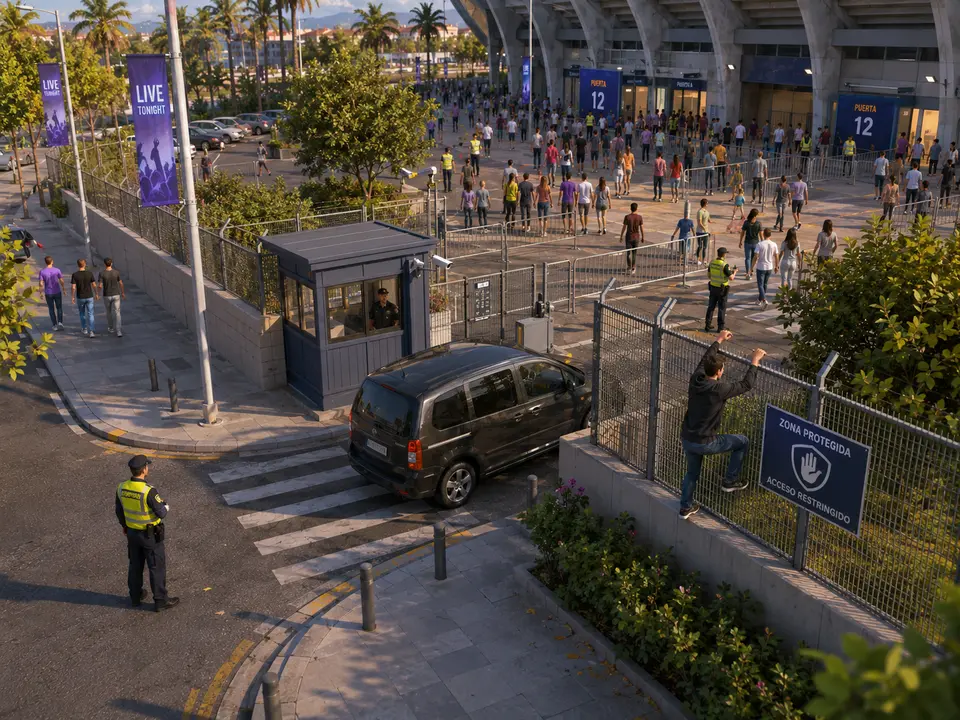
CAM-488A van stopped at the barrier and someone climbing the fence
«Tell me if anyone crosses the fence line, or if a vehicle stays stopped in front of the barrier for more than two minutes.»
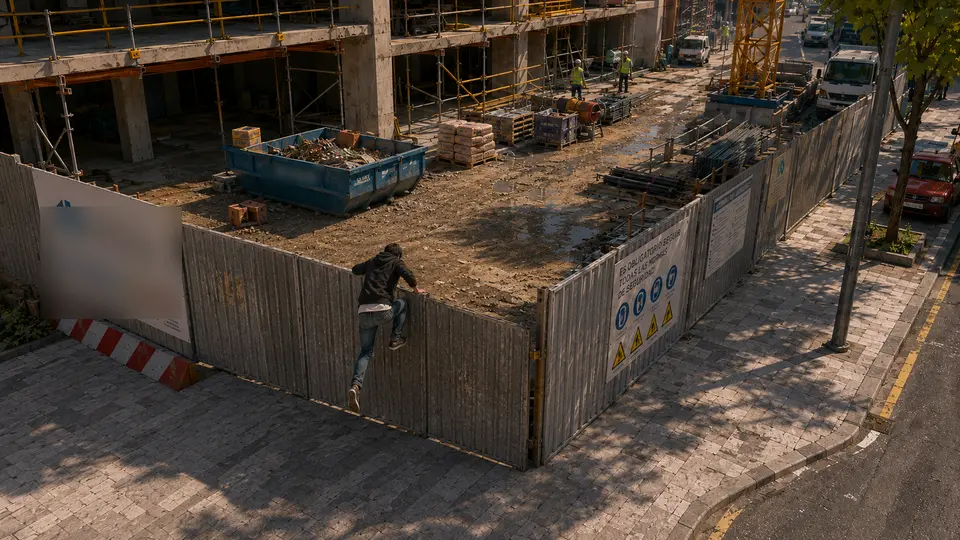
CAM-57Someone climbing the site fence
«Tell me if someone climbs the fence or gets in where nobody is meant to, whatever time it is, and show me the camera so I know where they came through.»
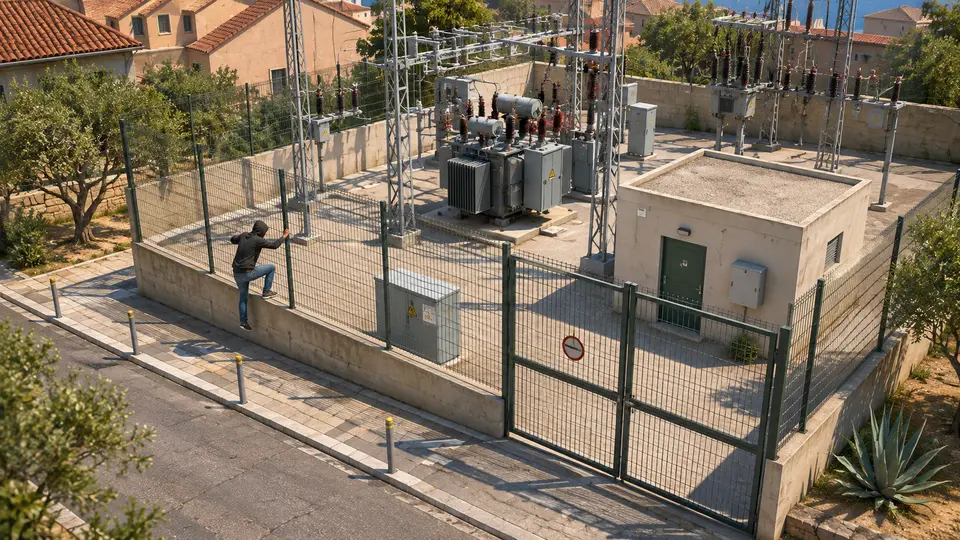
CAM-158Someone climbing the substation fence
«Tell me the moment somebody touches the fence or gets over it, at any hour. Nobody is supposed to be in here.»
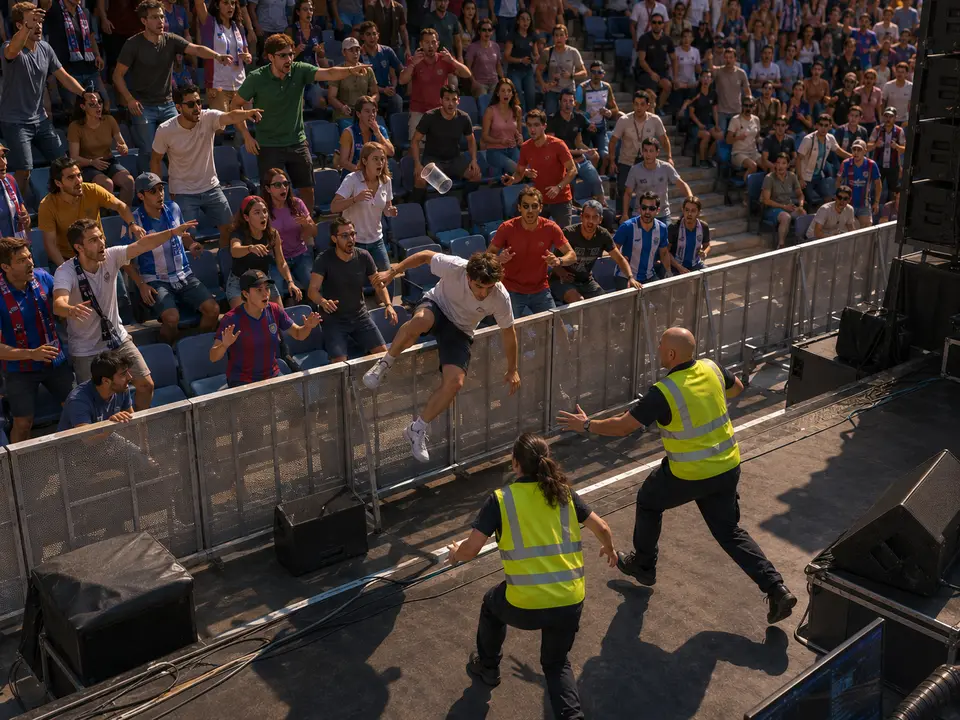
CAM-490Someone has jumped the barrier towards the stage
«Tell me the moment somebody crosses the barrier towards the stage or climbs a structure, and save me the video from ten seconds before.»


What it does not do
IRIS stops nobody and identifies nobody. It sees the climb, alerts and keeps the video; a person decides what happens next. And a camera is not a fence: if the boundary is broken, seeing the crossing more clearly does not fix that.
And it depends on the camera seeing. A dirty lens or a branch that has grown in front leaves a blind stretch, and that has to be known in advance, not on the day something happens.
Questions
- Would a detection system on the fence itself not be better?
- It depends, and the two often work well together. A system mounted on the fence notices that something touched it, and that is fast and cheap on a long perimeter. What it does not know is what touched it: the wind, a dog, a branch or a person. That is why many sites end up with the alarm switched off, which is the worst way to protect a perimeter. With a camera you do see what it was, and the person receiving the alert decides with the image in front of them instead of blind.
- Does it alert while they are climbing or once they are in?
- While they climb, if you set it that way, and that is the recommendation. The rule is tied to contact with the fence, not to being inside, because the whole difference between a useful alert and a report lives in those seconds. The alert comes with video from a few seconds earlier, so whoever receives it sees the full scene: how they arrived, whether they came with anyone and where they are heading. That is what you use to decide whether to call, switch on a light or send somebody who is nearby.
- Does it say which point of the fence they came through?
- Yes, and in the long run that is the most useful part of all. The alert carries the camera and the stretch, so whoever goes knows where to go instead of walking eight hundred metres of fence with a torch. And because everything is logged, after a few months you have a map: two stretches account for nearly all the climbs, almost always where there is a skip parked outside, a bank of earth or a tree. That is not fixed with more cameras: it is fixed by moving the skip or closing that stretch.
- What about animals, wind and plastic bags?
- IRIS says what it sees, and that is exactly what removes most of those alerts: it tells a person from a dog, a branch or a flapping tarpaulin, and when it does alert it sends the image so it can be checked in two seconds. We do not promise nothing extra will ever fire, because a foggy night or a dirty lens spoils any camera. What does change is that nobody has to leave the house to find out what it was: you look, you close it and you carry on.
The real interface, step by step
A camera looks. IRIS understands what it sees.
An extract of the real screen, no voice-over and hands-free. Each round poses another situation. What sits behind it is a good deal bigger than what you see.
- It lands in the tray
- You open it
- You confirm or dismiss
Not seeing yours here?
These words are the ones we have built, not the ones IRIS understands. The list falls short on purpose: you ask for it in a sentence, and sentences do not run out. Tell us what is in front of your cameras and we will tell you whether it understands it, or not yet.
And the best part
A recording gets watched when nothing can be done.An alert lands while there is still time to act.
IRIS raises the alert while it is happening and says where: the camera, the time and the images from that moment. With that, whoever is on duty is still in time to act.
Tell us your problem and we will say whether IRIS understands it, or not yet.
We reply the same working day.