Stadiums and venuesIntrusion detection
CAM-490
Someone has jumped the barrier towards the stage
Afternoon concert, front row. Someone vaults the separation barrier and lands on the stage side. A cup thrown from the stands is still in the air. Two security staff are already running over. IRIS does not know who they are: it does not recognise faces, does not compare them with anything and keeps nobody’s identity. What it sees is a movement — a body crossing a line nobody crosses — and an object flying where nothing flies. It detects a movement, not a person.

Turn on IRIS Vision
AI-generated image
What IRIS is
IRIS keeps an eye on every gate for you.
IRIS is an artificial intelligence that watches the cameras you already have at the venue and understands what's happening at the gates and in the stands. When a crowd builds up at an entrance, a stand nears capacity, or something you've asked it to watch happens, it alerts you — and whatever can be counted, like people in each area, it counts in numbers. All day long, with no one needing to watch a screen.
You tell it what you need to watch, and IRIS does it.
Here, for example, IRIS catches the moment someone vaults the barrier towards the stage, and also the cup flying in from the stands, without knowing who anyone is. It marks the exact point on the barrier and the second, with the video right there. With that, the security director decides in thirty seconds whether to stop the concert or not.
Works with the cameras you already have. Nothing to replace.
A person replies, not a form.
- Your footage never leaves your premises.
- It doesn't identify people.
- Certifications →
What IRIS understands
What it recognises in this scene
- person crossing the barrier
- thrown object
- stage separation barrier
- security staff running in
- second security staff member
What this camera measures
An alert says something is happening. The reading says how much.
- 9 sSince the crossing
- 1Thrown objects seen
- 11People up against the barrier
- 2Staff in shot
- 18:42:07Video starts at
The figures on this screen are an example from the illustration, not any client's measurement.
The rule
You decide once. IRIS applies it always.
If
somebody crosses the barrier towards the stage or climbs a structure in the venue
Then
- alert the control room with the camera, the point on the barrier and the exact time
- save the video from ten seconds before the jump
- leave the clip ready for the event report
The instruction that set it up«Tell me the moment somebody crosses the barrier towards the stage or climbs a structure, and save me the video from ten seconds before.»
What changes
What changes for whoever runs security at the venue
Second song of the encore, front row. Someone jumps the barrier and lands on the stage side; a cup thrown from the stand is still in the air. Climbing a railing, a sound tower or a roof kills people every year, and not always the person who climbs. The same goes for an object thrown from above. The security manager does not need to be told that something happened: the whole venue saw it. What is needed is the exact point on the barrier, the exact second and the video, to decide in thirty seconds whether the show stops or not. That is what reaches the control room.
What people usually ask
Does IRIS recognise the face of the person who jumps the barrier?
No. IRIS does not recognise faces, does not compare them against any database and keeps nobody’s identity. What it detects is a movement: a body crossing a line nobody crosses, or climbing where nobody climbs. It gives the camera, the spot and the second, and hands over the video. Putting a name to whoever appears in that image is a person’s job, following the venue’s own procedures.
Does it also detect somebody climbing a tower or a railing?
Yes. It is the same detection: a person reaching a height or a place where nobody should be. At a concert, climbing a sound tower or a roof is more dangerous than dropping into the pit, and not only for the climber. The rule is written once for each structure that has to be protected, and the alert arrives with the camera and the exact spot.
Is the recording usable as evidence?
Yes, in the sense that IRIS hands over the video with the camera, the point on the barrier and the exact second, saved from before the jump. That is exactly what is hard to find today when an incident has to be reconstructed. What is done with that evidence — a report, a ban, nothing at all — is decided by the venue under its own procedures. IRIS accuses nobody and acts on nobody’s behalf.
Other cameras
- CAM-480 · The queue tells you when the gates should open
- CAM-481 · One gate standing idle while the next one jams
- CAM-482 · Twenty-four arrive a minute, the search line clears nine
- CAM-483 · More people per square metre than three minutes ago, and nobody moves
- CAM-484 · The ramp is packed and the concourse next to it is empty
- CAM-485 · Twenty thousand people leaving at once, all through the same gate
A different case every time
A new case each time. Always the same screen.
It plays by itself and shows one case from start to finish. It is a summary: the real screen has far more functions than fit in this box.
- The hour, as a grid
- You look where it's dark
- You jump to that minute
See it somewhere else
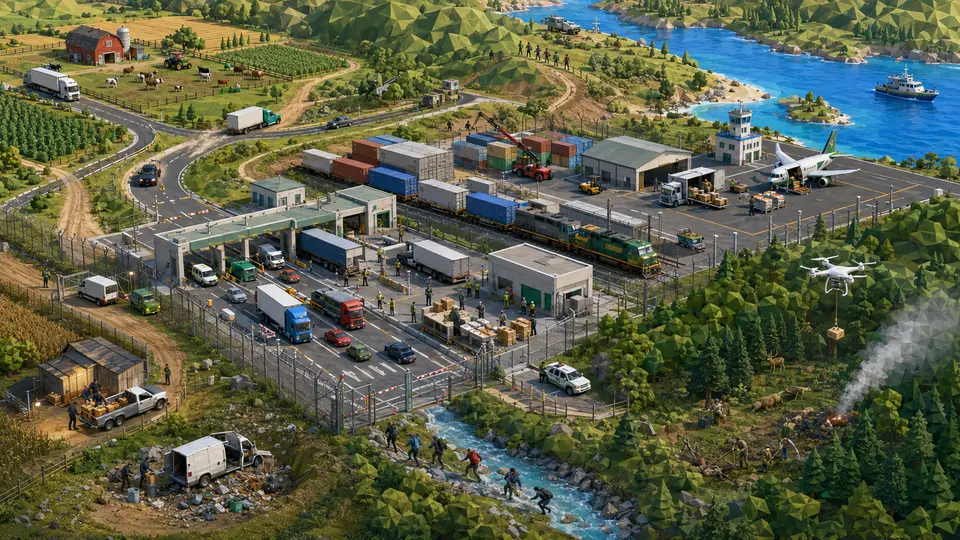
What can a camera see without pointing at anyone?
13 cases: 9 raise an alert when something happens and 4 only measure. You see each image as it is, and then with what IRIS understands on top.
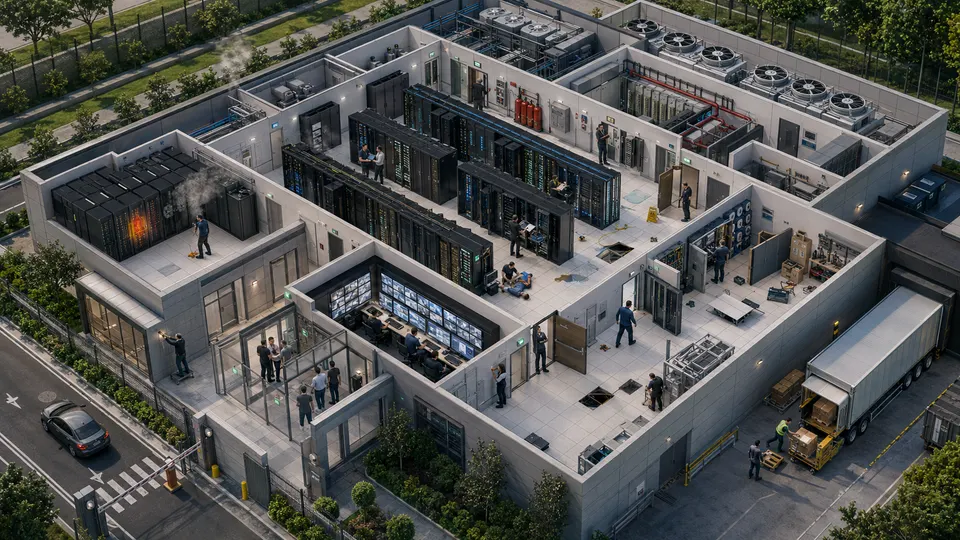
What if the outage does not start with an attack?
13 cases, and in every one of them IRIS raises an alert when something happens. You see each image as it is, and then with what it understands on top.


And the best part
You decide once what matters to you.It stops depending on who happens to be on shift.
You say it in your own words and it stays written down. Nobody has to remember anything at the start of a shift: what you decided is already in place, and still there tomorrow.
Tell us your problem and we will say whether IRIS understands it, or not yet.
We reply the same working day.