Solutions by typeInfrastructure integrity
How do I know a grate has stopped draining before the street floods?
The grate stopped draining and nobody saw it
It is 07:15 at the bar screen. The bars have vanished under a curtain of wipes, rags and plastic hanging from top to bottom; only three or four on the right are still clear. The rake gave its last cycle a while ago and has not moved since. In front, the water level is higher than usual. Behind, almost nothing is coming through. The morning shift clocks in at eight, and by then the level upstream will have been climbing for an hour.
5 cameras across 3 sectors
What IRIS is
IRIS watches the cameras for you.
IRIS Neural is an artificial intelligence that watches the cameras you already have and understands what happens in front of them. When something important happens —or something you told it you need to keep an eye on—, it alerts you; and whatever can be counted, it counts in numbers. All day long, without anyone having to watch a screen.
You tell it what you need to watch, and IRIS does it.
Works with the cameras you already have. Nothing to replace.
A person replies, not a form.
- Your footage never leaves your premises.
- It doesn't identify people.
- Certifications →
This is how you ask for it
«Alert me if the screen blinds over with textiles or the rake stops running cycles.»
When the screen blinds over, the water does not disappear: it finds another way. In a plant that means the overflow, and an overflow opening for no good reason is a discharge, a report and an inspection. In a street it means a flooded carriageway, cars swerving and somebody’s ground floor. And in both cases the bill starts once the water has gone: cleaning, drying, justifying and explaining why the screen had been blocked for hours.
You decide once
It gets decided once, and by name: how much of the screen may be covered before it counts as a problem, how many minutes the rake may go without a cycle, and which street gullies to watch when rain is forecast. It is a half-hour conversation between operations and maintenance. After that IRIS applies it to every screen and every gully with a camera, rain or no rain.
A blocked screen is the perfect example of a fault that makes no noise. Nothing breaks, nothing stops and no controller throws an error: the water simply passes worse, and then much worse. In a treatment plant, the curtain of wipes grows over hours. In a street, the gully fills with leaves across a whole autumn and nobody looks at it until the first serious storm.
And it is always discovered the same way, which is the worst way: through the effect. The resident who calls because the street is a river. The operator who sees the upstream level spike. The dam keeper who finds the raft of logs against the spillway when they already need a crane to pull them out. By then the screen had been blocked for a long time, and it was on the video, blinding over little by little, in front of a camera nobody was watching.
IRIS looks at the bars. It sees how many are clear and how many have vanished under something, it sees whether the pile is growing, and it sees whether the rake is still cycling or has gone still. When the screen passes the point you set, it alerts with the camera, the time and the video of how it filled up. You clean before the storm, not after the flood.
And there is a case with nothing to do with water that is nonetheless the same rule. On a cell landing, somebody pushes the laundry trolleys and the service bins up against the gate that closes the walkway and leaves them there. Nothing has broken, nothing has sounded, and from the corridor it just looks like clutter: that is why minutes go by before anyone realises the route the officers have to come in through is blocked. What is being watched is the same as at the gully — a way through that has stopped being a way through — and what changes is who needs to find out.
What changes
Before: the screen was cleaned by calendar and the gully by complaint. What happened between two cleanings was known to nobody.
Now: it gets cleaned when the camera says it is filling up, and that same camera later shows that it was cleaned and at what time. The round stops being a tour of every point and becomes a tour of the ones that need it today.
Where we have seen it

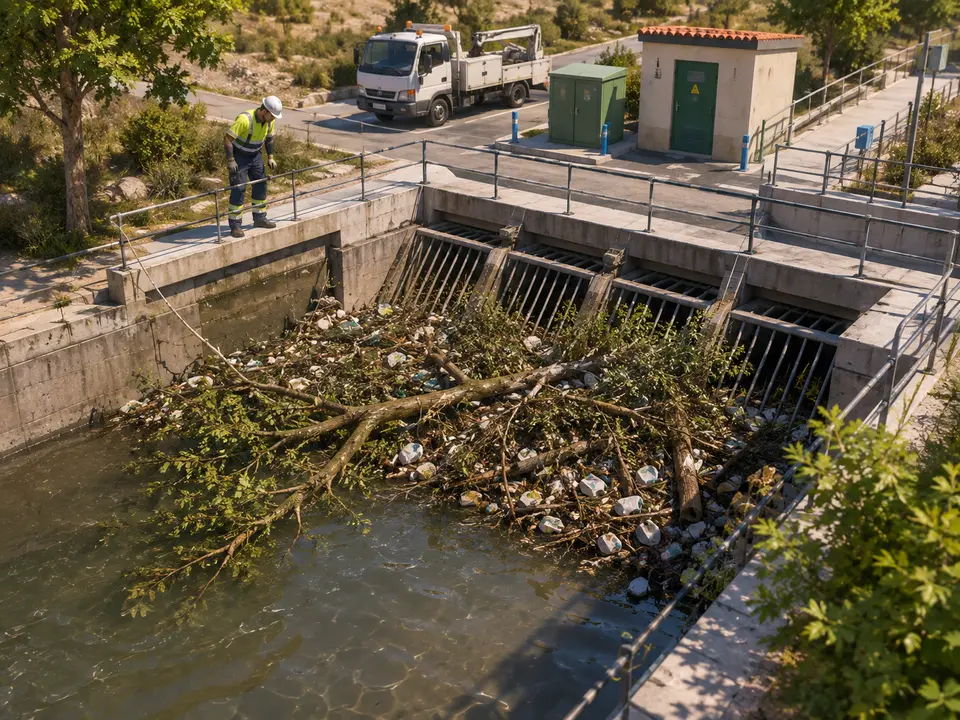
CAM-167The street gully choked with branches
«Tell me when a gully gets covered and stops taking water, before the street floods and a resident has to phone me about it.»
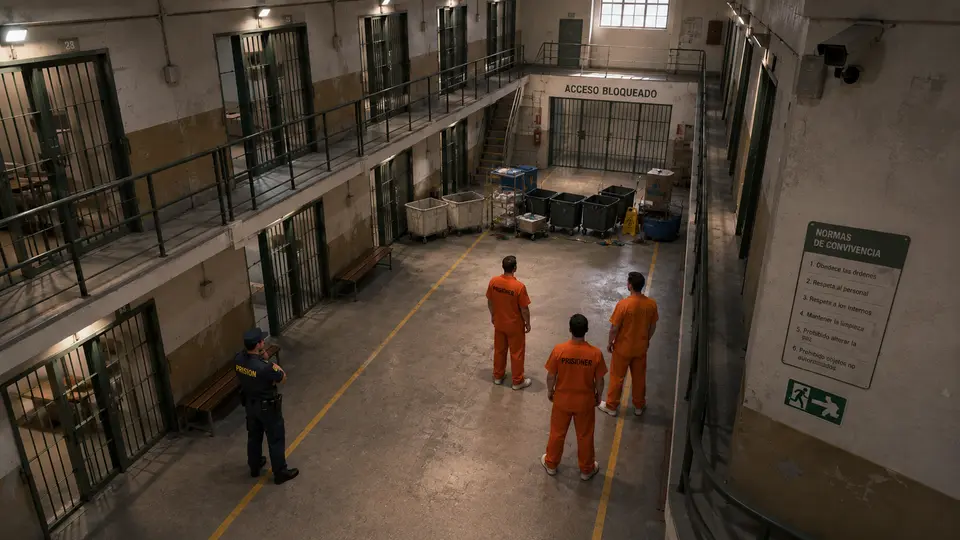
CAM-101Blocked access on the landing
«Tell me if anything is left in front of a door or a barred gate and stays there, because that is the way we have to get through.»
CAM-403A tree has come down the channel and is blocking the intake
«Tell me if something large lodges across the racks at the intake.»
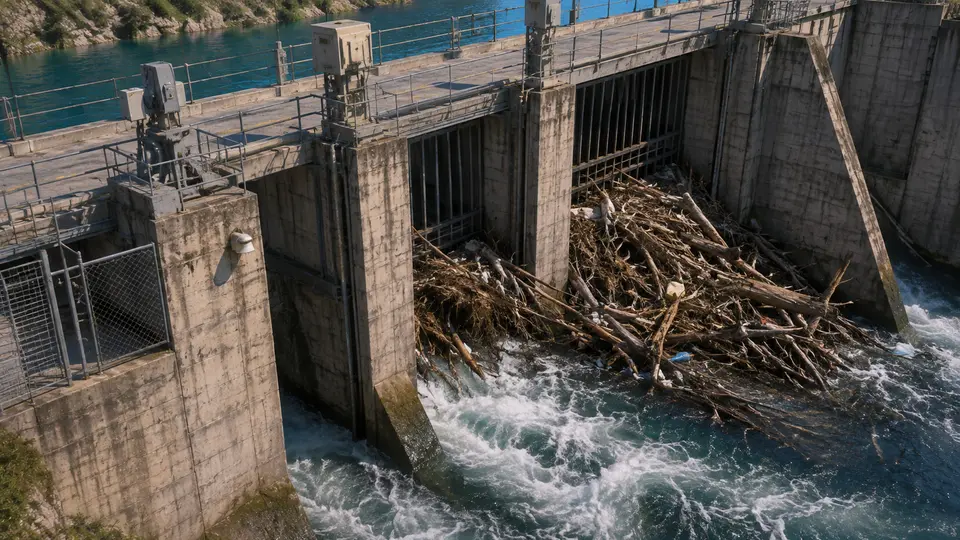
CAM-146Logs piling up against the spillway
«Tell me when wood or rubbish builds up against the spillway screens, and tell me whether the pile is still growing.»
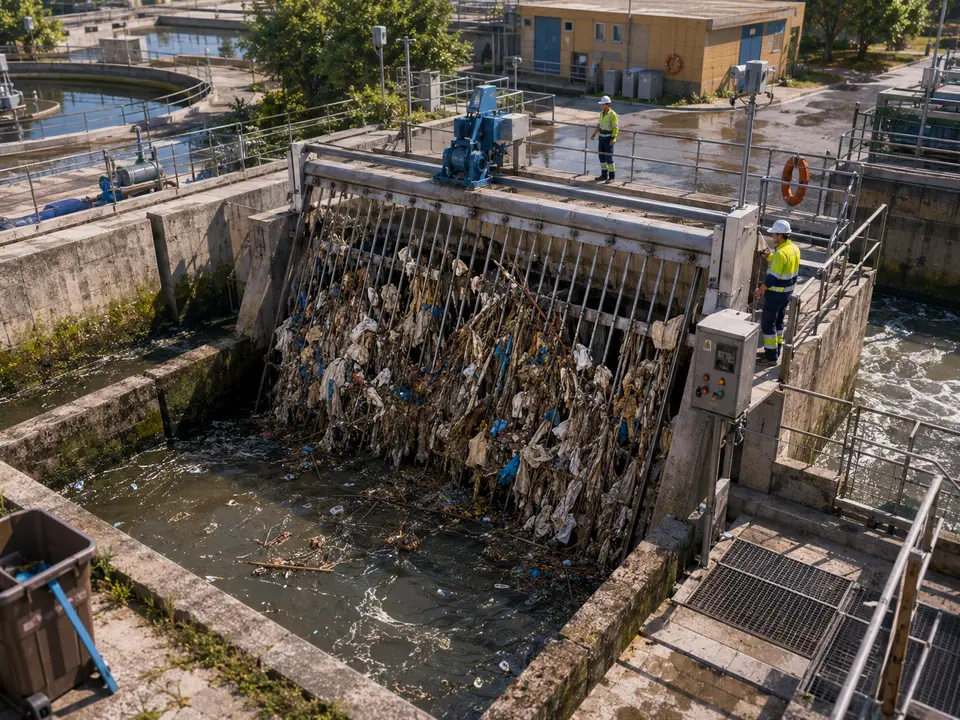
CAM-402The screen is packed with wipes and the water is not getting through
«Tell me if the screen blinds with textiles or the raking machine stops running cycles.»


What it does not do
IRIS does not clean the screen, does not command a rake cycle and does not measure flow: that is what the plant instrumentation is for, and it is still needed.
It also cannot tell what the blockage is made of. It knows the bars have vanished under something, not whether that something is wipes, leaves or a large sheet of plastic. And whatever piles up below the waterline is invisible to any camera.
Questions
- Do we need a camera on every gully?
- No, and it would make no sense. You put them where the blockage hurts: the gullies at the low points that always flood, the bar screen, the intake and the spillway. That is a handful of spots per site, and usually the very ones that already have a camera for another reason. The rest keeps being checked on the round, because a camera only knows what is inside its frame.
- Does it work in the rain and at night?
- In the rain, yes, and that is when it is needed. What is watched is the screen and what sits on it, and that stays visible when wet. At night it depends on the camera: with infrared or the site lighting it is fine; in the dark with no infrared it sees nothing, and then IRIS reports that this camera has stopped seeing instead of staying quiet. And if the lens is covered in droplets and the image hazes over, it says that too.
- Can it tell litter from a log lying across?
- It tells size and position apart, not material. A tree across the intake and a bag against the bars look different because they take up different space: one covers several bays at once, the other covers a small patch. That difference is what you need to decide whether a crew goes out now or it goes on the list for the next clean. What you cannot ask a camera is whether that is wood, plastic or textile.
- Can it tell whether the pile is growing?
- Yes, and it tends to be the figure people use most. A half-covered screen that has been like that all week is a scheduled clean; one that filled up in twenty minutes is a crew leaving now. IRIS looks at the same screen over time and says whether it is getting worse, has stayed the same, or has come back to normal after a cleaning cycle. That tracking is what turns the alert into a priority instead of a fright.
The real interface, step by step
A camera looks. IRIS understands what it sees.
An extract of the real screen, no voice-over and hands-free. Each round poses another situation. What sits behind it is a good deal bigger than what you see.
- It lands in the tray
- You open it
- You confirm or dismiss
Not seeing yours here?
These words are the ones we have built, not the ones IRIS understands. The list falls short on purpose: you ask for it in a sentence, and sentences do not run out. Tell us what is in front of your cameras and we will tell you whether it understands it, or not yet.
And the best part
What happens outside the framedoes not exist for IRIS. No camera sees the whole world.
So the first thing we do is check what each camera covers and write it down: from here you can understand this, and not that. A dull hour that saves a lot of misunderstandings.
Tell us your problem and we will say whether IRIS understands it, or not yet.
We reply the same working day.