Solutions by typeProduction efficiency
How do I prove nothing got mixed between two batches?
Two batches that touched
Two in the afternoon in the packing room. The previous batch has finished and the line is not cleared yet: on the front table there is an open carton, loose leaflets and a white bottle from the product that has just come off. The line manager already has the next order in his hand and the machine ready. Four minutes to start.
7 cameras across 4 sectors
What IRIS is
IRIS watches the cameras for you.
IRIS Neural is an artificial intelligence that watches the cameras you already have and understands what happens in front of them. When something important happens —or something you told it you need to keep an eye on—, it alerts you; and whatever can be counted, it counts in numbers. All day long, without anyone having to watch a screen.
You tell it what you need to watch, and IRIS does it.
Works with the cameras you already have. Nothing to replace.
A person replies, not a form.
- Your footage never leaves your premises.
- It doesn't identify people.
- Certifications →
This is how you ask for it
«Before the batch starts, show me the line and tell me if anything from the previous one is still in sight.»
If that bottle slips into a carton of the new batch, the problem is not one bottle: it is that nobody can say for certain what is inside any pack of either batch. And when traceability breaks, both batches are blocked whole. Product held for weeks, a deviation report, an internal investigation, and an inspection that starts by asking for that day’s line clearance record and what time it was signed.
You decide once
You decide this once, and quality decides it. You say which areas must be clear before starting, what counts as material from the previous batch, who signs the clearance and who is told if something is left: if product, leaflets or tooling from the previous batch is still visible in the packing room, the line does not start and the manager is alerted. IRIS applies it at every batch change, and keeps the image of the line at that time.
A batch mix-up cannot be seen in the finished product. It is seen in the place and in the order, and always in the same minute: the changeover. A pallet from the red quarantine zone showing up over the line of the green released zone. A scrap basket loaded with material from four different bays when the recipe called for two. The solvent going into the mixer first when the charging order pinned on the wall says it goes last.
In none of those cases is there bad intent. There are two zones side by side, two similar products and a shift under pressure. The operator who leaves the pallet a metre past the red line is not cutting a corner: she is looking for space. And the problem is not that metre either: it is that in three weeks, when somebody asks whether that material was released or not, nobody will be able to answer with anything but a memory.
IRIS watches two things a person cannot watch at once: where each thing is, and in what order it goes in. You mark the zones on the image and you give it the charging order. It alerts when something crosses a line it should not or goes in ahead of turn. And it does something that is worth as much as the alert in an inspection: it keeps the image of the cleared line, with its time and its camera, for the day it has to be shown.
What changes
Before, line clearance was signed on a form and the signature was all the proof there was. If somebody asked a month later what had been on the table at two in the afternoon, the answer was whatever the signer remembered. Now the signature is still there — a person makes it, not a camera — but it comes with the image of the line at that exact time. The discussion stops being a matter of memory.
Where we have seen it
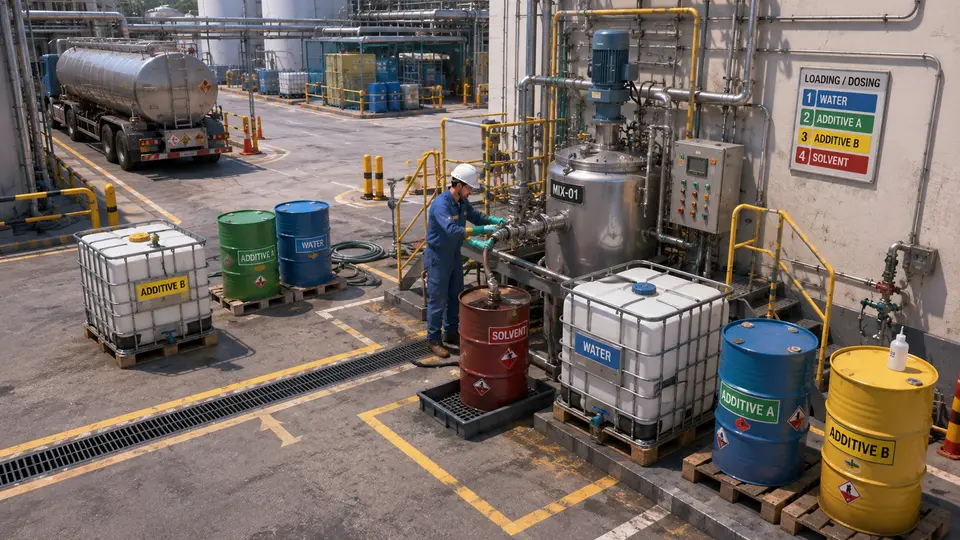
CAM-310The solvent goes in first when it was meant to go in last
«Tell me if anyone connects a container to the mixer that is not the one due at that point in the charge.»
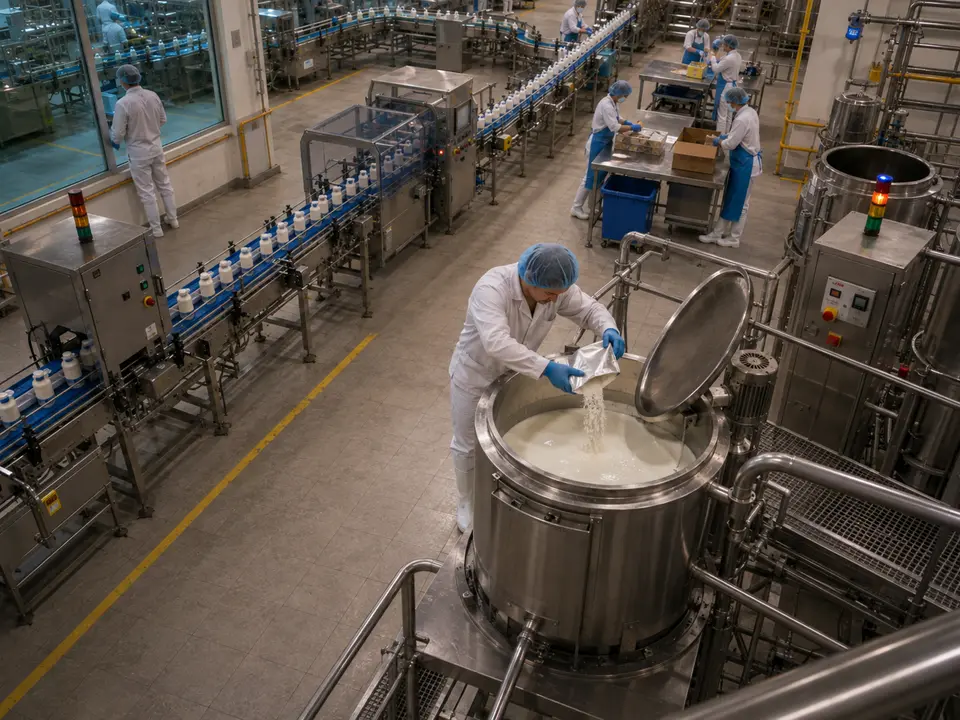
CAM-216Somebody is tipping something into an uncovered tank
«Tell me if somebody opens a mixing tank or tips something in outside the hours when dosing is due.»
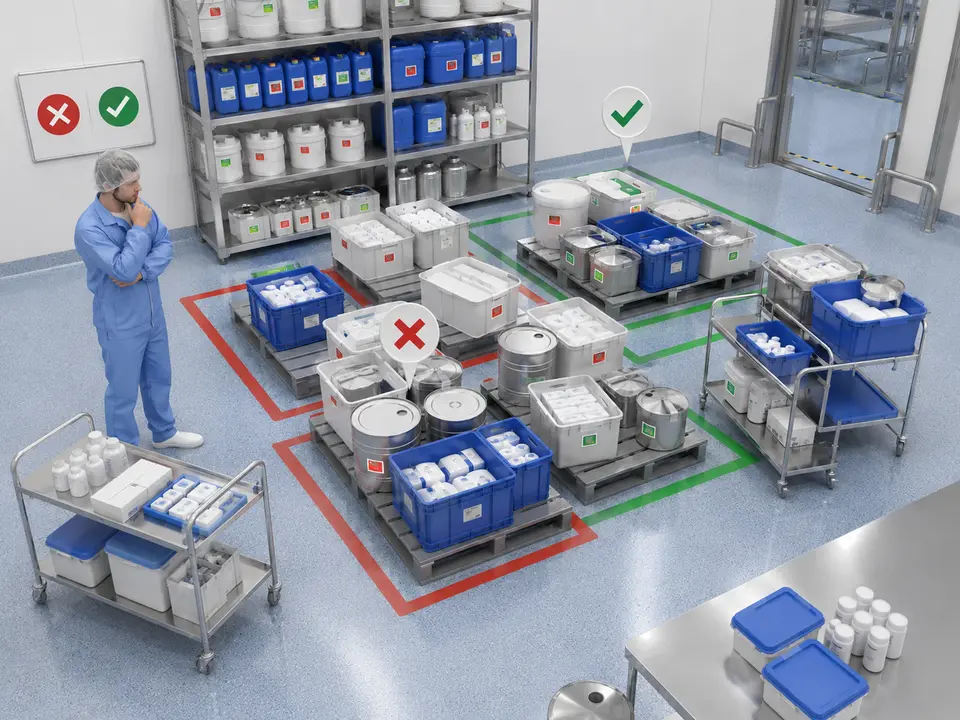
CAM-286A quarantine pallet sitting on the released zone line
«Tell me if any pallet from the red quarantine zone shows up inside the green zone or on the line.»
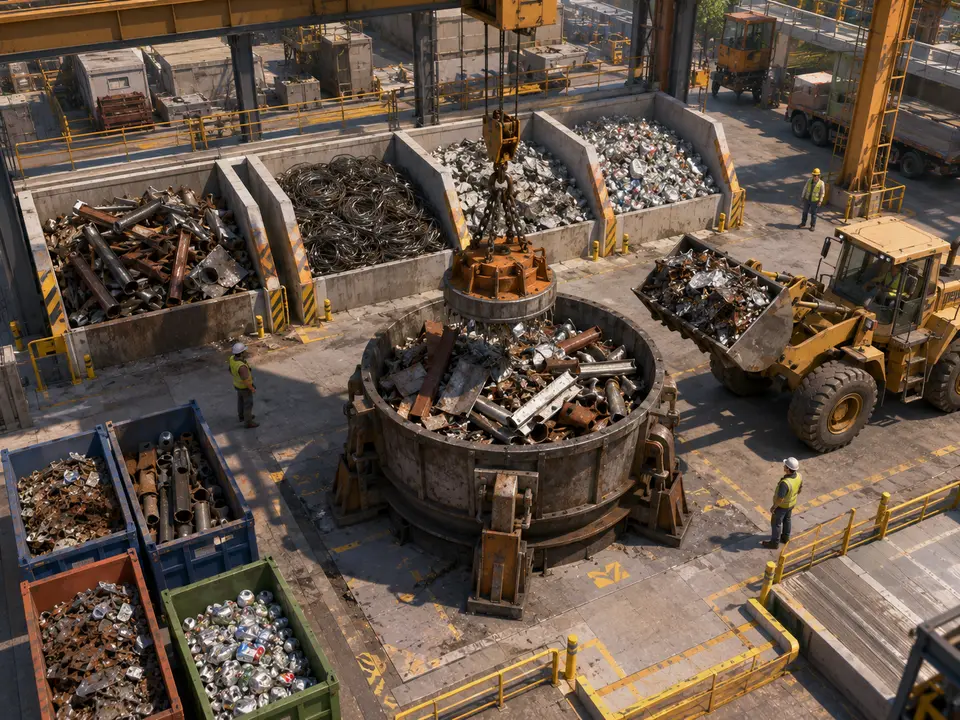
CAM-363The basket has been loaded from four different bays
«Tell me if material from a bay that does not belong in this recipe goes into the basket, and tell me which bay it came from.»
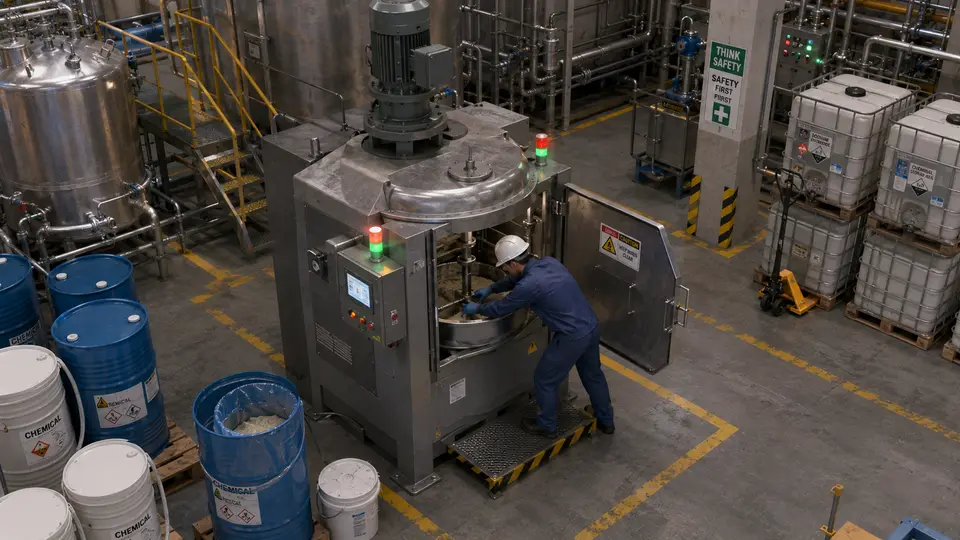
CAM-315Hands inside the mixer with the beacon still green
«Tell me if somebody puts their hands into the mixer with the door open and the beacon green.»
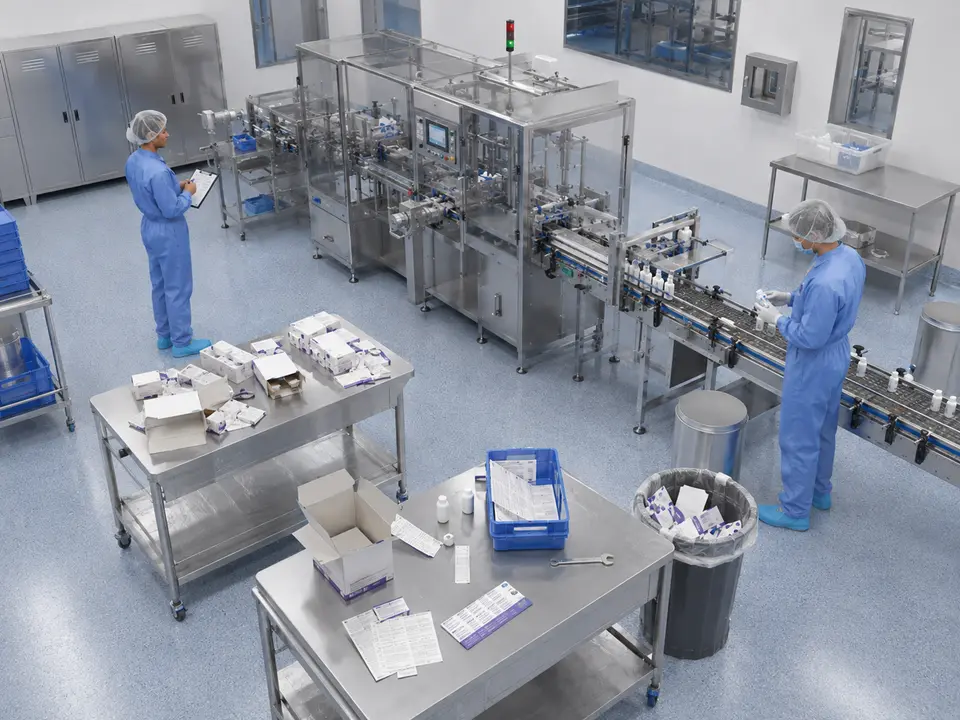
CAM-283The previous batch is still on the table
«Before the batch starts, show me the line and tell me if any material from the previous one is still in sight.»
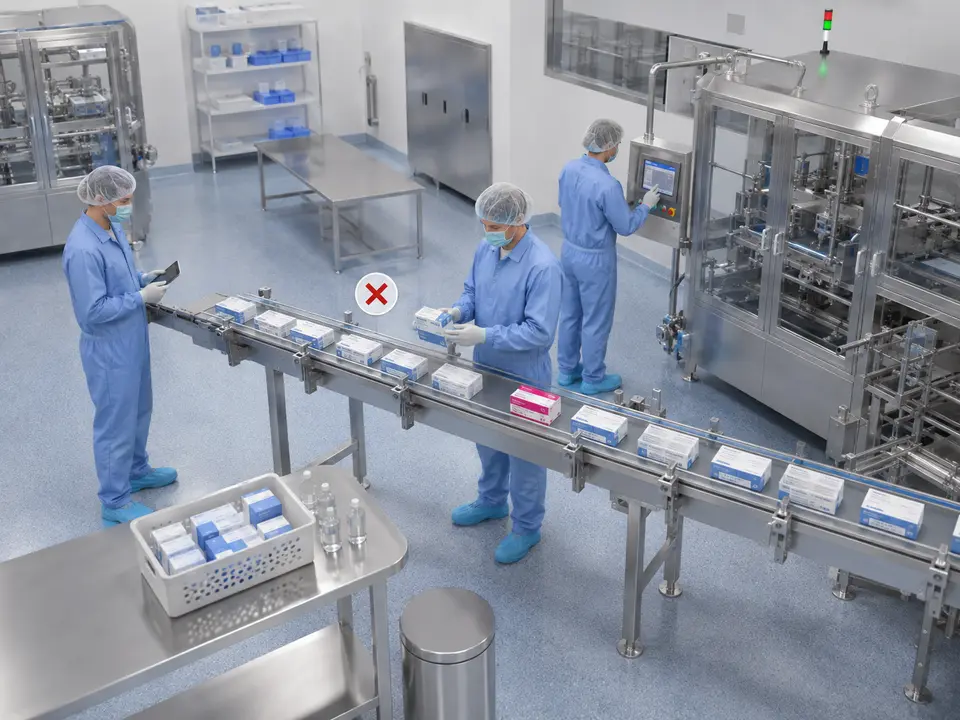
CAM-285A pink carton moving among identical blue ones
«Tell me if a carton goes down the cartoning belt that is not like the ones in the batch we are running.»


What it does not do
IRIS does not read a batch number printed small, and it does not know what is inside a closed drum. It sees where each thing is, whether it looks like the rest and in what order it goes in.
And it does not replace your batch records or the clearance signature: it releases nothing, blocks nothing and does not decide whether a batch is valid. It puts an image and a time against what today is only a ticked box.
Questions
- Does it replace the line clearance record?
- No, and it should not. Clearance is signed by a person who carries responsibility, and that signature is what counts. What IRIS does is stand next to it: it looks at the line before the start, flags anything left over from the previous batch and keeps the image of that moment with its time and its camera. The record is still yours and is still the document; what changes is that it now has an image behind it instead of just a tick.
- How does it know which pallet is quarantined and which is released?
- By where it is, which is exactly how people know. You already have the floor marked with tape: the red zone is quarantine and the green one is released material. Those same zones are drawn over the camera image, and from then on IRIS flags a pallet from the red one appearing inside the green one or straddling the line. It does not need to know what is on the pallet: it only needs to know which side of the line it is on.
- Is the image any use as evidence in an inspection?
- It is useful for showing what was on the line at that time, which is usually exactly what gets asked. The image is kept with its camera, date and time, inside your own infrastructure if you choose, and can be retrieved when needed. What we cannot tell you is that it is a valid document in your regulatory framework: your quality department and the authority inspecting you decide that, not us.
- What if the two products look identical from the outside?
- Then IRIS cannot tell them apart, and that has to be known before starting. If two bottles are identical and differ only by a small printed number, a camera hanging from the ceiling will not resolve it. What can be done is to change the vantage point: move a camera close to where the pack passes still, or lean on the zone instead of the pack, flagging that there is something on a table that should be empty. It is decided case by case, looking at the real camera.
Demo · IRIS at work
A new case each time. Always the same screen.
It plays by itself and shows one case from start to finish. It is a summary: the real screen has far more functions than fit in this box.
- Cameras on the map
- You draw an area
- What passed shows up
Not seeing yours here?
These words are the ones we have built, not the ones IRIS understands. The list falls short on purpose: you ask for it in a sentence, and sentences do not run out. Tell us what is in front of your cameras and we will tell you whether it understands it, or not yet.
And the best part
A wall of monitors is impressive.Nobody can read forty tiles at once.
The more tiles there are, the less each one gets looked at. IRIS watches all four thousand cameras at once and points at a single one: the one that needs someone right now.
Tell us your problem and we will say whether IRIS understands it, or not yet.
We reply the same working day.