CAM-921
Gone dark
The same crossroads that appears everywhere else in this section, at the same time of day, with the same people waiting to cross. Only now almost all of it is black. You can just make out the white car pulling out of the junction, a piece of the zebra stripes and the pharmacy cross, one of the few things still visible. Of the rest, nothing is left: not the right-hand pavement, not the red car, not the clothes of the person waiting on the corner. It is daytime and the scene has not changed; what has changed is the picture. IRIS sees that exposure in this frame has collapsed in a time band where this camera did see. Why, that is for whoever opens it up to say.

Turn on IRIS Vision
AI-generated image
What IRIS is
IRIS watches the cameras for you.
IRIS Neural is an artificial intelligence that watches the cameras you already have and understands what happens in front of them. When something important happens —or something you told it you need to keep an eye on—, it alerts you; and whatever can be counted, it counts in numbers. All day long, without anyone having to watch a screen.
You tell it what you need to watch, and IRIS does it.
Here, for example, IRIS sees that this camera has suddenly gone dark in mid-afternoon, even though it is still daylight outside and this same camera used to see fine at that hour. So you find out the same day, with the exact time the picture went and what it showed just before. With that you decide whether it needs opening up or adjusting, then check whether it sees properly again at that hour.
Works with the cameras you already have. Nothing to replace.
A person replies, not a form.
- Your footage never leaves your premises.
- It doesn't identify people.
- Certifications →
What IRIS understands
What it recognises in this scene
- frame gone dark
The rule
You decide once. IRIS applies it always.
If
brightness across the frame collapses and stays below normal in a time band where that camera did see
Then
- alert with the camera, the exact time the picture went and the video of the seconds before
- put alongside what that same camera was seeing yesterday at that hour
- keep the alert open until the picture comes back, and raise another one when it does
The instruction that set it up«Tell me if a camera goes dark at an hour when it ought to be seeing, and tell me the exact moment it started.»
What changes
What changes for whoever answers for the cameras working
At four in the afternoon this camera should not look like this. And yet the system does not complain: the stream arrives, the video records, the disk fills with hours of black. Nobody opens that picture because nobody has any reason to. The complaint comes three weeks later: a car that took a wing mirror off, a fight outside a bar, someone who fell on the pavement. The video is requested and there is no video, there is night at four in the afternoon. With IRIS the alert goes out the same day, with the exact time the picture went and with what could be seen just before. A blind spot you know about is a problem; a blind spot nobody knows about is a hole.
What people usually ask
At night all my cameras look worse. Isn’t this going to fire every night?
No, because a camera is not compared with another camera or with some ideal: each camera is compared with itself, at the same hour. One that has always seen very little at three in the morning is still fine at three in the morning. What fires is the change: the one that yesterday at that hour showed the pavement and today shows nothing. And also the one that goes dark at four in the afternoon, which is the case on this page. Every camera has its own normal, and that normal is learned from its own history.
What if it is the street lighting that has failed? That is not the camera’s fault.
True, and the alert is still worth having. IRIS does not assign blame: it says that this spot has not been visible since a given time. Very often a camera-gone-dark alert is really the first warning that a street light or a whole stretch of lighting has failed, and it arrives before a resident phones in. The job ticket is opened just the same, except it goes to whoever looks after the lighting rather than to video maintenance. What matters is that somebody knows today, not in a fortnight.
How do you tell this apart from somebody covering the camera?
They do look alike, which is why IRIS does not decide who is right: it raises both and states what it measured. Here what was measured is that exposure collapsed while the scene stayed the same. When something covers the optics, the picture does not only lose light: the edges disappear too, the whole drawing of the scene. The alert carries the time, the video before and the video after, and whoever reads it decides whether to send a technician or to call somebody else. IRIS does not say who did what.
The real interface, step by step
A new case each time. Always the same screen.
It plays by itself and shows one case from start to finish. It is a summary: the real screen has far more functions than fit in this box.
- Checks the whole system
- Flags what is failing
- Puts it on one screen
See it somewhere else
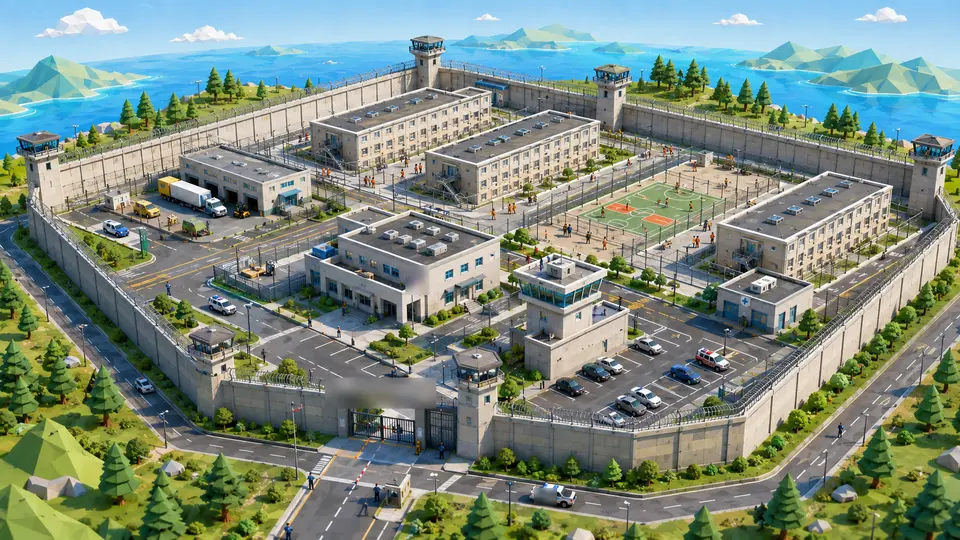
Who is watching the yard screen when the fight starts?
17 cases: 16 raise an alert when something happens and one only measures. You see each image as it is, and then with what IRIS understands on top.

How long before somebody comes down that corridor at four in the morning?
13 cases: 12 raise an alert when something happens and one only measures. You see each image as it is, and then with what IRIS understands on top.


And the best part
There are nights of thick fogwhen the image gives you nothing. We do not dress that up.
Backlight, heavy rain, a street lamp that has blown. IRIS works with what the camera puts in front of it; when there is no image, it says so instead of inventing an answer.
Tell us your problem and we will say whether IRIS understands it, or not yet.
We reply the same working day.