Solutions by typeInfrastructure integrity
Who is watching the substation tonight?
Nobody is supposed to be in here
Twenty to midnight. A substation by the side of the road, seen from a street light on the pavement. Someone has climbed onto the kerb wall and is gripping the mesh with one foot on the rail, about to go over. There is nobody inside, and there should not be: the last visit was on Tuesday. Four metres from where they will land is the switchgear, and that kills without anyone having to touch it.
7 cameras across 3 sectors
What IRIS is
IRIS watches the cameras for you.
IRIS Neural is an artificial intelligence that watches the cameras you already have and understands what happens in front of them. When something important happens —or something you told it you need to keep an eye on—, it alerts you; and whatever can be counted, it counts in numbers. All day long, without anyone having to watch a screen.
You tell it what you need to watch, and IRIS does it.
Works with the cameras you already have. Nothing to replace.
A person replies, not a form.
- Your footage never leaves your premises.
- It doesn't identify people.
- Certifications →
This is how you ask for it
«Tell me the moment anyone touches the fence or crosses to the other side, whatever the hour. Nobody is supposed to be in here.»
The first thing lost here is not the copper: it is a person. And then comes everything else. One cable pulled out inside a yard leaves a whole neighbourhood without supply, or a factory halfway through a cast, or a building that needs power for something that cannot wait. The repair takes as long as it takes, and the next morning the recording turns up: the person went over the fence at twenty to midnight, and the video was recording it the whole time, for nobody.
You decide once
You decide this once, and it is one of the easiest rules there is, because there are no exceptions to argue about. You say where the perimeter runs, which hours count — here, all of them — who may be inside with a work order and who gets told: if anyone crosses the fence, alert the control room and the security company with the camera open and the time. IRIS applies it on all seven cameras in the compound, on Christmas Eve and in August, with nobody having to arm or disarm anything.
A substation is an odd place to guard because it is so easy to guard. There is almost never anyone inside, so the rule needs no nuance: nobody comes in here. The hard part is not deciding it, it is that at twenty to midnight there is no human being looking at that screen. And what is at stake is not the copper. Whoever goes over that mesh ends up a few metres from live switchgear, and there you do not have to touch anything for it to end badly.
The other half of this word is that nothing in there should move on its own. A branch that has climbed the wall and is edging towards the busbar. A pine that came down whole inside the compound after the storm and is resting against the transformer. A bushing that looks blackened today and did not yesterday. None of those sets off any alarm, and all of them are perfectly visible from the camera that is already there.
IRIS applies «nobody comes in here» around the clock and also compares the yard with how it always looks. And there is a part worth saying plainly: it does not know who the person who climbed over is, and it does not need to. It says somebody has crossed to the other side, at what time and on which camera, and shows the image. What is done about it is decided by a person, who is also the only one who can send anybody out there.
What changes
Before, the substation was visited every so often and spent its nights alone. The camera did record, but the recording was for the police report, not for getting there in time. Now, the moment someone climbs onto the kerb wall, the control room has the image open and can raise the alarm before that person is inside. The difference between the two situations is not the copper recovered: it is that sometimes you get there before the other thing happens.
Where we have seen it
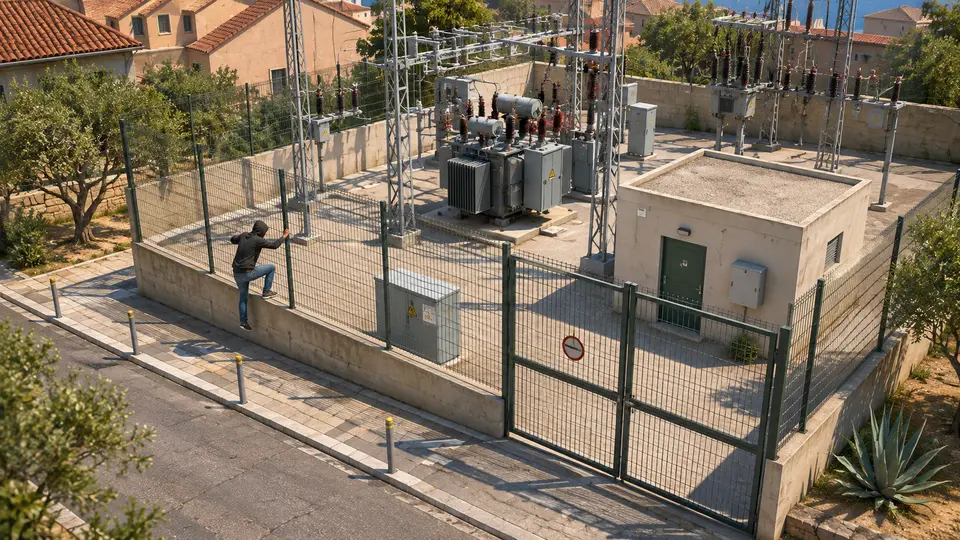
CAM-158Someone climbing the substation fence
«Tell me the moment somebody touches the fence or gets over it, at any hour. Nobody is supposed to be in here.»
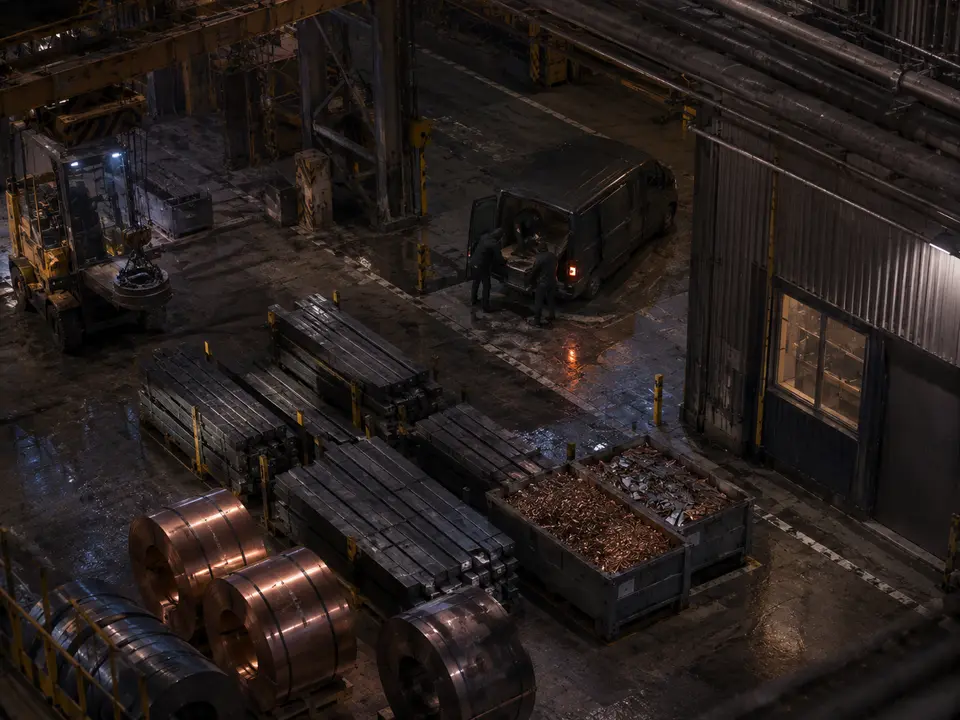
CAM-379A vehicle loading before dawn where nothing gets loaded
«Tell me if a vehicle loads in the material yard outside working hours and off the usual lanes.»
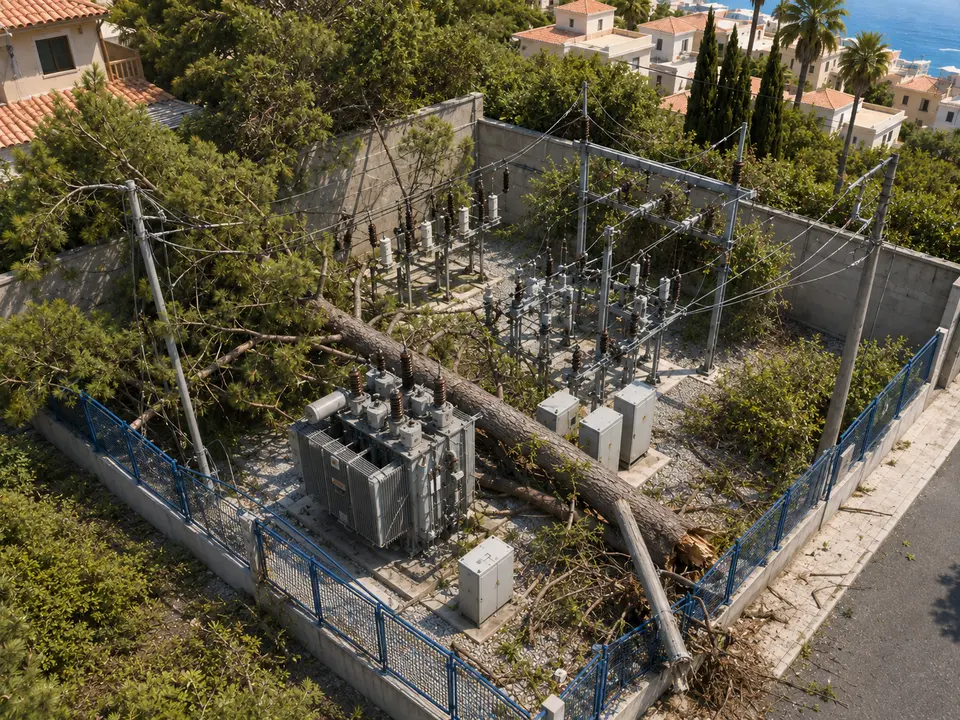
CAM-351A whole pine tree down inside the substation
«Alert me right away if a tree or a pole comes down inside the substation, and show me the before and after.»
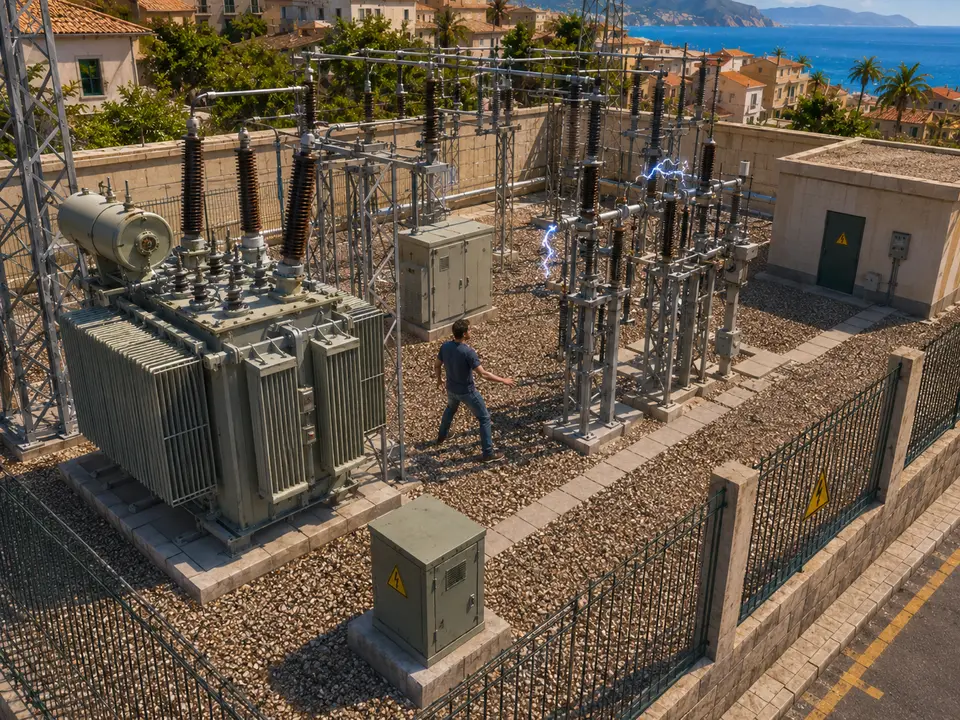
CAM-347No protective clothing beside the live cells
«Tell me if anyone enters the high-voltage zone without a helmet, gloves and protective clothing, even if they are only walking through.»
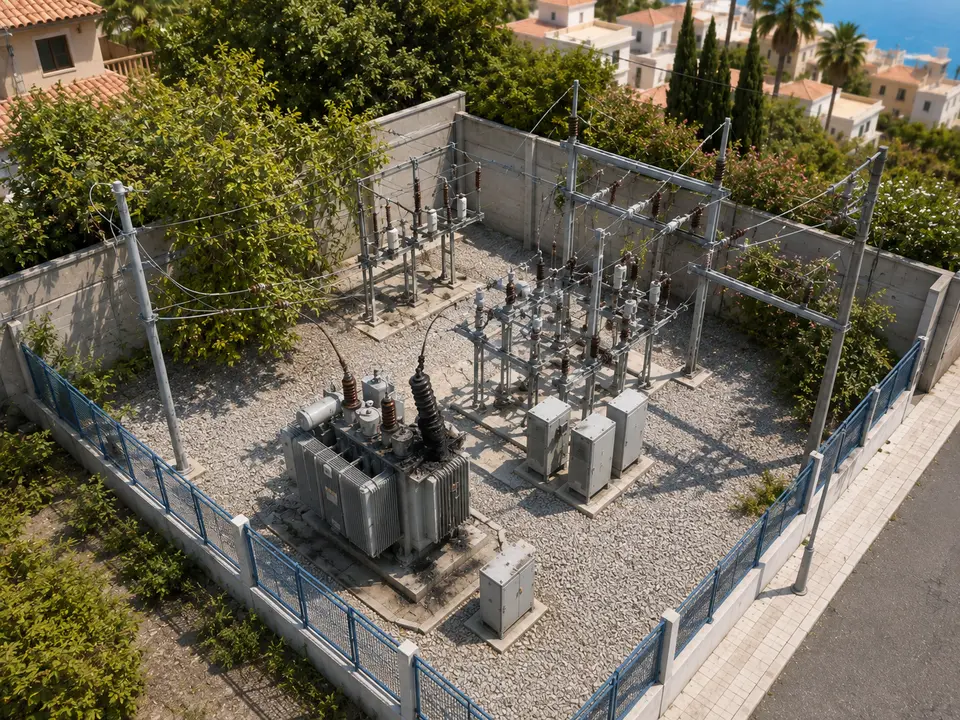
CAM-352The bushings are not the way they always were
«Tell me if any insulator or bushing looks different from how it was, even if nothing else happens.»
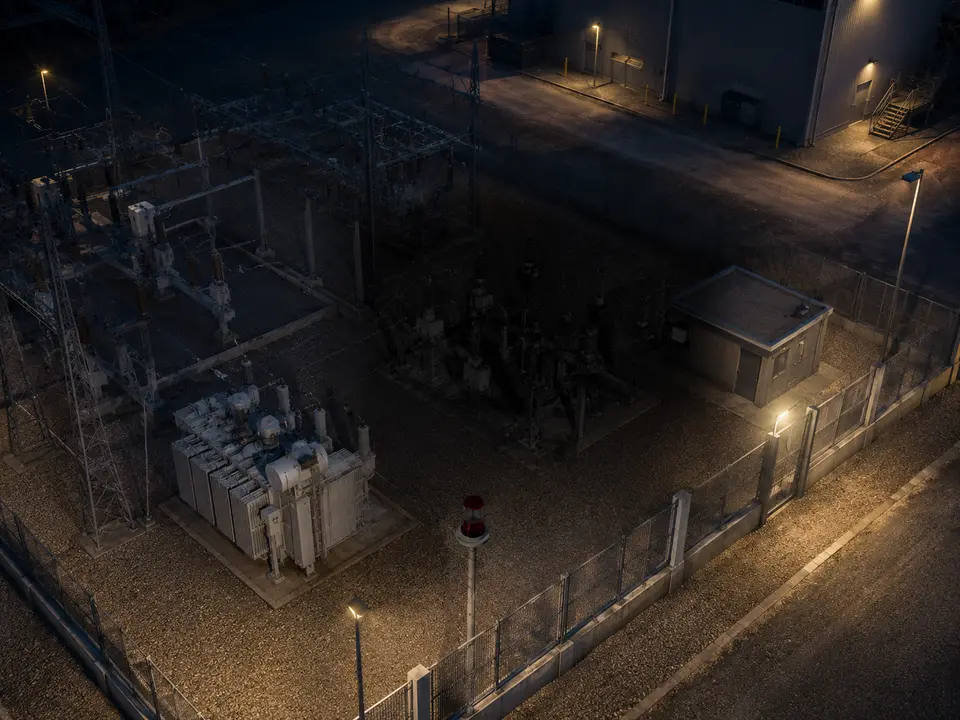
CAM-357Tonight the substation is in the dark
«Tell me if at night there is less light than usual inside the compound, or if the red beacon is not lit.»
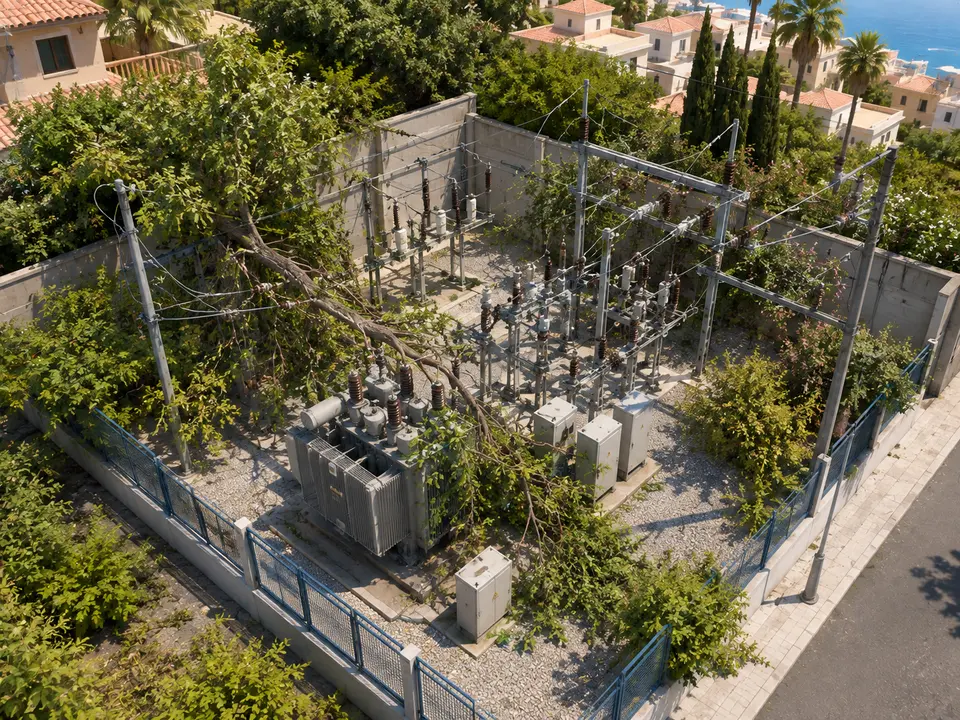
CAM-350A branch touching the substation busbar
«Tell me if vegetation grows inside the yard or if a branch gets close to the busbar.»


What it does not do
IRIS identifies nobody: it does not recognise faces, it does not read plates to work out who someone is and it keeps no file on anyone. Nor does it say whether that person is a thief, and it does not call anyone a suspect. It says somebody crossed the fence, at what time and on which camera.
And it does not cut the power, does not open doors and does not know whether a piece of equipment is live. The electrical side is what the protection systems are for; IRIS looks at what can be seen.
Questions
- Does IRIS know who the person who climbed in is?
- No. It does not recognise faces, it identifies nobody and it keeps no file on anyone. Nor does it call anyone a suspect: that is a judgement, and a camera does not judge. What it states is a checkable fact — a person crossed to the other side of the fence at 23:40 and can be seen on this camera — and from there the person who has to decide, decides. For what is needed here, which is that nobody ends up four metres from the switchgear, knowing who they are changes nothing at all.
- Isn’t the fence and a perimeter alarm enough?
- They help, and you should have them. What they do not give is context: a perimeter alarm says something touched the fence, not whether it was a person, a branch in the wind or a cat. That is why many of them end up switched off on stormy nights. The camera shows what it was, and that changes the call: sending a patrol at four in the morning because a contact tripped is not the same as sending it because there is a person inside and you can see them.
- Can it see a branch getting close to the busbar?
- Yes, and it is one of the most useful things it does here, because vegetation grows at a speed nobody watches. The camera keeps the same framing and compares the yard with how it looked a month ago: the scrub that has climbed the wall, the creeper hanging over, the long branch that has reached across. IRIS speaks up when that gets close to the area you marked on the image. It does not measure electrical clearances: it flags that somebody should go and cut before it turns into something else.
- What about alerts caused by an animal or a branch in the wind?
- There will be some, fewer than with a motion detector, and the rule cuts them down. What you ask for here is not «something moved», it is «a person crossed the fence», and that already rules out most windy nights. Then you set how many seconds and which part of the image counts. And a residue remains that cannot be removed and that we would not want to remove: we would rather someone spent ten seconds on a video of a cat than have nobody see the night there is a person in there.
The real interface, step by step
You set the rule once. IRIS applies it every time.
You will see a summary of the interface, played step by step and hands-free. Each round starts with another case. The complete tool does not fit in a demo.
- The rule gets built
- It goes to every camera
- Published, it watches alone
- And then it fires
Not seeing yours here?
These words are the ones we have built, not the ones IRIS understands. The list falls short on purpose: you ask for it in a sentence, and sentences do not run out. Tell us what is in front of your cameras and we will tell you whether it understands it, or not yet.
And the best part
There is a moment when you can still act.It is while it is happening, and it is short.
After that, all you can do is tell the story. IRIS speaks up at that moment — camera, time and images — and whoever is on call decides what to do with it.
Tell us your problem and we will say whether IRIS understands it, or not yet.
We reply the same working day.