Solutions by typeProduction efficiency
How long have we been running with nothing coming out?
Everything is running and nothing goes through
Almost midnight in the baggage hall. Around the belt there is a ring of people two and three deep: two hundred and ten of them standing, with trolleys and with sleeping children. Four suitcases are going round on the belt. There is a long stretch that comes out empty and has been that way for six minutes. The belt is running, the lights are on and the board says the flight has landed. Nothing is broken, and that is exactly why no alarm has gone off.
3 cameras across 3 sectors
What IRIS is
IRIS watches the cameras for you.
IRIS Neural is an artificial intelligence that watches the cameras you already have and understands what happens in front of them. When something important happens —or something you told it you need to keep an eye on—, it alerts you; and whatever can be counted, it counts in numbers. All day long, without anyone having to watch a screen.
You tell it what you need to watch, and IRIS does it.
Works with the cameras you already have. Nothing to replace.
A person replies, not a form.
- Your footage never leaves your premises.
- It doesn't identify people.
- Certifications →
This is how you ask for it
«Tell me how long the line has been running with no product going through.»
A line running empty costs the same as a line stopped, but it appears on no report: the machine is running, so on paper everything is fine. In a robot cell that is half an hour lost without a single beacon lighting up. In a baggage hall it is two hundred people standing in front of a turning belt, and a complaint the next day that nobody will be able to explain.
You decide once
The plant decides it and writes it once: which stretch must carry product, how many empty minutes stop being normal, and who gets told. Five minutes without a part leaving the robot cell, alert the line manager with the picture of the container. IRIS applies it on every shift, and adds those minutes up day by day so they can be compared.
There are two ways to lose a shift and only one of them makes noise. The noisy one is the stoppage: the red beacon, people gathered round the machine, the report. The other is this one. The filler is switched on, the signal tower too, the conveyor goes all the way round and there is not a single bottle on the bend. In a robot cell it is the same thing with different scenery: the arm parked in the middle with nothing to pick, and a grey container you can see the bottom of.
Nobody finds out because there is nothing to find out. No part has broken, no sensor has tripped and the production system logs the machine as available. And the problem is almost never here: it is upstream, at the station that feeds this line, in a changeover that ran long or a container nobody refilled.
IRIS watches the stretch and counts what goes through it. If nothing goes through, it times it from the first minute and leaves it with its hour and its camera. That is the whole trick, and it is the one that is missing: measuring the gap. With the exact time product stopped coming, you open the camera on the previous station and see why. The cause is decided by whoever knows the line. What IRIS adds is that the gap stops being invisible.
What changes
Before, empty time was discovered while closing out the shift, when there was nothing left to do about it. Now an alert goes out while it is happening, with the exact minute of the last part and the picture of the empty container. The operator who was standing around stops waiting, and the refill gets requested sooner. And at the end of the week there is a figure: how many minutes a day go that way, and at which station they start.
Where we have seen it
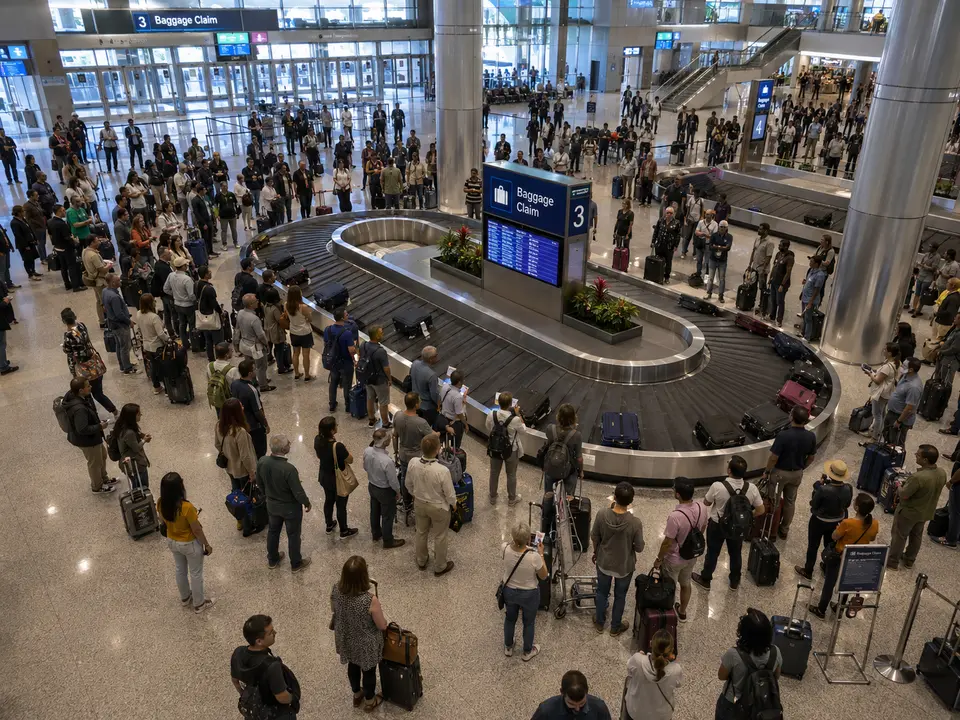
CAM-591Two hundred people watching an empty belt
«Tell me if the belt has gone more than five minutes without producing a bag and people are still waiting.»
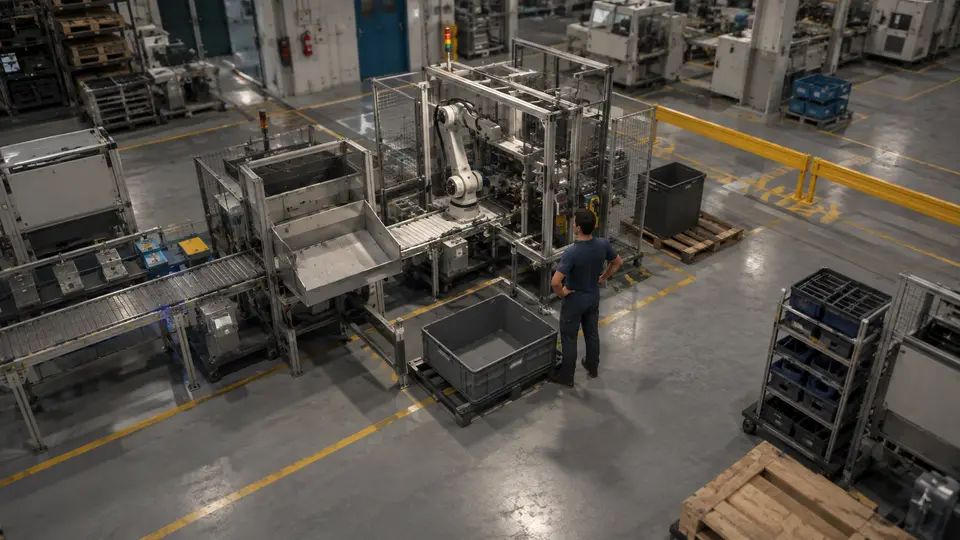
CAM-243The cell is ready and the bin is empty
«Tell me if the bin at the cell runs empty and the robot goes more than five minutes without putting out a part.»
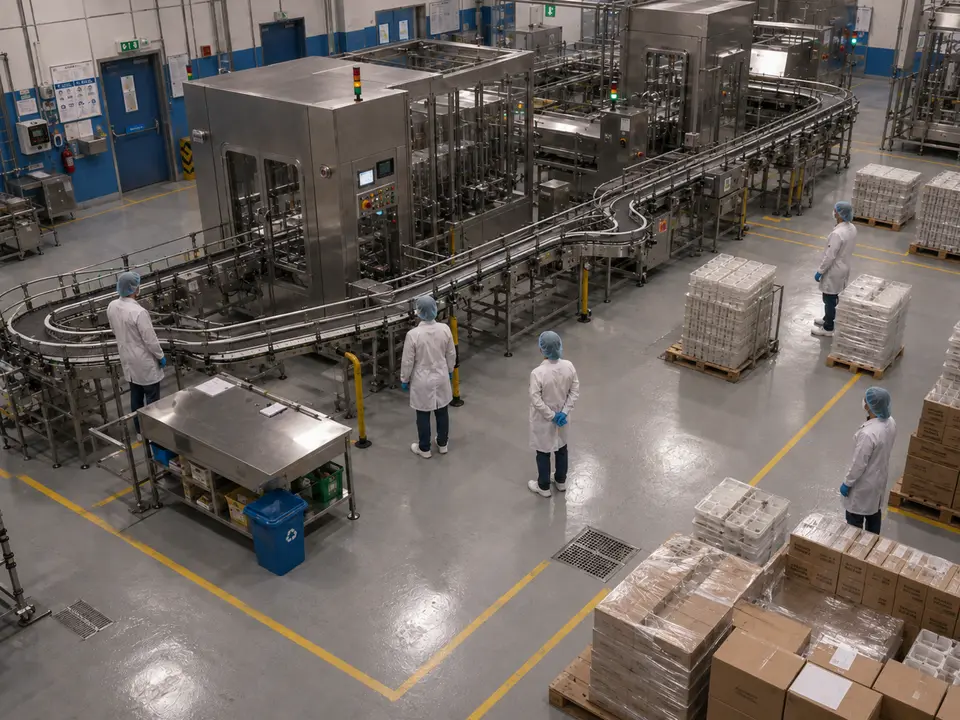
CAM-202The line is running and not one bottle goes by
«Tell me how long the line has been running with no product going through.»


What it does not do
IRIS does not know why product has stopped arriving. It sees the stretch is empty and gives the exact time it stopped. With that time you look at the upstream camera and see whether there was a jam, a changeover or a wait for raw material.
And it does not act: it does not stop the cell, does not raise a replenishment order and does not send anyone anywhere.
Questions
- Why flag an empty line if nothing is broken?
- Because empty time costs the same. The machine draws power, the shift ticks by and no product comes out. That gap never reaches the report precisely because nothing broke, which is why nobody has ever measured it. IRIS times it and leaves it with an hour and a camera. That shows how many minutes a day go that way, at which station the problem starts, and whether it is rising or falling week to week.
- Does it tell an empty line from a stopped line?
- Yes, and they are alerted separately because they are two different problems. Stopped means the machine is not moving. Empty means the machine is moving with nothing on it. The second is the one that goes unnoticed, because at a glance the plant looks like it is working: there is noise, there are lights and there are people. Each has its own threshold, its own recipient and its own count, and they appear as two columns in the shift report.
- How does IRIS know a container is empty?
- By what is visible inside it. You draw an area over the container and the camera looks at whether there are parts in there or not. It is the same count it makes with people at a door, applied to a bin. If the container is covered, has a tarpaulin over it or falls outside the frame, the camera cannot say, and then you need another perspective on the same spot. That shows up during installation, looking at the real picture.
- Is this only useful inside a factory?
- No. It is the same measure anywhere something has to keep going past. In a baggage hall the belt turns and no suitcase appears while two hundred people wait: that is exactly a line running empty, and it is measured the same way, with a line always drawn in the same place. The figure stops being a declaration by whoever unloads and becomes a measure both parties can look at without arguing about where it came from.
The real interface, step by step
You set the rule once. IRIS applies it every time.
You will see a summary of the interface, played step by step and hands-free. Each round starts with another case. The complete tool does not fit in a demo.
- The rule gets built
- It goes to every camera
- Published, it watches alone
- And then it fires
Not seeing yours here?
These words are the ones we have built, not the ones IRIS understands. The list falls short on purpose: you ask for it in a sentence, and sentences do not run out. Tell us what is in front of your cameras and we will tell you whether it understands it, or not yet.
And the best part
Nothing to drill, nothing to rip out:the cameras already on your walls can start understanding.
No building work, no new cabling, no swapping equipment. It connects to what is already there, and what is already there starts telling you what it sees.
Tell us your problem and we will say whether IRIS understands it, or not yet.
We reply the same working day.