CAM-202
The line is running and not one bottle goes by
The same hall, an hour later. The conveyor runs its whole loop completely empty: not one bottle anywhere on the curve. The filler is switched on, the signal tower too, and the shift clock keeps running. Three people in white coats and hairnets stand waiting beside the belt, looking towards the machine. On the right, the pallets of empty boxes are still lined up at the outfeed with nothing to fill.

Turn on IRIS Vision
AI-generated image
What IRIS is
IRIS watches the plant for you.
IRIS looks at the cameras you already have on the plant floor and understands what it sees: a stopped line, someone inside a robotic cell, someone without their safety gear on, jammed parts. When something like that happens, it alerts right away; and whatever can be counted, it counts in numbers. All day long, with no one needing to watch the screen.
You tell it what you need to watch, and IRIS does it.
For instance, IRIS measures the minutes the belt keeps running with not a single bottle passing through. That way you know how many minutes are lost each shift without the machine ever stopping, something that never shows up on paper because everything looks fine. With that number you decide whether the problem is on this line or the station feeding it, and next month you check if it's improved.
Works with the cameras you already have. Nothing to replace.
A person replies, not a form.
- Your footage never leaves your premises.
- It doesn't identify people.
- Certifications →
What IRIS understands
What it recognises in this scene
- conveyor running and empty
- filler switched on with no product
- operator waiting beside the belt
- operator looking towards the machine
- pallets of empty boxes at the outfeed
What this camera measures
An alert says something is happening. The reading says how much.
- 6 min 40 sTime running empty
- 0Bottles counted in the last minute
- 3People waiting by the line
- 10:12Time of the last bottle
- 2Times with no product today
The figures on this screen are an example from the illustration, not any client's measurement.
The rule
You decide once. IRIS applies it always.
If
the line is running and no product goes through for more than two minutes
Then
- alert the shift supervisor with the camera and the time
- time the empty minutes until product starts coming in again
- save the video of the last pack that went through the run
The instruction that set it up«Tell me how long the line has been running with no product going through.»
What changes
What changes for whoever answers for the plant
An empty line costs the same as a stopped line, but it appears in no report: the machine is running, so on paper everything is fine. IRIS measures the minutes when no product arrives and leaves them with their time and their camera. With that the plant manager sees where the bottleneck really is, and it is almost never here: it is upstream, at the station that feeds this line.
What people usually ask
What is the point of alerting on an empty line if nothing is broken?
Because empty time is paid for all the same. The machine draws power, the shift clock runs and nothing comes out. That gap never appears in the report because nothing broke down. IRIS times it and leaves it with a time and a camera, so you can see how many minutes a day go that way and at which station the problem starts.
Does it tell an empty line from a stopped line?
Yes. They are two different things and they are alerted separately. Stopped means the machine is not moving; empty means the machine is moving and carrying nothing. The second one is the one that usually goes unnoticed, because at a glance the plant looks like it is working.
Does IRIS know why no product is arriving?
It does not work it out on its own. It sees that the run is empty and gives the exact time product stopped coming through. With that time you look at the camera on the previous station and see whether there was a jam, a format changeover or a wait for raw material. IRIS supplies the image and the minute; the cause is decided by whoever knows the line.
Other cameras
- CAM-200 · The line has stopped and nobody knows why
- CAM-201 · Bottles piling up on the accumulation table
- CAM-203 · A glove on the belt, among the trays
- CAM-204 · A water bottle in the middle of a juice run
- CAM-205 · A label that says the opposite of what is in the bag
- CAM-206 · The changeover is not finished
Simulation · how IRIS works
You set the rule once. IRIS applies it every time.
You will see a summary of the interface, played step by step and hands-free. Each round starts with another case. The complete tool does not fit in a demo.
- Four cameras at once
- Each understands its own view
- The numbers climb by themselves
See it somewhere else

What does an airport see before the queue forms?
14 cases: 7 raise an alert when something happens and 7 only measure. You see each image as it is, and then with what IRIS understands on top.
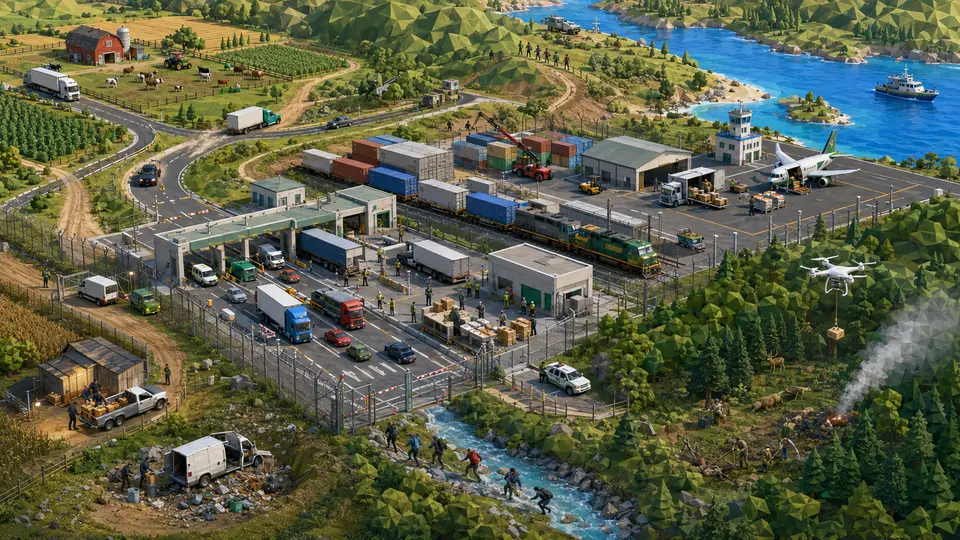
What can a camera see without pointing at anyone?
13 cases: 9 raise an alert when something happens and 4 only measure. You see each image as it is, and then with what IRIS understands on top.


And the best part
You decide the rule onceand it is applied the same way every time.
At three in the morning it means what it means at noon, on camera one and on camera four thousand. It does not depend on who is on shift, or how tired they are.
Tell us your problem and we will say whether IRIS understands it, or not yet.
We reply the same working day.