Solutions by typeCustomer experience
Who tells you half the floor has gone dark?
Half the floor dark, and the shop open
It is 20:15 and the right-hand half of the shop is dark. A whole run of light fittings never came back on after this afternoon’s voltage dip, and the shelves at the back sit in gloom: the floor stops shining exactly where the light ends. Everybody is in the left-hand half, the one still lit. Nobody has called maintenance, because looking at the ceiling is nobody’s job.
6 cameras across 5 sectors
What IRIS is
IRIS watches the cameras for you.
IRIS Neural is an artificial intelligence that watches the cameras you already have and understands what happens in front of them. When something important happens —or something you told it you need to keep an eye on—, it alerts you; and whatever can be counted, it counts in numbers. All day long, without anyone having to watch a screen.
You tell it what you need to watch, and IRIS does it.
Works with the cameras you already have. Nothing to replace.
A person replies, not a form.
- Your footage never leaves your premises.
- It doesn't identify people.
- Certifications →
This is how you ask for it
«“Alert me if the lights go out in part of the hall, and tell me which part, even if the rest stays on.”»
Half the floor stops selling that night, and the next, and the one after, because a light going out makes no noise and can stay like that for weeks. Besides what does not get sold, there is what cannot be seen: in a dark area the camera sees worse too, so the unlit stretch becomes a hole in everything else. And in a station or a tunnel that is no longer about sales: it is people walking where there is no light.
You decide once
You decide which areas have to be lit and when: the sales floor while the shop is open, the station concourse until the last train, the substation yard all night with the red beacon on. You decide whether the alert goes to maintenance, to the control room or to both. And you decide the opposite case, which also costs money: an alert if a wing is still lit at three in the morning.
A blown light calls nobody. No alarm goes off, it appears in no report, and the building keeps working exactly the same, only slightly worse. So the warning almost always arrives by one of two bad routes: a customer mentioning it at the till, or someone noticing at closing time, three weeks late. And in a tunnel or on a platform it is not a comment at the till: it is a stretch people keep walking through in the dark.
IRIS looks at the same thing you look at when you walk in: whether this part of the hall is lit and that one is not. When a stretch that should have light at this hour goes dark, the alert goes out with the camera and the time, and it names the stretch, not the whole building. It works both ways: it also flags the wing that stayed lit all night, which is not a fault but is paid for all the same.
There is one more reason not to let it slide, and it is the one least often told. Where there is no light, the camera sees worse. An unlit aisle does not just stop selling: it stops being watched, and every other rule that depended on that camera goes down with it. That is why lighting is not a separate maintenance chore. It is the condition for everything else to work.
What changes
Before, the fault was reported by a customer or spotted at closing time, and it left behind a maintenance note with no exact hour or place: “some lights have gone in the back area”. Now the alert goes out the same evening, says which stretch went dark and from what minute, and comes with the video. Whoever runs the building decides whether that is a lamp, a breaker or a badly set schedule — but they no longer find out three weeks later.
Where we have seen it
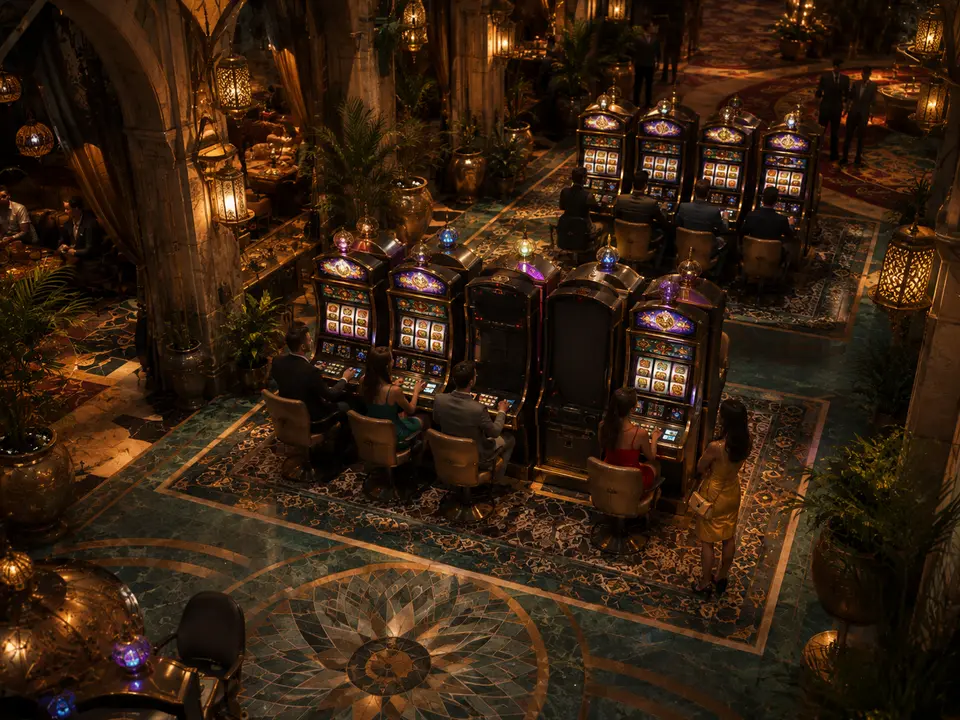
CAM-526One dark screen in the middle of a bank of machines that are all lit
«Tell me if a machine's screen stays dark for more than ten minutes while the ones beside it stay lit.»
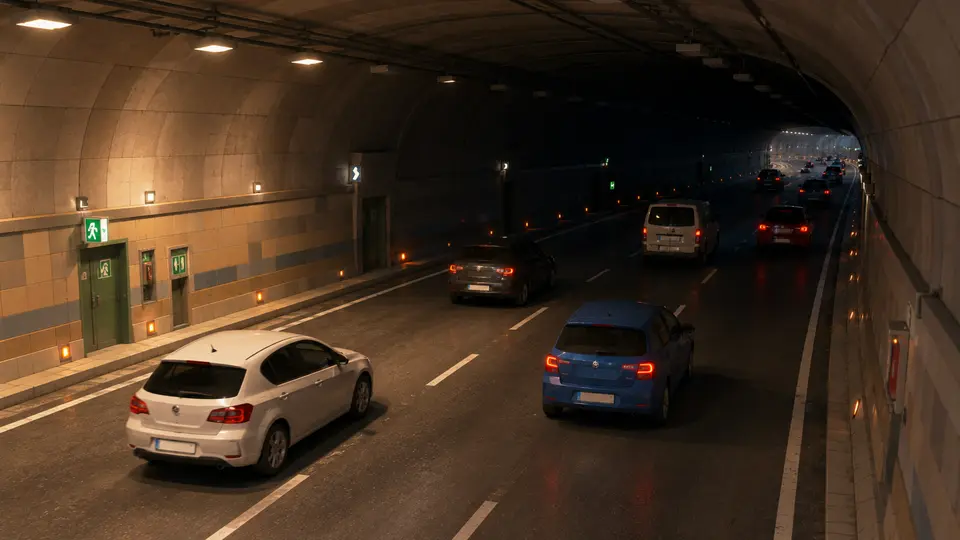
CAM-185A stretch of tunnel in the dark
«Tell me if a stretch of the tunnel loses its lighting, even when nothing else has happened.»

CAM-74Half the shop floor in the dark
«Tell me if the lights go out in one part of the floor and tell me which part, even if the rest of the store is still lit.»
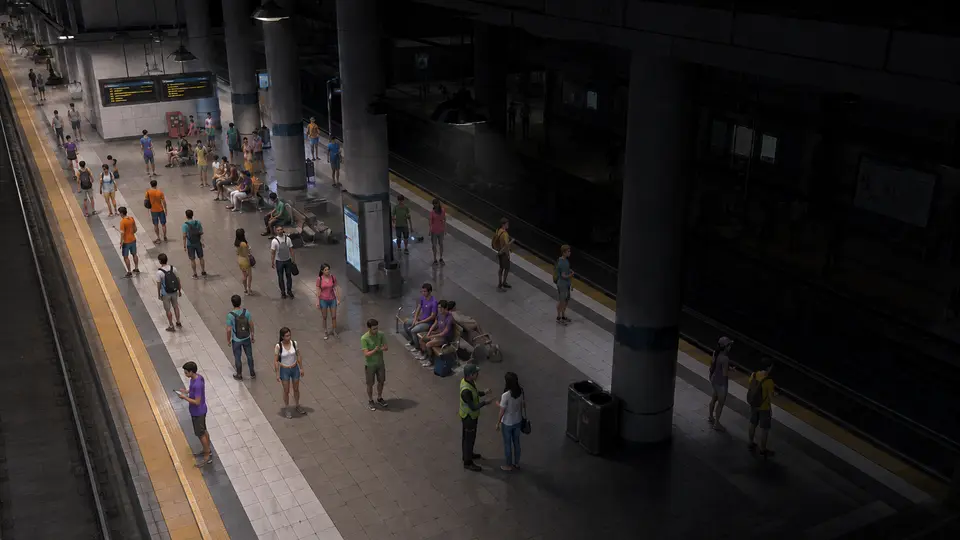
CAM-91Half the station in the dark
«Tell me if part of the station goes dark when it should be lit.»
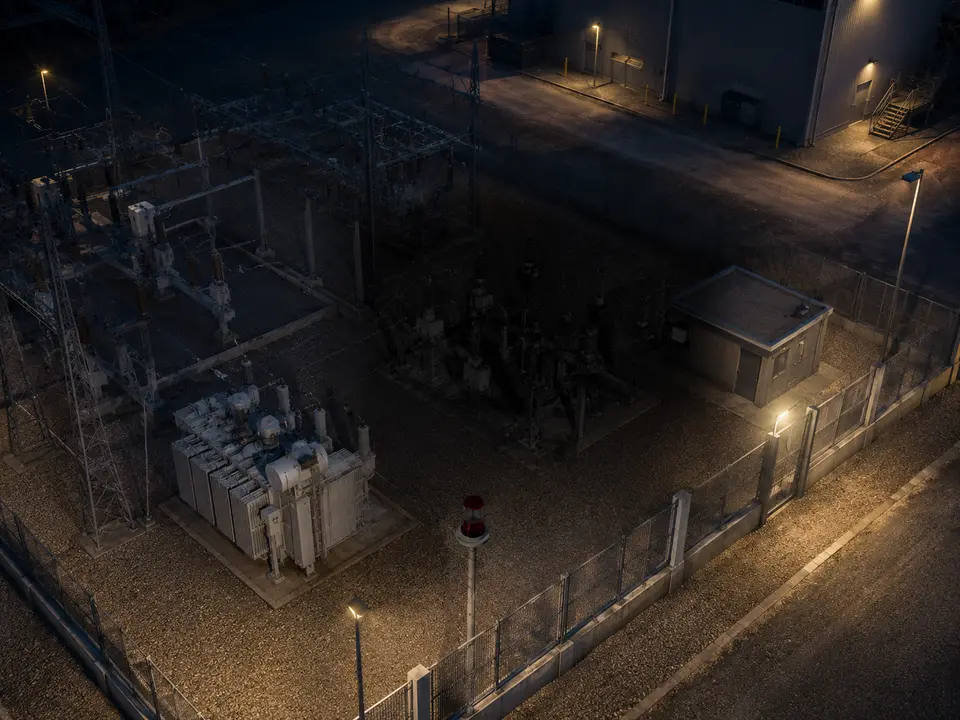
CAM-357Tonight the substation is in the dark
«Tell me if at night there is less light than usual inside the compound, or if the red beacon is not lit.»


What it does not do
IRIS does not measure lux and does not replace an instrument reading: it will not tell you whether an area meets a standard. It also does not know why the light went out — a lamp, a breaker, a badly set schedule — and it switches nothing on by itself. And in gloom it sees worse, like anyone: what it detects well is the change, that a stretch had light and now does not.
Questions
- Does IRIS measure light levels in lux?
- No. IRIS is not a light meter and does not replace an instrument reading, which is what you need to certify against a standard. What it does is look at the scene, see that a stretch that was lit at that hour no longer is, and tell you which one. For a floor manager that is the useful thing at eight on a Thursday evening. For a technical report you need the instrument, and it is better to say so up front.
- What if the lights go out because they are meant to?
- Then there is no alert. The rule carries a schedule: the floor must be lit while the shop is open, and after closing the opposite is normal. You set that once, with the real hours of the site and the season, and IRIS applies it every day. If the schedule changes in summer, you change the rule; you do not switch the system off. A rule that fires when it should not is a rule everyone stops reading within two weeks.
- Does it also catch lights left on at night?
- Yes, and it is the same rule in reverse. If an area must be off after a certain hour and is still lit, that gets flagged too. It is not a fault, but it is paid for on the bill every month and nobody looks at it, because at three in the morning nobody walks past. Not everything important is an alarm: sometimes what matters is a number, and here the number is the hours a wing stayed lit with nobody inside.
- If the camera also sees badly in the dark, how does it detect it?
- Because that is exactly where the change shows. A stretch that was lit and turns black is one of the clearest changes there is in an image, and with the rest of the hall lit beside it the contrast is obvious. One honest caveat: if the camera has a night mode and compensates, the scene may still be visible in black and white, and then the signal is a different one. That is why it is tested with that specific camera before the area is signed off.
Every simulation
Something has spilled
Tell me if there is liquid or foam outside its place and it is still there two minutes later.
- The sentence
- Where it applies
- What it finds
- The same rule
Not seeing yours here?
These words are the ones we have built, not the ones IRIS understands. The list falls short on purpose: you ask for it in a sentence, and sentences do not run out. Tell us what is in front of your cameras and we will tell you whether it understands it, or not yet.
And the best part
What you bought was a warehouse of images.What you needed was someone to look at them.
Those same cameras that only fill disks today can flag what matters while it is happening. The warehouse stays; it just stops being all you have.
Tell us your problem and we will say whether IRIS understands it, or not yet.
We reply the same working day.