Solutions by typeCustomer experience
Whose suitcase is that, and how long has it been there?
A suitcase on its own, nobody beside it
It is 11:15, checkout hour. The luggage room is stacked with bags, a porter crosses the lobby with a loaded trolley and three guests wait at the desk for their bills. Leaning against the concierge stand stands a black cabin case, upright, alone. It has been there eleven minutes and nobody has come within two metres of it. Not one of the forty bags in that lobby has anybody’s name on it.
4 cameras across 2 sectors
What IRIS is
IRIS watches the cameras for you.
IRIS Neural is an artificial intelligence that watches the cameras you already have and understands what happens in front of them. When something important happens —or something you told it you need to keep an eye on—, it alerts you; and whatever can be counted, it counts in numbers. All day long, without anyone having to watch a screen.
You tell it what you need to watch, and IRIS does it.
Works with the cameras you already have. Nothing to replace.
A person replies, not a form.
- Your footage never leaves your premises.
- It doesn't identify people.
- Certifications →
This is how you ask for it
«“Alert me when a bag is left alone in the lobby for more than ten minutes, and keep the video of who put it there and who takes it away.”»
When that case goes missing, it goes missing completely. At seven in the evening a guest comes back asking for it and the search begins: the morning shift has gone home, nobody remembers who left it, and someone sits down to watch four hours of recording. Sometimes it turns up and sometimes it gets paid for. And in a boarding corridor the same scene has a different price: a bag left alone by a gate can end with the corridor closed.
You decide once
You decide the minutes and the place: ten in the hotel lobby, five in a boarding corridor, none in the luggage room, where what you want is not an alert but the video of everything that goes in and out. You decide whether the alert goes to the concierge, to security or to both. And you decide the hours: at eleven in the morning a lobby full of cases is normal, at three in the morning it is not. IRIS applies that difference on its own.
A hotel almost never loses a suitcase because somebody takes it. It loses it because at eleven in the morning there are forty bags in the same corner, three people moving them and not one with a name on it. The same happens in a boarding corridor, but there the consequence is different: a bag alone by a gate forces somebody to make an uncomfortable decision with very little information. Same scene, two different problems.
IRIS watches the lobby floor. It sees a bag standing where there was nothing before, checks whether anyone is within two metres and counts the minutes. When your minutes pass, the alert goes out with the camera, the time and the video of the moment it was put down. It does not say the case is dangerous and it calls nobody suspicious: it says a bag has been on its own for eleven minutes, and it shows the scene. A person decides what to do.
What gets used most, though, comes later. When a guest asks about their bag at seven in the evening, the answer is no longer to sit through four hours of recording: you search for what can be seen — a black cabin case, left by the concierge stand around eleven — and up comes the moment it was put down and the moment it left. Stop hunting for the minute. Search for what happened.
What changes
Before, when a bag went missing, you asked the porters and someone sat in front of the recorder scrubbing through hours of lobby. Now there are two things: the alert at the time, once a case has been alone for longer than agreed, and the search afterwards, done by what can be seen rather than by the exact minute. Whoever is on reception no longer has to choose between serving a guest and staring at a screen.
Where we have seen it
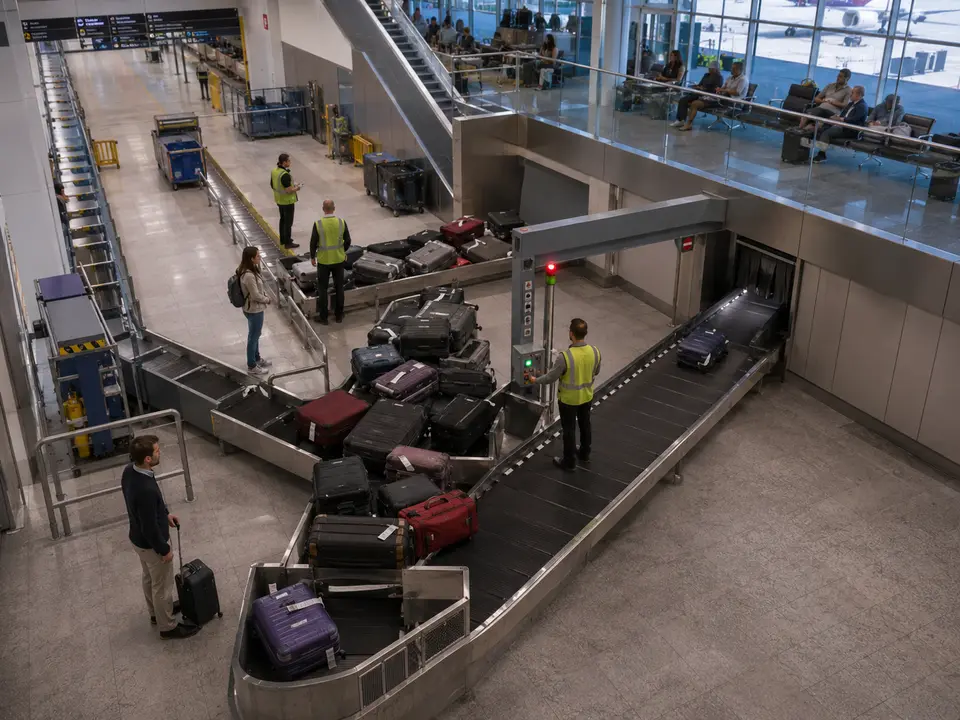
CAM-592Downstairs the belt is jammed and upstairs nobody knows
«Tell me if the conveyor stops moving bags and luggage stacks up at the bend.»
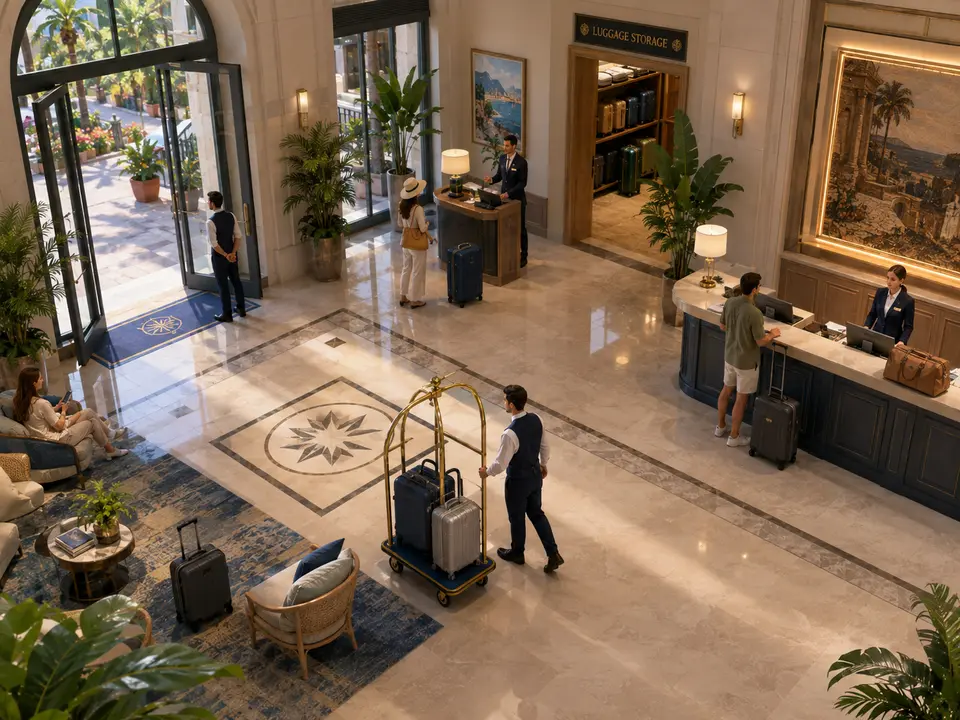
CAM-505A suitcase on its own in the lounge, nobody beside it
«Tell me when a bag is left on its own for more than ten minutes in the lobby, or when it leaves the left-luggage room with someone other than the person who dropped it off.»
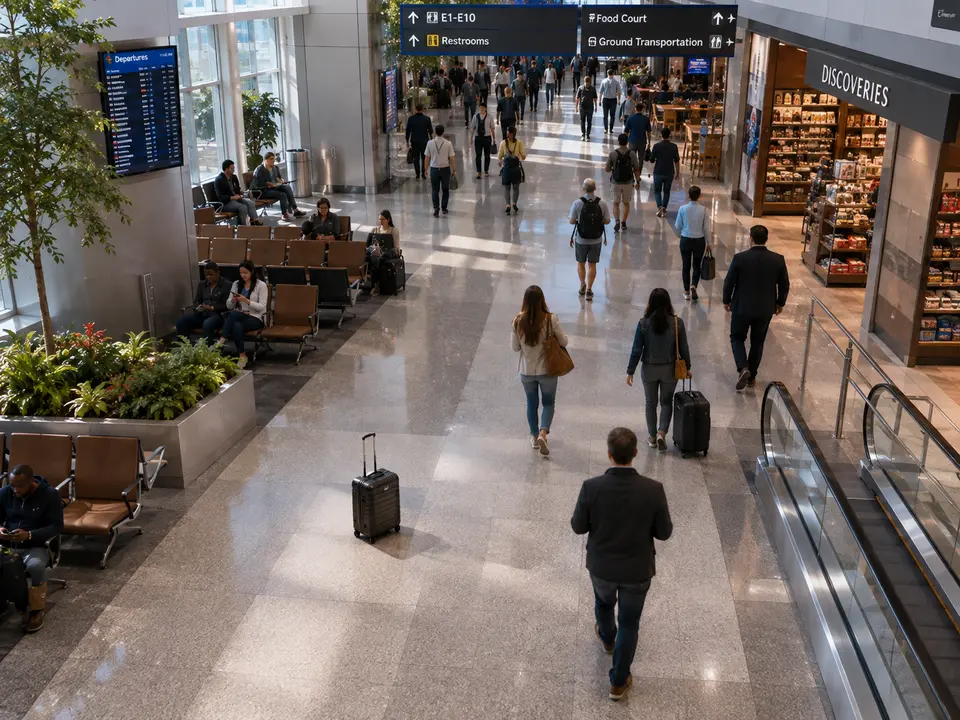
CAM-589A suitcase standing alone, and nobody within two metres
«Tell me if a bag is left on its own for more than five minutes with nobody within two metres.»
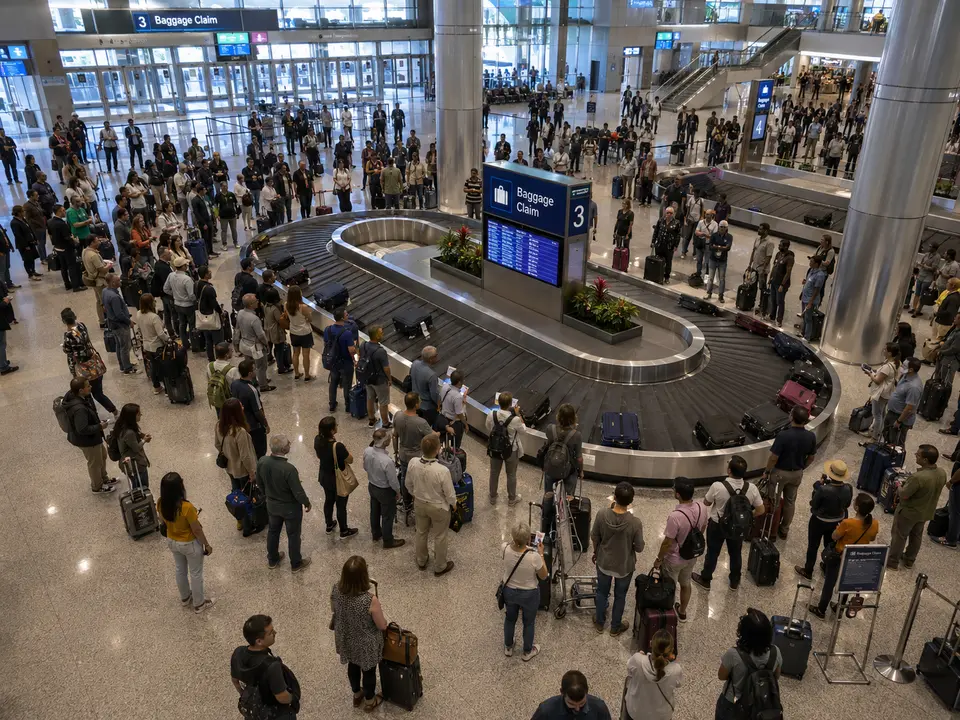
CAM-591Two hundred people watching an empty belt
«Tell me if the belt has gone more than five minutes without producing a bag and people are still waiting.»


What it does not do
IRIS does not know whose case it is. It recognises no faces, identifies nobody and does not say a bag is dangerous: it calls nothing and nobody suspicious. What it does is count the minutes a bag has been alone and show the video of who put it down and who took it away. And it needs to see the floor: in a crowded lobby, a case hidden behind people the whole time is a case it does not see.
Questions
- Does IRIS say a suitcase is suspicious?
- No. IRIS labels nobody and nothing suspicious, and that word appears in no alert. What it states is a measurable fact: there is a bag on the floor, nobody within two metres, eleven minutes. That, with the camera and the video, is what a person needs to decide whether the concierge walks over or security is called. The judgement is made by whoever has the criteria and the responsibility, not by the system.
- Does it know whose each suitcase is?
- No. IRIS does not identify people and does not link a case to a name. What it keeps is the video: the moment that bag was put down and the moment somebody took it away. When there is a doubt, you look at that and a person settles it in a minute, with no need to recognise anybody. It is less than any film promises and exactly what you need to close a luggage claim.
- Can I search for a specific suitcase afterwards?
- Yes, by what can be seen. “A black cabin case left by the concierge stand around eleven” is a valid search, and it returns the moments that bag appears: when it was put down, whether it moved and when it left the lobby. What you cannot search by is who left it, because IRIS does not recognise people. The description is of the case, not of the guest, and that settles nearly everything.
- Does it work the same in a hotel and in a boarding corridor?
- Yes, with different margins, because it is not the same problem. In a hotel lobby a bag left alone for ten minutes is normal at checkout time, and what matters is custody: who put it there and who takes it away. In a boarding corridor the minutes are fewer and the alert goes to different people. The same rule, said with different figures, and your organisation decides which figures apply where.
Demo · IRIS at work
We won't just tell you. We'll show you.
It is a summary of the real screen: it plays by itself, step by step, and shows only the path of one case. The actual tool has far more than fits in here.
- The alert fires
- It lands in the tray
- You open it
- You confirm or dismiss
Not seeing yours here?
These words are the ones we have built, not the ones IRIS understands. The list falls short on purpose: you ask for it in a sentence, and sentences do not run out. Tell us what is in front of your cameras and we will tell you whether it understands it, or not yet.
And the best part
What happens outside the framedoes not exist for IRIS. No camera sees the whole world.
So the first thing we do is check what each camera covers and write it down: from here you can understand this, and not that. A dull hour that saves a lot of misunderstandings.
Tell us your problem and we will say whether IRIS understands it, or not yet.
We reply the same working day.